

You’re writing an email, updating your resume, or finishing an essay. You type the word interested several times and realize your writing sounds repetitive. Learning synonyms for interested helps you express curiosity, enthusiasm, or attention with more variety and precision.
English offers many ways to say someone is interested. Some words suggest mild curiosity, while others show deep excitement or strong passion. Choosing the right one makes your writing more natural and engaging.
phrases for interested include curious, engaged, fascinated, intrigued, attentive, eager, enthusiastic, absorbed, invested, and captivated. The best choice depends on your audience, tone, and the level of interest you want to express. In this guide, you’ll learn where the word came from, what it means in plain English, the best alternatives for different situations, and practical tips to help you choose the right synonym every time.
Find similar expressions in Synonyms for Love: Heartfelt Alternatives (2026).
Where Does The Word Interested Come From
The word interested comes from the Latin word interesse, which means to be between or to matter. It later entered Middle English through French and gradually developed the meaning of showing concern, attention, or curiosity about something.
Today, interested usually describes someone who wants to learn more, pay attention, or become involved in a person, activity, subject, or opportunity. You might hear it in school, at work, during interviews, or in everyday conversations.
Examples
She is interested in science.
I’m interested in joining the team.
They became interested after hearing the presentation.
Our students are interested in learning new skills.
What Does Interested Mean In Plain English
In simple English, interested means wanting to know more about something or someone.
It can describe curiosity, excitement, attention, or a desire to participate.
For example.
A student interested in history enjoys learning about the past.
A company interested in hiring you wants to know more about your skills.
A reader interested in a book wants to keep reading.
Although interested is a common word, using different alternatives helps your writing sound more polished and less repetitive.
Master List Of Synonyms For Interested
The table below groups useful phrases for interested by tone and everyday use.
| Word | Meaning | Tone | Example |
|---|---|---|---|
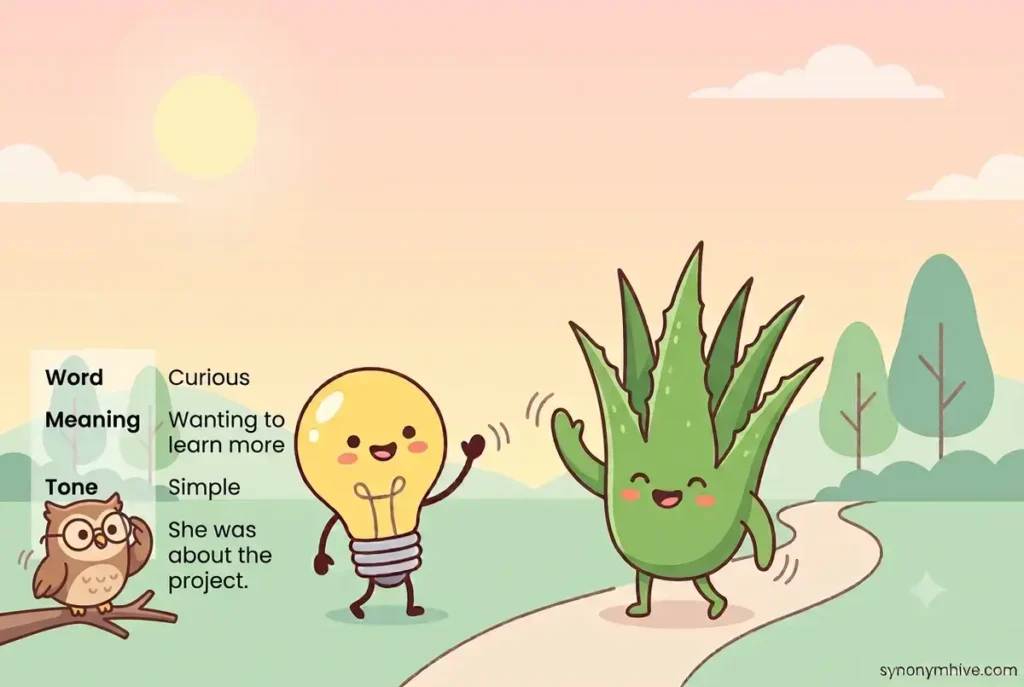
| Curious | Wanting to learn more | Simple | She was curious about the project. |
| Eager | Ready and excited | Simple | I’m eager to begin. |
| Engaged | Paying close attention | Everyday | Students stayed engaged during class. |
| Fascinated | Extremely interested | Everyday | He was fascinated by space. |
| Enthusiastic | Showing excitement | Everyday | He was enthusiastic about the plan. |
| Keen | Very interested | Everyday | She’s keen to learn. |
| Curious-minded | Interested in learning | Informal | He’s naturally curious-minded. |
| Hooked | Unable to stop paying attention | Informal | I was hooked after one episode. |
| Into | Interested in something | Informal | I’m into photography. |
| Drawn | Naturally attracted | Informal | She felt drawn to art. |
| Captivated | Completely fascinated | Formal | The audience was captivated. |
| Compelled | Strongly motivated | Formal | I felt compelled to help. |
| Concerned | Showing personal interest | Formal | Parents are concerned about education. |
| Dedicated | Strongly committed | Formal | She is dedicated to research. |
| Passionate | Showing deep enthusiasm | Formal | He’s passionate about music. |
| Motivated | Driven to act | Formal | Employees stayed motivated. |
| Inquisitive | Naturally curious | Formal | The child has an inquisitive mind. |
| Intent | Fully focused | Formal | She listened with intent attention. |
| Observant | Notices details | Formal | He’s highly observant. |
| Alert | Paying attention | Everyday | Drivers should stay alert. |
| Responsive | Reacting with interest | Formal | The audience was responsive. |
| Focused | Giving full attention | Everyday | She remained focused. |
| Curious About | Wanting information | Everyday | They’re curious about the results. |
| Engrossed | Completely absorbed | Formal | He was engrossed in the novel. |
| Spellbound | Completely captivated | Informal | The children were spellbound. |
| Amazed | Filled with wonder | Everyday | We were amazed by the discovery. |
| Inspired | Encouraged creatively | Everyday | She felt inspired after the speech. |
This collection gives you alternatives for essays, resumes, emails, conversations, presentations, and creative writing.
Synonyms For Interested By Strength
Some words show slight curiosity, while others express deep enthusiasm.
| Level | Synonyms | Best Use |
|---|---|---|
| Mild | Curious, Attentive, Aware, Alert | Daily conversations |
| Moderate | Interested, Engaged, Keen, Eager, Focused | School, work, emails |
| Strong | Fascinated, Intrigued, Invested, Enthusiastic, Absorbed | Articles, presentations |
| Very Strong | Captivated, Engrossed, Spellbound, Passionate | Stories, speeches, creative writing |
Choosing the right intensity helps readers understand exactly how much interest someone has.
Synonyms For Interested By Part Of Speech
The word interested is mainly an adjective, but related nouns and verbs help you vary your writing.
Adjectives
These directly replace interested.
- Curious.
- Engaged.
- Fascinated.
- Intrigued.
- Attentive.
- Eager.
- Keen.
- Focused.
- Enthusiastic.
- Absorbed.
Example
She was fascinated by the documentary.
Nouns
These describe the feeling or quality of being interested.
- Interest.
- Curiosity.
- Enthusiasm.
- Passion.
- Attention.
- Engagement.
- Fascination.
- Motivation.
Example
His curiosity led him to ask more questions.
Verbs
These describe becoming or showing interest.
- Explore.
- Examine.
- Discover.
- Learn.
- Investigate.
- Observe.
- Follow.
- Research.
Example
Students explored the topic in greater detail.
Using different parts of speech makes your writing smoother and prevents repeating the same adjective.
Do Americans And British People Use Different Words
American and British English both use interested, but some alternatives are more common in one region than the other.
| American English | British English | Notes |
|---|---|---|
| Interested | Interested | Common in both. |
| Curious | Curious | Common in both. |
| Eager | Keen | Keen is more common in British English. |
| Into | Into | Frequently used in casual speech in both regions. |
| Enthusiastic | Enthusiastic | Common in both. |
| Fascinated | Fascinated | Common in both. |
| Engaged | Engaged | Widely used in education and business. |
| Invested | Invested | Often used emotionally in American English. |
Most expressions for interested work well in both American and British English. The biggest differences appear in casual speech, where British speakers often use keen, while American speakers may prefer excited, into, or interested in.

What Is The Best Word For A Resume
The word interested is acceptable on a resume, but stronger alternatives often make your qualifications sound more professional.
Better choices include
- Enthusiastic.
- Motivated.
- Dedicated.
- Committed.
- Passionate.
- Engaged.
Example sentences
Enthusiastic about leading cross-functional teams.
Motivated to deliver high-quality customer service.
Dedicated to continuous learning and improvement.
Committed to achieving company goals.
Passionate about software development.
These words show employers that you’re ready to contribute instead of simply showing interest.
What Is The Best Word For An Essay
Academic writing benefits from precise vocabulary.
Good choices include
- Intrigued.
- Fascinated.
- Engaged.
- Curious.
- Invested.
- Attentive.
Example sentences
Researchers became fascinated by the unexpected results.
Students remained engaged throughout the discussion.
Many historians are intrigued by this discovery.
Scientists stayed curious about the new evidence.
The audience was attentive during the lecture.
These words sound more specific than repeating interested throughout an essay.
What Is The Best Word For Text Messages
Simple words usually sound the most natural when texting friends.
Good choices include
- Into.
- Curious.
- Hooked.
- Excited.
- Interested.
Example sentences
I’m really into that new show.
Now you’ve got me curious.
I’m hooked already.
That sounds exciting.
I’m interested. Tell me more.
These expressions sound friendly and conversational.
What Is The Best Word For Emails
Professional emails should sound positive without becoming overly emotional.
Good choices include
- Interested.
- Enthusiastic.
- Keen.
- Eager.
- Motivated.
Example sentences
I am interested in discussing this opportunity.
We are eager to hear your feedback.
I’m enthusiastic about joining your team.
Our company remains committed to this project.
I look forward to learning more.
These alternatives help your emails sound confident and professional.
What Is The Best Word For Speaking
Everyday conversations usually call for simple vocabulary.
Good choices include
- Curious.
- Interested.
- Into.
- Excited.
- Keen.
Example sentences
I’m interested in learning guitar.
She’s really into painting.
We’re excited about the trip.
He’s curious about space.
They’re keen to help.
These words sound natural without feeling too formal.
Real Life Examples Using Different Synonyms
These examples show how different synonyms fit different situations.
- The children were fascinated by the magician.
- She stayed engaged during the meeting.
- I’m curious about your new project.
- He became passionate about photography.
- The audience remained attentive throughout the speech.
- We were intrigued by the mystery.
- She’s eager to start her new job.
- The students were absorbed in the experiment.
- Investors remained interested in the company.
- My sister is into gardening these days.
- He felt inspired after reading the book.
- The class stayed focused during the lesson.
- Everyone became captivated by the performance.
- They were motivated to finish the project early.
- The young scientist had an inquisitive mind.
Interested Vs Curious
These words are similar but not identical.
| Interested | Curious |
|---|---|
| General desire to know or take part. | Strong desire to discover or learn something new. |
| Often used for hobbies, jobs, and people. | Often used for questions and unknown topics. |
| Neutral in tone. | Slightly stronger sense of investigation. |
Examples
I’m interested in marketing.
I’m curious about how the machine works.
Interested Vs Fascinated
These words show different levels of attention.
| Interested | Fascinated |
|---|---|
| Shows normal interest. | Shows deep admiration or excitement. |
| Suitable for everyday situations. | Much stronger emotion. |
| Common in conversations and emails. | Often used in storytelling and articles. |
Examples
She is interested in history.
She is fascinated by ancient civilizations.
Expand your vocabulary with Synonyms for Confidence Ultimate Guide Quick List (2026).
Interested Vs Engaged
Although these words overlap, they are not interchangeable in every situation.
| Interested | Engaged |
|---|---|
| Wants to know more. | Actively participating or paying attention. |
| May simply express curiosity. | Suggests involvement and focus. |
| Common everywhere. | Often used in education and business. |
Examples
The students were interested in the lesson.
The students stayed engaged throughout the lesson.
Common Mistakes To Avoid
Choosing the wrong synonym can change your meaning.
Using Fascinated For Small Interests
If someone casually likes a TV show, interested or into usually sounds more natural than fascinated.
Using Passionate Too Often
Employers see the word passionate frequently. Use it only when you truly want to express strong commitment.
Confusing Curious With Interested
Curious usually suggests wanting answers.
Interested often means wanting to participate or continue learning.
Using Keen In Every Situation
Keen is common in British English but sounds less natural in some American conversations.
Repeating Interested Too Many Times
Replace repeated uses with words like engaged, fascinated, eager, or motivated to improve readability.
What Are The Opposite Words Of Interested
Sometimes you need words with the opposite meaning.
| Antonym | Meaning |
|---|---|
| Bored | Lacking interest. |
| Indifferent | Showing no concern. |
| Uninterested | Not wanting to know more. |
| Apathetic | Showing little emotion or concern. |
| Detached | Emotionally uninvolved. |
| Disengaged | Not paying attention. |
| Distracted | Unable to focus. |
These opposites create clearer contrasts in both speaking and writing.
Quick Tips For Choosing The Right Word
- Use interested for general situations.
- Choose curious when asking questions.
- Use engaged for active participation.
- Pick enthusiastic in professional writing.
- Use fascinated for strong admiration.
- Choose captivated in storytelling.
- Use keen when writing for a British audience.
- Match the strength of the synonym to the level of excitement.
Using the right synonym makes your writing more natural, more precise, and more enjoyable to read.
How Do Native English Speakers Express Interest Naturally
Native English speakers often choose different words depending on the situation instead of repeating interested.
Here are some common choices.
- Into.
- Curious.
- Keen.
- Hooked.
- Excited.
- Engaged.
- Invested.
Examples
I’m really into hiking these days.
She became hooked after the first episode.
He’s curious about artificial intelligence.
We’re excited to visit New York.
The students stayed engaged throughout the class.
Using these alternatives makes conversations sound more natural and less repetitive.
Which Synonyms For Interested Work Best In Professional Writing
Business writing usually calls for words that sound confident but not overly emotional.
| Situation | Best Synonym |
|---|---|
| Job application | Enthusiastic |
| Resume | Motivated |
| Business proposal | Engaged |
| Professional email | Interested |
| Team meeting | Committed |
| Company report | Focused |
| Training program | Dedicated |
Professional writing should sound clear and respectful. Avoid overly casual words like hooked or into in formal documents.
How Can You Replace Interested Without Changing The Meaning
Replacing interested is easy when you think about the exact feeling you want to express.
Instead of writing:
She is interested in photography.
Try one of these.
She is fascinated by photography.
She is passionate about photography.
Making a terrible mistake can lead to serious problems.
She is eager to learn photography.
She is engaged in photography classes.
Each sentence shares a similar idea but creates a different level of emotion and enthusiasm.
Which Synonyms For Interested Fit Different Situations
Different situations call for different words.
| Situation | Best Synonym |
|---|---|
| Reading a mystery novel | Intrigued |
| Learning a new language | Curious |
| Watching a documentary | Fascinated |
| Applying for a job | Enthusiastic |
| Classroom discussion | Engaged |
| Scientific research | Inquisitive |
| Volunteer work | Dedicated |
| Personal hobby | Into |
| Business presentation | Attentive |
| Creative project | Inspired |
Matching the synonym to the situation helps readers understand your exact meaning.
Which Synonyms For Interested Show The Strongest Emotion
Some words express a much deeper level of interest than others. Choosing the right one helps readers understand exactly how someone feels.
| Level | Synonyms | Example |
|---|---|---|
| Low | Aware, Attentive | She was attentive during class. |
| Medium | Interested, Curious, Engaged | He’s interested in learning Spanish. |
| High | Fascinated, Enthusiastic, Invested | They were fascinated by the exhibit. |
| Very High | Captivated, Engrossed, Spellbound | The audience was spellbound by the performance. |
Use stronger words only when they truly match the situation.
What Words Should You Avoid Using Instead Of Interested
Not every related word is a perfect replacement. Some change the meaning of your sentence.
| Word | Why It May Not Fit | Better Alternative |
|---|---|---|
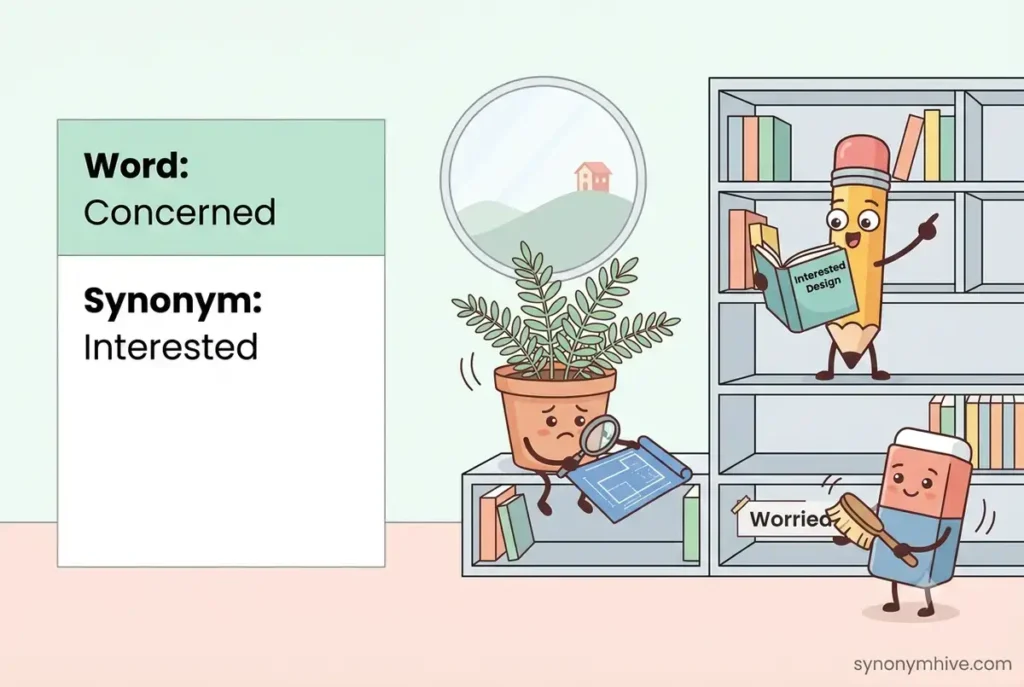
| Concerned | Means worried, not curious | Interested |
| Obsessed | Suggests unhealthy fixation | Fascinated |
| Nosy | Means overly curious about private matters | Curious |
| Distracted | Means unable to focus | Engaged |
| Attached | Means emotionally connected | Invested |
Always choose a synonym that matches your intended meaning instead of simply picking a different word.
How Do Authors Keep Their Writing From Repeating Interested
Professional writers avoid using the same adjective over and over. Instead, they vary their vocabulary based on the context.
For example, instead of writing:
The students were interested in science. They were interested in the experiment. They stayed interested throughout the lesson.
A stronger version would be:
The students were curious about science. They became fascinated by the experiment. They remained engaged throughout the lesson. This simple change makes the writing more vivid and enjoyable to read.
How Can You Practice Synonyms For Interested Every Day
Building your vocabulary doesn’t require hours of study. Small daily habits make a big difference.
- Replace interested with a different synonym each time you write.
- Read books and highlight new vocabulary related to curiosity and enthusiasm.
- Watch interviews or podcasts and notice how native speakers express interest.
- Write five original sentences using different synonyms every day.
- Review your emails and essays to remove repeated words before submitting them.
With regular practice, you’ll naturally use a wider range of alternatives for interested and your writing will become clearer, more engaging, and more professional.
Conclusion
Learning synonyms for interested helps you communicate with greater confidence and precision. Instead of repeating the same word, you can choose curious when asking questions, engaged for active participation, enthusiastic in professional writing, fascinated for deep admiration, or captivated when something completely holds your attention. The more alternatives you know, the more natural your writing and speaking will sound. Practice using different synonyms in emails, essays, conversations, and presentations to build a richer vocabulary and express your ideas more clearly.
Expand your vocabulary with Synonyms for Hate: Powerful Alternatives (2026).
Frequently Asked Questions
What’s Another Way To Say Interested
Some of the best expressions for interested include curious, fascinated, intrigued, engaged, attentive, eager, enthusiastic, captivated, invested, and absorbed. Choose the one that best matches your situation.
What’s The Difference Between Interested And Curious
Interested means you want to know more or take part in something. Curious usually suggests asking questions or wanting to discover new information.
Which Synonym Is Best For A Resume
Words like enthusiastic, motivated, committed, and dedicated usually sound stronger than simply saying you’re interested.
Can Interested Be Used In Formal Writing
Yes. Interested is appropriate in essays, reports, emails, and professional communication. You can also use alternatives like engaged, motivated, or attentive when they fit the context.
What’s Another Way To Say I’m Interested
You can say I’m curious, I’m eager, I’m enthusiastic, I’m keen, or I’m fascinated, depending on how strongly you want to express your interest.
Which Synonyms Do Native English Speakers Use Most
Native speakers commonly use curious, into, interested, excited, keen, and engaged because these words sound natural in everyday conversations.
What Is The Opposite Of Interested
Common opposites include bored, uninterested, apathetic, indifferent, disengaged, and detached.