
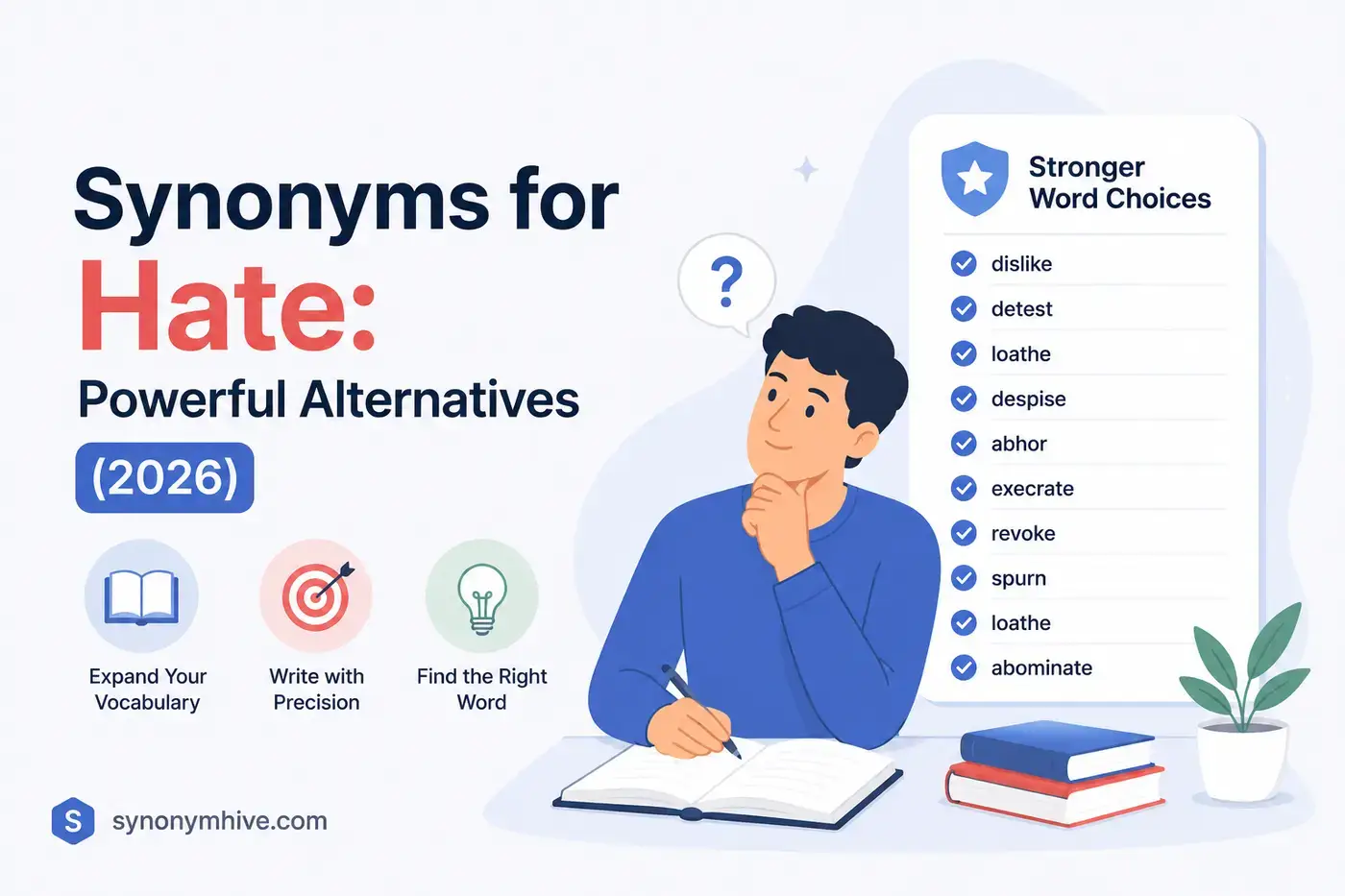
Have you ever written an email, essay, or text message and realized the word hate sounded too harsh or too simple? Learning alternatives for hate helps you express dislike, frustration, anger, or resentment with greater accuracy. The right word can make your writing clearer, more natural, and more believable.
Synonyms for hate are words that describe different levels of dislike, resentment, disgust, or hostility. Some work well in everyday conversations, while others fit formal writing, creative stories, or professional communication. Using different words also keeps your writing from becoming repetitive. Instead of repeating hate, you can choose a word that better matches your feelings and the situation.
This guide explains the meaning and history of the word, shares a large collection of alternatives, compares similar words, and helps you choose the best one every time.
Need another vocabulary suggestion? Read Synonyms for Quiet Ultimate Guide Smart Choices (2026).
What Does Hate Mean
The word hate describes a very strong feeling of dislike, anger, or hostility toward someone or something. People use it in many situations.
- Personal opinions.
- Difficult relationships.
- Unpleasant experiences.
- Strong dislikes.
- Fiction and storytelling.
- Everyday conversations.
For example:
- I hate waking up early on weekends.
- She hates waiting in long lines.
- They hated how the movie ended.
- He hates unfair treatment.
Sometimes people use hate casually, even when they simply mean they don’t enjoy something very much. In other situations, it describes a much deeper and more serious emotion. Understanding that difference helps you choose better words.
Word Origin And Plain English Meaning
The word hate has been part of English for hundreds of years. It comes from the Old English word hatian, which meant to dislike strongly or feel hostility toward someone or something. Similar words appeared in several early Germanic languages, showing that this emotion has long been part of everyday communication. Today, the word covers many different levels of emotion.
In plain English, hate means:
- To dislike something very strongly.
- To feel anger or hostility.
- To strongly avoid or reject something.
- To have deep resentment.
- To feel extreme dislike.
Imagine sitting in heavy traffic while running late for an important meeting. You might say you hate traffic. In that case, you’re expressing frustration instead of true hatred. The same word can describe serious emotions, casual complaints, or fictional conflicts. That’s why choosing the right synonym matters.
Synonyms For Hate Master Word List
Many websites list only a few alternatives. Real writing needs more variety because different situations call for different levels of emotion. The table below groups useful words into simple, everyday, formal, and casual language.
| Word | Meaning | Tone | Example |
|---|---|---|---|
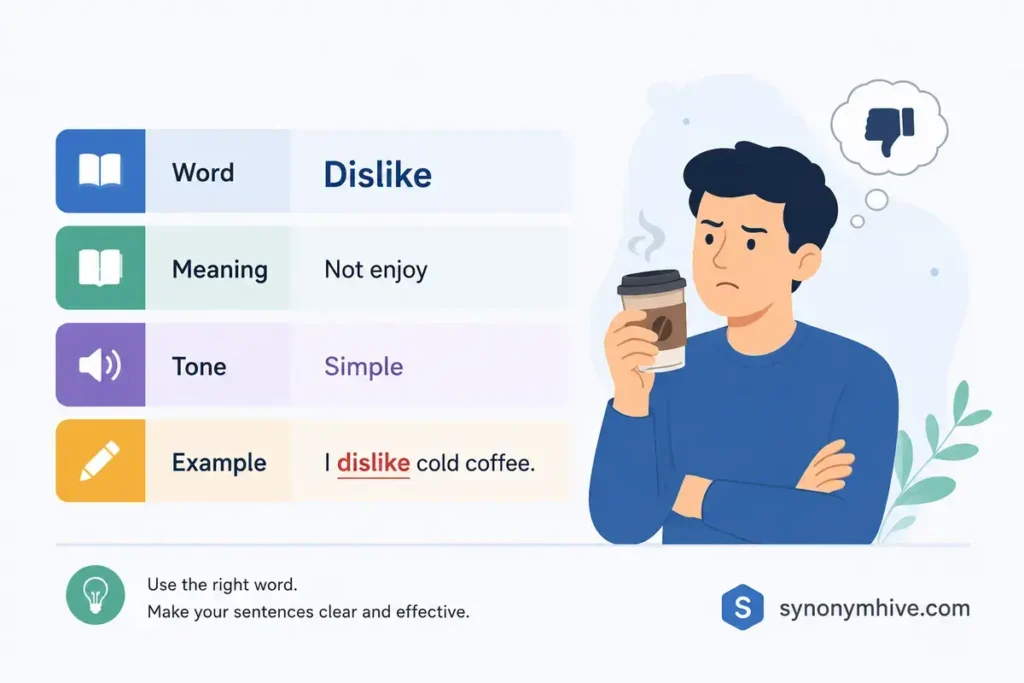
| Dislike | Not enjoy | Simple | I dislike cold coffee. |
| Mind | Feel bothered by | Simple | I don’t mind waiting. |
| Object to | Not approve | Simple | They object to the new rule. |
| Avoid | Stay away from | Everyday | We avoid crowded places. |
| Resent | Feel bitterness | Everyday | She resents unfair criticism. |
| Loathe | Hate strongly | Everyday | I loathe wasting time. |
| Detest | Dislike intensely | Everyday | They detest bullying. |
| Disdain | Feel contempt | Formal | He showed disdain for the idea. |
| Oppose | Be against | Formal | Residents oppose the project. |
| Denounce | Publicly criticize | Formal | Leaders denounced corruption. |
| Disapprove of | Think something is wrong | Formal | My parents disapprove of smoking. |
| Can’t stand | Strongly dislike | Everyday | I can’t stand loud chewing. |
| Sick of | Tired of | Casual | I’m sick of this weather. |
| Fed up with | Very frustrated | Casual | She’s fed up with delays. |
| Not a fan of | Mild dislike | Casual | I’m not a fan of horror movies. |
| Grossed out by | Feel disgust | Casual | He was grossed out by the smell. |
| Turned off by | Lose interest | Casual | I’m turned off by rude behavior. |
| Can’t deal with | Too frustrating | Slang | I can’t deal with this noise. |
| Can’t tolerate | Unable to accept | Everyday | I can’t tolerate lying. |
| Hostile toward | Showing anger | Formal | He became hostile toward strangers. |
| Bitter about | Holding resentment | Everyday | She’s bitter about the decision. |
| Irritated by | Mild annoyance | Everyday | I’m irritated by constant interruptions. |
| Annoyed by | Slight frustration | Simple | He’s annoyed by the loud music. |
This collection gives you options for school assignments, business writing, stories, conversations, and everyday situations.
Synonyms By Intensity
Not every situation needs the strongest possible word. Sometimes a softer expression sounds more honest.
Mild Dislike
These words describe ordinary frustration or annoyance.
| Word | Best Use |
|---|---|
| Dislike | Everyday conversation. |
| Not a fan of | Casual speech. |
| Annoyed by | Minor frustration. |
| Irritated by | Everyday situations. |
| Object to | Professional settings. |
Moderate Dislike
These words express stronger feelings without sounding extreme.
| Word | Best Use |
|---|---|
| Resent | Relationships. |
| Can’t stand | Daily conversation. |
| Fed up with | Ongoing frustration. |
| Sick of | Informal speech. |
| Oppose | Formal discussions. |
Strong Dislike
These words describe deep anger, disgust, or hostility.
| Word | Best Use |
|---|---|
| Loathe | Personal feelings. |
| Despise | Serious dislike. |
| Detest | Formal and casual writing. |
| Abhor | Academic or formal writing. |
| Revolted by | Extreme disgust. |
Matching the intensity to the situation helps your writing sound believable instead of exaggerated.
Synonyms By Part Of Speech
Most people know hate as a verb, but related words appear in other forms too. Learning them makes your writing more flexible.
Verbs
| Word | Example |
|---|---|
| Hate | I hate wasting food. |
| Loathe | She loathes dishonesty. |
| Despise | They despise cheating. |
| Detest | He detests rude behavior. |
| Resent | We resent unfair treatment. |
| Abhor | Many people abhor violence. |
Nouns
| Word | Example |
|---|---|
| Hatred | Hatred solves nothing. |
| Resentment | Resentment grew over time. |
| Dislike | His dislike became obvious. |
| Hostility | The hostility ended peacefully. |
| Contempt | She spoke with contempt. |
| Disgust | The smell caused disgust. |
Adjectives
| Word | Example |
|---|---|
| Hateful | Hateful words can hurt people. |
| Bitter | He remained bitter for years. |
| Hostile | The crowd became hostile. |
| Resentful | She felt resentful after the decision. |
| Disgusted | We were disgusted by the mess. |
| Unfriendly | The neighbor seemed unfriendly. |
Using different forms keeps your writing smooth and avoids repeating the same word over and over.
Do Americans And British People Use Different Words
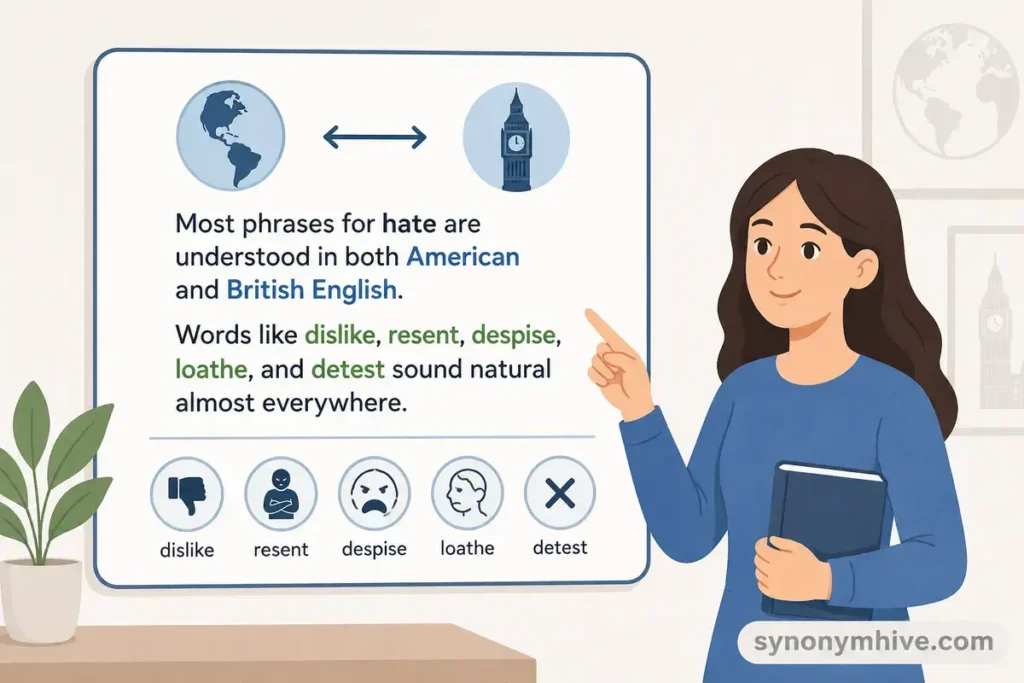
Most phrases for hate are understood in both American and British English. Words like dislike, resent, despise, loathe, and detest sound natural almost everywhere. Some informal expressions are more common in one region.
| Word Or Phrase | More Common In | Notes |
|---|---|---|
| Can’t stand | US and UK | Very common in everyday speech. |
| Fed up with | UK | Also common in the US but heard more often in Britain. |
| Sick of | US | Frequently used in casual conversations. |
| Not keen on | UK | Means not interested in or not liking something. |
| Over | US | Means no longer interested or emotionally invested. |
| Done with | US | Common way to express frustration or finality. |
If you’re writing for an American audience, simple choices like dislike, can’t stand, resent, despise, and avoid usually sound the most natural. If your audience includes readers from different countries, stick with widely understood expressions and avoid local slang unless it fits the context.
Which Synonym Fits Your Situation Best
The best synonym depends on who you’re talking to and what you’re trying to say. A work email, school essay, text message, and conversation with friends all call for different words. The sections below show which choices sound the most natural in each situation.
Best Word For A Resume
The word hate almost never belongs in a resume. Professional writing should stay positive and focus on strengths instead of dislikes. If you need to describe disagreement or concern, these words work much better.
| Best Word | Why It Works | Example |
|---|---|---|
| Oppose | Sounds professional. | Opposed outdated processes and suggested better solutions. |
| Object to | Shows respectful disagreement. | Objected to unsafe workplace practices. |
| Prefer | Keeps the tone positive. | Prefer collaborative work environments. |
| Value | Focuses on strengths. | Value honesty and teamwork. |
| Advocate for | Shows leadership. | Advocate for clear communication across teams. |
Positive wording almost always leaves a better impression than negative wording.
Best Word For An Essay
Essays often need formal vocabulary that explains ideas clearly.
| Best Word | Best Use | Example |
|---|---|---|
| Resent | Personal or social topics. | People may resent unfair treatment. |
| Despise | Literature analysis. | The character despises betrayal. |
| Abhor | Academic writing. | Many cultures abhor unnecessary violence. |
| Oppose | Arguments. | Many citizens oppose higher taxes. |
| Condemn | Social issues. | The report condemns discrimination. |
These choices sound thoughtful and precise without feeling dramatic.
Best Word For A Text Message
Friends usually speak in a relaxed way, so everyday expressions work best.
| Best Word | Example |
|---|---|
| Can’t stand | I can’t stand this traffic. |
| Sick of | I’m sick of these ads. |
| Fed up with | I’m fed up with this rain. |
| Over | I’m over that show now. |
| Not a fan of | I’m not a fan of spicy food. |
These expressions sound natural because people use them every day.
Best Word For An Email
Emails should match the relationship between you and the reader.
| Situation | Best Word | Example |
|---|---|---|
| Business | Oppose | We respectfully oppose the proposed changes. |
| Customer | Concerned about | We’re concerned about the recent delays. |
| Teacher | Disagree with | I respectfully disagree with this point. |
| Friend | Can’t stand | I can’t stand getting stuck in traffic. |
| Family | Fed up with | I’m fed up with this broken washing machine. |
Simple wording helps your message stay respectful and easy to understand.
Best Word For Speaking
People naturally choose familiar expressions in conversations. These words sound comfortable in everyday speech.
| Word | Example |
|---|---|
| Dislike | I dislike waking up early. |
| Can’t stand | I can’t stand loud music. |
| Hate | I hate getting caught in traffic. |
| Fed up with | I’m fed up with these delays. |
| Sick of | We’re sick of waiting. |
Natural conversations sound better than trying to force formal vocabulary into everyday speech.
Original Example Sentences
These examples show how different words fit different situations.
- I dislike crowded shopping malls during the holidays.
- She resents being blamed for mistakes she didn’t make.
- They despise dishonesty in business.
- We can’t stand waiting in long lines.
- He’s fed up with constant delays.
- The community opposed the new construction project.
- Many people abhor violence against children.
- I’m not a fan of horror movies.
- She felt bitter about losing the competition.
- We avoided unnecessary arguments during the meeting.
- The coach condemned poor sportsmanship.
- He’s sick of fixing the same problem every week.
- They rejected the proposal after careful discussion.
- I loathe wasting perfectly good food.
- The audience was disgusted by the rude behavior.
Each sentence uses a different level of emotion, making the meaning clearer and more natural.
Hate Vs Dislike
People often treat these words as if they mean the same thing, but they express very different levels of emotion.
| Hate | Dislike |
|---|---|
| Shows very strong emotion. | Shows mild negative feelings. |
| Sounds more emotional. | Sounds polite and balanced. |
| Fits serious situations or casual exaggeration. | Fits everyday conversations. |
Examples.
Dislike.
I dislike waking up early.
Hate.
I hate waking up at five every morning.
The second sentence expresses much stronger emotion.
Hate Vs Loathe
These words are very close, but they aren’t always interchangeable.
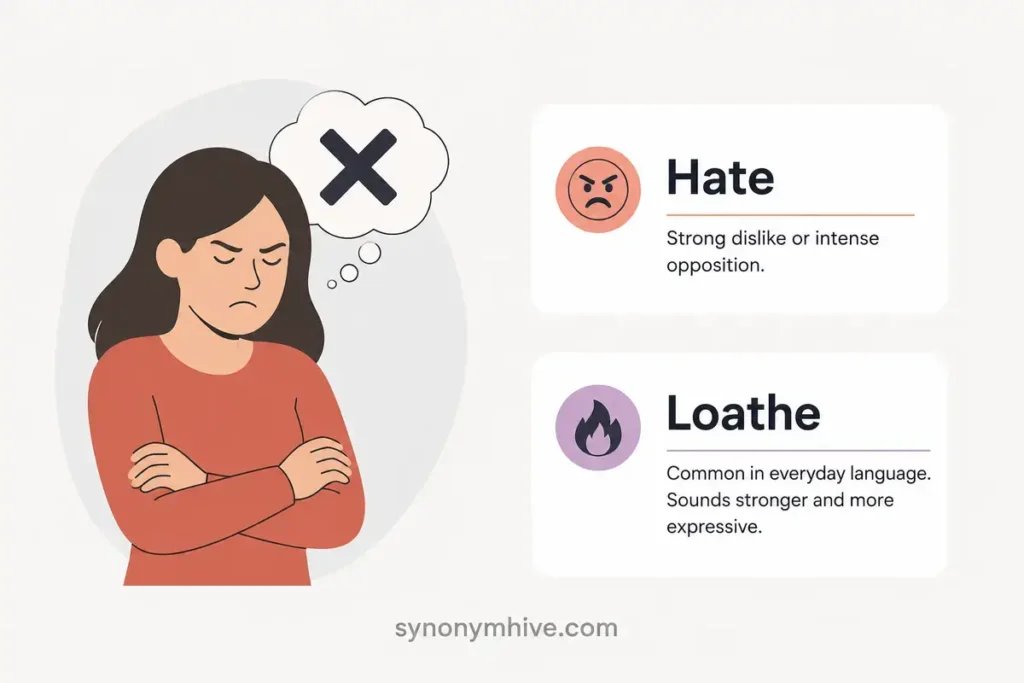
| Hate | Loathe |
|---|---|
| Common in everyday language. | Sounds stronger and more expressive. |
| Used in casual and formal settings. | Often appears in books and serious writing. |
Examples.
I hate doing paperwork.
I loathe dishonesty.
Loathe often carries a deeper emotional weight.
Expand your vocabulary with Synonyms For Safe Simple Guide Top Picks (2026).
Hate Vs Despise
These words describe different kinds of negative feelings.
| Hate | Despise |
|---|---|
| Focuses on strong dislike. | Includes disrespect and contempt. |
| Can describe people or things. | Often describes behavior or character. |
Examples.
I hate cold weather.
She despises people who lie.
Despise usually involves judging someone’s actions or values.
Hate Vs Resent
These words are related, but they describe different emotions.
| Hate | Resent |
|---|---|
| Strong dislike. | Ongoing bitterness about something unfair. |
| Often immediate. | Usually develops over time. |
Examples.
He hates waiting in traffic.
She resents never receiving credit for her hard work.
Resentment often grows slowly after repeated disappointments.
Common Mistakes People Make
Many writers choose words that don’t match the situation.
Avoid these common mistakes.
- Using hate for every small annoyance.
Sometimes dislike or don’t enjoy sounds more honest.
- Choosing overly dramatic words.
Words like abhor or loathe shouldn’t describe small everyday problems.
- Using slang in formal writing.
Expressions like can’t stand or sick of don’t belong in research papers or business reports.
- Confusing dislike with contempt.
Despise suggests moral judgment, not just annoyance.
- Forgetting your audience.
Friends, teachers, customers, and coworkers all expect different levels of formality.
When You Should Not Use Hate
Even though synonyms for hate help you express negative feelings more clearly, the word hate isn’t always the best choice.
Avoid using it when:
- You only mean a mild dislike.
- You’re writing a professional email.
- A respectful tone is important.
- The same word appears several times in one piece of writing.
- Another word explains your meaning more accurately.
Choosing the right level of emotion makes your writing stronger and more believable.
Antonyms For Hate
Looking at opposite words makes it easier to understand the full meaning of hate. These words express positive feelings, acceptance, or appreciation instead of dislike or hostility.
| Antonym | Meaning | Example |
|---|---|---|
| Love | Feel deep affection. | They love spending time together. |
| Like | Enjoy something. | I like reading before bed. |
| Enjoy | Take pleasure in. | She enjoys painting. |
| Appreciate | Recognize value. | We appreciate your support. |
| Admire | Respect greatly. | Many students admire their teacher. |
| Respect | Hold in high regard. | I respect her decision. |
| Cherish | Value deeply. | They cherish family traditions. |
| Treasure | Hold dear. | He treasures old photographs. |
| Welcome | Accept gladly. | We welcome new ideas. |
| Accept | Receive without rejection. | She accepted the feedback gracefully. |
Choosing the right opposite word helps create stronger comparisons and clearer writing.
How Do You Choose The Right Synonym
A long list of words is useful, but picking the right one makes your writing more natural and accurate.
Use these simple tips.
- Think about how strong the feeling really is.
If you’re only slightly annoyed, dislike or not a fan of may fit better than hate.
- Match the situation.
Formal writing usually calls for words like oppose, object to, or disapprove of. Casual conversations often sound better with can’t stand or fed up with.
- Think about your audience.
Friends usually expect relaxed language. Teachers, coworkers, and clients expect a more professional tone.
- Read the sentence aloud.
If the word sounds too dramatic or too weak, try another option.
- Avoid repeating the same word.
Mix related words naturally to keep your writing interesting.
- Focus on clarity.
Simple words often communicate your meaning better than rare vocabulary.
- Choose the exact emotion.
Some words describe annoyance. Others express frustration, resentment, disgust, or hostility. Pick the one that matches what you really mean.
Quick Reference Table
Use this table when you need a fast answer.
| If You Mean | Best Choice |
|---|---|
| Mild dislike | Dislike |
| Everyday frustration | Can’t stand |
| Growing bitterness | Resent |
| Moral disapproval | Despise |
| Deep disgust | Loathe |
| Public disagreement | Oppose |
| Strong criticism | Condemn |
| Extreme disgust | Abhor |
| Everyday annoyance | Fed up with |
| Tired of something | Sick of |
Everyday Situations And The Best Choice
Different situations call for different words. These examples make choosing easier.
| Situation | Better Word | Example |
|---|---|---|
| School essay | Oppose | Many scientists oppose pollution. |
| Business email | Object to | We object to the proposed changes. |
| Casual conversation | Can’t stand | I can’t stand slow internet. |
| Talking about food | Dislike | I dislike olives. |
| Describing unfair treatment | Resent | Employees resent unfair decisions. |
| Literature analysis | Despise | The villain despises honesty. |
| Public speech | Condemn | The mayor condemned violence. |
| Family discussion | Fed up with | We’re fed up with the constant noise. |
| Social issue | Abhor | Most people abhor discrimination. |
| Everyday complaint | Sick of | I’m sick of rainy weekends. |
Choosing the right word makes your message more believable and easier to understand.
Why Learning More Words Improves Your Writing
A larger vocabulary isn’t about sounding smarter. It’s about expressing yourself more accurately. Learning more words helps you:
- Avoid repeating the same expression.
- Write stronger essays and reports.
- Sound more natural in conversations.
- Match the tone to the situation.
- Explain emotions with greater precision.
- Keep readers interested from beginning to end.
That’s why learning alternatives for hate is so useful. Every alternative expresses a different level of dislike, frustration, resentment, or hostility. Using the right word helps readers understand exactly what you mean.
Discover another helpful synonym list in Synonyms for Confidence Ultimate Guide Quick List (2026).
Conclusion
Learning synonyms for hate gives you better ways to describe negative emotions without repeating the same word. Every synonym has its own shade of meaning. Dislike expresses a mild opinion. Resent highlights lasting bitterness. Loathe and abhor describe deep disgust, while oppose works well in professional and academic writing. Choosing the right word helps your message sound more accurate and more natural.
Keep this guide nearby when you’re writing essays, emails, stories, or everyday messages. As your vocabulary grows, you’ll find it easier to express exactly what you mean. Strong writing doesn’t come from using dramatic words. It comes from choosing words that fit the situation and communicate your ideas clearly.
Frequently Asked Questions
What’s Another Way To Say Hate?
There are many useful alternatives. phrases for hate include dislike, resent, despise, loathe, detest, abhor, oppose, condemn, can’t stand, and fed up with. The best choice depends on the situation and the strength of your feelings.
What’s The Best Synonym For Hate In Formal Writing?
Oppose, disapprove of, condemn, resent, and abhor work well in essays, reports, and professional communication because they sound precise and respectful.
What’s The Difference Between Hate And Dislike?
Dislike expresses a mild negative opinion. Hate describes a much stronger emotional reaction. People often use hate casually, but its literal meaning is far more powerful.
Can I Use Hate In A Business Email?
Usually, no. Professional emails often sound better with words like oppose, object to, disagree with, or have concerns about because they keep the tone respectful.
What’s Another Way To Say Hate In A Text Message?
Yes. Even though people sometimes use it for small annoyances, hate normally describes a very strong feeling of dislike or hostility. Choose a milder synonym if the situation doesn’t call for such a powerful word.
How Do I Stop Repeating Hate In My Writing?
Use expressions for hate naturally and choose the word that best matches your meaning. Small vocabulary changes make your writing smoother, clearer, and more engaging.