
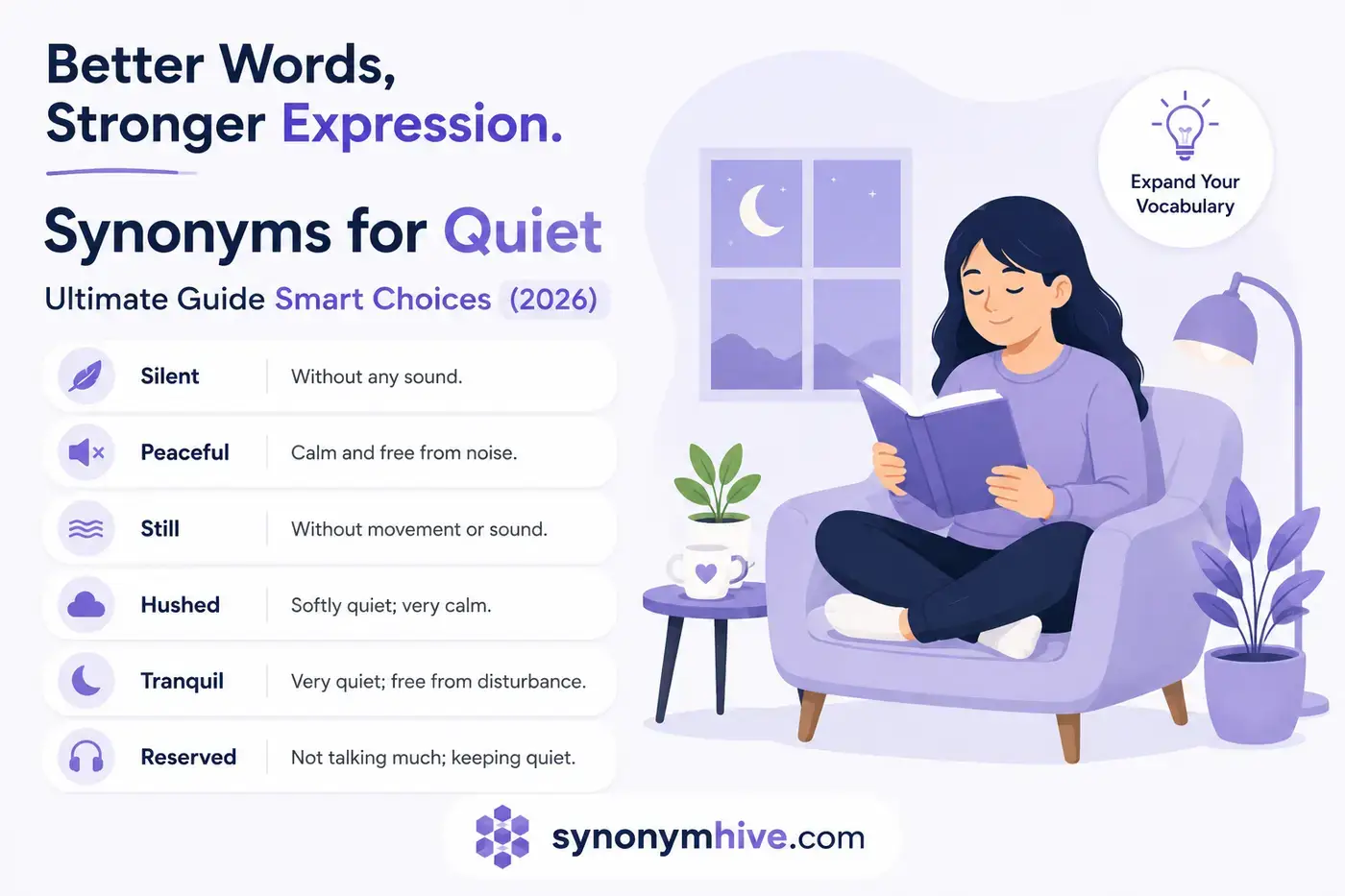
Have you ever written an email, essay, or text and noticed you used the word quiet several times? Learning synonyms for quiet helps you describe people, places, and situations with greater accuracy. The right word can make your writing sound more natural and keep readers interested.
Synonyms for quiet are words that describe little or no noise, calm behavior, or peaceful surroundings. Common alternatives include silent, calm, peaceful, still, hushed, muted, and tranquil. The best choice depends on the situation and the level of silence you want to describe.
Some words describe complete silence, while others suggest a peaceful atmosphere or a person who speaks very little. A few can even describe calm personalities instead of sound. This guide explains the meaning and history of the word, provides more than thirty useful alternatives, compares similar words, and shows you how to choose the best synonym in every situation.
Check out more vocabulary ideas in Synonyms for Horrible Ultimate Guide 2026.
What Does Quiet Mean
The word quiet usually means making very little noise or having little sound. It can also describe a calm person, a peaceful place, or a situation without activity or excitement.
Here are a few examples.
- The library was quiet all afternoon.
- She has a quiet personality.
- We enjoyed a quiet evening at home.
- The street became quiet after midnight.
Learning phrases for quiet helps you avoid repeating the same word while making your writing more precise.
Where Did The Word Quiet Come From
The word quiet comes from the Latin word quietus, which meant at rest or calm. It later passed through Old French before becoming part of the English language. Over time, its meaning expanded beyond silence. Today, quiet can describe peaceful places, gentle personalities, calm emotions, and situations with little activity.
Master List Of Synonyms For Quiet
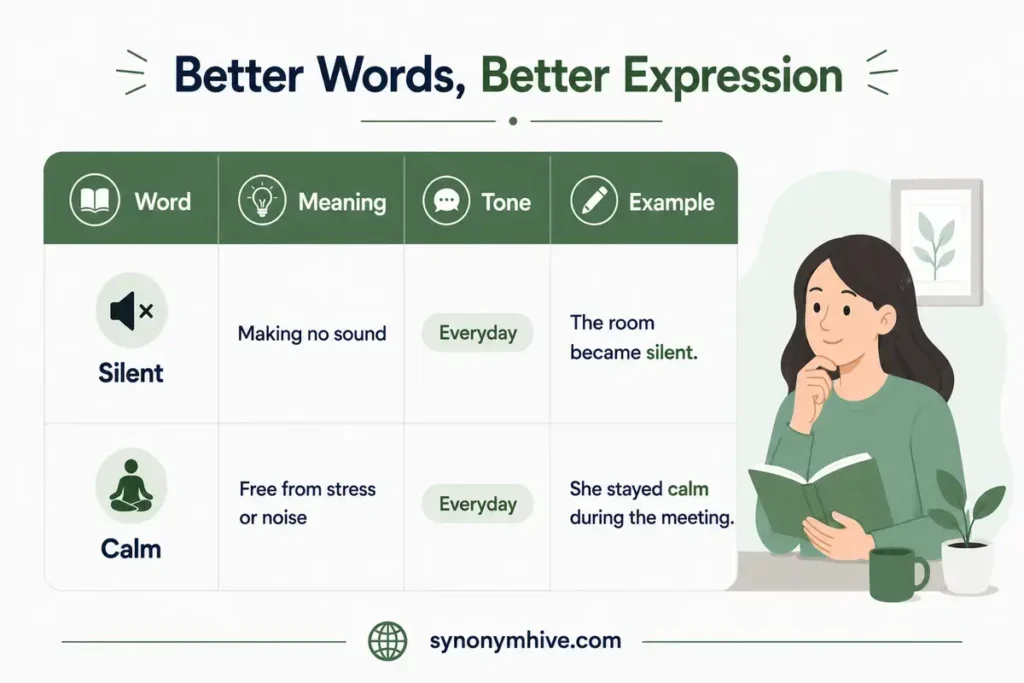
The table below includes more than thirty useful expressions for quiet grouped by tone and everyday use.
| Word | Meaning | Tone | Example |
|---|---|---|---|
| Silent | Making no sound | Everyday | The room became silent. |
| Calm | Free from stress or noise | Everyday | She stayed calm during the meeting. |
| Peaceful | Relaxing and quiet | Everyday | We spent a peaceful weekend together. |
| Still | Without movement or sound | Everyday | The lake was still at sunrise. |
| Hushed | Very quiet | Neutral | A hushed crowd waited patiently. |
| Muted | Soft and low | Neutral | The music remained muted. |
| Tranquil | Peaceful and relaxing | Formal | The garden felt tranquil. |
| Motionless | Without movement | Neutral | The child stood motionless. |
| Restful | Relaxing | Everyday | It was a restful afternoon. |
| Soft | Low in volume | Everyday | Keep your voice soft. |
| Reserved | Quiet in personality | Neutral | She’s naturally reserved. |
| Shy | Not talkative | Everyday | The new student seemed shy. |
| Introverted | Prefers solitude | Neutral | He’s introverted but friendly. |
| Unassuming | Modest and quiet | Formal | She remained unassuming despite her success. |
| Low key | Relaxed and quiet | Informal | We planned a low key weekend. |
| Mellow | Calm and relaxed | Informal | The music created a mellow mood. |
| Subdued | Quiet and controlled | Formal | The audience remained subdued. |
| Peaceable | Calm and nonviolent | Formal | They reached a peaceable agreement. |
| Undisturbed | Free from interruption | Neutral | The forest stayed undisturbed. |
| Private | Away from attention | Everyday | They had a private conversation. |
| Cozy | Comfortable and peaceful | Everyday | We enjoyed a cozy evening. |
| Relaxed | Calm and comfortable | Everyday | Everyone looked relaxed. |
| Composed | Calm and controlled | Formal | She stayed composed under pressure. |
| Settled | Calm after activity | Neutral | The dust finally settled. |
| Mild | Gentle and calm | Everyday | He has a mild personality. |
| Reticent | Quiet and reserved | Formal | The witness remained reticent. |
| Taciturn | Speaking very little | Formal | The old farmer was taciturn. |
Which Synonyms Show Different Levels Of Quiet
Some words describe complete silence, while others simply suggest a calm environment.
| Intensity | Best Synonyms |
|---|---|
| Very Mild | Calm Relaxed Gentle |
| Mild | Quiet Soft Mellow |
| Moderate | Peaceful Hushed Muted |
| Strong | Silent Still Soundless |
| Very Strong | Tranquil Serene Motionless |
Choosing the right level helps readers picture the exact atmosphere you want to describe.
Which Parts Of Speech Are Related To Quiet
Most substitutes for quiet are adjectives because they describe people, places, or sounds.
Adjectives
- Quiet.
- Silent.
- Peaceful.
- Calm.
- Still.
- Tranquil.
- Serene.
- Gentle.
Nouns
- Quietness.
- Silence.
- Peace.
- Calmness.
- Stillness.
- Tranquility.
Verbs
- Quiet.
- Calm.
- Soothe.
- Silence.
- Relax.
Using these related words makes your writing more varied and natural.
Are There Any US And UK Differences
Most phrases for quiet are understood in both American and British English. Still, a few expressions are more common in one region.
| More Common In The US | More Common In The UK |
|---|---|
| Quiet | Quiet |
| Calm | Peaceful |
| Low key | Quiet as anything |
| Silent | Hushed |
| Relaxed | Tranquil |
American English speakers often use low key, calm, and quiet in casual conversations. British English speakers may use expressions like hushed more often in writing and speech, especially when describing peaceful settings. Understanding these small regional differences helps you choose words that sound natural for your audience.
What Is The Best Word For A Resume
The word quiet is not always the best choice on a resume because it may suggest a lack of confidence. Instead, choose words that highlight professionalism and self control.
Good choices include.
- Composed.
- Calm.
- Focused.
- Reserved.
- Professional.
Example sentences.
Remained composed during high pressure situations.
Calm team member who handles deadlines effectively.
Focused on delivering accurate results.
Professional communicator with excellent listening skills.
These alternatives create a stronger impression while keeping a positive tone.
What Is The Best Word For An Essay
Essays often need descriptive and precise vocabulary.
Good choices include.
- Tranquil.
- Serene.
- Silent.
- Subdued.
- Still.
Example sentences.
The lake remained tranquil throughout the morning.
The village became silent after sunset.
The painting captured a serene countryside.
The audience stayed subdued during the ceremony.
These words make essays sound richer without becoming difficult to understand.
What Is The Best Word For Text Messages
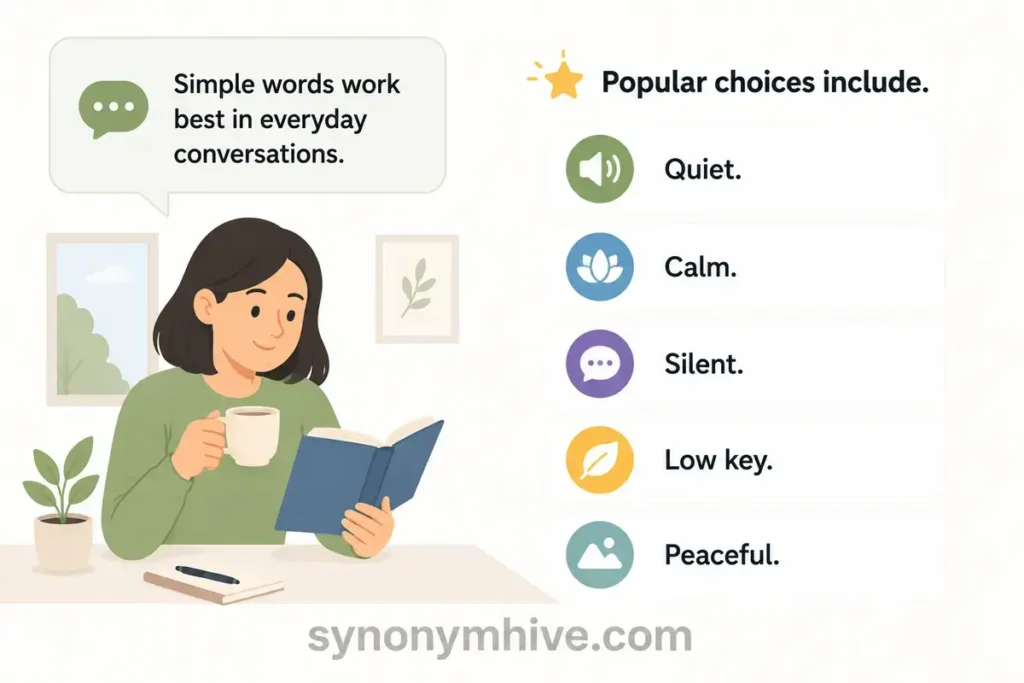
Simple words work best in everyday conversations.
Popular choices include.
- Quiet.
- Calm.
- Silent.
- Low key.
- Peaceful.
Example sentences.
It’s really quiet here tonight.
Let’s have a low key evening.
The neighborhood is peaceful now.
Everyone became silent when she entered.
These expressions sound natural in casual conversations.
What Is The Best Word For Emails
Professional emails should use polite and clear language.
Better choices include.
- Calm.
- Professional.
- Respectful.
- Reserved.
- Composed.
Example sentences.
She remained calm throughout the discussion.
Thank you for your composed response.
Our team maintained a respectful and professional approach.
These words fit workplace communication better than simply saying someone is quiet.
What Is The Best Word For Speaking
Daily conversations usually use familiar vocabulary.
Common choices include.
- Quiet.
- Silent.
- Calm.
- Peaceful.
- Soft spoken.
Example sentences.
The room became quiet after the announcement.
He’s usually quiet around new people.
She has a soft spoken voice.
The park was peaceful this morning.
Everyone stayed silent during the presentation.
Real Life Examples Using Different Synonyms
These examples show how different words fit different situations.
- The classroom became silent when the teacher entered.
- We enjoyed a peaceful afternoon by the lake.
- The baby stayed calm during the flight.
- The office remained quiet until everyone arrived.
- She has a reserved personality.
- The forest felt tranquil after the rain.
- His soft voice made everyone listen carefully.
- The audience remained hushed during the performance.
- The streets were still before sunrise.
- They spent a cozy evening watching movies.
- The child became quiet after hearing the story.
- She remained composed during the interview.
- The hotel offered a restful place to relax.
- The town looked serene under fresh snowfall.
- He stayed mellow throughout the discussion.
Quiet Vs Silent
These words seem similar, but they are not always interchangeable.
| Quiet | Silent |
|---|---|
| Very little noise. | No sound at all. |
| Common in everyday speech. | Stronger than quiet. |
| Can describe people or places. | Usually describes complete silence. |
Examples.
The library was quiet.
The theater became silent before the show.
Quiet Vs Peaceful
Both words describe calm situations, but they focus on different ideas.
| Quiet | Peaceful |
|---|---|
| Focuses on little noise. | Focuses on calm feelings. |
| Can describe sound levels. | Can describe emotions and places. |
| May still have some activity. | Suggests relaxation and comfort. |
Examples.
The office was quiet.
The beach felt peaceful at sunrise.
Explore more word choices in Synonyms for Lonely Simple Guide Expert Picks (2026).
Quiet Vs Reserved
These words describe people in different ways.
| Quiet | Reserved |
|---|---|
| Speaks very little. | Does not easily share thoughts or feelings. |
| Refers mainly to behavior. | Refers to personality. |
| May change with the situation. | Usually describes a lasting trait. |
Examples.
The student stayed quiet during class.
She’s naturally reserved around strangers.
Common Mistakes To Avoid
Choosing the wrong synonym can change your meaning.
Using Silent When There Is Still Noise
Silent means no sound at all. If people are speaking softly or background noise exists, quiet is usually the better choice.
Confusing Quiet With Shy
A quiet person is not always shy. Some people simply enjoy listening more than speaking.
Using Peaceful For Every Situation
Peaceful describes a relaxing feeling. It does not always mean a place is completely quiet.
Treating Every Synonym As The Same
Each synonym has its own meaning.
Silent suggests complete silence.
Calm describes emotions.
Reserved describes personality.
Tranquil creates a peaceful image.
Using the correct word makes your writing more accurate.
What Are The Opposite Words Of Quiet
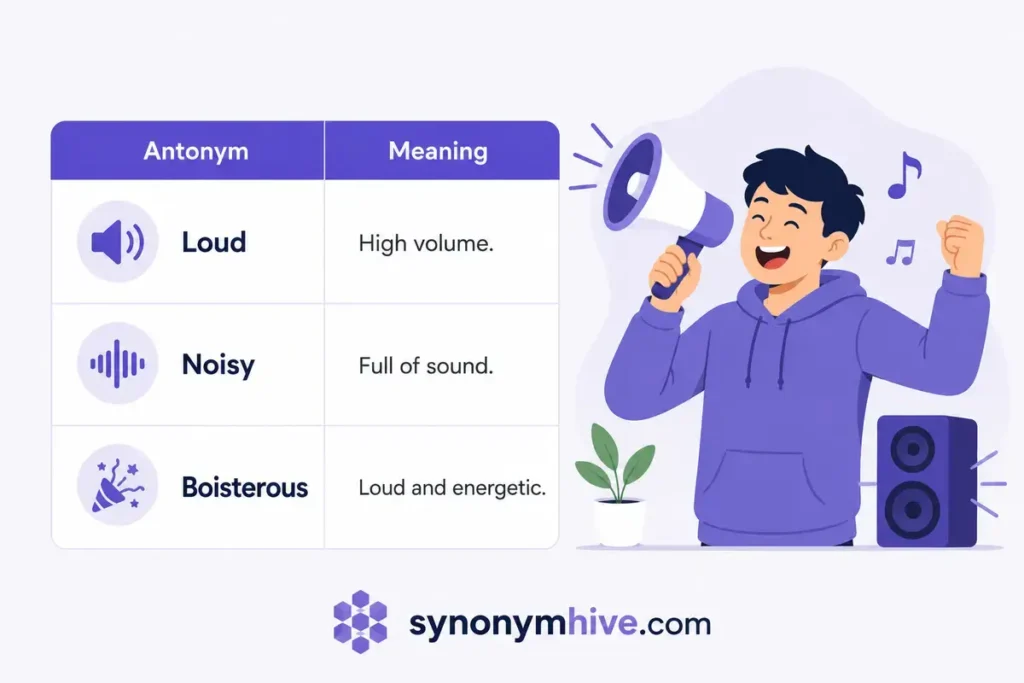
Sometimes you need a word with the opposite meaning.
| Antonym | Meaning |
|---|---|
| Loud | High volume. |
| Noisy | Full of sound. |
| Boisterous | Loud and energetic. |
| Rowdy | Noisy and difficult to control. |
| Chaotic | Full of confusion and noise. |
| Bustling | Busy and active. |
| Deafening | Extremely loud. |
Quick Tips For Choosing The Right Word
- Use quiet for everyday situations.
- Use silent when there is no sound.
- Use peaceful for relaxing places.
- Use reserved to describe personality.
- Use tranquil in descriptive writing.
- Use soft spoken for gentle voices.
- Match the strength of the word to the situation.
- Avoid repeating the same word throughout your writing.
Using the right synonym helps your writing sound smoother, clearer, and more engaging while giving readers a better picture of the scene or person you are describing.
How Do Native English Speakers Say Quiet
Native English speakers rarely repeat the word quiet in every conversation. They choose different words depending on the situation.
Some common alternatives include.
- Calm.
- Silent.
- Peaceful.
- Hushed.
- Still.
- Low key.
- Soft spoken.
Examples.
The neighborhood is really peaceful at night.
Everyone went silent after the announcement.
Let’s have a low key weekend.
She’s soft spoken but very confident.
Using different words makes your conversations sound more natural.
Which Synonyms Sound Too Formal For Everyday Conversations
Some synonyms work well in books and formal writing but sound unusual in casual speech.
Examples include.
- Taciturn.
- Reticent.
- Serene.
- Tranquil.
- Subdued.
For everyday conversations, people are more likely to say quiet, calm, silent, or peaceful.
Which Synonyms Work Best In Creative Writing
Creative writing often benefits from vivid descriptions that help readers picture the setting.
Good choices include.
- Tranquil.
- Serene.
- Hushed.
- Motionless.
- Still.
- Muted.
- Whisper quiet.
Examples.
The forest remained tranquil beneath the stars.
A hushed silence filled the old church.
The lake was perfectly still at sunrise.
The hallway stayed motionless as everyone waited.
These words create stronger images than simply using quiet.
How Can You Build A Stronger Vocabulary For Quiet
Expanding your vocabulary becomes easier with regular practice.
Try these ideas.
- Read novels and notice how writers describe peaceful scenes.
- Replace repeated words while editing.
- Learn one new synonym every day.
- Write your own sentences using new vocabulary.
- Listen to podcasts and audiobooks to hear natural word choices.
Over time, these habits will help you choose more accurate words without thinking about it.
Which Synonyms Fit Different Real Life Situations
The best synonym depends on what you are describing.
| Situation | Best Synonym |
|---|---|
| Library | Silent |
| Park at sunrise | Peaceful |
| Sleeping baby | Still |
| Calm employee | Composed |
| Introverted person | Reserved |
| Relaxing vacation | Tranquil |
| Gentle conversation | Soft spoken |
| Classroom during a test | Hushed |
| Relaxed evening | Low key |
| Calm lake | Serene |
Choosing a word that matches the situation makes your writing more accurate and easier to picture.
What Are Common Idioms About Quiet
English speakers often use idioms instead of simply saying someone or something is quiet.
Some common expressions include.
- Quiet as a mouse.
- Keep it down.
- Hold your tongue.
- Silence is golden.
- Not a peep.
Examples.
The children were as quiet as a mouse during the movie.
Please keep it down because the baby is sleeping.
He didn’t say a word. Not a peep.
Silence is golden during moments of reflection.
Learning these expressions helps your English sound more natural.
Which Synonyms Describe A Quiet Personality
Some words describe a person’s character instead of the amount of noise around them.
| Synonym | Best Use | Example |
|---|---|---|
| Reserved | Keeps thoughts private | She’s reserved in large groups. |
| Introverted | Enjoys time alone | He’s introverted but friendly. |
| Modest | Doesn’t seek attention | She’s modest about her achievements. |
| Gentle | Kind and calm | He has a gentle personality. |
| Thoughtful | Speaks after careful thinking | She’s thoughtful during discussions. |
| Soft spoken | Talks in a gentle voice | The doctor was soft spoken and reassuring. |
Choosing the right word helps readers understand someone’s personality instead of assuming they simply talk less.
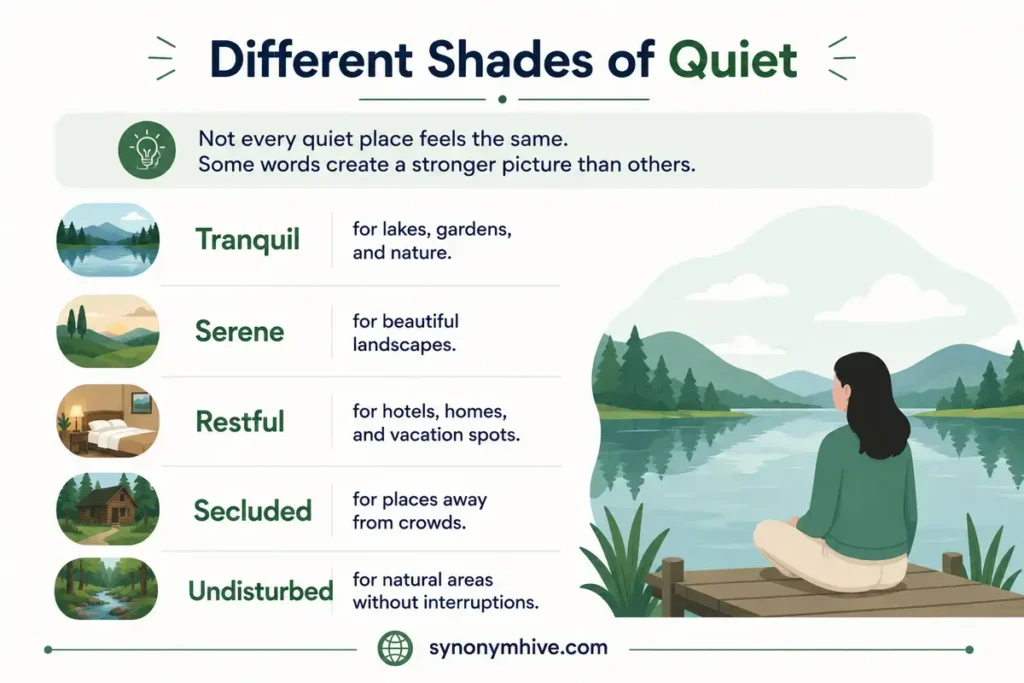
Which Synonyms Describe A Peaceful Place
Not every quiet place feels the same. Some words create a stronger picture than others.
- Tranquil for lakes, gardens, and nature.
- Serene for beautiful landscapes.
- Restful for hotels, homes, and vacation spots.
- Secluded for places away from crowds.
- Undisturbed for natural areas without interruptions.
Examples.
The cabin sat beside a tranquil river.
We enjoyed a restful weekend in the countryside.
The beach remained secluded even during the summer.
These words help readers imagine the setting more clearly.
How Can You Avoid Repeating Quiet In A Story
Repeating quiet several times can make a story feel flat. Mix different words to keep the writing interesting.
Instead of writing.
The room was quiet. The hallway was quiet. The night was quiet.
Try this.
The room was silent.
The hallway remained hushed.
The neighborhood felt peaceful.
The streets were still beneath the moonlight.
Using varied vocabulary creates stronger descriptions and keeps readers engaged.
Which Synonyms Match Different Moods
The mood of your sentence should guide your word choice.
| Mood | Best Synonyms |
|---|---|
| Relaxing | Peaceful Tranquil Serene |
| Serious | Silent Hushed Muted |
| Professional | Composed Reserved |
| Romantic | Gentle Soft Whisper quiet |
| Sad | Subdued Still |
| Nature | Calm Undisturbed Restful |
| Reflective | Quiet Thoughtful Peaceful |
Matching the synonym to the mood makes your writing feel more natural and helps readers connect with the scene or emotion.
Find more synonyms in Synonyms for Intense: Powerful Alternatives (2026).
Conclusion
Learning synonyms for quiet helps you describe people, places, and situations with greater accuracy. Instead of repeating the same word, you can choose silent for complete silence, peaceful for relaxing places, calm for emotions, reserved for personality, or tranquil for vivid descriptions in creative writing. Matching the word to the context makes your writing clearer, more engaging, and easier to understand. Keep practicing these alternatives in conversations, emails, essays, and stories. The more you use them, the more confident and natural your English will become.
Frequently Asked Questions
What’s Another Way To Say Quiet
Some of the best phrases for quiet include silent, peaceful, calm, tranquil, hushed, still, muted, and soft spoken. The best choice depends on the situation.
What Is The Difference Between Quiet And Silent
Quiet means there is very little noise. Silent means there is no sound at all.
Which Synonym Is Best For A Calm Person
Words like calm, reserved, composed, and soft spoken describe someone with a peaceful personality.
Can Quiet Describe A Personality
Yes. A quiet person usually speaks less than others or prefers listening instead of talking. It does not always mean the person is shy.
Which Synonym Works Best In Formal Writing
Formal writing often uses words like tranquil, serene, subdued, reticent, or composed, depending on the context.
What Is The Opposite Of Quiet
Common opposites include loud, noisy, boisterous, rowdy, and chaotic.
Which Synonyms Do Native English Speakers Use Most
Native speakers commonly use quiet, calm, silent, peaceful, still, and soft spoken because these words fit everyday conversations naturally.