
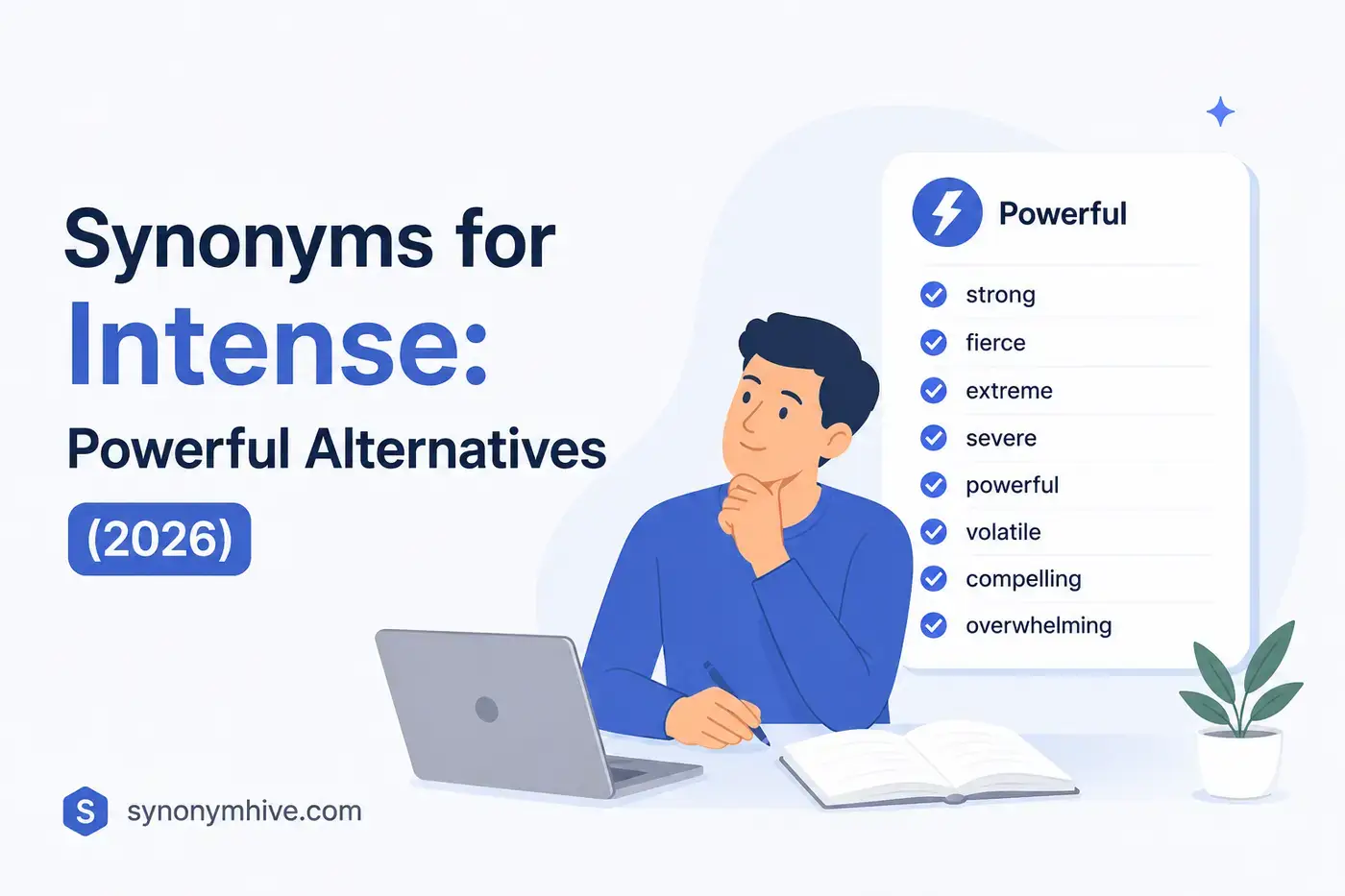
Have you ever paused while writing an email, essay, or text because the word intense didn’t feel quite right? Learning synonyms for intense helps you describe strong emotions, powerful experiences, and serious situations with more precision. The right word makes your writing clearer and more engaging.
Synonyms for intense are words that describe something extremely strong, deep, powerful, or serious. Some fit everyday conversations, while others work better in formal writing, creative stories, or professional communication. Using different words also keeps your writing fresh. Instead of repeating intense, you can choose a word that better matches the feeling you want to express.
This guide explains the meaning and history of the word, shares a large collection of alternatives, compares similar words, and shows you how to choose the best one for every situation.
Find more synonyms in Synonyms for Hungry Ultimate Guide Top Picks (2026).
What Does Intense Mean
The word intense describes something that has a high level of strength, emotion, energy, or focus. People use it to describe many different situations, including:
- Strong emotions.
- Serious conversations.
- Powerful experiences.
- Heavy workloads.
- Extreme weather.
- Competitive sports.
- Bright colors or flavors.
For example:
- We had an intense discussion about the project.
- The final game was intense from start to finish.
- She felt intense excitement before the performance.
The meaning changes slightly with the situation, but the main idea stays the same. Something intense stands out because it feels stronger than normal.
Word Origin And Plain English Meaning
Many common English words have interesting histories, and intense is no exception. The word comes from the Latin word intensus, which means stretched, strained, or made stronger. As English developed, the meaning shifted toward describing things with great strength, energy, or emotion. Today, people use intense in many different ways.
In plain English, it means:
- Very strong.
- Full of energy.
- Deeply emotional.
- Serious or powerful.
- Hard to ignore.
Imagine watching the final minutes of a close championship game. Every second matters, everyone’s heart is racing, and nobody looks away. That’s an intense moment. The same idea can describe feelings, relationships, conversations, workouts, storms, colors, music, or even flavors.
Synonyms For Intense Master Word List
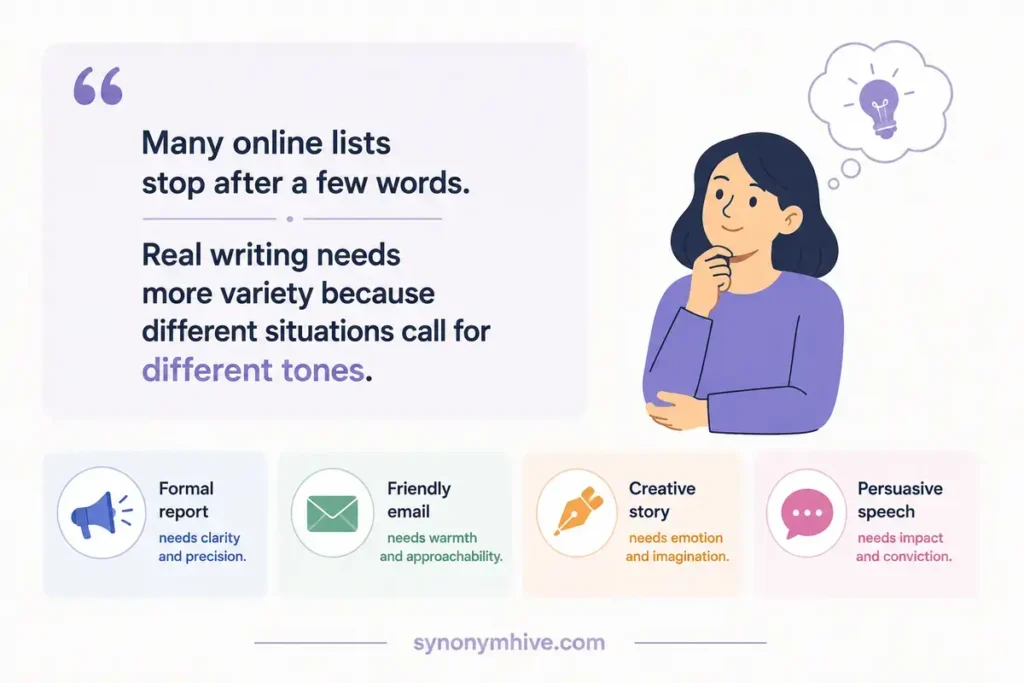
Many online lists stop after a few words. Real writing needs more variety because different situations call for different tones. The table below groups useful alternatives into simple, everyday, formal, and casual language.
| Word | Meaning | Tone | Example |
|---|---|---|---|
| Strong | Full of power | Simple | She has strong feelings about the issue. |
| Deep | Full of emotion | Simple | They shared a deep connection. |
| Serious | Important or severe | Simple | It became a serious discussion. |
| Emotional | Filled with feeling | Everyday | The movie was emotional. |
| Fierce | Strong and determined | Everyday | The competition was fierce. |
| Forceful | Showing great strength | Formal | He made a forceful argument. |
| Profound | Very deep | Formal | The experience had a profound effect. |
| Compelling | Strong and convincing | Formal | She presented compelling evidence. |
| Powerful | Influential and effective | Formal | It was a powerful message. |
| Vigorous | Full of energy | Formal | They held a vigorous debate. |
| Ferocious | Extremely fierce | Formal | The storm became ferocious. |
| Relentless | Never slowing down | Formal | The pressure was relentless. |
| Concentrated | Highly focused | Formal | The solution contains concentrated ingredients. |
| Explosive | Sudden and powerful | Everyday | The crowd gave an explosive reaction. |
| Heated | Full of emotion | Everyday | The meeting became heated. |
| Electric | Full of excitement | Casual | The atmosphere felt electric. |
| Wild | Extremely energetic | Casual | The concert was wild. |
| Crazy | Very exciting | Casual | It was a crazy game. |
| Epic | Extremely impressive | Casual | That workout was epic. |
| Brutal | Extremely difficult | Slang | The exam was brutal. |
| Insane | Extremely strong or exciting | Slang | The race was insane. |
| Mind blowing | Extremely impressive | Slang | The performance was mind blowing. |
| Over the top | More than expected | Casual | His reaction was over the top. |
| Unforgettable | Leaves a lasting impression | Everyday | It was an unforgettable experience. |
| Overwhelming | Too strong to handle easily | Everyday | She felt overwhelming joy. |
This collection gives you choices for school papers, business writing, creative stories, and everyday conversations.
Synonyms By Intensity
Some situations need a gentle description. Others call for words that express powerful emotions or extreme energy. Choosing the right level makes your writing sound more natural.
Mild Strength
These words describe something stronger than average without sounding dramatic.
| Word | Best Use |
|---|---|
| Strong | Everyday writing. |
| Serious | Work and school. |
| Deep | Relationships and emotions. |
| Meaningful | Personal experiences. |
| Focused | Work and study. |
Medium Strength
These words suggest greater emotion, energy, or determination.
| Word | Best Use |
|---|---|
| Passionate | Opinions and hobbies. |
| Powerful | Speeches and writing. |
| Emotional | Personal stories. |
| Fierce | Competition. |
| Heated | Arguments and debates. |
Very Strong
These words describe situations that feel extreme.
| Word | Best Use |
|---|---|
| Ferocious | Storms and competition. |
| Relentless | Pressure or effort. |
| Explosive | Reactions and events. |
| Brutal | Difficult challenges. |
| Overwhelming | Strong emotions. |
| Insane | Informal conversations. |
Choosing the right level helps readers understand exactly how strong the situation feels.
Synonyms By Part Of Speech
Most people know intense as an adjective, but related words appear in other forms too. Learning them makes your writing more flexible.
Adjectives
| Word | Example |
|---|---|
| Intense | It was an intense game. |
| Powerful | She gave a powerful speech. |
| Fierce | The rivalry is fierce. |
| Passionate | He’s passionate about music. |
| Profound | The book had a profound impact. |
| Relentless | The heat was relentless. |
Nouns
| Word | Example |
|---|---|
| Intensity | The intensity of the storm surprised everyone. |
| Passion | Her passion inspired the team. |
| Strength | His greatest strength is patience. |
| Power | Knowledge is power. |
| Energy | The room was full of energy. |
| Emotion | The song carried deep emotion. |
Verbs
| Word | Example |
|---|---|
| Intensify | The rain began to intensify. |
| Strengthen | Exercise can strengthen your muscles. |
| Deepen | Time helped deepen their friendship. |
| Increase | The pressure continued to increase. |
| Strengthen | Daily practice strengthens confidence. |
Using different forms keeps your writing smooth and avoids repeating the same word too often.
Do Americans And British People Use Different Words
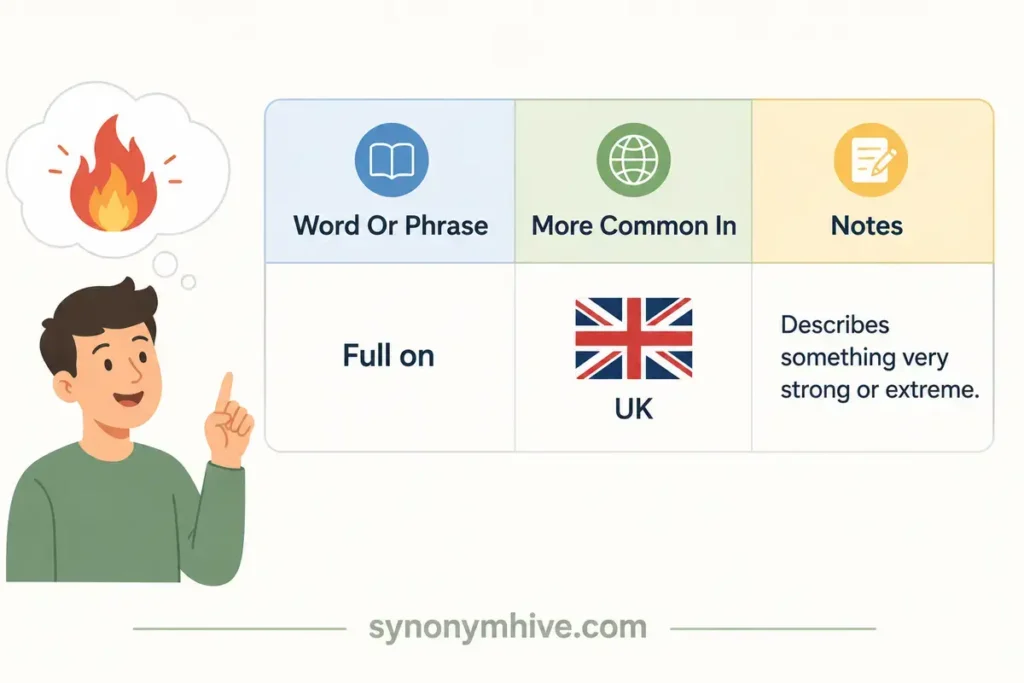
Most alternatives for intense are understood in both American and British English. Words like powerful, serious, passionate, fierce, and profound sound natural almost everywhere. Some informal expressions are more common in one region than another.
| Word Or Phrase | More Common In | Notes |
|---|---|---|
| Full on | UK | Describes something very strong or extreme. |
| Proper | UK | Can mean very or truly in casual speech. |
| Crazy | US | Often means exciting or extreme. |
| Wild | US | Common in everyday conversation. |
| Brutal | US | Frequently used for difficult situations. |
| Mental | UK | Informal word for something extremely intense or surprising. |
If you’re writing for readers in the United States, simple choices like strong, powerful, passionate, serious, and fierce usually sound the most natural. If your audience includes readers from different countries, avoid local slang unless you’re sure they’ll recognize it.
Which Synonym Fits Your Situation Best
The best synonym depends on what you’re writing and who will read it. A business email calls for different language than a text message. A school essay has a different tone than a conversation with friends. The sections below help you choose the right word for common situations.
Best Word For A Resume
A resume should sound professional and confident. Pick words that show impact without sounding dramatic.
| Best Word | Why It Works | Example |
|---|---|---|
| Powerful | Highlights results. | Delivered powerful presentations to company leaders. |
| Passionate | Shows dedication. | Passionate about improving customer service. |
| Focused | Shows commitment. | Maintained a focused approach to every project. |
| Determined | Shows persistence. | Determined to meet challenging deadlines. |
| Committed | Shows reliability. | Committed to continuous learning and growth. |
Clear language usually makes a stronger impression than complicated vocabulary.
Best Word For An Essay
Essays often need formal language that sounds natural and easy to understand.
| Best Word | Best Use | Example |
|---|---|---|
| Profound | Deep ideas. | The invention had a profound impact on society. |
| Compelling | Arguments. | The author presents a compelling case. |
| Powerful | Literature analysis. | The ending delivers a powerful message. |
| Passionate | Opinions. | The speaker gives a passionate speech. |
| Serious | Academic writing. | Climate change remains a serious concern. |
These words sound polished without making your writing feel forced.
Best Word For A Text Message
Text messages are casual, so simple words work best.
| Best Word | Example |
|---|---|
| Crazy | That game was crazy. |
| Wild | The party was wild last night. |
| Epic | That concert was epic. |
| Brutal | Today’s workout was brutal. |
| Insane | Traffic was insane today. |
Friends usually prefer everyday language over formal vocabulary.
Best Word For An Email
Emails can be formal or friendly. Match your word choice to the situation.
| Situation | Best Word | Example |
|---|---|---|
| Business | Powerful | Your presentation made a powerful impression. |
| Client | Compelling | You shared several compelling ideas. |
| Teacher | Thoughtful | Your feedback was thoughtful and helpful. |
| Coworker | Strong | You made a strong point during the meeting. |
| Friend | Intense | That movie had an intense ending. |
Simple words help your message sound sincere and easy to understand.
Best Word For Speaking
People naturally use shorter words when speaking. These choices sound comfortable in everyday conversations.
| Word | Example |
|---|---|
| Strong | She has strong opinions. |
| Powerful | That speech was powerful. |
| Intense | It was an intense experience. |
| Crazy | The ending was crazy. |
| Fierce | The competition was fierce. |
Natural speech feels better than trying to impress people with difficult vocabulary.
Original Example Sentences
Examples help you see how each word fits a different situation.
- The championship game stayed intense until the final second.
- She gave a powerful speech that inspired the audience.
- The debate became heated after the new proposal was announced.
- His passion for photography grows every year.
- The storm brought fierce winds across the coast.
- We had a serious conversation about our future.
- The documentary had a profound effect on my thinking.
- The crowd created an electric atmosphere before the concert began.
- The training session was brutal but rewarding.
- The rescue team worked with relentless determination.
- Her emotional speech moved everyone in the room.
- The competition became increasingly fierce as the final round approached.
- His focused attitude helped him finish the project early.
- The pressure continued to intensify during the final minutes.
- The coach praised the team’s determined effort after the victory.
Each sentence uses a different word because every situation calls for a different level of emotion or strength.
Intense Vs Strong
These words are similar, but they don’t express the same feeling.
| Intense | Strong |
|---|---|
| Suggests a high level of emotion or energy. | Describes power or ability. |
| Often describes experiences and feelings. | Often describes people, objects, or ideas. |
| Sounds more emotional. | Sounds more neutral. |
Examples.
Strong.
She has strong leadership skills.
Intense.
She showed intense determination during the competition.
The second sentence creates a much stronger emotional picture.
Learn more useful word alternatives in Synonyms for Quiet Ultimate Guide Smart Choices (2026).
Intense Vs Passionate
People sometimes use these words as if they mean the same thing, but they don’t.
| Intense | Passionate |
|---|---|
| Can describe many situations. | Usually describes enthusiasm or strong feelings. |
| May sound serious or emotional. | Usually has a positive meaning. |
| Works for weather, sports, work, and emotions. | Often describes people and beliefs. |
Examples.
He’s passionate about teaching children.
The final minutes of the game were intense.
One describes a person’s enthusiasm. The other describes the experience itself.
Intense Vs Fierce
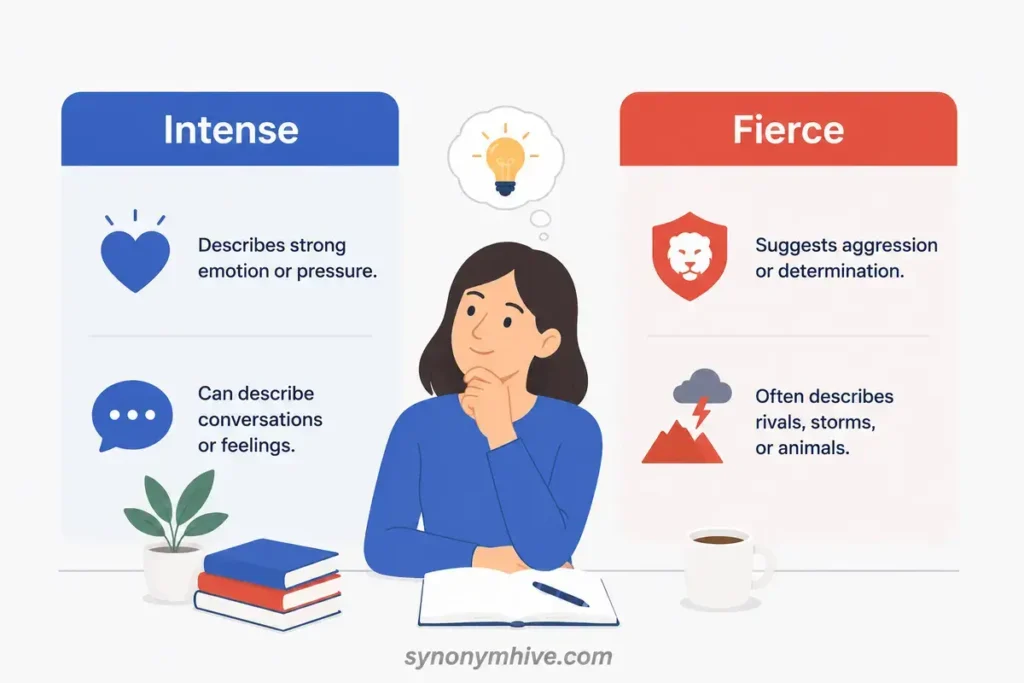
These words overlap, especially when talking about competition.
| Intense | Fierce |
|---|---|
| Describes strong emotion or pressure. | Suggests aggression or determination. |
| Can describe conversations or feelings. | Often describes rivals, storms, or animals. |
Examples.
The interview became intense after the difficult questions.
The competition became fierce as the teams fought for first place.
The meanings are close, but each creates a different image.
Intense Vs Extreme
These words aren’t always interchangeable.
| Intense | Extreme |
|---|---|
| Focuses on strength. | Focuses on being far beyond normal. |
| Can describe emotions. | Often describes conditions or actions. |
Examples.
She felt intense excitement before the concert.
The hikers faced extreme weather in the mountains.
One emphasizes emotion. The other emphasizes the situation.
Common Mistakes People Make
Many writers make the same vocabulary mistakes.
Avoid these common problems.
- Repeating intense too often.
Mix in related words like powerful, fierce, deep, serious, and passionate.
- Choosing words that sound too dramatic.
Calling a normal meeting explosive or ferocious usually feels exaggerated.
- Using slang in formal writing.
Words like crazy, epic, insane, and brutal belong in casual conversations, not professional reports.
- Ignoring the actual meaning.
Powerful doesn’t always mean emotional. Passionate doesn’t always mean serious. Pick the word that matches your message.
- Forgetting your audience.
Teachers, employers, coworkers, and friends all expect a different writing style.
When You Should Not Use Intense
Even though phrases for intense help you write with more variety, the original word isn’t always the best choice.
Avoid using intense when:
- The situation is only mildly emotional.
- You need completely neutral language.
- The experience isn’t especially powerful.
- You’re repeating the same word several times in one article or paragraph.
- A simpler word explains the idea just as well.
The strongest writing doesn’t rely on dramatic words. It uses the right word at the right time.
Antonyms For Intense
Looking at opposite words helps you understand the meaning of intense more clearly. If something feels calm, gentle, or ordinary instead of powerful, one of these words may fit better.
| Antonym | Meaning | Example |
|---|---|---|
| Calm | Peaceful and relaxed. | The lake stayed calm all afternoon. |
| Mild | Not very strong. | We had a mild winter this year. |
| Gentle | Soft or kind. | She spoke in a gentle voice. |
| Relaxed | Free from pressure. | It was a relaxed meeting. |
| Easy | Not difficult. | The assignment was easy to finish. |
| Ordinary | Nothing unusual. | It was an ordinary day at work. |
| Quiet | Free from noise or excitement. | The neighborhood was quiet at night. |
| Simple | Easy to understand. | The instructions were simple. |
| Moderate | Between low and high. | The exercise was moderate. |
| Peaceful | Free from conflict. | We enjoyed a peaceful evening. |
Choosing the right opposite word helps create better contrast and makes your writing more accurate.
How Do You Choose The Right Synonym
A long list of words is useful, but picking the best one matters even more.
Follow these simple tips.
- Think about the situation.
A sports event, business meeting, family conversation, and weather report all need different words.
- Match the strength of the moment.
Don’t describe a normal event with an overly dramatic word. Save stronger language for moments that truly deserve it.
- Keep your tone consistent.
Formal writing should sound professional. Casual conversations can use everyday expressions.
- Read your sentence aloud.
If the word sounds awkward, replace it with something more natural.
- Avoid repeating the same word.
Using different words keeps your writing smooth and interesting.
- Focus on clarity.
The easiest word is often the best choice because readers understand it right away.
- Choose the word that matches the meaning.
Some words describe emotion. Others describe energy, pressure, determination, or physical strength. Pick the one that fits your message.
Quick Reference Table
Use this table when you need a fast answer.
| If You Mean | Best Choice |
|---|---|
| Strong emotions | Intense |
| Great determination | Fierce |
| Deep enthusiasm | Passionate |
| Strong influence | Powerful |
| Serious discussion | Heated |
| Deep emotional impact | Profound |
| Never giving up | Relentless |
| Very difficult | Brutal |
| High excitement | Electric |
| Far beyond normal | Extreme |
Everyday Situations And The Best Choice
The same experience can be described in different ways. These examples help you choose the most natural word.
| Situation | Better Word | Example |
|---|---|---|
| Sports competition | Fierce | The rivalry became fierce in the final round. |
| Emotional speech | Powerful | Her speech left everyone inspired. |
| Business meeting | Serious | We had a serious discussion about the budget. |
| Family conversation | Deep | We shared a deep conversation after dinner. |
| School essay | Profound | The novel had a profound effect on society. |
| Workout | Brutal | Today’s workout was brutal but worth it. |
| Concert | Electric | The crowd created an electric atmosphere. |
| Storm | Ferocious | A ferocious storm moved across the coast. |
| Debate | Heated | The debate became heated after the final question. |
| Personal goal | Passionate | She’s passionate about helping others. |
Choosing the right word makes your writing sound more natural and more precise.
Why Learning More Words Makes You A Better Writer
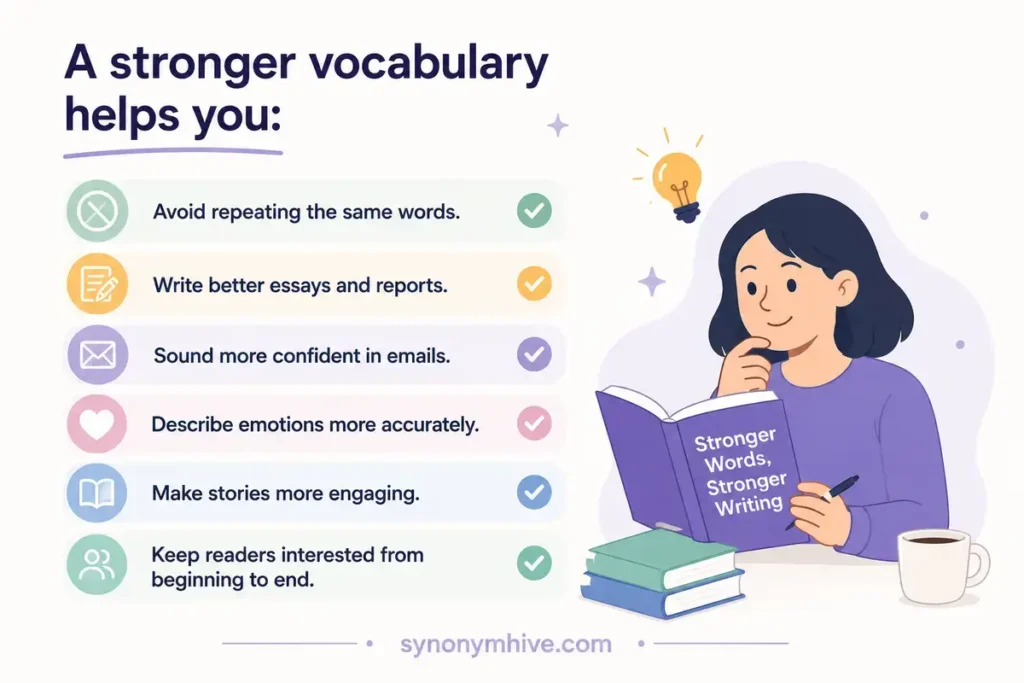
Building your vocabulary isn’t about using bigger words. It’s about saying exactly what you mean. A stronger vocabulary helps you:
- Avoid repeating the same words.
- Write better essays and reports.
- Sound more confident in emails.
- Describe emotions more accurately.
- Make stories more engaging.
- Keep readers interested from beginning to end.
That’s why learning expressions for intense is so valuable. Each alternative gives you another way to describe strong feelings, powerful experiences, or serious situations without sounding repetitive.
Explore more word choices in Synonyms For Safe Simple Guide Top Picks (2026).
Conclusion
Learning synonyms for intense helps you communicate with more confidence and precision. Every synonym carries its own shade of meaning. Powerful highlights strength. Passionate shows enthusiasm. Fierce suggests determination. Profound points to deep impact, while relentless describes steady pressure or effort. Picking the right word makes your writing clearer and more engaging.
Keep this guide handy when you’re writing emails, essays, reports, or everyday messages. As you practice using different words in real situations, your vocabulary will grow naturally. Strong writing isn’t about using complicated language. It’s about choosing words that fit the moment and help readers understand exactly what you mean.
Frequently Asked Questions
What’s Another Way To Say Intense
There are many good alternatives. alternatives for intense include powerful, fierce, passionate, strong, profound, relentless, heated, dramatic, extreme, and emotional. The best choice depends on the situation.
What’s The Best Synonym For Intense In Formal Writing
Powerful, profound, compelling, serious, and vigorous are excellent choices for essays, reports, and professional communication.
What’s The Difference Between Intense And Passionate
Intense describes something with great strength or emotion. Passionate usually describes a person’s strong enthusiasm, beliefs, or feelings.
Can I Use Intense In A Resume
Yes, but use it carefully. In many cases, words like focused, committed, determined, or powerful sound more professional.
What’s Another Way To Say Intense In A Text Message
Simple words like crazy, wild, epic, brutal, or insane work well in casual conversations with friends.
Is Intense Always A Positive Word
No. It can describe positive experiences, difficult situations, strong emotions, arguments, pressure, or dangerous conditions. The meaning depends on the context.
How Do I Stop Repeating Intense In My Writing
Use phrases for intense naturally and choose the word that best matches your message. A small change in vocabulary makes your writing smoother without sounding forced.