
You are describing a house in a school essay, writing a review of a hotel, or trying to explain why a design does not look appealing. The word beautiful comes to mind, but you need its opposite. Choosing the right word matters because ugly, unattractive, plain, and hideous do not express the same idea. The most common opposite of beautiful is ugly. However, that word can sound harsh when you describe a person, a place, or someone’s creative work. Other choices can be more accurate and respectful, especially when you want to describe something ordinary, poorly designed, damaged, or unpleasant to look at.
The opposite of beautiful is usually ugly or unattractive. Other useful words include plain, unsightly, unappealing, hideous, and repulsive. The best choice depends on what you are describing and how strongly you want to express your opinion.
This guide explains the meaning and origin of these words, compares more than 30 alternatives, and shows how to use them in essays, emails, reviews, conversations, and professional writing. You will also learn which terms sound mild, which sound harsh, and how to avoid word choices that may come across as rude.
Check out more vocabulary ideas in Opposite of Hot Best Words for Every Situation.
What Is the Opposite of Beautiful in Simple English?
The opposite of beautiful is a word that describes something as lacking beauty or visual appeal. Ugly is the most direct choice. Unattractive is a more neutral alternative, while plain describes something that is simple and does not stand out for its beauty.
The right word depends on the details. A building may look unattractive because its design is awkward. An old wall may look shabby because the paint is peeling. A room may seem plain because it has little decoration. These descriptions are not interchangeable, even though they can all suggest a lack of beauty.
| Word | Simple meaning | Example |
|---|---|---|
| Ugly | Not beautiful or pleasing to look at | The old sign was ugly and faded. |
| Unattractive | Not appealing in appearance | The building looked unattractive from the street. |
| Plain | Simple and without much decoration | The room had plain white walls. |
| Unsightly | Unpleasant to look at | An unsightly stain covered the ceiling. |
| Unappealing | Not attractive or inviting | The dish looked unappealing on the plate. |
| Hideous | Extremely ugly | The statue had a hideous face. |
| Shabby | Worn out or in poor condition | They rented a shabby apartment. |
| Repulsive | Extremely unpleasant or disgusting | The spoiled food had a repulsive appearance. |
Ugly is useful when you need a direct opposite, but it often carries a strong negative judgment. Unattractive is more measured. Plain may not be negative at all, because a simple design can still look neat, elegant, or appropriate.
Where Did the Words Beautiful and Ugly Come From?
Understanding a word’s history can explain how its meaning developed. Beautiful and ugly come from different linguistic roots, and both have meanings that extend beyond physical appearance.
What Is the Origin of Beautiful?
Beautiful developed from the word beauty, with the suffix ful added to mean full of or characterized by something. Beauty entered English through Anglo French and Old French forms connected to the idea of being pleasing or attractive.
Today, beautiful can describe people, scenery, objects, ideas, music, writing, and experiences. A beautiful garden has visual appeal. A beautiful song may sound moving or graceful.
The word therefore has a broad meaning. Its opposite changes with the context. An unattractive garden may lack visual appeal, while a cruel act may be described as ugly in a moral sense. The same word can refer to appearance, behavior, or emotional effect.
What Is the Origin of Ugly?
Ugly comes from Old Norse uggligr, a word related to something frightening or dreadful. It entered Middle English and gradually developed its modern sense of being unpleasant to look at.
The word can still carry a harsh tone. Calling a design ugly is a direct criticism of the design. Calling a person ugly can sound insulting because it judges someone’s appearance rather than describing a specific feature or choice.
Ugly also appears in expressions that have little to do with looks. An ugly argument is hostile or unpleasant. An ugly situation is difficult or troubling. These uses show that the word can describe the emotional or moral character of something, not just its appearance.
Why Does the Opposite of Beautiful Depend on Context?
Beautiful has several meanings, so its opposite is not always one fixed word. When you describe a painting, you might mean that it looks unattractive. When you describe a simple dress, you might mean that it lacks decoration.
For example, an old chair may be shabby because its fabric is torn. It may be unattractive because its shape looks awkward. It may be plain because it has no decorative details. Each word focuses on a different feature.
Think about the quality you want to describe before choosing a term. If the problem is poor condition, use shabby or dilapidated. If the problem is appearance, use unattractive or unsightly.
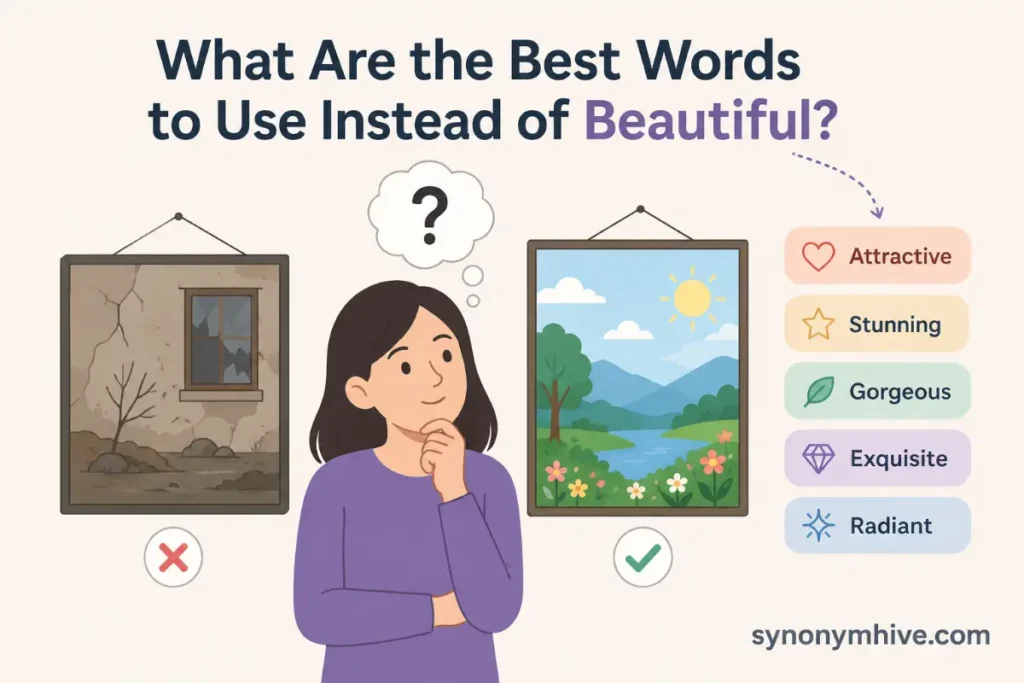
What Are the Best Words to Use Instead of Beautiful?
The best alternative depends on the object, the setting, and the impression you want to create. Some words are simple and neutral. Others sound formal, harsh, or casual. The tables below give you more than 30 choices, along with meanings, tones, and examples.
What Are Simple Words for Everyday Use?
These familiar words work in everyday conversation and general writing. They are easy to understand and do not require a special context.
| Word | Meaning | Tone | Example |
|---|---|---|---|
| Ugly | Not pleasing to look at | Direct and harsh | The old poster looked ugly. |
| Plain | Simple and not decorative | Neutral | The cottage had a plain exterior. |
| Unattractive | Not appealing in appearance | Neutral | The building looked unattractive from the road. |
| Awkward | Lacking a pleasing shape or arrangement | Mildly negative | The chair had an awkward design. |
| Ordinary | Common and not unusual | Neutral | The room looked ordinary beside the grand lobby. |
| Dull | Lacking brightness, interest, or liveliness | Mildly negative | The dull paint made the hallway look tired. |
| Drab | Lacking color or brightness | Negative | Drab curtains covered the windows. |
| Messy | Untidy or disorganized | Casual | The messy display looked unappealing. |
| Rough | Uneven or unfinished in appearance | Neutral to negative | The rough surface needed sanding. |
Plain and ordinary do not always mean unattractive. A plain room may look clean and peaceful. An ordinary object may work perfectly well without being special. Use these words when simplicity or a lack of distinction is the main point.
What Are Everyday Words With More Specific Meanings?
These words describe a particular flaw, condition, or reaction. They are often more useful than a broad judgment such as ugly.
| Word | Meaning | Tone | Example |
|---|---|---|---|
| Unsightly | Unpleasant to look at | Neutral to negative | The unsightly wires hung across the wall. |
| Unappealing | Not attractive or inviting | Neutral | The unappealing menu photos discouraged diners. |
| Unpleasant | Causing discomfort or dislike | Neutral | The room had an unpleasant appearance after the flood. |
| Shabby | Worn out and poorly maintained | Negative | The shabby furniture needed repair. |
| Scruffy | Untidy or rough in appearance | Informal | The scruffy garden needed attention. |
| Blemished | Marked by flaws or spots | Neutral | The blemished surface needed polishing. |
| Weathered | Changed or worn by exposure to the elements | Often neutral | The weathered fence had lost its bright color. |
| Cluttered | Filled with too many objects | Negative | The cluttered shelf made the room look crowded. |
| Gaudy | Too bright or decorated in a showy way | Negative | The gaudy display used too many colors. |
| Tacky | Lacking taste or style | Informal and negative | The tacky decoration did not suit the formal room. |
These words help explain why something does not look good. Cluttered points to too many items. Gaudy suggests excessive decoration. Shabby highlights wear and poor condition. Tacky criticizes style or taste, so it can sound judgmental.
What Are Formal Words for Unattractive Appearance?
Formal words can help in essays, reports, design reviews, and detailed descriptions. Some are more precise than everyday terms, while others sound literary or severe.
| Word | Meaning | Tone | Example |
|---|---|---|---|
| Hideous | Extremely ugly | Strong | The film showed a hideous creature. |
| Repulsive | Causing intense disgust | Very strong | The repulsive odor made the room difficult to enter. |
| Grotesque | Distorted or strange in an unpleasant way | Strong and descriptive | The artist created a grotesque figure. |
| Deformed | Having an altered or unusual shape | Clinical or descriptive | The metal frame was deformed by the heat. |
| Misshapen | Having an irregular or unattractive shape | Descriptive | The misshapen pot leaned to one side. |
| Dilapidated | In very poor condition from age or neglect | Formal | The dilapidated house stood at the end of the road. |
| Unsightly | Visually unpleasant | Formal leaning | The report identified an unsightly structure near the entrance. |
| Disfigured | Having an appearance altered by damage or injury | Serious | The sculpture was disfigured during transport. |
| Unkempt | Not neat or well maintained | Formal leaning | The unkempt courtyard needed regular care. |
Use formal words carefully. Deformed and disfigured can refer to physical conditions or damage, so they may be insensitive when applied to people. Dilapidated is usually best for buildings or structures in serious disrepair. Grotesque often suggests something strange, distorted, or disturbing, not merely plain.
What Are Slang and Casual Words for Something Unattractive?
Casual terms can make a conversation lively, but some of them sound insulting. The audience and setting matter.
| Word or expression | Meaning | Tone | Example |
|---|---|---|---|
| Hideous | Extremely ugly | Strong, common in casual speech | That color combination looks hideous. |
| Ratty | Worn out, shabby, or untidy | Informal | He wore a ratty old jacket. |
| Beat up | Damaged or badly worn | Casual | The beat up suitcase still worked. |
| Eyesore | Something unpleasant to look at | Casual to neutral | The unfinished wall was an eyesore. |
| Cheap looking | Appearing poorly made or low in quality | Informal and critical | The plastic trim looked cheap. |
| Clunky | Awkward, bulky, or poorly designed | Informal | The old interface looked clunky. |
| Garish | Too bright or showy | Critical | The garish sign stood out from the quiet street. |
| Gross | Disgusting or unpleasant | Very casual | The stained container looked gross. |
An eyesore is especially useful when you want to criticize an object or feature rather than a person. Cheap looking focuses on the impression of low quality, not necessarily the actual price. Clunky often describes an awkward design or shape, including digital products.
Which Words Describe Appearance From Mild to Strong?
Word intensity helps you communicate the right level of criticism. A mild description can point out a lack of style without sounding cruel. A strong description can convey shock, disgust, or a very negative reaction.
Which Words Sound Mild?
Use mild terms when the appearance is not especially attractive but does not cause a strong negative reaction.
- Plain means simple and not decorated.
- Ordinary means common or unremarkable.
- Dull means lacking brightness or interest.
- Awkward means poorly shaped or arranged.
- Unattractive means not pleasing to look at.
- Unappealing means not inviting or attractive.
Example: The office was plain, with white walls and simple furniture.
This description does not insult the room. It tells readers that the space lacks decoration or visual interest.
Which Words Sound Moderately Negative?
These choices express a clearer criticism or point to a visible problem.
- Drab suggests a lack of color or life.
- Shabby suggests wear or poor maintenance.
- Unsightly means unpleasant to look at.
- Scruffy suggests a rough or untidy appearance.
- Gaudy means excessively bright or decorated.
- Tacky means lacking taste or style.
- Cluttered means crowded with too many things.
Example: The cluttered shop window made it hard to notice the products.
Cluttered explains the problem more clearly than ugly. The issue is not necessarily the products themselves. Too many items compete for attention.
Which Words Sound Very Strong?
Use these words when the appearance creates a powerful negative reaction or when the flaw is severe.
- Ugly expresses a direct negative judgment.
- Hideous means extremely ugly.
- Grotesque suggests a disturbing or distorted appearance.
- Repulsive suggests strong disgust.
- Misshapen means having an irregular shape.
- Dilapidated describes a structure in serious disrepair.
Example: The abandoned factory was dilapidated, with broken windows and a collapsed roof.
Dilapidated is strong, but it describes the building’s condition rather than making a vague judgment about its beauty. That extra detail helps readers picture the scene.
How Can You Choose the Right Strength?
Start with the smallest word that communicates your meaning. If plain is enough, you do not need ugly. If the problem is damage, describe the damage.
Strong language can be useful in fiction, reviews, and personal reactions, but it can also make writing sound unfair. Match the word to what you can actually observe.

What Is the Difference Between Similar Words?
Many words describe a lack of beauty, but each one highlights a different feature. Choosing a precise word can make your description more helpful and less judgmental.
Ugly vs Unattractive
Ugly is direct and often harsh. Unattractive is more neutral and usually sounds less personal.
| Ugly | Unattractive |
|---|---|
| Expresses a strong negative opinion. | Gives a more measured description. |
| Can sound insulting when used for a person. | Often suits practical descriptions and reviews. |
| Works in expressive writing when a strong reaction matters. | Works in neutral or professional writing. |
Examples.
- The bright orange sign looked ugly against the historic brick wall.
- The building looked unattractive because its windows were poorly arranged.
Both sentences criticize appearance, but the second explains a specific design issue. In a professional review, unattractive may help you describe the problem without sounding unnecessarily harsh.
Plain vs Dull
Plain means simple or lacking decoration. Dull means lacking brightness, interest, or liveliness.
A plain dress may be elegant because of its clean shape and simple color. A dull dress may look lifeless because the color is faded or the fabric lacks visual interest.
| Plain | Dull |
|---|---|
| Focuses on simplicity. | Focuses on a lack of brightness or interest. |
| Can be positive, neutral, or negative. | Usually carries a negative meaning when describing appearance. |
| Example: The plain room had little decoration. | Example: The dull paint made the room look lifeless. |
Do not use plain as a synonym for ugly in every sentence. A simple design can be attractive, practical, and well made.
Shabby vs Dilapidated
Shabby usually describes something worn out, faded, or poorly maintained. Dilapidated describes something in serious disrepair, especially a building or structure.
A shabby sofa might have faded fabric and worn cushions. A dilapidated house might have a damaged roof, broken windows, and unsafe floors.
Use shabby for smaller signs of wear. Choose dilapidated when the damage is severe and affects the condition of the structure.
Gaudy vs Tacky
Gaudy describes something that is too bright, showy, or heavily decorated. Tacky suggests poor taste or a style that seems cheap or unsuitable.
A room with glittering walls, bright gold furniture, and several competing patterns might look gaudy. A plastic decoration designed to imitate an expensive material might look tacky to some viewers.
These words express opinions about style, so they can be subjective. What one person calls gaudy may look bold or playful to someone else. If you are writing a fair review, explain the details that led to your judgment.
Compare more word options with Opposite of Strong Best Words and Examples 2026.
How Do You Use These Words in a Resume or Professional Review?
Professional writing often requires criticism without personal attacks. The right word lets you describe a design problem, a poor condition, or an unsatisfactory result in a clear and useful way.
What Word Should You Use in a Resume?
A resume usually focuses on your skills and achievements, so words describing ugly or unattractive appearance rarely belong there. If your work involved improving a product, website, display, or space, describe the problem in specific terms.
Example.
I redesigned a cluttered product page to make its layout clearer and improve the shopping experience.
Cluttered describes the issue and gives the reader a practical reason for the redesign. Calling the page ugly would communicate an opinion without showing what you changed.
What Word Should You Use in an Essay?
In an essay, choose the word that best supports your point. Plain, unsightly, gaudy, and grotesque can describe different visual features. Stronger terms may suit literary analysis when they reflect the author’s intended effect.
Example.
The writer describes the abandoned mansion as dilapidated to emphasize years of neglect and the family’s decline.
This sentence explains why the word matters. It does more than label the mansion unattractive.
What Word Should You Use in a Text Message?
Casual messages allow direct language, but the subject still matters. If you are discussing a broken chair or a badly designed phone case, ugly, clunky, or beat up may sound natural.
Examples.
- That old lamp looks pretty shabby.
- The new app design feels clunky and hard to use.
- The wallpaper is too busy for this small room.
- Those colors do not really work together.
These messages focus on the object rather than insulting someone. When a person is involved, tact can prevent an honest opinion from becoming hurtful.
What Word Should You Use in an Email?
For a work email, choose neutral language and explain the specific problem. Unappealing, cluttered, inconsistent, or poorly designed may be more useful than ugly.
Example.
The current brochure looks cluttered because the text and images compete for space. I recommend simplifying the layout and increasing the spacing between sections.
The reader can understand the concern and act on it. A useful critique describes what needs to change, not just what you dislike.
What Word Should You Use When Speaking?
In conversation, simple words usually sound most natural. Use unattractive for a measured opinion, shabby for worn items, and ugly when you deliberately want to express a strong reaction.
Examples.
- The building looks unattractive from the main road.
- That suitcase is beat up, but it still works.
- The garden looks scruffy because nobody has trimmed it.
- The sign is too gaudy for the entrance.
- The room is plain, but it is clean and comfortable.
A thoughtful description can also mention what works well. For example, a room may look plain but still be bright, clean, and comfortable. This gives a fuller picture than a negative label alone.
What Common Mistakes Should You Avoid?
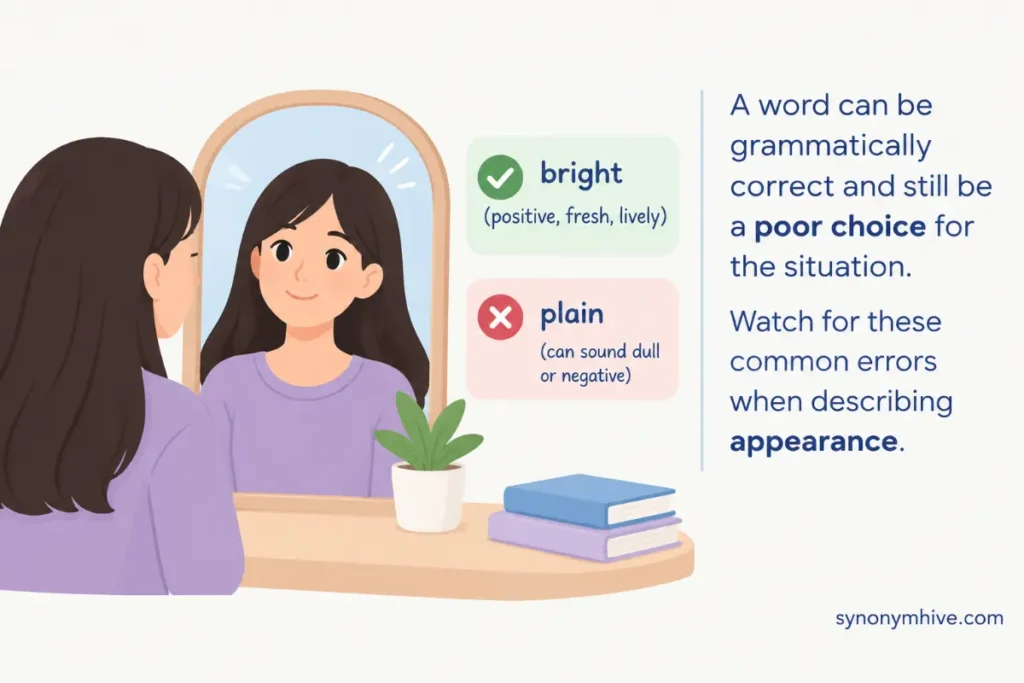
A word can be grammatically correct and still be a poor choice for the situation. Watch for these common errors when describing appearance.
Do Not Treat Plain as a Direct Synonym for Ugly
Plain usually means simple or not decorated. It does not automatically mean unattractive.
A plain white shirt may look neat and stylish. A plain wall may suit a modern room. Use ugly only when you mean that something looks unpleasant to you.
Do Not Confuse Damage With Appearance
An object may look unattractive because of its design, or it may look unattractive because it has been damaged. Those are different problems.
Shabby suggests wear and poor maintenance. Dilapidated suggests serious damage or decay. Misshapen describes an irregular form. These words give the reader more information than a broad judgment.
Do Not Use Strong Words When a Mild One Is Enough
Hideous, grotesque, and repulsive are powerful terms. They can work in fiction, vivid descriptions, or a strong personal reaction, but they may sound excessive in a routine review.
Instead of writing, The office was hideous, you might write, The office had mismatched furniture and harsh lighting. The second sentence explains the issue and gives the reader something concrete to picture.
Do Not Confuse Visual Appeal With Quality
Something can look unattractive and still work well. An old tool may have scratches but remain reliable. A plain website may be easy to use. A worn chair may still be comfortable.
If you are reviewing a product, separate appearance from performance. Words such as functional, durable, effective, and well made describe qualities that beauty alone cannot measure.
Avoid Insulting People Unnecessarily
Calling a person ugly can cause hurt and may make your writing sound cruel. If you need to describe someone’s appearance, focus on relevant, observable details instead of making a sweeping judgment.
For example, a character might have a tired expression, messy hair, or a stained coat. These details can support a scene without reducing the person to a negative label.
In creative writing, a narrator may deliberately use harsh language to reveal bias or anger. Make sure that choice serves the story rather than appearing without purpose.
What Are the Antonyms of Beautiful and Their Positive Opposites?
The antonyms of beautiful describe a lack of visual appeal, while its positive opposites describe attractive or pleasing qualities. The best pair depends on the specific meaning.
| Negative word | Positive opposite |
|---|---|
| Ugly | Beautiful |
| Unattractive | Attractive |
| Plain | Ornate or decorative, depending on context |
| Dull | Bright or striking |
| Drab | Colorful or vibrant |
| Unsightly | Attractive or pleasing |
| Shabby | Well maintained |
| Cluttered | Neat or orderly |
| Gaudy | Tasteful or understated |
| Misshapen | Well formed |
| Dilapidated | Well maintained or restored |
| Tacky | Stylish or tasteful |
These pairs are useful guides rather than strict rules. Ornate does not always mean beautiful, and plain does not always mean ugly. A simple design can be attractive, while a highly decorated design can look gaudy. Focus on the feature you want to contrast.
How Can You Choose the Right Word Quickly?
A few simple checks can help you select a clear and accurate description.
- Identify the main problem. Decide if the issue is poor design, lack of decoration, damage, clutter, or an unpleasant appearance.
- Choose the right level of intensity. Plain and unattractive are relatively mild. Ugly is direct. Hideous and repulsive are much stronger.
- Consider your audience. A text to a friend may use casual language, while a report or email usually benefits from neutral wording.
- Describe evidence when possible. Instead of saying a room is ugly, explain that it has harsh lighting, mismatched furniture, or crowded shelves.
- Check the emotional effect. Ask yourself if the word criticizes an object, a design choice, or a person. Use extra care when the description could sound personal.
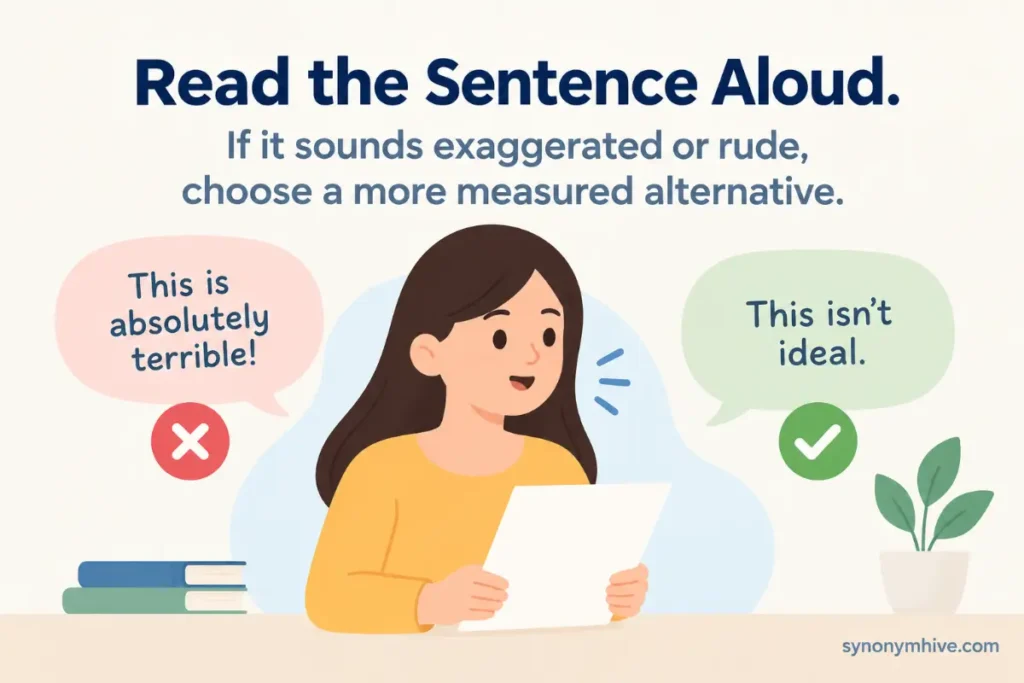
- Read the sentence aloud. If the word sounds exaggerated or rude, choose a more measured alternative.
These steps can make your writing clearer without forcing you to memorize every synonym. The best word is the one that explains the specific quality you noticed.
Learn more useful word alternatives in Opposite of Love Best Words and Examples 2026.
Conclusion
The opposite of beautiful is most often ugly or unattractive, but many other words can express a more precise meaning. Plain describes simplicity, shabby points to wear, unsightly highlights an unpleasant appearance, and gaudy criticizes excessive decoration. Strong terms such as hideous and repulsive communicate a much harsher reaction.
Before choosing a word, identify the feature you want to describe. Is the object damaged, poorly designed, cluttered, or simply lacking decoration? Match your word to that detail and to the tone of your writing. A neutral description often works better than a broad insult, especially in professional settings. With a little attention to meaning and intensity, you can describe appearance clearly and confidently.
Frequently Asked Questions
What is the most common opposite of beautiful?
The most common opposite of beautiful is ugly. Unattractive is a more neutral option when you want to describe appearance without sounding too harsh.
What is a polite word for ugly?
Unattractive is often a polite alternative to ugly. Plain, unappealing, or poorly designed may work better when they describe the specific issue.
What is a stronger word than ugly?
Hideous is a common stronger word for ugly. Grotesque suggests a disturbing or distorted appearance, while repulsive expresses a strong sense of disgust.
What is another way to say something does not look good?
You can say it looks unattractive, unsightly, unappealing, shabby, or poorly designed. Choose the term that best explains the reason it does not look good.
What is the opposite of beautiful in an essay?
Ugly, unattractive, unsightly, gaudy, and dilapidated can work in an essay, depending on the subject. Use the word that best supports your description or argument.
Is plain the same as ugly?
No, plain means simple or lacking decoration, while ugly means not pleasing to look at. A plain object can still be attractive, elegant, or useful.
What word describes a building that looks ugly because it is old and damaged?
Dilapidated describes a building that is in very poor condition because of age or neglect. Shabby can describe a building or room that looks worn but may not have severe structural damage.