
Is this conversation helpful so far?
Is this conversation helpful so far?
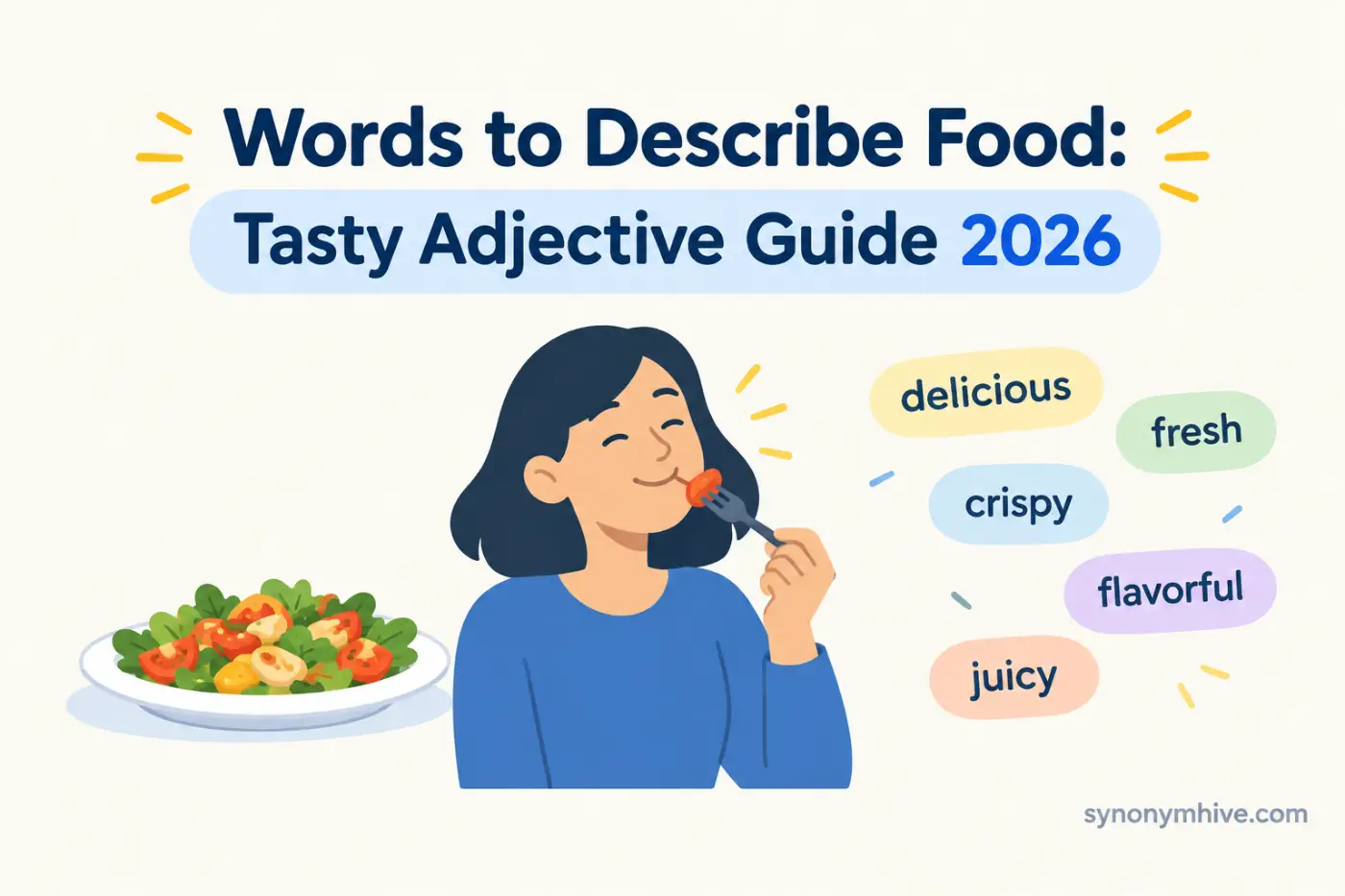
Have you ever tried to describe a delicious meal in an email or a food review and found yourself using the same word again and again? Maybe everything tastes good, delicious, or amazing. Those words work, but they don’t always capture what makes a dish special.
The right words to describe food can help you explain its taste, texture, smell, appearance, and overall appeal. They can turn a simple sentence into a vivid description that makes readers imagine the first bite. This skill is useful when you’re writing an essay, creating a restaurant review, sharing a recipe, or texting a friend about dinner.
Words to describe food are descriptive terms that explain how a dish tastes, smells, feels, looks, and makes you feel. Words such as savory, crispy, creamy, aromatic, and tangy help readers picture a meal and understand what makes it appealing.
The best word depends on what you’re describing. A crunchy apple needs different language from a tender steak or a rich chocolate cake. Choosing a precise word also helps you avoid repeating the same adjectives and makes your writing sound more natural.
This guide covers the meaning and origin of food descriptions, a master list of useful adjectives, words arranged by intensity, and examples for everyday conversations, essays, emails, and reviews. You’ll also learn how similar words differ and how to choose the right expression for each situation.
Explore another synonym guide: Words to Describe a Smile: Words for Stories and Poems 2026.
What Are Words to Describe Food?
Words to describe food are adjectives and other descriptive expressions that tell readers something specific about a meal or ingredient. They help explain its flavor, texture, aroma, appearance, temperature, freshness, and quality.
For example, saying that a soup is delicious tells the reader that you like it. Saying that it is creamy, savory, and gently spiced gives the reader a clearer picture of the experience.
Food descriptions can serve several purposes.
- Explain flavor. Words such as sweet, bitter, sour, salty, and savory identify the main tastes.
- Describe texture. Terms such as crunchy, tender, chewy, and silky explain how food feels in your mouth.
- Describe aroma. Words such as fragrant, smoky, earthy, and citrusy tell readers what a dish smells like.
- Show appearance. Descriptions such as golden, glossy, vibrant, and flaky help readers picture the food.
- Express quality. Words such as fresh, overcooked, balanced, and bland communicate how well a dish turns out.
- Create emotion. Expressions such as comforting, indulgent, and nostalgic connect food with feelings and memories.
The strongest descriptions often combine two or three details. For example, The warm apple pie had a flaky crust and a sweet cinnamon aroma gives readers more information than The pie was good.
You don’t need fancy vocabulary to describe food well. You need words that accurately express what you notice.
Where Did Food Descriptive Words Come From?
Many food adjectives developed from everyday experiences, older languages, and the way people prepared and shared meals. Their origins can explain why certain words carry specific meanings today.
The word sweet comes from Old English swēte. It has long described pleasant flavors and gradually developed other meanings connected to kindness, beauty, and pleasant experiences.
The word savory comes through Old French from Latin roots associated with taste. Today, it commonly describes food with a rich, salty, spicy, or meaty flavor rather than a sweet one. A savory pie, for instance, might contain vegetables, cheese, or meat.
Bitter comes from Old English biter, a word connected to a sharp or unpleasant taste. Coffee, dark chocolate, and certain leafy vegetables can have bitter notes. The word also appears in expressions about sadness or disappointment.
Crunchy developed from words that imitate the sharp sound food makes when bitten. It describes both a texture and the sound associated with that texture. Think of fresh carrots, toasted nuts, or crisp cereal.
Creamy comes from cream and describes a smooth, rich texture similar to cream. It can refer to dairy products, sauces, soups, desserts, and even certain plant based foods.
Spicy comes from spice. Although spices can contribute warmth and flavor, the word often refers to food that creates a noticeable heat sensation because of ingredients such as chili peppers.
These examples show how food vocabulary grows from taste, touch, sound, smell, and cultural habits. Knowing a word’s history can make it easier to understand, but using it accurately matters more than memorizing its origin.

What Are the Best Words to Describe Food?
The best descriptive word depends on the detail you want readers to notice. Use this master list to find a suitable word for everything from a quick snack to a carefully prepared meal.
The table includes 32 useful words grouped by tone and everyday purpose. The tone describes how a word usually feels in conversation or writing. Some words can fit more than one group depending on context.
Simple Words for Everyday Food Descriptions
These familiar words work well in school assignments, casual conversations, and basic food reviews.
| Word | Meaning | Tone | Example |
|---|---|---|---|
| Tasty | Having a pleasant flavor | Casual | The sandwich was tasty. |
| Delicious | Very enjoyable to eat | Positive | The soup was delicious. |
| Sweet | Having a sugary flavor | Neutral | The mango was sweet. |
| Salty | Containing a noticeable salt flavor | Neutral | The popcorn was salty. |
| Fresh | Recently prepared or in good condition | Positive | The salad tasted fresh. |
| Hot | At a high temperature or spicy | Context dependent | The hot soup warmed my hands. |
| Cold | At a low temperature | Neutral | The cold lemonade was refreshing. |
| Soft | Easy to press or bite | Neutral | The bread was soft. |
These words are easy to understand, but they still need context. Hot might describe temperature or chili heat, so add another detail when the meaning could be unclear.
Everyday Words That Make Descriptions More Specific
Use these terms when you want to describe how a dish tastes, smells, or feels.
| Word | Meaning | Tone | Example |
|---|---|---|---|
| Crispy | Firm and pleasantly brittle when bitten | Positive | The crispy potatoes were golden. |
| Crunchy | Making a clear crunch when chewed | Positive | The crunchy carrots added texture. |
| Creamy | Smooth and rich | Positive | The creamy pasta sauce coated every noodle. |
| Juicy | Containing plenty of liquid | Positive | The juicy peach dripped down my chin. |
| Tender | Soft and easy to chew | Positive | The tender chicken fell apart easily. |
| Chewy | Requiring repeated chewing | Neutral | The chewy bagel was satisfying. |
| Tangy | Having a sharp and lively flavor | Positive | The tangy dressing brightened the salad. |
| Smoky | Having a flavor or aroma like smoke | Often positive | The smoky beans tasted rich. |
These terms work because they provide sensory details. A reader can imagine the crunch of a potato chip or the smoothness of a creamy soup without seeing the food.
Formal Words for Essays and Food Reviews
| Word | Meaning | Tone | Example |
|---|---|---|---|
| Aromatic | Having a noticeable and pleasant smell | Refined | The aromatic broth contained ginger and garlic. |
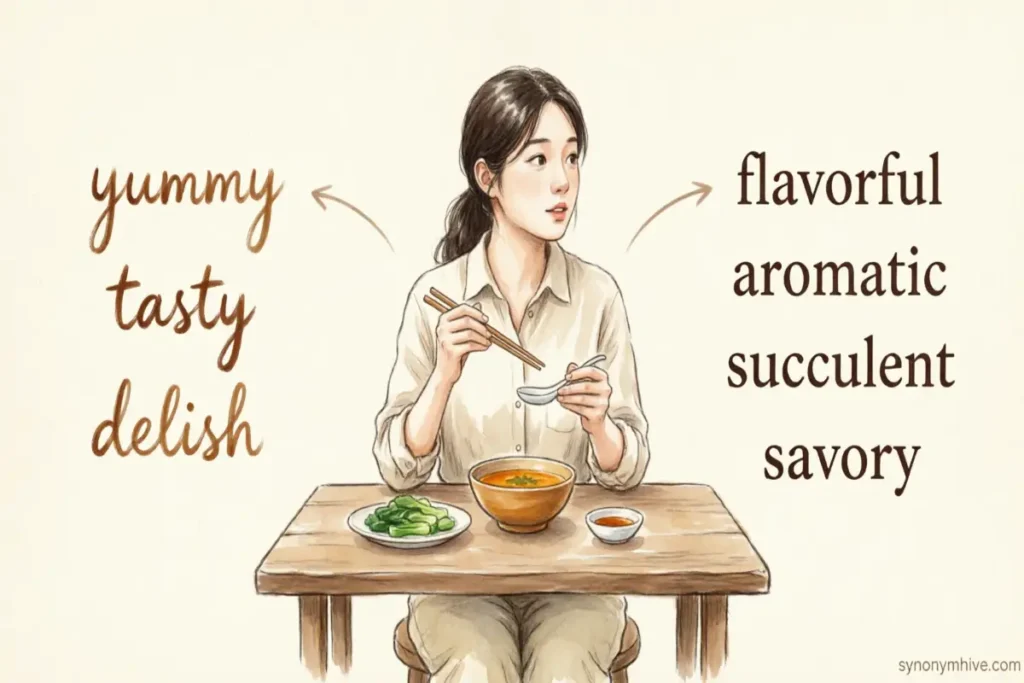
| Flavorful | Having a strong or distinct flavor | Positive | The flavorful stew used fresh herbs. |
| Succulent | Tender and full of moisture | Refined | The succulent roast remained moist. |
| Delicate | Subtle and not overpowering | Refined | The delicate sauce complemented the fish. |
| Fragrant | Giving off a pleasant smell | Refined | The fragrant rice filled the kitchen. |
| Savory | Rich or salty rather than sweet | Neutral | The savory tart contained mushrooms. |
| Zesty | Lively and sharp in flavor | Energetic | The zesty salsa added brightness. |
| Luscious | Rich and appealing in taste or texture | Expressive | The luscious chocolate filling melted slowly. |
Formal language works best when the word fits the dish. Succulent makes sense for moist roasted meat or fruit, while delicate is useful for a subtle sauce. Using elaborate words for simple details can make writing feel forced.
Slang and Casual Expressions for Food
Slang adds personality to texts, social posts, and conversations with friends. These expressions are less suitable for formal essays unless you’re discussing informal language.
| Word or expression | Meaning | Tone | Example |
|---|---|---|---|
| Yummy | Very tasty | Playful | These cookies are yummy. |
| Yum | An expression of enjoyment | Casual | Yum, that smells amazing. |
| Mouthwatering | So appealing that it makes you want to eat | Expressive | That burger looks mouthwatering. |
| Drool worthy | Extremely tempting | Very informal | Those brownies are drool worthy. |
| Heavenly | Exceptionally enjoyable | Expressive | This cheesecake tastes heavenly. |
| Bomb | Excellent or impressive | Slang | That taco was bomb. |
| Fire | Extremely good | Slang | The grilled corn is fire. |
| To die for | Exceptionally appealing | Informal | The garlic bread is to die for. |
Slang changes over time and varies by age group and community. Choose expressions your audience will understand. A casual text can be playful, but a restaurant menu usually benefits from clearer descriptions.
Which Food Words Describe Flavor From Mild to Strong?
Food flavor can be gentle, noticeable, bold, or intense. Choosing a word that matches the strength of a flavor helps readers understand what to expect.
What Words Describe Mild Flavors?
Mild food has a gentle taste that doesn’t overwhelm the other ingredients. These words are useful when describing subtle seasonings, light sauces, and foods with delicate flavors.
- Subtle. A flavor that’s present but not strong. Example: The soup had a subtle hint of ginger.
- Mellow. A smooth flavor without sharp or harsh notes. Example: The roasted garlic had a mellow sweetness.
- Delicate. A light flavor that can be easily overshadowed. Example: The delicate lemon sauce complemented the fish.
- Light. A flavor or overall eating experience that feels gentle rather than rich. Example: The light vegetable broth was perfect for lunch.
- Mild. A flavor that lacks strong heat or intensity. Example: The mild curry suited everyone at the table.
- Gentle. A soft and restrained flavor. Example: The gentle sweetness of the pear balanced the cheese.
These words don’t automatically mean that food lacks flavor. A delicate dish can have plenty of character without using strong spices or heavy sauces.
What Words Describe Medium or Balanced Flavors?
Balanced food has flavors that work well together. No single taste takes over the entire dish.
- Well seasoned. Prepared with an appropriate amount of salt and other seasonings. Example: The well seasoned chicken had plenty of flavor without tasting salty.
- Balanced. Different flavors complement one another. Example: The balanced dressing combined acidity with a little sweetness.
- Rich. Full and deep in flavor. Example: The rich mushroom sauce gave the pasta a hearty taste.
- Rounded. A flavor that feels complete rather than sharp or unfinished. Example: Slow cooking gave the tomato sauce a rounded flavor.
- Full bodied. Having a deep and substantial flavor. Example: The full bodied broth made the stew taste satisfying.
Use balanced when several flavors work together. Use rich when the flavor feels deep or concentrated. They aren’t interchangeable in every sentence.
What Words Describe Strong or Intense Flavors?
Strong flavors stand out immediately. They might come from spices, fermented ingredients, aged cheese, citrus, or concentrated sauces.
- Bold. Strong and noticeable. Example: The bold seasoning gave the grilled vegetables plenty of character.
- Pungent. Having a sharp and powerful smell or taste. Example: The pungent blue cheese divided opinions at the table.
- Robust. Full and strong in flavor. Example: The robust tomato sauce paired well with the pasta.
- Intense. Very concentrated or powerful. Example: The intense coffee flavor balanced the sweet frosting.
- Fiery. Extremely hot because of chili or other spicy ingredients. Example: The fiery salsa made everyone reach for water.
- Sharp. Having an immediate and noticeable taste. Example: The sharp cheddar added character to the sandwich.
A strong flavor isn’t always a good flavor. Bold often sounds positive, while pungent can suggest a smell or taste that some people find overwhelming. Choose the term that matches your actual experience.

Which Words Describe Taste Texture Smell and Appearance?
Food descriptions become clearer when you focus on one sense at a time. This approach is especially helpful when you’re writing a restaurant review or describing a meal in detail.
What Words Describe the Taste of Food?
Taste words explain the basic flavor or the way several flavors work together.
- Sweet. Suggests sugar, honey, ripe fruit, or caramel.
- Sour. Describes a sharp acidic taste found in lemons and vinegar.
- Salty. Identifies a noticeable salt flavor.
- Bitter. Describes a sharp taste found in coffee, dark chocolate, and some greens.
- Savory. Describes a flavor associated with ingredients such as mushrooms, meat, cheese, and herbs.
- Umami. Refers to a deep, savory taste found in foods such as aged cheese, mushrooms, and soy sauce.
- Tangy. Suggests a lively, sharp flavor.
- Acidic. Describes a noticeable level of acidity.
- Buttery. Suggests the flavor or richness of butter.
- Nutty. Describes a flavor similar to nuts or toasted seeds.
- Earthy. Suggests flavors associated with soil, roots, mushrooms, or certain vegetables.
- Citrusy. Describes a bright flavor associated with lemons, limes, oranges, and similar fruits.
Remember that taste and flavor aren’t exactly the same. Taste refers to basic sensations such as sweet, sour, salty, bitter, and umami. Flavor includes taste along with aroma and other sensations.
What Words Describe Food Texture?
Texture tells readers how food feels when they touch it, cut it, or chew it.
- Crispy. Has a firm surface that breaks with a pleasant crunch.
- Crunchy. Makes a clear sound when bitten or chewed.
- Tender. Is easy to cut or chew.
- Chewy. Requires repeated chewing.
- Silky. Feels smooth and soft.
- Creamy. Has a smooth and often rich consistency.
- Flaky. Breaks into thin layers or small pieces.
- Fluffy. Feels light and airy.
- Dense. Feels compact or heavy for its size.
- Gooey. Is soft, sticky, and sometimes runny.
- Crumbly. Breaks into small pieces.
- Juicy. Releases plenty of liquid when bitten.
Texture words can change the whole impression of a dish. A brownie might be fudgy and dense, while a sponge cake might be fluffy and light. Both can taste delicious, but they create different eating experiences.
What Words Describe the Smell of Food?
Aroma often shapes how people experience a meal before they take the first bite.
- Fragrant. Has a pleasant and noticeable smell.
- Aromatic. Releases a distinct smell, often from herbs, spices, coffee, or cooked ingredients.
- Herby. Smells or tastes strongly of fresh or dried herbs.
- Floral. Has a scent similar to flowers.
- Smoky. Suggests smoke or food cooked over a flame.
- Toasty. Has the warm smell of browned bread, roasted nuts, or toasted grains.
- Garlicky. Has a strong garlic aroma or flavor.
- Citrusy. Has a fresh scent similar to citrus fruit.
- Pungent. Has a powerful smell that can be sharp or intense.
- Earthy. Has a deep, natural aroma associated with mushrooms, roots, or soil.
For example, The fragrant cinnamon rolls filled the kitchen with a warm, sweet aroma tells the reader more than The rolls smelled good.
What Words Describe the Appearance of Food?
Visual descriptions help readers imagine the meal before tasting it. They’re especially useful for food photography captions, menus, recipes, and restaurant reviews.
- Golden. Has a warm yellow or light brown color, often associated with baking or frying.
- Vibrant. Has bright, lively colors.
- Glossy. Has a smooth surface that reflects light.
- Flaky. Shows thin layers that separate easily.
- Glazed. Has a shiny coating of sauce or syrup.
- Rustic. Has a simple, handmade, or country style appearance.
- Colorful. Contains several noticeable colors.
- Caramelized. Has browned surfaces created by cooking sugars and other ingredients.
- Plump. Looks full and rounded.
- Appetizing. Looks appealing and makes people want to eat.
- Charred. Has darkened areas from exposure to high heat.
- Delicate. Looks fine, light, or carefully prepared.
Choose appearance words carefully. A charred crust might be desirable on grilled vegetables, but burnt food suggests excessive cooking. The difference matters when you want your description to be accurate.
Which Food Words Fit Different Parts of Speech?
Adjectives do most of the work when you describe food, but nouns and verbs can make your writing more vivid. Using different parts of speech also helps you avoid repeating the same descriptive pattern.
Which Adjectives Describe Food?
Adjectives describe a quality of the food itself.
- The crispy chicken had a golden coating.
- The fragrant rice smelled wonderful.
- The tender vegetables needed very little chewing.
- The tangy sauce balanced the rich filling.
- The silky pudding melted on my tongue.
Adjectives work especially well when you want to provide quick, specific details.
Which Nouns Describe Food Qualities?
Nouns can name the quality you’re discussing rather than describing it directly.
- Texture. The texture of the bread was soft and airy.
- Aroma. The aroma of fresh coffee filled the room.
- Flavor. The flavor of the sauce developed as it simmered.
- Freshness. The freshness of the herbs made the salad stand out.
- Richness. The richness of the cheese balanced the tart apples.
- Sweetness. The natural sweetness of the strawberries needed no extra sugar.
These nouns are helpful in formal writing because they allow you to explain a quality in more detail.
Which Verbs Make Food Descriptions More Vivid?
Strong verbs can communicate a sensory experience without adding several adjectives.
- Melts. The chocolate melts slowly on your tongue.
- Crackles. The bacon crackles in the hot pan.
- Sizzles. The vegetables sizzle as they hit the skillet.
- Glows. The golden crust glows under the kitchen lights.
- Drips. Honey drips from the warm biscuit.
- Crumbles. The dry pastry crumbles at the first bite.
- Bursts. The ripe berry bursts with juice.
- Lingers. The smoky flavor lingers after each bite.
Instead of writing The food was very hot and crispy, try The crispy potatoes sizzled straight from the oven. The second sentence gives readers something to picture and hear.
Are Food Descriptions Different in American and British English?
American and British English share most food adjectives, but some words and expressions differ by region. A few terms also carry different meanings depending on the context.
| Word | Common American usage | Common British usage |
|---|---|---|
| Crisps | Usually called chips in the UK | Thin, crunchy potato snacks |
| Chips | Often refers to thin fried potato strips | Often refers to thicker fried potato pieces |
| Biscuit | Usually a soft bread product | Usually a sweet baked cookie |
| Pudding | Often a creamy dessert | Can refer to dessert in general or a specific dish |
| Jelly | Usually a clear fruit spread or gelatin dessert depending on context | Often means a clear fruit spread |
| Aubergine | Less common in everyday conversation | Common name for eggplant |
| Courgette | Less common in everyday conversation | Common name for zucchini |
| Coriander | Often refers to the leaves or the plant | Commonly used for the plant and its leaves or seeds |
These differences matter when you’re writing for a specific audience. A British reader might picture thick chips when you describe a plate of chips, while an American reader might picture thin fries.
Most descriptive adjectives, including crispy, tender, juicy, savory, and fragrant, work in both countries. Spelling differences also appear in words such as flavor and flavour.
For American audiences, use American spelling and familiar food names unless you’re explaining a regional dish or writing for an international readership.
Explore more word choices in Words to Describe a City Best Ultimate Guide 2026.
Which Words Should You Use to Describe Food in Different Situations?
The best description depends on your audience and purpose. A text to a friend can sound playful, while a school essay or restaurant review needs more precise language.
What Words Describe Food in an Essay?
When writing an essay, choose sensory words that support your main point. Avoid filling every sentence with adjectives. A few specific details can make your writing more effective.
Useful words include aromatic, tender, crisp, flavorful, balanced, fragrant, and succulent.
Example sentences.
- The aromatic spices filled the kitchen with a warm and inviting scent.
- The tender vegetables added color and texture to the homemade soup.
- The crisp pastry contrasted with the smooth apple filling.
- The balanced flavors made the dish enjoyable without overwhelming the palate.
For example, instead of writing The food was really good, you could write The roasted vegetables were tender inside with lightly caramelized edges. The second sentence provides evidence for your opinion.
When you write an essay, explain the effect of the food’s qualities. Describe how the texture contrasts with the filling or how the seasoning balances the sweetness. These details make your description more meaningful.
What Words Describe Food in a Resume?
Food descriptions rarely belong in a standard resume unless you’re applying for a job in cooking, baking, food service, hospitality, or food production.
If you’re describing professional food preparation, focus on relevant skills and results. Words such as consistent, precise, appealing, fresh, well seasoned, and high quality may help when they’re accurate.
Example sentences.
- Prepared fresh and flavorful meals while maintaining consistent presentation.
- Created appealing menu items using seasonal ingredients.
- Maintained high food quality through careful preparation and portion control.
- Developed balanced recipes to meet customer preferences.
Don’t use vague claims such as made the best food ever. Employers need clear evidence of your skills. If possible, mention customer feedback, menu development, food safety, or service efficiency.
What Words Describe Food in an Email?
Emails usually benefit from a warm and direct tone. You can sound appreciative without making the message overly formal.
Useful words include delicious, fresh, flavorful, delightful, memorable, and wonderful.
Example sentences.
- Thank you for the delicious lunch yesterday. I especially enjoyed the fresh salad and homemade dressing.
- The cake was wonderfully moist and had just the right amount of sweetness.
- I really enjoyed the meal. The fragrant rice and tender chicken were excellent.
- Thank you for sharing your recipe. The finished dish was flavorful and easy to prepare.
If you’re writing a professional email to a chef or restaurant owner, be specific about what you enjoyed. Mentioning the dish and its standout qualities makes your appreciation feel sincere.
What Words Describe Food in a Text Message?
Text messages are a good place for casual language and short sensory descriptions. You don’t need a long sentence to show excitement.
Useful expressions include yummy, mouthwatering, crispy, juicy, heavenly, amazing, and so good.
Example sentences.
- This burger is juicy and seriously delicious.
- The fries are perfectly crispy.
- That chocolate cake is heavenly.
- The tacos were packed with flavor.
- This pizza is so good I could eat it every day.
You can also use playful expressions such as That dessert is next level or These cookies are dangerously good. These phrases work best in casual conversations and social media posts.
What Words Describe Food When Speaking?
When talking about food, choose words that feel natural to say aloud. Short, familiar descriptions are often easier to understand than complicated vocabulary.
Useful words include crispy, creamy, spicy, sweet, savory, fresh, and tender.
Example sentences.
- This soup tastes rich and comforting.
- The fish is flaky and tender.
- The sauce has a nice tangy finish.
- These strawberries are incredibly sweet.
- The bread smells fresh out of the oven.
If someone asks how a meal tastes, go beyond saying good when you can. Mention the flavor or texture you noticed most. Your answer will sound more personal and give the other person a better idea of the dish.
What Are Some Original Examples of Food Descriptions?
These examples show how to use descriptive vocabulary in everyday situations. Each sentence focuses on a specific quality instead of relying on general praise.
1. Breakfast. The fluffy pancakes soaked up the maple syrup while their golden edges added a light crunch.
2. Fresh fruit. The ripe mango was juicy and sweet with a bright tropical aroma.
3. Homemade soup. The hearty vegetable soup had a savory broth filled with tender carrots and earthy mushrooms.
4. Grilled chicken. The smoky chicken had a lightly charred crust and a juicy center.
5. Chocolate cake. The rich chocolate cake had a moist crumb and a silky frosting that melted in my mouth.
6. Fresh bread. The warm loaf had a crisp crust and a soft center that released a comforting yeasty aroma.
7. Garden salad. The vibrant salad combined crunchy cucumbers with crisp lettuce and a tangy lemon dressing.
8. Pasta. The creamy sauce clung to each strand of pasta while roasted garlic added a deep savory flavor.
9. Seafood. The flaky fish had a delicate flavor that paired beautifully with the bright citrus sauce.
What Is the Difference Between Similar Food Descriptions?
Some descriptive words seem interchangeable, but they can create different impressions. Understanding these small differences helps you select the most accurate term.
Crispy vs Crunchy
Both words describe food that makes a noticeable sound when bitten, but they often suggest different textures.
| Crispy | Crunchy |
|---|---|
| Often describes a thin or firm outer layer | Often describes a firm texture throughout |
| Common for fried chicken skin and potato chips | Common for raw carrots and nuts |
| Suggests a light snap or brittle surface | Suggests a more substantial crunch |
Example. The fried chicken had crispy skin and a crunchy coating of toasted crumbs.
The distinction isn’t absolute. People often use both words for the same food, and regional habits can affect their choices.
Savory vs Spicy
Savory describes a flavor profile associated with foods such as meat, mushrooms, cheese, and herbs. Spicy can describe food seasoned with spices, but it often refers to heat from chili peppers.
| Savory | Spicy |
|---|---|
| Focuses on a rich or non sweet flavor | Often focuses on heat or strong seasoning |
| Can describe mild dishes | Can describe mild or very hot dishes depending on usage |
| Example. Savory mushroom pie | Example. Spicy chili sauce |
A curry can be savory without being hot. It can also be both savory and spicy.
Juicy vs Tender
Juicy describes moisture. Tender describes how easily food cuts or chews.
A piece of meat can be tender but dry. Fruit can be juicy without being soft. Using both words gives a clearer description when both qualities are present.
Example. The tender chicken stayed juicy after roasting.
Delicious vs Flavorful
Delicious expresses enjoyment. Flavorful describes the presence of noticeable flavor.
A dish can be flavorful but unpleasant to someone who dislikes its ingredients. A mild dessert can be delicious without having a powerful flavor.
Example. The flavorful sauce was delicious with the roasted vegetables.
Fragrant vs Aromatic
Both words describe smell. Fragrant usually suggests a pleasant scent, while aromatic often describes a noticeable smell that comes from herbs, spices, coffee, or cooked ingredients.
Example. The fragrant jasmine rice had an aromatic blend of spices.
The distinction is subtle, so either word may work in many situations.
What Mistakes Should You Avoid When Describing Food?
Good descriptions depend on accuracy. A fancy word won’t improve your writing if it gives the reader the wrong impression.
1. Using delicious for everything. The word is useful, but repeating it makes descriptions less specific. Replace it with details about taste, texture, smell, or appearance.
2. Confusing taste with texture. Sweet describes taste, while crunchy describes texture. Choose the correct category.
3. Calling every strong flavor spicy. Garlic, black pepper, ginger, and chili can create different sensations. Describe the ingredient or effect more precisely.
4. Overusing intensifiers. Phrases such as very delicious, extremely tasty, and really amazing often add little. A more specific adjective usually works better.
5. Using formal words in casual texts. Calling a friend’s sandwich a succulent culinary creation may sound unnatural. Match your language to your audience.
6. Making unsupported claims. Words such as fresh, organic, and homemade can carry specific meanings. Don’t use them unless they’re accurate.
7. Confusing appearance with quality. A glossy dish isn’t automatically delicious, and a rustic appearance doesn’t guarantee that food is homemade.
8. Using too many adjectives at once. A phrase such as sweet, delicious, tasty, wonderful, amazing cake feels repetitive. Try a moist chocolate cake with a rich cocoa flavor instead.
9. Ignoring the audience. A restaurant review needs more detail than a quick text. Choose vocabulary that fits the purpose.
10. Describing what you didn’t notice. Don’t call a dish smoky if you didn’t detect a smoky aroma or flavor. Honest descriptions build trust.
What Are the Antonyms of Common Food Words?
Antonyms help explain food quality by showing the opposite of a particular characteristic. The right opposite depends on the context.
| Word | Antonym | Example |
|---|---|---|
| Sweet | Bitter | The coffee tasted bitter rather than sweet. |
| Fresh | Stale | The bread had become stale. |
| Crispy | Soggy | The fries turned soggy after sitting in the sauce. |
| Tender | Tough | The meat was tough and difficult to chew. |
| Juicy | Dry | The chicken was dry after overcooking. |
| Creamy | Grainy | The sauce felt grainy instead of smooth. |
| Flavorful | Bland | The rice tasted bland without seasoning. |
| Hot | Cold | The soup had gone cold. |
| Rich | Light | The light broth felt less heavy than the cream based soup. |
| Mild | Spicy | The spicy sauce had more heat than the mild version. |
Not every word has one perfect opposite. For example, bland can contrast with flavorful or well seasoned, depending on what you want to emphasize.

How Can You Choose the Right Word to Describe Food?
Choosing the right adjective becomes easier when you focus on the actual experience instead of searching for the fanciest word.
1. Start with the strongest impression. Ask yourself what you noticed first. Was the dish sweet, spicy, fragrant, or crunchy?
2. Choose one sensory detail. Focus on taste, texture, aroma, or appearance. This gives your description a clear direction.
3. Add a second detail if it helps. A combination such as creamy and tangy gives more information than two similar words such as tasty and delicious.
4. Think about the audience. Use simple terms for everyday conversation and more precise language for essays, menus, or restaurant reviews.
5. Avoid exaggeration. Words such as perfect and unforgettable should reflect a strong opinion rather than fill space.
6. Use examples to support your opinion. Instead of saying a meal was excellent, explain how its crispy coating contrasted with its tender center.
7. Read the sentence aloud. If the description sounds awkward in conversation, choose a simpler phrase.
8. Check the meaning. Make sure the word describes the quality you intend. For example, pungent suggests a strong smell or taste, not simply a pleasant one.
A simple test can help. If your sentence could describe almost any dish, add a detail that makes it specific. The dessert was amazing becomes The lemon tart had a silky filling and a sharp citrus finish.
Compare more word options with words to describe nature Best Guide.
Conclusion
The best words to describe food help readers understand what makes a meal special. You can describe its flavor with words such as savory and tangy, its texture with terms such as crispy and tender, or its aroma with expressions such as fragrant and smoky.
Start with the quality that stands out most. Then add one or two details that help your reader picture the experience. You don’t need complicated vocabulary or a long string of adjectives to make a strong impression.
For everyday conversations, simple words often work best. For essays, menus, and restaurant reviews, precise sensory language adds depth and credibility. Pay attention to the food itself, choose words that fit the experience, and let the details do the work. With practice, you’ll find it easier to describe meals clearly and make your writing more engaging.
Frequently Asked Questions
What Are the Best Words to Describe Food?
Some of the best words include delicious, savory, crispy, creamy, juicy, tender, aromatic, flavorful, and tangy. Choose the word that best matches the food’s taste, texture, smell, or appearance.
What’s Another Way to Say Delicious?
You can say tasty, flavorful, mouthwatering, delightful, scrumptious, or heavenly. For a more precise description, explain what makes the dish appealing, such as its rich sauce or crispy crust.
How Do You Describe Food in an Essay?
Use sensory details to explain the food’s taste, smell, texture, and appearance. For example, describe a pie as having a flaky crust and a sweet cinnamon filling instead of simply calling it good.
What Words Describe Food Texture?
Common texture words include crunchy, crispy, chewy, tender, creamy, silky, fluffy, flaky, gooey, and crumbly. Choose a term that explains how the food feels when you touch or eat it.
What Are Some Fancy Words to Describe Food?
Words such as succulent, luscious, aromatic, delicate, and full bodied can add variety to food writing. Use them only when they accurately describe the dish.
How Can I Describe Food Without Repeating Delicious?
Focus on specific details such as flavor, texture, aroma, and appearance. Words to describe food include tangy, smoky, buttery, juicy, golden, and fragrant, each of which gives readers a different impression.
What Words Describe Food That Tastes Bad?
Words such as bland, bitter, rancid, sour, stale, burnt, and soggy can describe unpleasant food qualities. Choose the term that identifies the actual problem rather than using a general word such as bad.