

You’re writing an email, finishing an essay, or posting online. You type the word terrible, then realize you’ve used it several times already. Repeating the same word weakens your writing. Learning alternatives for terrible helps you express stronger ideas and match the right tone for every situation.
English has many alternatives to terrible. Some describe something slightly unpleasant, while others express complete disaster. Picking the right word makes your message clearer and more interesting.
Synonyms for terrible include awful, horrible, dreadful, dreadful, poor, unpleasant, dreadful, atrocious, disastrous, miserable, and appalling. The best choice depends on how strong you want your message to sound and where you’re using it. This guide explains the meaning and history of the word terrible, shares more than 30 useful alternatives, shows when to use each one, and helps you avoid common mistakes that many writers make.
Find similar expressions in Synonyms for Anger Simple Guide Find the Perfect Word (2026).
Where Does The Word Terrible Come From
The word terrible comes from the Latin word terribilis, which means causing fear or fright. It entered English through Old French during the Middle Ages.
At first, terrible described something frightening or powerful. Over time, its meaning expanded. Today, people also use it to describe something very bad, disappointing, unpleasant, or of poor quality. You might hear it when talking about weather, food, customer service, sports, health, or emotions.
Examples.
The movie was terrible.
We had terrible weather all weekend.
She felt terrible after catching the flu.
That was a terrible decision.
What Does Terrible Mean In Plain English
In simple English, terrible means very bad or extremely unpleasant. It can describe poor quality, painful experiences, strong emotions, dangerous situations, or disappointing results.
For example.
A terrible meal tastes very bad.
A terrible storm causes major damage.
Making a terrible mistake can lead to serious problems.
A terrible headache causes intense pain.
Because the word covers many situations, choosing a better synonym often makes your meaning clearer.
Master List Of Synonyms For Terrible
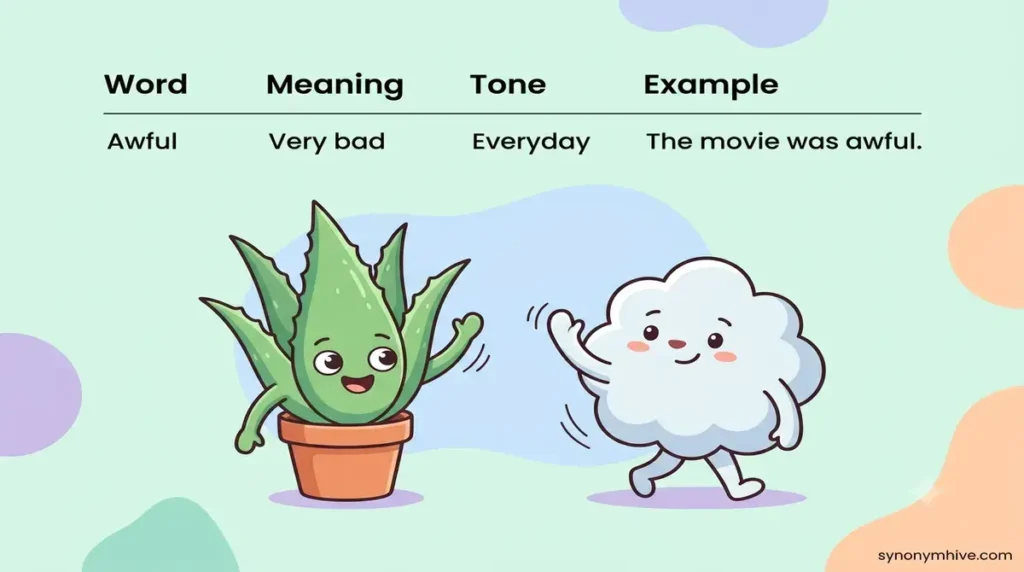
The table below groups useful phrases for terrible by tone and everyday use.
| Word | Meaning | Tone | Example |
|---|---|---|---|
| Awful | Very bad | Everyday | The movie was awful. |
| Horrible | Extremely unpleasant | Everyday | We had horrible traffic. |
| Bad | Not good | Everyday | It was a bad idea. |
| Poor | Low quality | Everyday | The service was poor. |
| Miserable | Causing sadness or discomfort | Everyday | We had miserable weather. |
| Unpleasant | Not enjoyable | Everyday | It was an unpleasant meeting. |
| Dreadful | Very bad | Everyday | The food tasted dreadful. |
| Pathetic | Very disappointing | Everyday | That excuse was pathetic. |
| Lousy | Very poor quality | Informal | The hotel was lousy. |
| Rotten | Very bad | Informal | We had rotten luck. |
| Crummy | Poor quality | Informal | The seats were crummy. |
| Brutal | Extremely difficult | Informal | The exam was brutal. |
| Rough | Hard or unpleasant | Everyday | We had a rough day. |
| Disastrous | Causing great damage | Formal | The launch was disastrous. |
| Appalling | Shockingly bad | Formal | The conditions were appalling. |
| Atrocious | Extremely bad | Formal | The writing was atrocious. |
| Abysmal | Very poor | Formal | Customer service was abysmal. |
| Deplorable | Deserving criticism | Formal | The behavior was deplorable. |
| Shameful | Morally wrong | Formal | His actions were shameful. |
| Dire | Extremely serious | Formal | The situation became dire. |
| Catastrophic | Causing great destruction | Formal | The flood was catastrophic. |
| Devastating | Causing severe damage | Formal | It was devastating news. |
| Grim | Very serious | Formal | The forecast looked grim. |
| Nightmarish | Like a nightmare | Informal | The trip became nightmarish. |
| Hideous | Extremely ugly or unpleasant | Everyday | The smell was hideous. |
| Ghastly | Horrible or shocking | Formal | It was a ghastly accident. |
| Inferior | Lower quality | Formal | The materials were inferior. |
| Faulty | Containing defects | Everyday | The machine was faulty. |
| Hopeless | Impossible to improve | Everyday | The plan looked hopeless. |
| Disaster | Complete failure | Informal | The party was a disaster. |
This collection gives you alternatives for school assignments, business writing, conversations, reviews, and creative stories.
Synonyms For Terrible By Strength
Not every synonym expresses the same level of negativity.
| Level | Synonyms | Best Use |
|---|---|---|
| Mild | Bad Poor Unpleasant Rough | Everyday situations |
| Moderate | Awful Miserable Dreadful Lousy Pathetic | Conversations reviews |
| Strong | Horrible Appalling Atrocious Abysmal Disastrous | Essays reports articles |
| Extreme | Catastrophic Devastating Heinous Dire Nightmarish | Serious events emergencies |
Matching the strength of the word to the situation makes your writing more accurate.
Synonyms For Terrible By Part Of Speech
The word terrible is mainly an adjective, but related words can also appear as nouns and verbs.
Adjectives
These directly replace terrible.
- Awful.
- Horrible.
- Dreadful.
- Miserable.
- Appalling.
- Atrocious.
- Poor.
- Dire.
- Grim.
- Abysmal.
Example.
The performance was awful.
Nouns
These describe the condition or event.
- Disaster.
- Failure.
- Catastrophe.
- Misfortune.
- Tragedy.
Example.
The project became a complete disaster.
Verbs
These describe causing serious harm or problems.
- Damage.
- Harm.
- Ruin.
- Worsen.
- Destroy.
- Devastate.
Example.
The storm devastated several towns.
Using different parts of speech helps your writing flow better and reduces repetition.
Do Americans And British People Use Different Words
American and British English both use terrible, but some alternatives appear more often in one region than the other.
| American English | British English | Notes |
|---|---|---|
| Awful | Awful | Common in both. |
| Horrible | Horrible | Common in both. |
| Lousy | Rubbish | More common in the US and UK respectively. |
| Crummy | Dodgy | Informal regional choices. |
| Poor | Poor | Common in both. |
| Disastrous | Disastrous | Common in both. |
| Rotten | Rotten | Used in both but slightly more common in British English. |
Most synonyms work well in both American and British English. The biggest differences usually appear in informal speech, where local expressions are more common.
What Is The Best Word For A Resume
The word terrible almost never belongs on a resume. If you need to describe a challenge or problem, choose professional words that sound objective instead of emotional.
Better choices include.
- Challenging.
- Difficult.
- Complex.
- Unsatisfactory.
- Ineffective.
Example sentences.
Improved an unsatisfactory workflow.
Resolved challenging customer issues.
Turned an ineffective process into a productive system.
Managed complex projects under tight deadlines.
Improved poor team communication.
These alternatives focus on solving problems instead of simply criticizing them.
What Is The Best Word For An Essay
Essays usually require precise vocabulary. The best synonym depends on the situation.
Good choices include.
- Appalling.
- Atrocious.
- Disastrous.
- Dire.
- Unsatisfactory.
Example sentences.
The country faced a disastrous economic crisis.
Living conditions became appalling.
The experiment produced unsatisfactory results.
The report described the situation as dire.
The decision had disastrous consequences.
These words make academic writing clearer and more specific.
What Is The Best Word For Text Messages
Text messages usually sound better with simple words.
Good choices include.
- Awful.
- Bad.
- Rough.
- Horrible.
- Lousy.
Example sentences.
My day was awful.
The traffic was horrible.
I’m having a rough week.
That movie was lousy.
The weather is really bad today.
These choices sound natural in everyday conversations.
What Is The Best Word For Emails
Professional emails should stay respectful, even when discussing problems.
Good choices include.
- Unsatisfactory.
- Concerning.
- Poor.
- Ineffective.
- Unacceptable.
Example sentences.
The results were unsatisfactory.
We noticed poor communication during the project.
The current process appears ineffective.
The delay created an unacceptable outcome.
Customer feedback raised several concerns.
These words communicate problems without sounding overly emotional.
What Is The Best Word For Speaking
In everyday conversations, people usually prefer simple vocabulary.
Good choices include.
- Awful.
- Bad.
- Terrible.
- Rough.
- Horrible.
Example sentences.
The food was awful.
I had a terrible day.
Traffic was horrible this morning.
The game was pretty rough.
That idea was bad.
These words sound natural without feeling forced.
Real Life Examples Using Different Synonyms
Seeing words in real situations makes them easier to remember.
- The customer service was awful.
- We had miserable weather all weekend.
- The restaurant served poor quality food.
- His excuse sounded pathetic.
- The hurricane caused catastrophic damage.
- The team’s performance was disappointing.
- She received devastating news.
- The hotel room was filthy and unpleasant.
- The company’s losses were disastrous.
- That decision turned into a complete disaster.
- The classroom conditions were appalling.
- Their customer support was abysmal.
- The project ended in failure.
- We had a rough start but improved later.
- The broken equipment created serious problems.
Terrible Vs Awful
These words are very close in meaning, but they are not always identical.
| Terrible | Awful |
|---|---|
| Very bad or extremely unpleasant. | Very bad but often more common in conversation. |
| Used in formal and informal writing. | Mostly casual speech and everyday writing. |
| Can describe fear, quality, or events. | Often expresses disappointment. |
Examples.
The movie was terrible.
The pizza was awful.
Terrible Vs Horrible
People often use these words interchangeably, but there is a slight difference.
| Terrible | Horrible |
|---|---|
| Very bad. | More emotional and vivid. |
| Works in many situations. | Often emphasizes disgust or shock. |
| Common in daily speech. | Slightly stronger in many contexts. |
Examples.
We had terrible traffic.
The smell was horrible.
Looking for a better alternative? Visit Synonyms For Happy Ultimate Guide: Alternatives 2026.
Terrible Vs Bad
Both words express negative ideas, but their strength is different.
Bad is a general word.
Terrible expresses a much stronger opinion.
Examples.
The meal was bad.
The meal was terrible.
Choosing the stronger word only makes sense when the situation truly deserves it.
Common Mistakes To Avoid
Using the wrong synonym can confuse readers or make your writing sound exaggerated.
Using Terrible For Small Problems
Not every inconvenience is terrible.
Waiting five minutes is usually not terrible.
Missing an important deadline might be.
Confusing Horrible With Dangerous
Something can be horrible because it looks unpleasant.
It does not always mean it is dangerous.
Using Awful In Formal Reports
Words like unsatisfactory or ineffective usually fit business writing better than awful.
Treating Every Synonym As Equal
Each synonym has its own meaning.
Disastrous describes major failure.
Poor describes low quality.
Pathetic suggests disappointment.
Dire highlights serious urgency.
Choose the word that best matches the situation.
What Are The Opposite Words Of Terrible
Sometimes you need the opposite meaning.
| Antonym | Meaning |
|---|---|
| Excellent | Extremely good. |
| Great | Very good. |
| Wonderful | Extremely pleasant. |
| Outstanding | Better than expected. |
| Superb | Excellent quality. |
| Fantastic | Extremely impressive. |
| Amazing | Causing admiration. |
These opposites help create stronger comparisons in your writing.
Quick Tips For Choosing The Right Word
- Use bad for everyday situations.
- Choose awful in casual conversations.
- Use horrible for stronger emotional impact.
- Pick unsatisfactory in professional writing.
- Choose disastrous for major failures.
- Use catastrophic only for extreme events.
- Match the strength of the word to the situation.
- Avoid repeating terrible throughout the same piece of writing.
Choosing the right synonym makes your writing more precise, more engaging, and easier for readers to understand.
Which Synonyms For Terrible Sound Most Natural In Everyday English
Native English speakers don’t rely on terrible every time something goes wrong. They switch words depending on the situation.
Some common alternatives include.
- Awful.
- Bad.
- Rough.
- Horrible.
- Lousy.
- Miserable.
- A mess.
Examples.
The movie was awful.
I’ve had a rough day.
The traffic was horrible this morning.
That restaurant was lousy.
The whole trip turned into a mess.
These words sound natural in daily conversations and text messages.
Which Synonyms For Terrible Are Too Formal
Some words fit academic papers, news reports, or professional writing better than casual conversations.
Examples include.
- Appalling.
- Atrocious.
- Deplorable.
- Heinous.
- Catastrophic.
- Dire.
- Unsatisfactory.
You probably wouldn’t tell a friend their lunch was atrocious, but that word may fit a formal review or report.
How Can You Avoid Repeating Terrible In Your Writing
Repeating terrible several times makes your writing feel flat. Replace it with words that match the exact meaning.
Instead of writing.
The weather was terrible. The hotel was terrible. The service was terrible.
Try this.
The weather was miserable.
The hotel was disappointing.
The service was poor.
The food was awful.
Using different words keeps readers interested and paints a clearer picture.
Which Synonyms Fit Different Situations Best
The best synonym depends on the context.
| Situation | Best Synonym |
|---|---|
| Bad customer service | Poor |
| Difficult day | Rough |
| Very bad movie | Awful |
| Serious accident | Catastrophic |
| Low quality product | Inferior |
| Failed business plan | Disastrous |
| Dirty smell | Horrible |
| Weak performance | Unsatisfactory |
| Shocking behavior | Appalling |
| Extreme emergency | Dire |
Choosing a word that matches the situation makes your writing more accurate.
Common Idioms That Express Something Terrible
English speakers often use idioms instead of repeating terrible.
- A train wreck.
- A complete disaster.
- Fell apart.
- Went downhill.
- A nightmare.
Examples.
The presentation was a complete disaster.
Our vacation turned into a nightmare.
Everything went downhill after lunch.
The meeting fell apart in minutes.
His first attempt was a train wreck.
These expressions make conversations sound more natural and engaging.
What Words Should You Avoid Using Instead Of Terrible
Not every negative word can replace terrible. Some have very different meanings and can confuse readers.
| Word | Why It Doesn’t Always Work | Better Choice |
|---|---|---|
| Weird | Means unusual, not bad | Strange or odd |
| Scary | Means frightening | Horrible or terrifying if fear is the focus |
| Cheap | Refers to low cost or low quality | Poor or inferior |
| Sad | Describes emotion | Miserable if describing an experience |
| Angry | Describes a feeling | Terrible or awful if describing an event |
Before replacing terrible, make sure the new word expresses the same idea instead of changing the meaning.
How Do Books And News Articles Use Synonyms For Terrible
Professional writers choose different synonyms based on the topic instead of repeating one adjective.
News articles often use words like:
- Catastrophic
- Devastating
- Dire
- Disastrous
Books and novels commonly use:
- Grim
- Dreadful
- Horrible
- Miserable
- Appalling
Product reviews often include:
- Poor
- Awful
- Lousy
- Unsatisfactory
- Inferior
Reading different kinds of writing helps you learn which synonym sounds most natural in each situation.
What Questions Should You Ask Before Choosing A Synonym
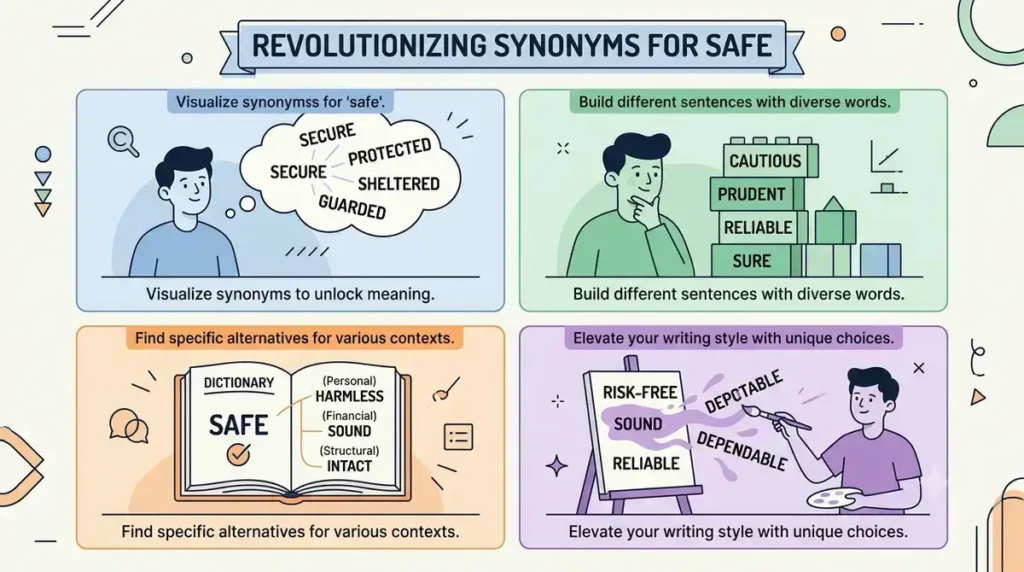
Choosing the best replacement becomes easier if you answer a few simple questions.
- Is the situation slightly bad or extremely bad?
- Am I writing formally or casually?
- Does the word describe quality, emotion, behavior, or an event?
- Will my readers easily understand this word?
- Does the synonym sound too dramatic for the situation?
Thinking about these questions helps you choose vocabulary that fits naturally instead of sounding exaggerated.
How Can Students Practice Synonyms For Terrible Every Day
The fastest way to remember new vocabulary is by using it regularly.
- Replace terrible with a different synonym whenever you write a sentence.
- Read newspaper articles and notice which negative words journalists prefer.
- Keep a vocabulary notebook with your favorite synonyms and example sentences.
- Challenge yourself to describe the same situation using three different synonyms.
- Practice speaking with friends by using new words in everyday conversations.
Small daily practice builds a stronger vocabulary and makes your speaking and writing sound more natural over time.
Need a similar word? Read Synonyms for Fascinating: The Ultimate Simple Guide (2026).
Conclusion
Learning synonyms for terrible gives you more control over your writing and helps you avoid repeating the same word. Instead of using terrible every time, you can choose awful for casual conversations, poor for quality, disastrous for major failures, appalling for shocking situations, or unsatisfactory for professional writing. Matching the word to the context makes your message more precise and easier to understand. Keep practicing these alternatives in emails, essays, conversations, and stories. The more you use them, the more natural and confident your English will become.
Frequently Asked Questions
What’s Another Way To Say Terrible
Some of the best expressions for terrible include awful, horrible, dreadful, miserable, disastrous, appalling, atrocious, poor, and abysmal. The right choice depends on the strength and context of your message.
What Is The Difference Between Terrible And Awful
Both words mean very bad. Awful sounds slightly more casual, while terrible works well in both everyday and formal writing.
Which Synonym Is Best For Formal Writing
Words like unsatisfactory, appalling, atrocious, dire, and disastrous usually fit reports, essays, and professional documents.
Can Terrible Describe Feelings
Yes. People often say they feel terrible when they are sick, upset, guilty, or emotionally overwhelmed.
What Is The Opposite Of Terrible
Common opposites include excellent, great, wonderful, fantastic, superb, and outstanding.
Which Synonyms Do Native English Speakers Use Most
Native speakers commonly use awful, bad, rough, horrible, poor, and lousy because they sound natural in everyday conversations.
What’s Another Way To Say Something Was Really Bad
Instead of saying something was really bad, you can use alternatives for terrible like awful, disastrous, miserable, or appalling, depending on the situation.