
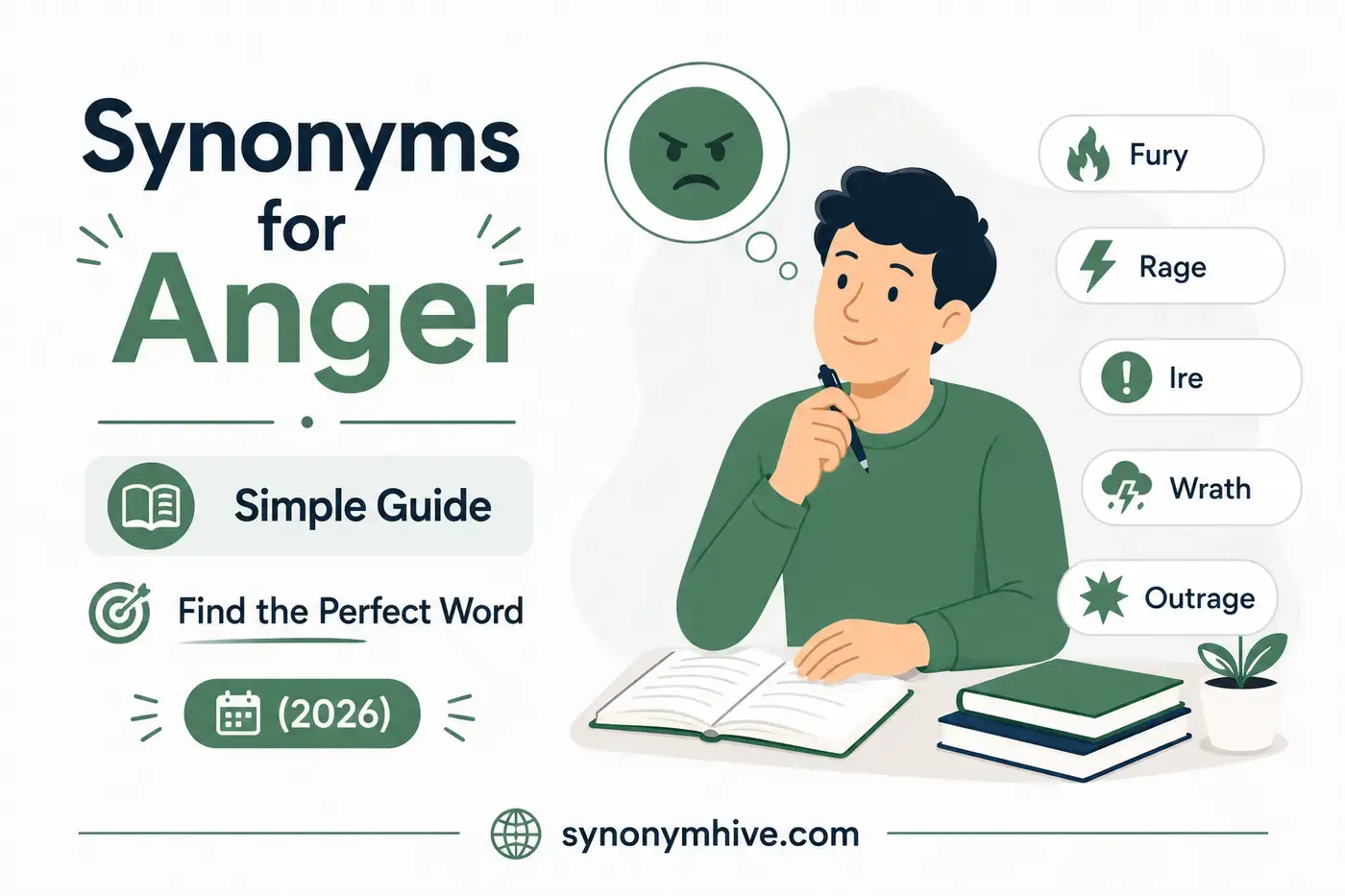
You might be writing an essay, story, email, or social media post and notice you’ve used the word anger several times. Repeating the same word can make your writing feel flat. Learning alternaties for anger helps you describe different levels of emotion with greater accuracy and impact.
Synonyms for anger are words that describe feelings of annoyance, frustration, irritation, rage, or fury. Common alternatives include annoyance, irritation, resentment, outrage, fury, wrath, and indignation. The best choice depends on how strong the emotion is and the situation you are describing.
Some words describe a mild feeling of being upset. Others express intense emotions that are difficult to control. Choosing the right synonym helps readers understand exactly how someone feels. This guide explains the meaning and history of the word, shares a complete list of useful alternatives, compares similar words, and shows you the best synonym for different situations.
You may also like Synonyms for Confidence Ultimate Guide Quick List (2026).
What Does Anger Mean
Anger is a strong feeling of displeasure or hostility that happens when someone feels hurt, treated unfairly, disappointed, or threatened. Everyone experiences anger from time to time. The feeling can be mild, like being irritated by traffic, or extremely strong, like feeling furious after a serious betrayal.
Here are a few examples.
- His anger faded after the misunderstanding was cleared up.
- She struggled to control her anger during the meeting.
- Their anger grew after hearing the unfair decision.
- He spoke without showing any anger.
Learning substitutes for anger helps you describe these different emotions more accurately instead of using the same word every time.
Where Did The Word Anger Come From
The word anger comes from Old Norse and later became part of Middle English. In its earliest form, it referred to grief, distress, or deep emotional pain before gradually taking on the meaning of strong displeasure or hostility.
Today, anger is one of the most common emotion words in English. Writers, speakers, and students use it to describe feelings that range from mild irritation to intense rage.

Master List Of Synonyms For Anger
The table below includes more than thirty useful phrases for anger grouped by tone and intensity.
| Word | Meaning | Tone | Example |
|---|---|---|---|
| Annoyance | Mild irritation | Simple | His annoyance quickly disappeared. |
| Irritation | Feeling bothered | Everyday | She showed irritation during the discussion. |
| Frustration | Feeling blocked or disappointed | Everyday | His frustration was easy to notice. |
| Resentment | Long lasting bitterness | Formal | Years of resentment remained. |
| Outrage | Extreme anger about unfairness | Formal | The decision caused public outrage. |
| Fury | Violent anger | Formal | Her fury shocked everyone. |
| Rage | Uncontrolled anger | Formal | He was shaking with rage. |
| Wrath | Intense anger | Formal | The king showed his wrath. |
| Indignation | Anger about unfair treatment | Formal | She spoke with indignation. |
| Bitterness | Lingering anger | Formal | Bitterness remained after the argument. |
| Exasperation | Extreme frustration | Formal | His exasperation was obvious. |
| Displeasure | Mild dissatisfaction | Formal | She expressed her displeasure calmly. |
| Temper | Angry mood | Everyday | He lost his temper. |
| Hostility | Open anger | Formal | The meeting ended in hostility. |
| Aggravation | Feeling annoyed | Everyday | Traffic caused aggravation. |
| Crossness | Mild anger | UK | His crossness soon passed. |
| Mad | Angry | Casual | She was mad about the mistake. |
| Upset | Emotionally bothered | Everyday | He was upset after the news. |
| Heated feelings | Strong emotions | Neutral | Heated feelings filled the room. |
| Discontent | Lack of satisfaction | Formal | Employee discontent increased. |
| Vexation | Annoyance | Formal | Minor delays caused vexation. |
| Storm | Sudden anger | Literary | A storm of anger followed. |
| Fit | Sudden burst of anger | Casual | He threw a fit. |
| Blowup | Angry argument | Casual | Their blowup surprised everyone. |
| Meltdown | Emotional loss of control | Casual | She had a meltdown after work. |
| Steam | Anger | Slang | He let off some steam. |
| Fire | Intense emotion | Literary | Fire filled his voice. |
| Enmity | Deep hostility | Formal | Years of enmity divided them. |
| Offense | Feeling insulted | Neutral | She took offense immediately. |
| Disgust | Strong dislike mixed with anger | Neutral | His disgust was obvious. |
Which Synonyms Show Different Levels Of Anger
Not every situation calls for the same word. Some emotions are mild while others describe complete loss of control.
| Intensity | Best Synonyms |
|---|---|
| Very Mild | Annoyance Irritation Displeasure |
| Mild | Frustration Aggravation Upset |
| Moderate | Resentment Temper Indignation |
| Strong | Outrage Fury Wrath |
| Extreme | Rage Hostility Enmity |
Choosing the right level makes your writing more believable and easier to understand.
Which Parts Of Speech Are These Words
Most expressions for anger are nouns because they describe emotions. Some related words also work as adjectives or verbs.
Nouns
- Anger.
- Rage.
- Fury.
- Frustration.
- Irritation.
- Outrage.
- Wrath.
- Hostility.
Adjectives
- Angry.
- Furious.
- Irritated.
- Frustrated.
- Resentful.
- Outraged.
Verbs
- Annoy.
- Irritate.
- Enrage.
- Upset.
- Infuriate.
Learning these forms helps you build more natural sentences.
Are There Any US And UK Differences
Most emotion words are understood in both American and British English.
A few expressions are more common in one region.
| More Common In The US | More Common In The UK |
|---|---|
| Mad | Cross |
| Blowup | Crossness |
| Meltdown | Fed up |
| Upset | Put out |
For American readers, mad, upset, frustrated, furious, and angry sound the most natural in everyday conversations.
What Is The Best Word For A Resume
A resume rarely needs emotion words, but they may appear when describing conflict resolution, leadership, or communication skills. In those cases, use professional language instead of dramatic expressions.
Good choices include.
- Frustration.
- Disagreement.
- Conflict.
- Concern.
- Dissatisfaction.
Example sentences.
Resolved customer frustration through effective communication.
Managed workplace conflicts with professionalism.
Addressed client concerns before they became larger issues.
These alternatives sound professional and focus on problem solving instead of emotion.
What Is The Best Word For An Essay
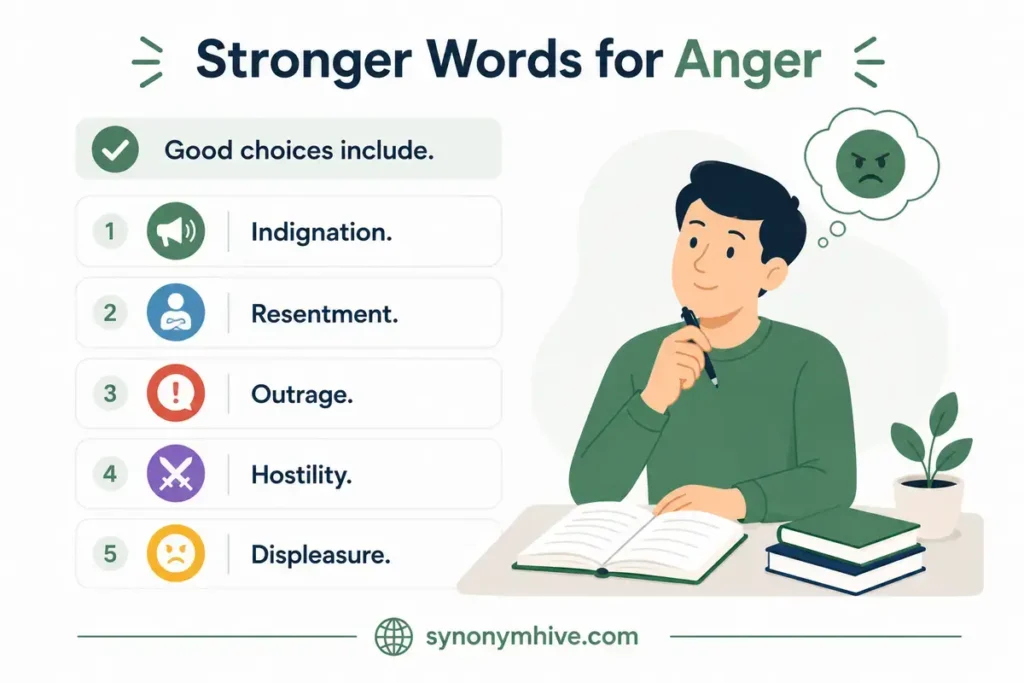
Essays often require precise vocabulary. The best synonym depends on the situation you are describing.
Good choices include.
- Indignation.
- Resentment.
- Outrage.
- Hostility.
- Displeasure.
Example sentences.
Public outrage followed the announcement.
The character’s resentment shaped every decision.
The speech expressed deep indignation about injustice.
These words help academic writing sound clear without becoming overly dramatic.
What Is The Best Word For Text Messages
Text messages usually use simple and familiar words.
The most common choices include.
- Mad.
- Upset.
- Annoyed.
- Frustrated.
- Tick off.
Example sentences.
I’m really mad about what happened.
That traffic had me so frustrated.
I’m upset but I’ll be okay.
His comment really ticked me off.
What Is The Best Word For Emails
Professional emails should stay calm and respectful even when discussing problems.
These alternatives work well.
- Concern.
- Dissatisfaction.
- Frustration.
- Disappointment.
- Objection.
Example sentences.
I would like to express my concern about the recent delay.
Several customers reported frustration with the new process.
We appreciate your response but remain disappointed with the outcome.
These words explain the situation without sounding emotional or confrontational.
What Is The Best Word For Speaking
People usually choose everyday vocabulary during conversations.
Common alternatives include.
- Mad.
- Upset.
- Annoyed.
- Frustrated.
- Furious.
Example sentences.
I’m still upset about yesterday.
She looked annoyed during the meeting.
He was furious after the game.
Everyone felt frustrated by the delay.
Real Life Examples Using Different Synonyms
Seeing these words in real situations makes them much easier to understand.
- His annoyance disappeared after the apology.
- She struggled to hide her frustration.
- Public outrage spread across social media.
- Years of resentment damaged their friendship.
- His irritation grew during the long meeting.
- The unfair decision caused widespread indignation.
- She spoke calmly despite her anger.
- He lost his temper after the argument.
- The coach showed no hostility toward the players.
- The delay created disappointment among customers.
- My little brother was upset because the game ended early.
- The unfair rule filled the students with fury.
- Traffic caused plenty of aggravation this morning.
- Her bitterness slowly faded with time.
- His rage frightened everyone in the room.
Anger Vs Rage
These words describe similar emotions but differ in intensity.
| Anger | Rage |
|---|---|
| General feeling of being upset. | Extremely intense and difficult to control. |
| Can be mild or strong. | Almost always very strong. |
| Common in everyday speech. | Used for powerful emotional situations. |
Examples.
He felt anger after hearing the news.
He was filled with rage after the attack.
Find similar expressions in Synonyms for Love: Heartfelt Alternatives (2026).
Anger Vs Frustration
People often confuse these emotions even though they have different causes.
| Anger | Frustration |
|---|---|
| Usually caused by unfair treatment or conflict. | Usually caused by obstacles or repeated failure. |
| May lead to confrontation. | Often leads to discouragement. |
| Can appear suddenly. | Often builds over time. |
Examples.
She felt anger after being insulted.
He felt frustration because the computer kept crashing.
Fury Vs Wrath
Both words describe powerful emotions, but they are used differently.
| Fury | Wrath |
|---|---|
| Common in modern English. | More common in literature and historical writing. |
| Describes explosive anger. | Often suggests punishment or justice. |
| Used in speech and writing. | Mostly used in formal or literary contexts. |
Examples.
She was shaking with fury.
The story describes the king’s wrath.
Common Mistakes To Avoid
Choosing the wrong emotion word can change the meaning of your sentence.
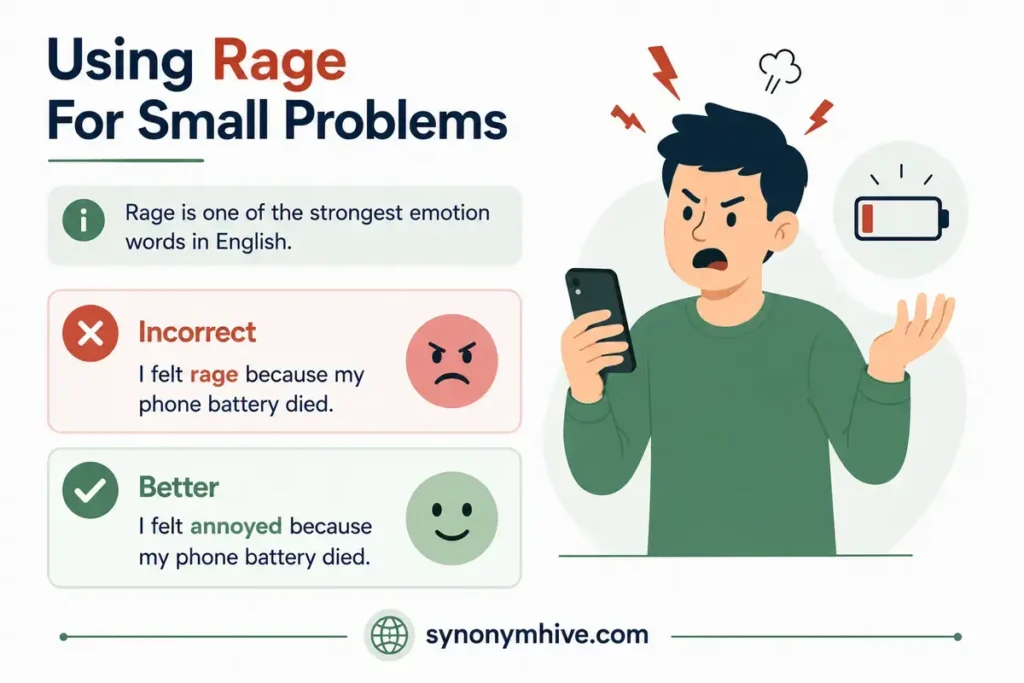
Using Rage For Small Problems
Rage is one of the strongest emotion words in English.
Incorrect.
I felt rage because my phone battery died.
Better.
I felt annoyed because my phone battery died.
Confusing Frustration And Anger
Frustration happens when something blocks your progress. Anger often comes from feeling hurt, insulted, or treated unfairly.
Using Mad In Formal Writing
Mad sounds natural in conversations but is less suitable for essays and business documents. Choose anger, frustration, or indignation instead.
Treating Every Synonym As Equal
Not every alternative has the same meaning. Annoyance is much weaker than fury. Resentment usually lasts much longer than irritation. Understanding these differences makes your writing more accurate.
What Are The Opposite Words Of Anger
Sometimes you need to describe calm emotions instead.
| Antonym | Meaning |
|---|---|
| Calm | Peaceful feeling. |
| Peace | Freedom from conflict. |
| Patience | Ability to stay calm. |
| Happiness | Positive emotion. |
| Joy | Great pleasure. |
| Contentment | Quiet satisfaction. |
Quick Tips For Choosing The Right Word
- Use annoyance for small everyday problems.
- Use frustration when progress is blocked.
- Use resentment for lasting negative feelings.
- Use outrage when reacting to injustice.
- Use fury and rage only for very intense emotions.
- Choose professional words in business writing.
- Match the strength of the word to the situation.
Using the right synonym makes your writing feel more realistic and helps readers understand exactly what someone is feeling.
How Do Native English Speakers Describe Anger
Native English speakers rarely repeat the word anger in every conversation. They naturally switch between different expressions depending on how strong the emotion is.
Some of the most common choices include.
- Annoyed.
- Upset.
- Frustrated.
- Mad.
- Furious.
- Irritated.
- Fed up.
These words sound natural because they match different situations. Someone who waits in traffic might feel annoyed, while a person who experiences betrayal may feel furious.
Which Synonyms Sound Too Strong For Everyday Situations
Some words describe extreme emotions and should not be used for small problems.
Examples include.
- Rage.
- Wrath.
- Fury.
- Outrage.
- Hostility.
These expressions fit serious conflicts, major disagreements, or dramatic storytelling. For everyday situations, words like annoyed, frustrated, or upset usually sound more natural.
How Can You Avoid Repeating Anger In Your Writing
Repeating the same emotion word over and over can make your writing feel dull. A wider vocabulary keeps your sentences interesting while giving readers a clearer picture. Instead of repeating anger, try alternatives that match the situation.
- Use annoyance for minor problems.
- Use irritation for small but noticeable discomfort.
- Use frustration when something prevents success.
- Use resentment for long lasting negative feelings.
- Use fury or rage only for powerful emotional moments.
Choosing words based on the level of emotion makes your writing more engaging.
Which Synonyms Fit Different Types Of Writing
Different kinds of writing require different vocabulary.
| Writing Type | Best Choices |
|---|---|
| Text message | Mad Upset Annoyed |
| Conversation | Frustrated Mad Irritated |
| Story | Fury Rage Resentment |
| Business email | Concern Dissatisfaction Frustration |
| School essay | Outrage Indignation Hostility |
| News article | Outrage Public anger Resentment |
| Speech | Frustration Concern Disappointment |
Matching the word to the audience helps your message sound more natural and appropriate.
Which Synonyms Should English Learners Learn First
If you are building your vocabulary, start with the words you are most likely to hear every day.
- Angry.
- Mad.
- Upset.
- Annoyed.
- Frustrated.
- Irritated.
- Furious.
Once you are comfortable with these words, move on to advanced choices like indignation, wrath, hostility, and resentment.
Which Idioms Express Anger Naturally
English speakers often use idioms instead of direct emotion words. These expressions make conversations sound more natural.
Some common examples include.
- Blow your top.
- Lose your temper.
- See red.
- Hit the roof.
- Be up in arms.
Examples.
He blew his top after the mistake.
She saw red when she read the message.
The neighbors were up in arms about the new rule.
Use these idioms carefully because they are informal and may not fit professional writing.

How Can Reading And Movies Improve Your Emotion Vocabulary
Books, movies, and television shows are excellent places to discover new ways to describe emotions. Notice how authors and screenwriters avoid repeating the same word. One scene may describe a character as irritated, while another uses frustrated or furious. Keeping a notebook of new words and writing your own example sentences will help you remember them much faster.
Practice Exercise To Build Your Vocabulary
Replace anger with a more suitable synonym in each sentence.
- His anger disappeared after the apology.
Possible answer.
His annoyance disappeared after the apology.
- Her anger grew during the meeting.
Possible answer.
Her frustration grew during the meeting.
- The decision caused anger across the country.
Possible answer.
The decision caused public outrage across the country.
- His anger lasted for years.
Possible answer.
His resentment lasted for years.
- She could not control her anger.
Possible answer.
She could not control her fury.
These exercises help you choose words based on meaning instead of simply picking random synonyms.
Find similar expressions in Synonyms for Grateful: Better Words 2026.
Conclusion
Learning synonyms for anger helps you describe emotions with greater accuracy and confidence. Instead of repeating the same word, you can choose alternatives that match the situation and the strength of the feeling. Mild emotions may call for annoyance or irritation, while stronger moments are better described with outrage, fury, or rage.
The more you practice these words in conversations, essays, emails, and stories, the more natural they will become. A richer vocabulary makes your writing more engaging, more precise, and easier for readers to connect with.
Frequently Asked Questions
What’s Another Way To Say Anger.
Some of the best phraes lfor anger include annoyance, irritation, frustration, resentment, outrage, fury, rage, and wrath. The best choice depends on how strong the emotion is.
What Is The Difference Between Anger And Rage.
Anger is a general feeling of being upset. Rage describes a much stronger emotion that is difficult to control.
Which Synonym Sounds Best In Professional Writing.
Words like frustration, concern, dissatisfaction, and displeasure sound more professional than rage or fury.
Is Mad A Good Synonym For Anger.
Yes. Mad is one of the most common everyday alternatives in American English. It works well in conversations but sounds less formal than anger.
Which Synonym Shows The Strongest Emotion.
Rage, wrath, and fury are among the strongest expressions for anger because they describe intense emotional reactions.
What Is The Difference Between Frustration And Irritation.
Frustration usually happens when something blocks your progress. Irritation describes a smaller feeling of annoyance that often disappears quickly.
Which Synonyms Do Native English Speakers Use Most.
Native speakers often use mad, upset, annoyed, frustrated, and furious because these words sound natural in everyday conversations.