
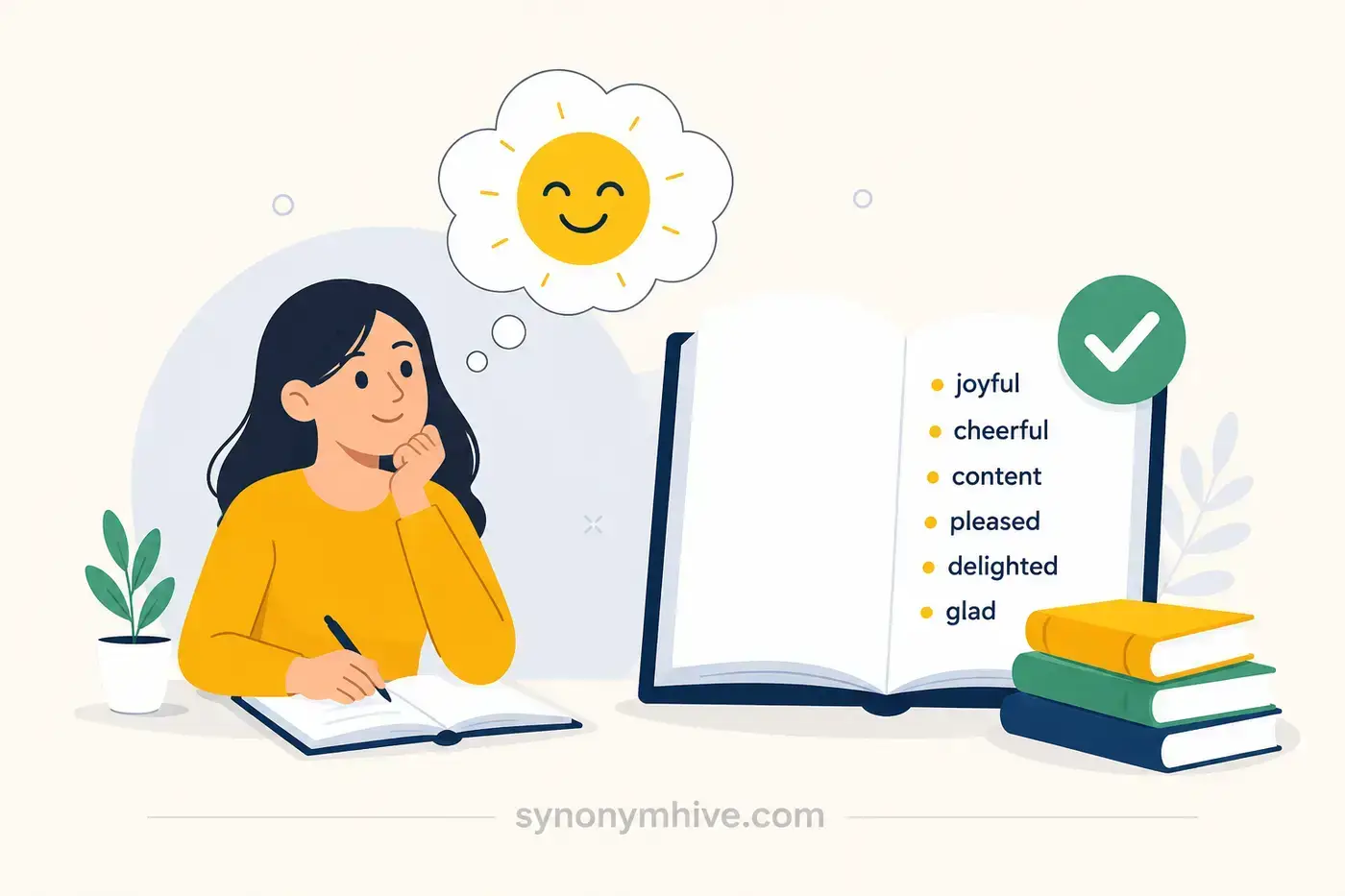
You’re writing an email, finishing an essay, or sending a text message. You type the word happy several times and notice your writing sounds repetitive. Learning synonyms for happy helps you express different levels of joy, satisfaction, and excitement while making your writing more interesting. English has many alternatives to happy. Some describe quiet contentment, while others show excitement, celebration, or deep joy. Choosing the right word helps readers understand exactly how someone feels.
Alternatives for happy include joyful, cheerful, delighted, pleased, glad, content, thrilled, excited, satisfied, and overjoyed. The best choice depends on the situation, your audience, and how strongly you want to express happiness.
This guide explains the history and meaning of happy, provides more than 30 useful alternatives, compares similar words, and shows you how to choose the best synonym for every situation.
You may also like Synonyms For Safe Simple Guide Top Picks (2026).
Where Does The Word Happy Come From
The word happy comes from the Old Norse word happ, which meant luck, chance, or good fortune. During the Middle Ages, English speakers began using happy to describe someone who was fortunate or lucky.
Over time, the meaning changed. Today, happy usually describes a feeling of joy, pleasure, satisfaction, or contentment rather than good luck. People use the word in everyday conversations, books, emails, speeches, and social media.
Examples
She felt happy after passing the exam.
We’re happy to help our customers.
The children looked happy during the trip.
I’m happy with the final result.
What Does Happy Mean In Plain English
In simple English, happy means feeling good, pleased, joyful, or satisfied. Someone who is happy enjoys what is happening or feels positive about life or a particular situation.
For example.
A happy child smiles and laughs.
An employee who feels valued enjoys coming to work.
A happy customer likes the product they bought.
Although happy works in almost every situation, using different phrases makes your writing richer and avoids repetition.
Master List Of Synonyms For Happy
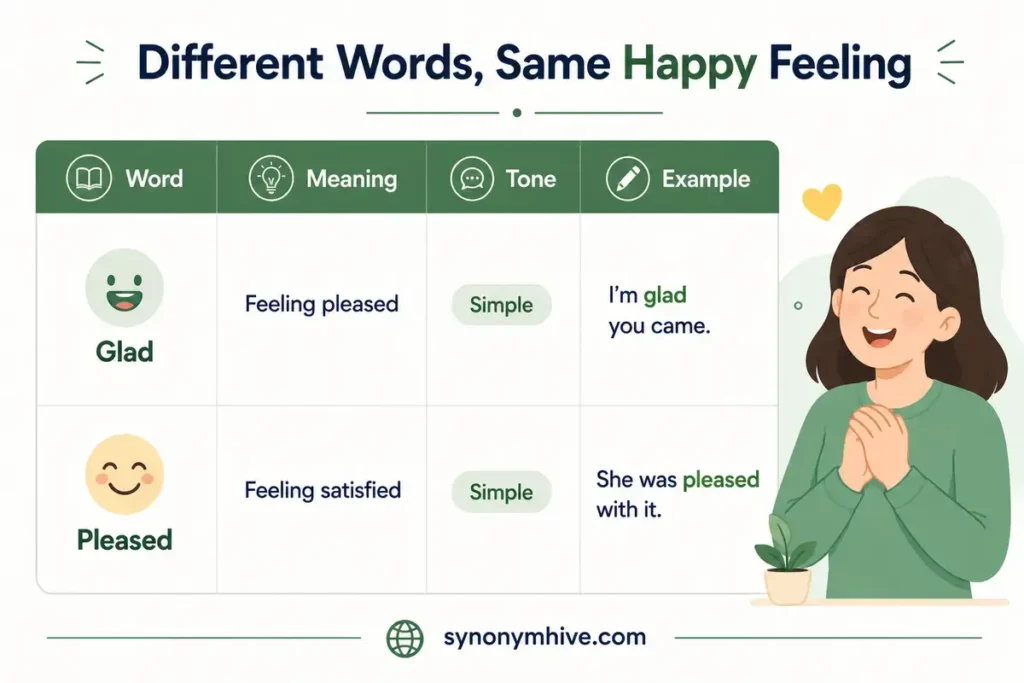
The table below groups useful expressions for happy by tone and everyday use.
| Word | Meaning | Tone | Example |
|---|---|---|---|
| Glad | Feeling pleased | Simple | I’m glad you came. |
| Pleased | Feeling satisfied | Simple | She was pleased with her grade. |
| Cheerful | Full of positive energy | Everyday | He stayed cheerful all day. |
| Joyful | Filled with joy | Everyday | It was a joyful celebration. |
| Delighted | Very pleased | Everyday | We were delighted to hear the news. |
| Content | Peacefully satisfied | Everyday | She felt content with her life. |
| Satisfied | Feeling fulfilled | Everyday | Customers were satisfied with the service. |
| Excited | Looking forward to something | Everyday | The kids were excited about vacation. |
| Thrilled | Extremely excited | Everyday | He was thrilled to win the award. |
| Overjoyed | Filled with great happiness | Everyday | They were overjoyed by the surprise. |
| Smiling | Showing happiness | Informal | Everyone left smiling. |
| On Cloud Nine | Extremely happy | Informal | She was on cloud nine after graduating. |
| Elated | Extremely pleased | Formal | He felt elated after getting promoted. |
| Radiant | Showing happiness through appearance | Formal | She looked radiant on her wedding day. |
| Buoyant | Cheerful and confident | Formal | Investors remained buoyant. |
| Merry | Happy and festive | Everyday | Everyone was merry during the holidays. |
| Optimistic | Expecting good things | Everyday | She remained optimistic. |
| Hopeful | Believing things will improve | Everyday | They stayed hopeful. |
| Lighthearted | Carefree and cheerful | Everyday | The movie had a lighthearted tone. |
| Carefree | Free from worry | Everyday | Children often seem carefree. |
| Animated | Full of energy | Everyday | The discussion became animated. |
| Enthusiastic | Showing excitement | Formal | She was enthusiastic about the project. |
| Warm | Friendly and kind | Everyday | He gave us a warm welcome. |
| Thankful | Feeling appreciation | Everyday | I’m thankful for your kindness. |
| Delighted Beyond Words | Extremely happy | Informal | They were delighted beyond words. |
This collection gives you alternatives for essays, emails, resumes, speeches, conversations, stories, and creative writing.
Synonyms For Happy By Strength
Not every synonym expresses the same level of happiness.
| Level | Synonyms | Best Use |
|---|---|---|
| Mild | Glad, Pleased, Content, Satisfied | Everyday conversations |
| Moderate | Happy, Cheerful, Joyful, Hopeful, Optimistic | School and work |
| Strong | Delighted, Excited, Thrilled, Enthusiastic | Celebrations and speeches |
| Very Strong | Ecstatic, Elated, Overjoyed, Jubilant, Blissful | Major achievements and life events |
Choosing the right level makes your writing sound more accurate and believable.
Synonyms For Happy By Part Of Speech
The word happy is mainly an adjective, but related nouns and verbs can improve sentence variety.
Adjectives
These directly replace happy.
- Glad.
- Cheerful.
- Joyful.
- Delighted.
- Thrilled.
- Elated.
- Jubilant.
- Content.
- Blissful.
- Optimistic.
Example
She looked delighted after hearing the good news.
Nouns
These describe the feeling of happiness.
- Happiness.
- Joy.
- Delight.
- Pleasure.
- Cheerfulness.
- Contentment.
- Satisfaction.
- Excitement.
- Bliss.
- Gratitude.
Example
Her joy was easy to see.
Verbs
These describe creating or expressing happiness.
- Celebrate.
- Enjoy.
- Smile.
- Rejoice.
- Appreciate.
- Delight.
- Encourage.
- Cheer.
Example
The children celebrated their success together.
Using different parts of speech helps your writing flow naturally while reducing repetition.
Do Americans And British People Use Different Words
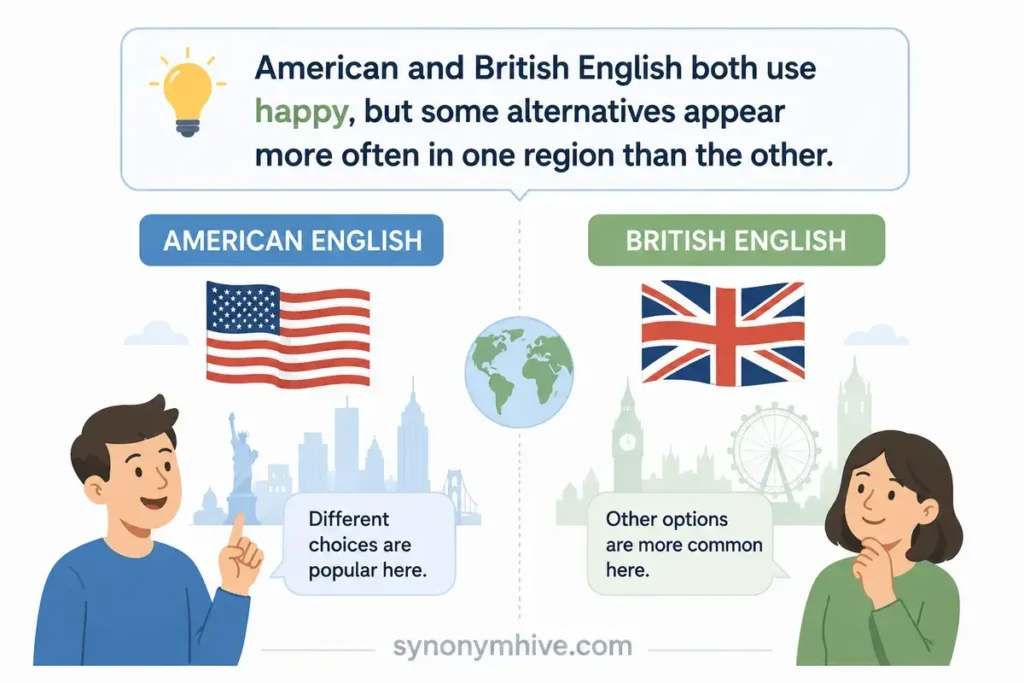
American and British English both use happy, but some alternatives appear more often in one region than the other.
| American English | British English | Notes |
|---|---|---|
| Happy | Happy | Common in both. |
| Glad | Chuffed | Chuffed is common in British English for feeling pleased. |
| Excited | Pleased | Both are common but used slightly differently. |
| Thrilled | Delighted | Popular in both regions. |
| Cheerful | Cheerful | Common in both. |
| Content | Content | Common in both. |
| Overjoyed | Overjoyed | Used in both. |
| On Cloud Nine | Over the Moon | Over the moon is especially common in British English. |
Most phrases for happy work well in both American and British English. Regional differences mainly appear in informal speech, where British speakers often say chuffed or over the moon, while American speakers usually choose thrilled, excited, or on cloud nine.
Which Synonym For Happy Fits A Resume Best
A resume should sound confident and professional. Avoid casual expressions that belong in conversations or text messages.
Enthusiastic
This word shows energy and a positive attitude toward work.
Example:
I am enthusiastic about helping customers and solving problems.
Motivated
Use this to show drive and commitment.
Example:
I am a motivated team member who enjoys learning new skills.
Positive
This highlights a good attitude without sounding emotional.
Example:
I maintain a positive approach in fast-paced workplaces.
Satisfied
Use this carefully when describing results or customers.
Example:
Improved customer satisfaction through faster response times.
These words sound stronger than simply saying you’re happy to do something.
Which Synonym For Happy Works Best In An Essay
Essays often require more precise vocabulary. Choose words that match the topic instead of repeating happy.
Joyful
Best for personal stories and descriptive writing.
Example:
The joyful crowd celebrated long after the game ended.
Content
Good for reflective essays.
Example:
After reaching her goal, she felt content with her progress.
Delighted
Useful for formal or academic writing.
Example:
The researchers were delighted by the unexpected results.
Optimistic
Perfect when discussing future goals or positive expectations.
Example:
The community remained optimistic despite the challenges.
Which Synonym For Happy Sounds Natural In Text Messages
Text messages are short and casual. Simple words usually sound best.
Excited
Example:
I’m so excited to see you tomorrow.
Glad
Example:
I’m glad everything worked out.
Pumped
A very informal choice.
Example:
I’m pumped for the concert tonight.
On Cloud Nine
A fun idiom for great happiness.
Example:
She has been on cloud nine since getting the job.
Need a similar word? Read Synonyms for Horrible Ultimate Guide 2026.
Which Synonym For Happy Should You Use In Emails
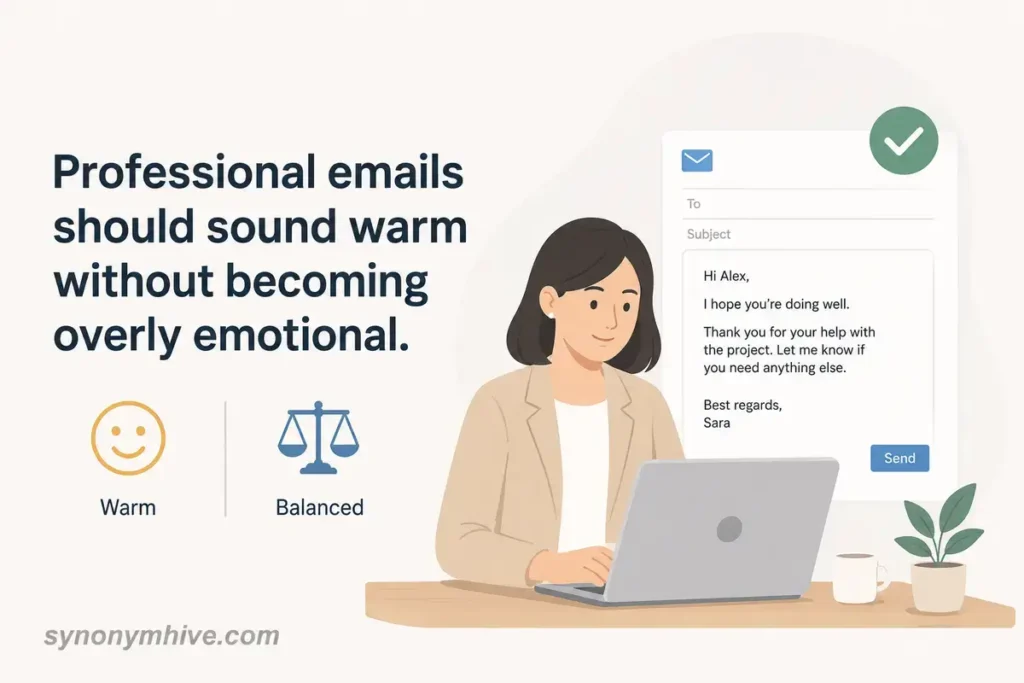
Professional emails should sound warm without becoming overly emotional.
Pleased
Example:
We’re pleased to announce the launch of our new service.
Delighted
Example:
I’m delighted to accept your invitation.
Grateful
Example:
We’re grateful for your continued support.
Happy
Sometimes the original word is still the best option.
Example:
I’d be happy to answer any questions.
Which Synonym For Happy Is Best For Speaking
When speaking, choose words that sound natural and fit the conversation.
Glad
Simple and friendly.
Example:
I’m glad you could make it.
Excited
Shows genuine enthusiasm.
Example:
We’re excited about the trip.
Thrilled
Expresses stronger emotion.
Example:
I’m thrilled to join the team.
Cheerful
Describes a person’s attitude.
Example:
She always stays cheerful, even during stressful days.
Real Life Examples Using Synonyms For Happy
Here are examples from everyday situations.
- The students were delighted when school ended early.
- Our neighbors were thrilled about their new baby.
- She felt content after finishing her first marathon.
- I’m glad we finally solved the problem.
- The audience became jubilant after the winning goal.
- We were pleased with the hotel’s excellent service.
- He stayed cheerful despite the rainy weather.
- My parents were overjoyed to see the whole family together.
- The manager looked satisfied with the team’s performance.
- Everyone was excited about the surprise party.
- The volunteers remained optimistic during the project.
- She looked radiant on her graduation day.
These examples show how each synonym creates a slightly different feeling.
Joyful Vs Cheerful
These words are similar, but they aren’t identical.
| Joyful | Cheerful |
|---|---|
| Describes deep happiness | Describes a positive attitude |
| Often connected to important events | Often describes daily behavior |
| Can be emotional | Usually lighthearted |
| Common in stories and celebrations | Common in conversations |
Example
The family felt joyful after the reunion.
The receptionist remained cheerful throughout the day.
Delighted Vs Thrilled
Many people treat these words as identical, but they express different levels of excitement.
| Delighted | Thrilled |
|---|---|
| Very pleased | Extremely excited |
| Slightly formal | More emotional |
| Suitable for emails | Common in conversations |
| Calm happiness | High-energy happiness |
Example
I was delighted to receive your invitation.
The children were thrilled to meet their favorite athlete.
Common Mistakes When Using Happy Synonyms
Learning new vocabulary also means knowing when not to use certain words.
Using Strong Words For Small Events
Avoid saying ecstatic after finding your keys. That level of emotion sounds exaggerated.
Mixing Formal And Informal Language
Don’t use pumped in a business proposal or academic paper.
Repeating The Same Synonym
Even if you stop repeating happy, repeating excited five times creates the same problem.
Choosing The Wrong Emotion
Content means peaceful satisfaction.
Excited means energetic anticipation.
These words are not interchangeable in every sentence.
Ignoring Your Audience
Professional writing usually needs words like pleased, delighted, or satisfied, while casual conversations allow pumped, on cloud nine, or super excited.
What Are The Opposites Of Happy
Sometimes knowing the opposite helps you understand the meaning better.
| Antonym | Meaning |
|---|---|
| Sad | Feeling unhappy |
| Miserable | Extremely unhappy |
| Depressed | Deep emotional sadness |
| Gloomy | Feeling negative |
| Disappointed | Feeling let down |
| Upset | Emotionally troubled |
| Unhappy | Not pleased |
| Heartbroken | Deep emotional pain |
| Discouraged | Losing confidence |
| Angry | Feeling strong frustration |
These antonyms help create stronger contrast in writing and speaking.
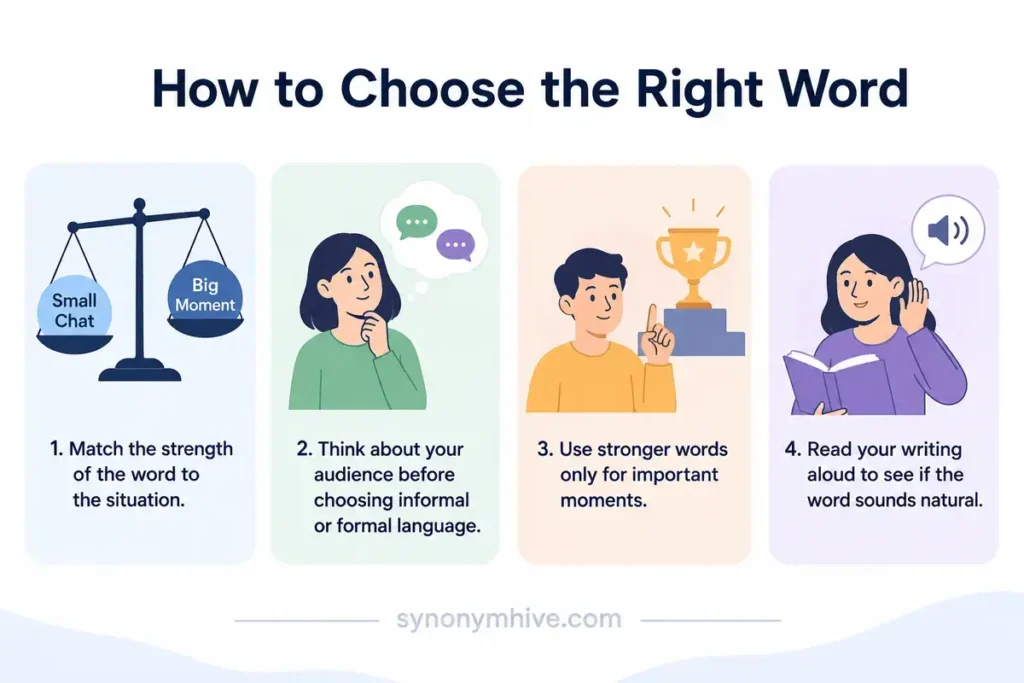
Quick Tips For Choosing The Right Synonym
- Match the strength of the word to the situation.
- Think about your audience before choosing informal or formal language.
- Use stronger words only for important moments.
- Read your writing aloud to see if the word sounds natural.
- Avoid repeating the same adjective in nearby sentences.
- Keep your vocabulary simple unless a stronger word adds real meaning.
- Remember that the best synonym is the one that clearly communicates your message, not the longest
- or most impressive word.
You may also like Synonyms for Hate: Powerful Alternatives (2026).
Conclusion
Happy is a useful everyday word, but relying on it too often can make your writing feel repetitive. By learning a wider range of synonyms, you can express different levels of joy, satisfaction, excitement, and contentment with greater accuracy. Choosing the right word also helps your message sound more natural, whether you’re writing an essay, email, resume, story, or social media post.
Use this guide as a quick reference whenever you need a better alternative to happy. With the right vocabulary, you can communicate your emotions more clearly, improve your writing style, and speak with greater confidence in any situation.
Frequently Asked Questions
What’s another way to say happy?
Some of the best alternatives for happy include glad, joyful, delighted, cheerful, pleased, content, thrilled, excited, elated, jubilant, and overjoyed. The best choice depends on how much happiness you want to express.
Which synonym for happy is best for professional writing?
Words like pleased, delighted, satisfied, and enthusiastic work well in professional emails, resumes, reports, and business communication because they sound positive without being too casual.
Is joyful stronger than happy?
Yes. Joyful usually expresses a deeper and more meaningful feeling than happy. People often use it for celebrations, achievements, family events, and emotional moments.
What’s another way to say I’m happy?
You could say I’m glad, I’m delighted, I’m thrilled, I’m pleased, I’m content, or I’m overjoyed. Pick the one that best matches the situation.
Are happy and content the same?
Not exactly. Happy is a general feeling of pleasure, while content describes calm satisfaction and peace with what you already have.
Which substitutes for happy do native English speakers use most?
Native speakers commonly use glad, excited, pleased, cheerful, thrilled, delighted, and happy in everyday conversations because these words sound natural and fit many situations.
Can I use happy in formal writing?
Yes. Happy is perfectly acceptable in formal writing, but you can sometimes improve variety by choosing alternatives like pleased, delighted, satisfied, or enthusiastic when they better fit the context.