

Writing an email or essay can get frustrating when you use the word believe over and over. The right alternative can make your writing sound more natural and keep readers interested. Find the most suitable replacement for believe based on the context you want to express.
Synonyms for believe are words or phrases that express accepting something as true trusting someone or holding an opinion. The best choice depends on the situation and the strength of your meaning. Each alternative has its own nuance, so selecting the right one improves clarity. A few show complete confidence. Others leave room for doubt.
This guide explains the meaning and history of the word believe shares a complete list of useful alternatives compares similar words and helps you pick the right one for every situation.
Learn more useful word alternatives in Synonyms for No Simple Guide Boost Your Vocabulary (2026).
What Does Believe Mean
The word believe means to accept something as true to trust someone or something or to think that an idea is correct.
People use it every day in many ways.
- I believe you.
- I believe this plan will work.
- I believe everyone deserves respect.
- I believe she arrived early.
The meaning changes a little depending on the sentence. Sometimes it shows trust. At other times, it shares an opinion. It can also show confidence even without complete proof. Using different synonyms allows you to express the right level of certainty in every situation.
Where Did The Word Believe Come From
The word believe comes from Old English. It developed from an older word that meant to hold something dear or trust it from the heart. Over the years, believe developed beyond simple acceptance. It came to include trusting others, having confidence, and treating something as true. Today, the word is widely used to express opinions, ideas, hopes, and personal views.
What Are The Best Synonyms For Believe
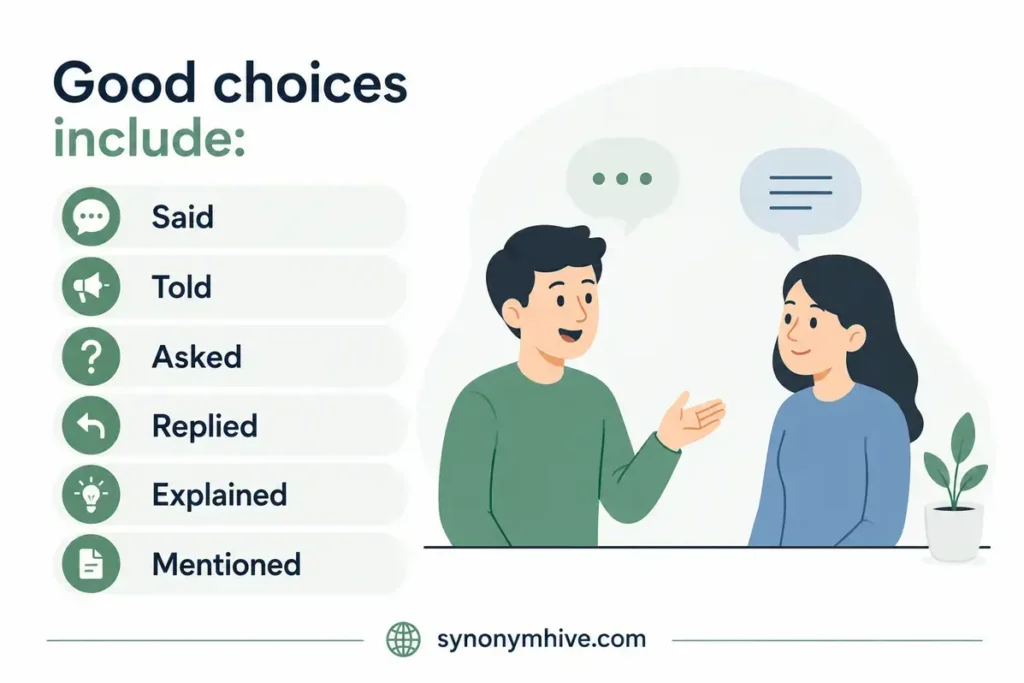
The table below includes many of the most useful synonyms along with their meanings tone and everyday examples.
| Word | Meaning | Tone | Example |
|---|---|---|---|
| Think | Have an opinion | Everyday | I think she is right. |
| Feel | Hold a personal opinion | Everyday | I feel this is the best choice. |
| Trust | Have confidence in someone | Everyday | I trust my coach. |
| Accept | Consider something true | Neutral | I accept the explanation. |
| Assume | Think without full proof | Neutral | We assumed the store was open. |
| Suppose | Think something may be true | Everyday | I suppose he forgot. |
| Imagine | Think or picture something | Everyday | I imagine it will rain later. |
| Expect | Think something will happen | Neutral | We expect good results. |
| Guess | Think without certainty | Casual | I guess they left already. |
| Reckon | Think or believe | Casual | I reckon that is correct. |
| Be convinced | Feel completely sure | Strong | I am convinced this works. |
| Be certain | Have no doubt | Strong | She is certain she locked the door. |
| Have faith in | Trust deeply | Formal | We have faith in our team. |
| Credit | Accept as true | Formal | Few people credited the rumor. |
| Suspect | Think something may be true | Neutral | Police suspect the story is false. |
| Presume | Assume something | Formal | I presumed you were busy. |
| Infer | Reach a conclusion | Formal | We inferred the answer from the facts. |
| Rely on | Trust someone | Everyday | I rely on my friends. |
| Count on | Depend on someone | Casual | You can count on me. |
| Buy | Accept an idea | Slang | I do not buy that excuse. |
| Go for | Accept an idea | Slang | I do not go for that story. |
| Bank on | Expect confidently | Casual | We bank on good weather. |
| Stand by | Continue supporting | Neutral | He stands by his decision. |
| Endorse | Publicly support | Formal | Experts endorsed the proposal. |
How Strong Is Each Synonym
Not every synonym shows the same level of confidence.
| Strength | Words |
|---|---|
| Very Mild | Guess Feel Suppose Imagine |
| Mild | Think Figure Assume Expect |
| Medium | Accept Consider Trust |
| Strong | Be Convinced Have Confidence In Maintain |
| Very Strong | Be Certain Have Faith In Swear By |
Choosing the right strength helps your message sound honest and accurate.
For example, I imagine is less definite than I am convinced.
Synonyms By Part Of Speech
Different grammar patterns call for different word choices.
Verbs
- Think.
- Trust.
- Accept.
- Suppose.
- Imagine.
- Figure.
- Guess.
- Consider.
- Infer.
- Maintain.
- Credit.
- Suspect.
Verb Phrases
- Have faith in.
- Have confidence in.
- Count on.
- Rely on.
- Stand by.
- Bank on.
- Be convinced.
- Be certain.
These expressions help you vary your writing and avoid repeating believe over and over.

When Should You Use Each Synonym
The best choice depends on your goal. Some words sound professional. Others fit everyday conversations. Picking the right one makes your writing feel more natural.
What Is The Best Word For A Resume
A resume should sound confident without sounding exaggerated.
Instead of using believe try words that show confidence backed by experience.
| Better Word | Why It Works | Example |
|---|---|---|
| Have confidence in | Shows trust based on experience | I have confidence in my ability to lead projects. |
| Maintain | Shows a consistent professional opinion | I maintain high quality standards in every project. |
| Consider | Sounds thoughtful and balanced | I consider teamwork one of my greatest strengths. |
| Trust | Works when talking about relationships | Clients trust my recommendations. |
Example sentence.
I have confidence in my ability to manage multiple projects while meeting deadlines.
What Is The Best Word For An Essay
School essays and academic writing usually call for a neutral and objective tone.
These words work well.
| Better Word | Best Use |
|---|---|
| Consider | Academic analysis. |
| Accept | Discussing facts or research. |
| Maintain | Referring to an author’s position. |
| Suggest | Introducing evidence carefully. |
| Conclude | Presenting findings. |
Example sentence.
Many historians maintain that the event changed the country’s future.
What Is The Best Word For Text Messages
Friends usually speak in a relaxed way.
These choices sound natural.
- Think.
- Guess.
- Figure.
- Suppose.
- Reckon.
Example sentences.
I think you’re right.
I guess they’ll be here soon.
I’m confident everything will work out.
I suppose we can leave after lunch.
What Is The Best Word For Emails
Professional emails should sound polite and clear.
Good alternatives include.
- Think.
- Trust.
- Expect.
- Consider.
- Have confidence in.
Example sentences.
I think this approach will save time.
We trust this solution meets your needs.
I expect the report to be ready tomorrow.
What Is The Best Word For Speaking
When speaking people usually prefer short and familiar words.
The most natural choices include.
- Think.
- Feel.
- Trust.
- Guess.
- Be convinced.
Example sentences.
I feel this is the right decision.
I trust your judgment.
I’m convinced we can finish today.
Real Life Examples Using Different Synonyms
Learning through examples makes new words easier to remember.
I trust my best friend with important secrets.
The teacher accepted my explanation after reading the report.
We assumed the store stayed open late.
I suppose the traffic caused the delay.
The doctor expects a full recovery.
Most people consider exercise important for good health.
I figure this road is shorter.
She maintains that honesty always matters.
The coach has complete confidence in the team.
I guessed the answer but it turned out to be correct.
Many scientists infer conclusions from careful observations.
You can count on me if you need help.
My grandfather swears by walking every morning.
I do not buy that excuse because the facts do not match.
Think Vs Believe
People often use these words in similar ways but they are not always the same.
| Think | Believe |
|---|---|
| Often shares an opinion. | Often shows stronger acceptance. |
| Can sound less certain. | Usually sounds more confident. |
| Common in casual speech. | Common in casual and formal writing. |
Examples.
I think it might rain today.
I believe this plan will succeed.
The first sentence leaves more room for doubt. The second shows greater confidence.
Trust Vs Believe
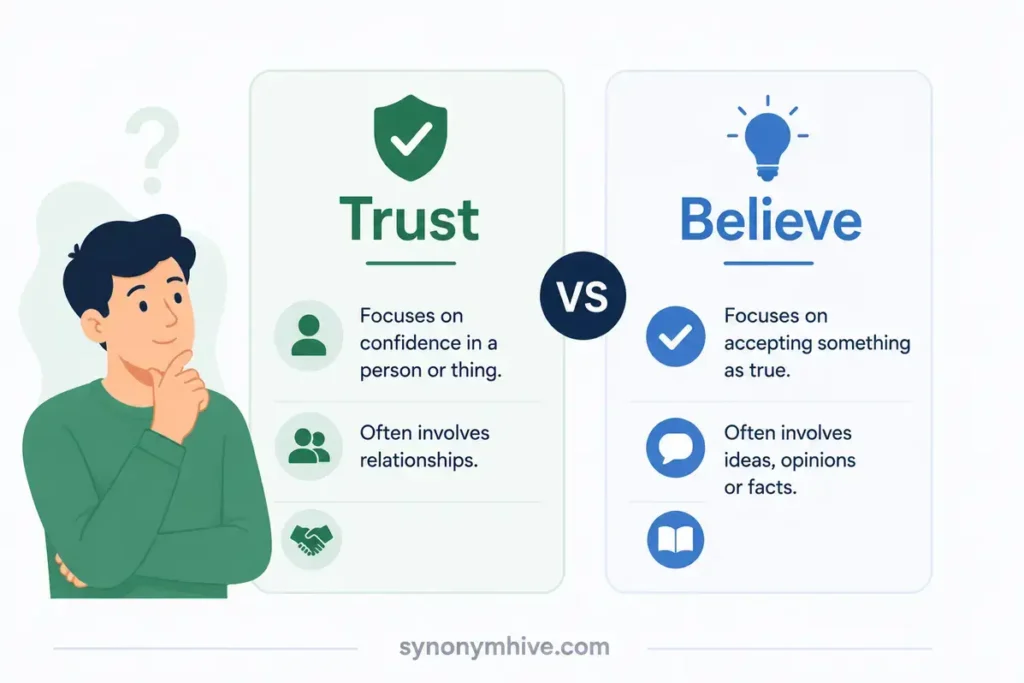
These words are close but focus on different ideas.
| Trust | Believe |
|---|---|
| Focuses on confidence in a person or thing. | Focuses on accepting something as true. |
| Often involves relationships. | Often involves ideas opinions or facts. |
Examples.
I trust my doctor.
I believe the doctor’s advice is correct.
One is about confidence in the person. The other is about accepting the information.
Need a similar word? Read Synonyms for With: The Ultimate Guide Write Like a Pro (2026).
Assume Vs Believe
These words can easily be confused.
| Assume | Believe |
|---|---|
| Based on limited information. | Can be based on facts experience or faith. |
| May turn out to be wrong. | Often reflects a genuine opinion or trust. |
Examples.
We assumed the restaurant was open.
We believed the restaurant opened at nine.
An assumption usually happens without checking.
Common Mistakes To Avoid
Many English learners make the same mistakes when using words related to believe.
Using Trust Instead Of Believe
Trust usually refers to confidence in a person.
Correct.
I trust my teacher.
I believe the answer is correct.
Using Guess In Formal Writing
Guess sounds too casual for reports essays and business writing.
Instead use.
- Think.
- Consider.
- Conclude.
- Maintain.
Using Assume Without Evidence
People often use assume when they really mean think.
Assume suggests little or no proof.
Think is usually the safer choice if you are sharing an opinion.
Choosing A Word That Sounds Too Strong
Be certain and be convinced show very high confidence.
If you are not completely sure choose think suppose or feel instead.
What Are The Opposite Words Of Believe
Antonyms help you express the opposite idea clearly.
| Antonym | Meaning |
|---|---|
| Doubt | Feel uncertain. |
| Disbelieve | Refuse to accept as true. |
| Distrust | Lack confidence in someone. |
| Question | Ask if something is true. |
| Reject | Refuse to accept an idea. |
| Deny | Say something is not true. |
These words are useful when discussing disagreements uncertainty or conflicting opinions.
How Do Native English Speakers Use Believe In Daily Conversations
Rather than relying on believe repeatedly, native English speakers vary their word choice to suit the context. Informal conversations commonly feature think, feel, or guess. More formal or serious situations often require trust, accept, or be convinced to communicate greater certainty.
Here are a few examples.
- I think everything will be fine.
- I feel you’re making the right choice.
- I trust your advice.
- I’m convinced this is the best solution.
Listening to everyday conversations can help you notice these small differences and use them more naturally.
Which Synonyms Should You Avoid In Casual Conversations
Some alternatives sound too formal for everyday speech. They are correct but can make a simple conversation feel stiff.
Words that are usually better saved for formal situations include.
- Maintain.
- Infer.
- Credit.
- Endorse.
- Presume.
Instead choose words like think feel trust guess or suppose when talking with friends family or coworkers. Your message will sound smoother and more natural.
How Can You Stop Repeating Believe In Your Writing
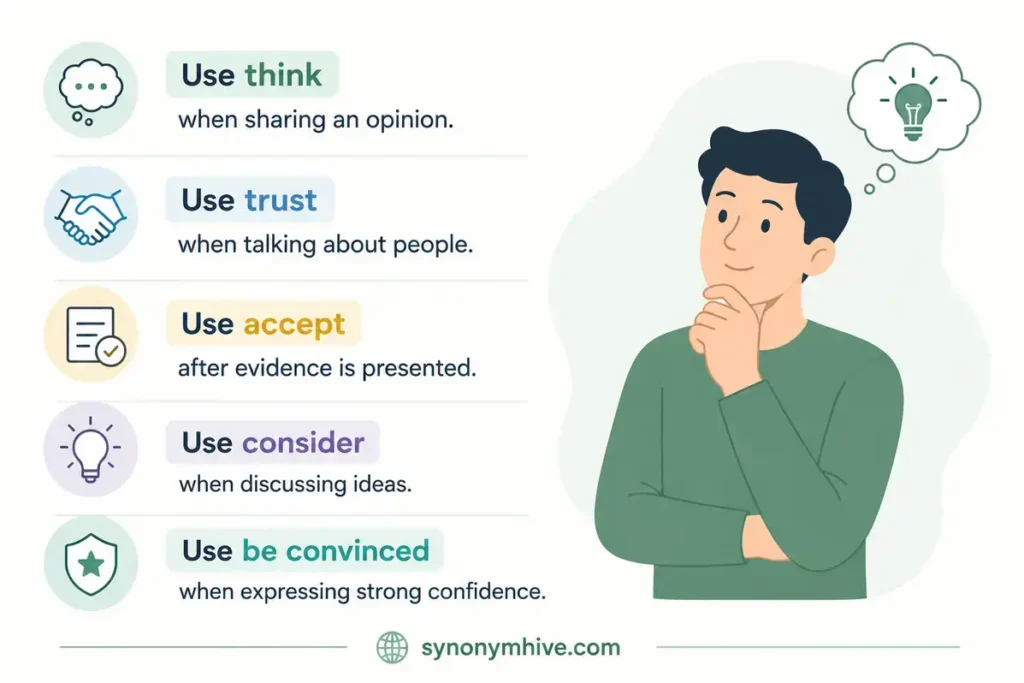
Repeating the same word makes writing feel flat. A simple way to improve your work is to match your word choice to your purpose.
For example.
- Use think when sharing an opinion.
- Use trust when talking about people.
- Use accept after evidence is presented.
- Use consider when discussing ideas.
- Use be convinced when expressing strong confidence.
Reading your work aloud is another helpful trick. If believe appears several times in one paragraph replace some of them with words that fit the meaning instead of changing every single one.
Which Synonym Fits Your Confidence Level
Not every situation calls for complete certainty. Choosing a word that matches your confidence makes your writing more honest and believable.
| Confidence Level | Best Choice | Example |
|---|---|---|
| Very Low | Guess | I guess they’ll arrive soon. |
| Low | Suppose | I suppose that could happen. |
| Medium | Think | I think this is the right answer. |
| High | Believe | I believe this plan will succeed. |
| Very High | Be Convinced | I’m convinced we made the right decision. |
Using the right level of confidence helps readers understand exactly how sure you are without needing extra explanation.
Quick Tips For Choosing The Right Word
- Use think for everyday conversations.
- Use consider in essays and reports.
- Use trust when talking about people.
- Use guess only in casual situations.
- Use be convinced when you feel completely sure.
- Use accept after seeing evidence.
- Use suppose when making a gentle assumption.
- Match the strength of your word to your level of confidence.
These small choices make your writing smoother more accurate and more enjoyable to read.
Check out more vocabulary ideas in Synonyms for Clear: Better Words to Use (2026).
Conclusion
Learning synonyms for believe helps you say exactly what you mean instead of repeating the same word. A simple choice like think trust accept or be convinced can completely change the tone of a sentence. Some words fit friendly conversations while others work better in essays emails or professional writing.
The key is to match the word to your message. If you are sharing an opinion think may be enough. If you are showing confidence trust or be convinced might be the better fit. Keep practicing these alternatives in real conversations and everyday writing. Before long choosing the right word will feel as natural as second nature.
Frequently Asked Questions
What’s Another Way To Say Believe.
The best alternative depends on your meaning. Common choices include think trust accept consider suppose feel and be convinced. These synonyms work in different situations and levels of confidence.
What Is The Strongest Synonym For Believe.
Be convinced and be certain are among the strongest choices. They show that someone has very little doubt about an idea or statement.
Can I Use Think Instead Of Believe.
Yes. Think is one of the most common everyday alternatives. It often sounds more casual and leaves a little room for uncertainty.
Is Trust The Same As Believe.
No. Trust is about confidence in a person or thing. Believe is about accepting an idea statement or fact as true. People sometimes use them in similar situations but they are not always interchangeable.
Which Synonym Sounds Best In Professional Writing.
Consider maintain accept and have confidence in work well in professional settings. They sound clear polished and appropriate for reports emails and workplace communication.
What Are The Most Common Synonyms.
Some of the most common synonyms are think trust accept suppose consider feel expect and be convinced. Each one carries a slightly different meaning so the best choice depends on your sentence.
What Word Should I Use Instead Of Believe In An Essay.
Consider maintain accept and conclude are strong choices for academic writing. They help your ideas sound balanced and supported by evidence.