
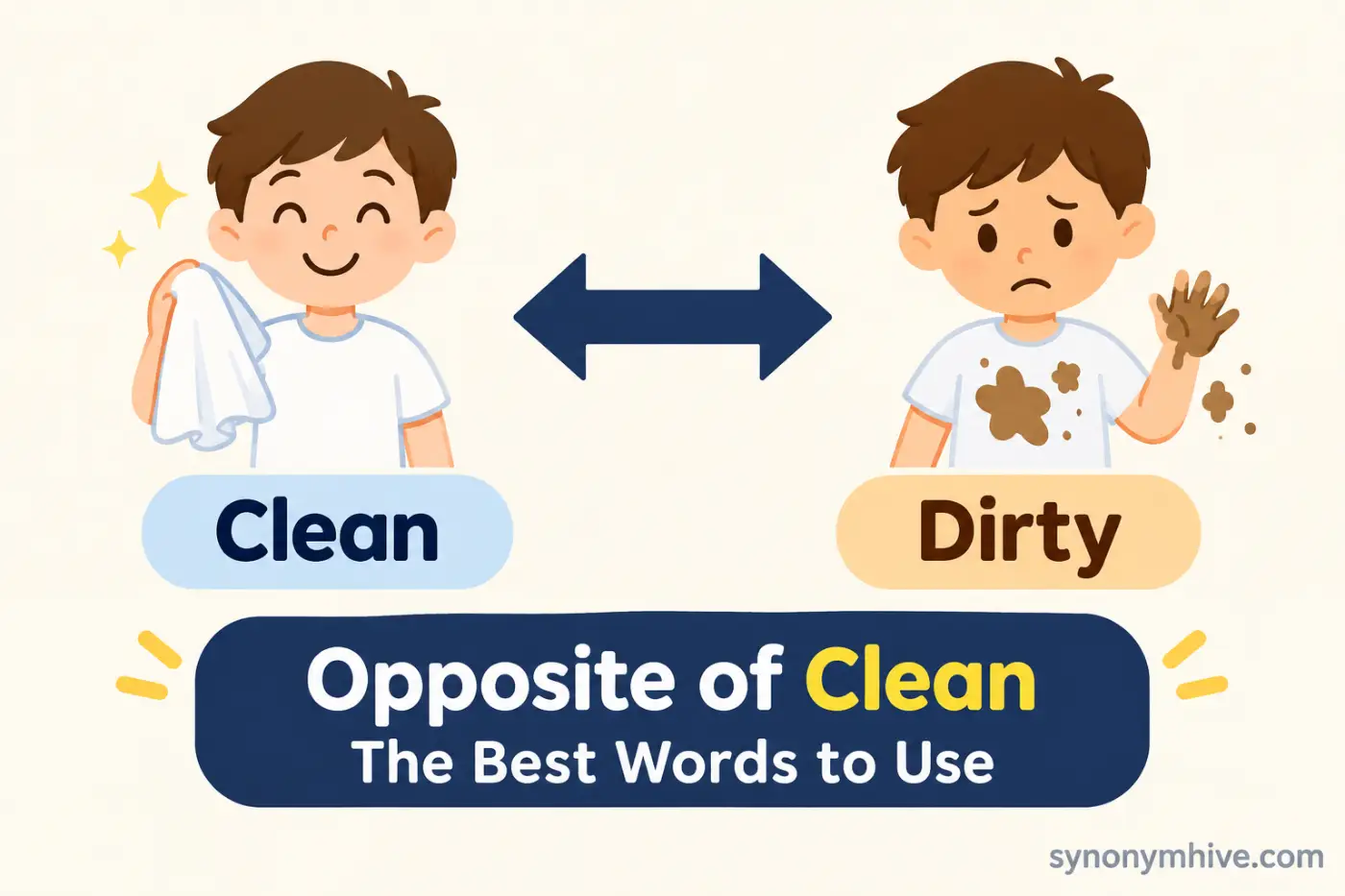
You are writing an email, finishing an essay, or updating your resume. You want to describe a dirty room, a messy desk, or a shirt with a stain. The word clean does not fit, but which opposite should you choose?
The opposite of clean is usually dirty. However, English has many other choices, including messy, filthy, stained, muddy, contaminated, and untidy. Each word describes a different kind of dirt or lack of order.
The best choice depends on what you mean. A messy room may need tidying, while a contaminated water supply may be unsafe. A dirty shirt may need washing, but a stained shirt may need special treatment.
This guide explains the main meanings of clean, gives you more than 30 useful alternatives, and shows which word works best in everyday speech, schoolwork, emails, and resumes. You will also see clear examples and learn how close synonyms differ.
Need a similar word? Read Opposite of Hot Best Words for Every Situation.
Quick Answer
The most common opposite of clean is dirty. Use dirty for something that has dust, mud, stains, or other unwanted marks. Choose messy or untidy when something lacks order, and use filthy for something extremely dirty.
What Does Clean Mean
Clean has several meanings in English. It can describe something without dirt, something free from harmful substances, or something neat and orderly. It can also describe honest behavior, fair play, or language that does not include offensive words.
The meaning changes with the sentence. A clean kitchen has no visible dirt and is safe to use. A clean desk may have no clutter.
Because clean has several meanings, it does not have just one opposite for every situation. Dirty works for physical dirt, but it does not fit every use.
Where Does the Word Clean Come From
Clean comes from Old English clæne, which meant pure, clear, or free from dirt. The word has Germanic roots and has kept much of its central meaning over time.
Its meaning later grew beyond physical cleanliness. People began using it for ideas such as moral purity, honest conduct, clear writing, and fair competition. That wider use explains why English speakers can describe a room, a person’s record, a joke, and a sports performance as clean.
The history also helps explain why its opposite changes by context. Dirty can describe a muddy floor, but dishonest is a better opposite when clean means honest. Unfair may work when clean describes fair competition.
Master Synonym List for the Opposite of Clean
The following words can describe dirt, clutter, poor hygiene, or a lack of purity. They are not perfect substitutes. Check the meaning and tone before choosing one.
Simple Words
| Word | Meaning | Tone | Example |
|---|---|---|---|
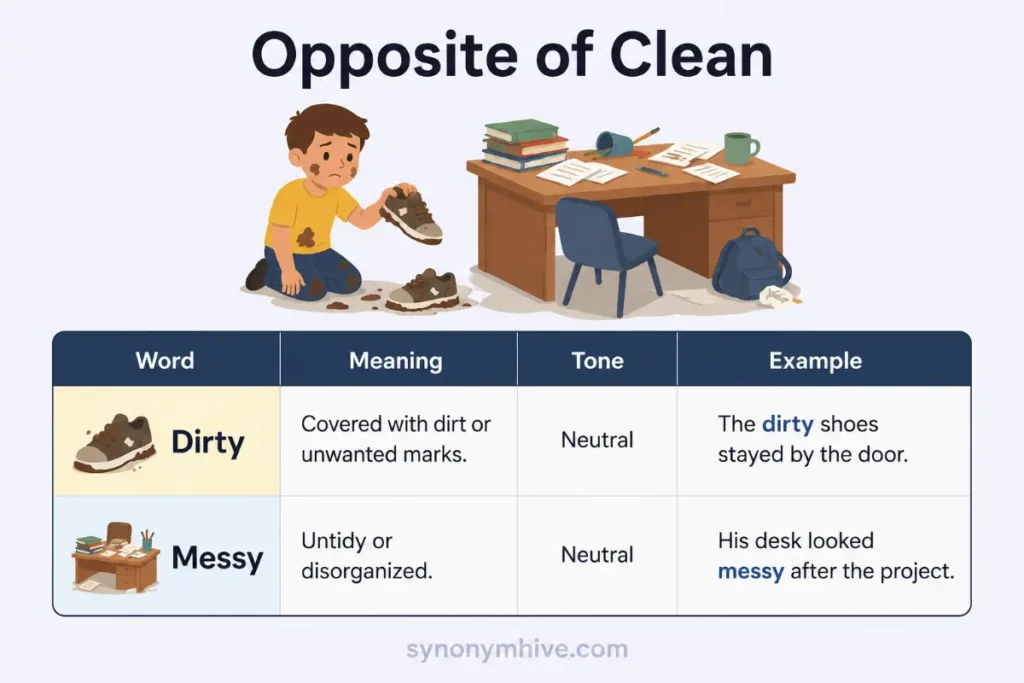
| Dirty | Covered with dirt or unwanted marks. | Neutral | The dirty shoes stayed by the door. |
| Messy | Untidy or disorganized. | Neutral | His desk looked messy after the project. |
| Untidy | Not neat or properly arranged. | Neutral | The bedroom was untidy. |
| Muddy | Covered with wet earth. | Neutral | The muddy dog ran across the floor. |
| Dusty | Covered with dust. | Neutral | The dusty shelf needed a wipe. |
| Stained | Marked by a spot that is hard to remove. | Neutral | Her stained shirt needed a wash. |
| Grimy | Covered with a layer of dirt or grease. | Informal | The grimy window blocked the sunlight. |
Everyday Words
| Word | Meaning | Tone | Example |
|---|---|---|---|
| Filthy | Extremely dirty. | Strong | The filthy bathroom needed a deep clean. |
| Soiled | Made dirty by contact with something unclean. | Formal or everyday | The soiled towels went into the laundry. |
| Sooty | Covered with black powder from smoke or burning. | Descriptive | The sooty fireplace needed attention. |
| Greasy | Covered with oil or fat. | Neutral | The greasy pan sat beside the sink. |
| Grubby | Dirty, often from handling or use. | Informal | His grubby hands left marks on the wall. |
| Cluttered | Filled with too many objects. | Neutral | The cluttered counter had no free space. |
| Disheveled | Untidy in appearance. | Descriptive | His disheveled clothes looked out of place. |
| Smudged | Marked with blurred dirt, ink, or color. | Neutral | The smudged page was hard to read. |
Formal Words
| Word | Meaning | Tone | Example |
|---|---|---|---|
| Contaminated | Made unsafe or impure by harmful material. | Formal | The contaminated water was not safe to drink. |
| Polluted | Made dirty or harmful by waste or chemicals. | Formal | Polluted air can harm people’s health. |
| Impure | Not fully pure or free from unwanted substances. | Formal | The sample contained impure material. |
| Unsanitary | Not clean enough to protect health. | Formal | The inspector found unsanitary conditions. |
| Unhygienic | Not meeting basic standards of cleanliness. | Formal | The unhygienic storage area needed repairs. |
| Tainted | Spoiled or affected by something harmful. | Formal | The report described tainted food supplies. |
| Defiled | Made dirty or treated with disrespect. | Formal | The vandals defiled the public monument. |
| Sullied | Damaged in purity or reputation. | Formal | The scandal sullied the company’s name. |
Slang and Informal Words
| Word | Meaning | Tone | Example |
|---|---|---|---|
| Grungy | Dirty, worn, or unpleasant in appearance. | Informal | The old basement looked grungy. |
| Gross | Very unpleasant or disgusting. | Informal | The spoiled milk smelled gross. |
| Nasty | Very dirty or unpleasant. | Informal | There was a nasty mess near the trash can. |
| Gunky | Covered with sticky or thick dirt. | Informal | The drain was full of gunky buildup. |
| Dingy | Dark, dull, and often dirty. | Informal | They rented a dingy apartment. |
| Cruddy | Dirty, poor, or unpleasant. | Slang | The table looked cruddy after the party. |
| Grimy | Covered with thick dirt or grease. | Informal | The mechanic washed his grimy hands. |
Some words in the table overlap. Grimy, for example, can appear in everyday speech or informal writing. The best choice depends on the audience and the sentence.
Which Opposite of Clean Should You Use
Not every word that means dirty describes the same thing. Some words suggest a small amount of dirt. Others describe serious pollution, poor hygiene, or a lack of order. Choosing the right one makes your writing more accurate.
Mild Words for a Little Dirt
Use mild words when something needs light cleaning but is not badly dirty.
- Dusty works when a surface has a thin layer of dust. For example, The dusty bookshelf needed a quick wipe.
- Smudged describes a blurred mark made by dirt, ink, or another substance. For example, I could barely read the smudged address.
- Stained refers to a mark that has changed the color of a surface or fabric. For example, The stained tablecloth needed special care.
- Untidy describes a space or appearance that lacks neatness. For example, His untidy room had clothes on the floor.
- Messy works for clutter, disorder, and situations that look poorly arranged. For example, The kitchen became messy after dinner.
These words do not always mean that something is unhygienic. A messy desk may have papers and books everywhere but no dirt. A dusty shelf may look neglected while the rest of the room stays neat.
Everyday Words for Clear Dirt
Choose these words when something has visible dirt or needs proper cleaning.
- Dirty is the broadest everyday choice. It works for clothes, floors, dishes, hands, and many other things.
- Grubby often describes hands, clothes, or objects that have collected dirt through use.
- Soiled describes something made dirty by contact with a substance. It often appears in instructions, laundry labels, and care settings.
- Muddy is useful when wet soil covers a surface or object.
- Greasy describes a surface covered with oil, fat, or a slippery film.
- Grimy suggests a thicker layer of dirt, often mixed with grease or dust.
For example, you might say, The children came home with muddy shoes and grubby hands. The sentence gives readers a clearer picture than saying the children were dirty.
Strong Words for Heavy Dirt
Use stronger terms when an object or place is extremely dirty.
- Filthy means extremely dirty. It often expresses disgust or strong disapproval.
- Grungy describes something dirty, worn, or unpleasant in appearance.
- Nasty can describe dirt, smells, stains, or a generally unpleasant condition.
- Gross is an informal word for something that causes disgust.
- Foul describes something extremely unpleasant, often because of a bad smell or poor condition.
For example, The filthy kitchen had spoiled food on the counters and a foul smell near the sink. These stronger words make sense because the problem goes beyond a few crumbs or dusty surfaces.
Avoid using strong terms for small problems. Calling a slightly dusty table filthy exaggerates the situation. A precise word helps readers understand how serious the problem really is.
Formal Words for Health and Safety Problems
Some situations need more than a general word for dirt. When discussing food, water, air, medical supplies, or public spaces, use a term that explains the risk.
- Contaminated means that something contains an unwanted substance or harmful material. It often appears in public health and science writing.
- Polluted usually describes air, water, or land damaged by waste or harmful substances.
- Unsanitary means that conditions are not clean enough to protect health.
- Unhygienic describes habits, conditions, or places that do not meet basic hygiene standards.
- Impure means that something contains unwanted material or is not fully pure.
- Tainted suggests that something has been spoiled or affected by a harmful substance.
For example, The city closed the beach after tests found contaminated water. The word contaminated tells readers that the water may contain something unsafe. Dirty would be less precise because it does not explain the possible health risk.
Opposites of Clean by Part of Speech
Clean can work as an adjective, verb, noun, or adverb. Its opposite changes based on the role it plays in a sentence.
Opposite of Clean as an Adjective
An adjective describes a person, place, thing, or condition. When clean describes something free from dirt, dirty is the most common opposite.
Examples include:
- The clean plates are ready for dinner. The dirty plates are still in the sink.
- She wore a clean shirt to the interview. He arrived in a dirty work uniform.
- The clean floor looked bright. The muddy floor needed another wash.
- The clean kitchen passed inspection. The unsanitary kitchen did not.
When clean means neat or organized, messy and untidy may work better than dirty.
For example, A clean desk helps me focus. A cluttered desk makes it hard to find anything. Here, cluttered is more accurate because the problem is the number and arrangement of objects, not dirt.
Opposite of Clean as a Verb
As a verb, clean means to remove dirt or make something neat. The best opposite depends on the action.
- Dirty can mean to make something unclean. For example, Please do not dirty the fresh towels.
- Soil means to make something dirty. For example, Wet shoes can soil the carpet.
- Stain means to leave a mark that changes a surface or fabric. For example, Coffee can stain a white shirt.
- Pollute means to make air, water, or land harmful or impure. For example, Factory waste can pollute a river.
- Contaminate means to introduce an unwanted or harmful substance. For example, Touching food with unwashed hands can contaminate it.
These verbs describe different actions. You would not normally say that someone polluted a clean shirt when you simply mean that the person spilled coffee on it. Choose the verb that describes what happened.
Opposite of Clean as a Noun
Clean can appear as a noun in phrases such as a clean or a spring clean, though this use is less common than the adjective and verb forms. The noun cleanliness refers to the state of being clean.
Common opposites of cleanliness include dirt, filth, grime, and uncleanliness.
Examples:
- The dirt on the windows showed that the building needed attention.
- The restaurant received a warning because of poor cleanliness.
- The workers removed years of grime from the old machine.
- The report raised concerns about the filth in the storage area.
In most everyday sentences, dirt or mess is more natural than uncleanliness. The longer word is useful in formal writing, but it can sound stiff in casual conversation.
Opposite of Clean as an Adverb
Clean can also appear as an adverb in phrases such as cut clean through or wiped clean. The opposite depends on the meaning of the phrase.
For example, cleanly can describe an action done neatly or without error. Its opposite may be messily, poorly, or carelessly.
- She cut the paper cleanly. He cut it unevenly.
- The team completed the task cleanly. The other team handled it carelessly.
- The paint came off cleanly. The old glue came off messily.
Do not force a single opposite into every sentence. Look at the full phrase and decide what clean means in that context.
Opposite of Clean by Context
The right word often depends more on the subject than on the word clean itself. A resume, an essay, a text message, and a workplace email may all need different language.
What Is the Best Opposite of Clean for a Resume
A resume should use clear and professional language. If you need to describe a workplace, process, or record that is not clean, avoid casual words such as gross, grubby, or nasty.
Choose a term that explains the actual problem.
- Disorganized works when a workspace, system, or process lacks order.
- Poorly maintained describes equipment, buildings, or work areas that have not received proper care.
- Noncompliant may fit a process that does not meet required rules or standards.
- Contaminated works in a technical role when materials contain unwanted or harmful substances.
- Inefficient describes a process that wastes time or resources, not a dirty space.
Example for a resume:
- Improved a disorganized inventory process by creating a clear storage and labeling system.
- Helped maintain sanitary work areas by following daily cleaning procedures.
- Identified poorly maintained equipment and reported repair needs to the supervisor.
Do not use a negative label just to make a resume sound strong. Describe the problem and explain what you did to improve it. Employers want evidence of useful work, not a list of complaints.
What Is the Best Opposite of Clean for an Essay
Essays usually need precise words that match the topic. Dirty is fine in a simple description, but a more specific term can make an academic point clearer.
Use:
- Polluted when discussing damaged air, water, or land.
- Contaminated when unwanted substances affect food, water, soil, or another material.
- Unsanitary when describing conditions that may harm health.
- Disorganized when discussing a messy system or structure.
- Impure when writing about a substance that is not fully pure.
Example:
The factory released waste into the river, leaving the water polluted and unsafe for nearby communities.
This sentence is stronger than saying the factory made the water dirty because polluted identifies the type of damage.
For a school essay about a bedroom or classroom, simpler words may work better. You do not need formal vocabulary when a plain word communicates the idea clearly.
What Is the Best Opposite of Clean for Texting
Text messages are informal, so everyday words usually sound most natural.
You can use dirty, messy, gross, filthy, or grubby, depending on how strong you want the message to sound.
Examples:
- My shoes are muddy after that walk.
- The kitchen is a mess after the party.
- This cup looks dirty. Can you wash it?
- That old fridge is gross.
- My hands are grubby from fixing the bike.
Use gross or filthy when you want to show strong dislike. Choose messy when the main problem is clutter. Dirty is the safest general choice.
What Is the Best Opposite of Clean for an Email
A work email should be polite and clear. Avoid words that sound insulting or overly emotional unless the situation truly calls for them.
For example, instead of writing, The break room is disgusting, you could say, The break room needs attention because food scraps and spills have been left on the counters.
Instead of saying, The storage area is filthy, you could write, The storage area does not meet our cleanliness standards and needs a full cleaning.
These alternatives explain the issue without attacking the people responsible. They also give the reader a clearer idea of what needs to happen next.
What Is the Best Opposite of Clean in Everyday Speaking
In conversation, dirty is usually the easiest and most natural choice. It works for clothes, floors, hands, cars, dishes, and many other things.
Use messy when you mean untidy. Say filthy when something is extremely dirty. Use muddy when wet soil is the main problem.
Examples:
- Your hands are dirty. Wash them before dinner.
- My room is messy because I have not put my clothes away.
- The dog got muddy in the garden.
- The garage is filthy after years of repairs.
- The kitchen counter feels greasy.
The best spoken word is usually the one that lets the listener picture the problem right away.
Find similar expressions in Opposite of Fast Best Words for Every Situation.
Opposite of Clean in US and UK English
American and British English share most of the same basic words for dirt and cleanliness. Dirty, messy, filthy, muddy, dusty, and stained are common in both varieties.
The main differences often involve spelling, common phrases, and local habits rather than a different opposite for clean.
Words That Work in Both Varieties
These words are widely understood in the United States and the United Kingdom:
| Word | US English Use | UK English Use |
|---|---|---|
| Dirty | Common for something covered in dirt. | Common for something covered in dirt. |
| Messy | Common for clutter or disorder. | Common for clutter or disorder. |
| Filthy | Means extremely dirty. | Means extremely dirty. |
| Muddy | Covered with wet soil. | Covered with wet soil. |
| Dusty | Covered with dust. | Covered with dust. |
| Stained | Marked by a spot or discoloration. | Marked by a spot or discoloration. |
| Grimy | Covered with a layer of dirt. | Covered with a layer of dirt. |
A speaker in either country can understand a sentence such as, The kitchen was filthy after the party. The word does not need to change across the Atlantic.
Regional Differences in Everyday Speech
Some informal words may sound more common in one area than another. Grubby, grubby hands, and a bit of a mess are familiar expressions in British English and are also understood in American English. Gross is especially common in casual American speech, but British speakers understand it too.
Local expressions can also depend on age, region, and social group. A word that sounds natural among friends may not suit a formal report or a workplace email.
If your readers are from different English speaking regions, use widely understood words such as dirty, messy, or filthy. They are direct and easy to understand.
Close Synonyms and Their Differences
Some words seem interchangeable, but they describe different problems. Knowing the difference helps you avoid vague or misleading sentences.
Dirty vs Messy
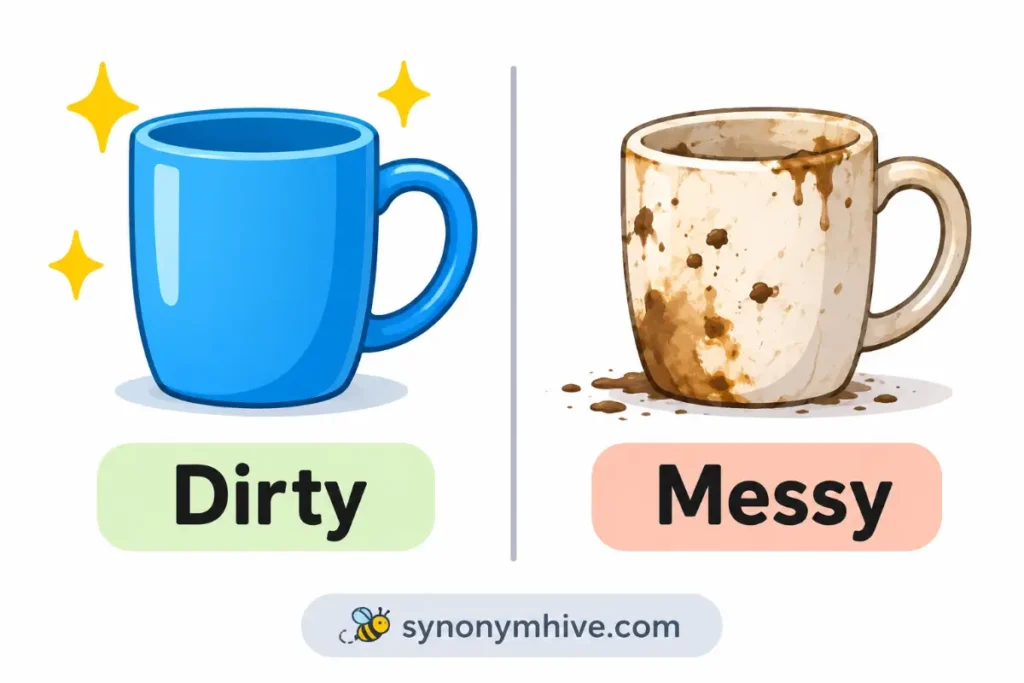
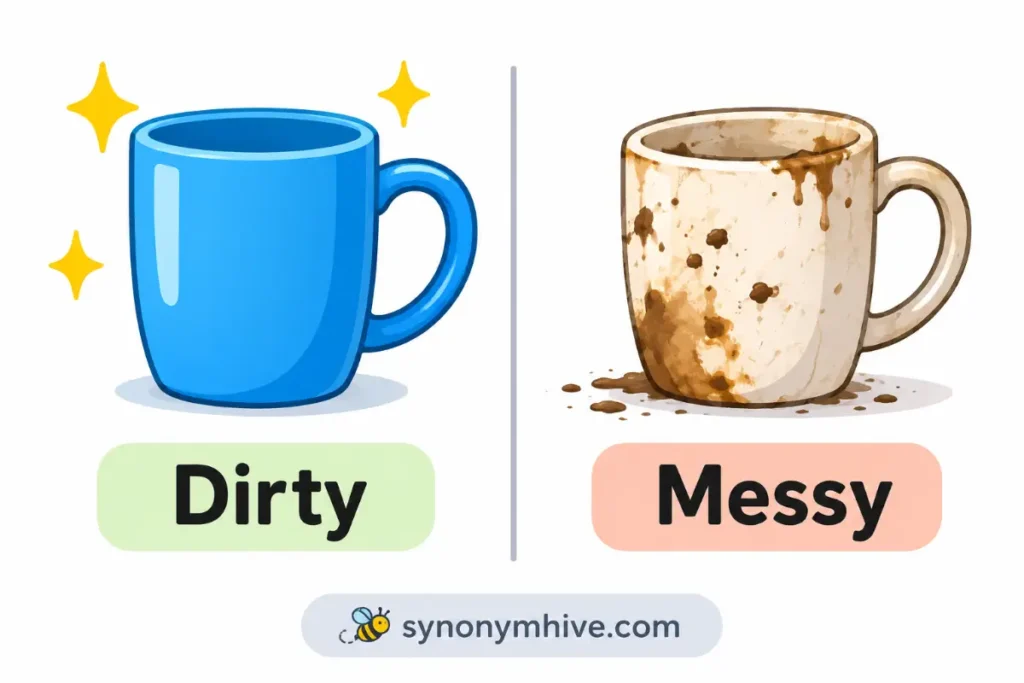
Dirty means something has unwanted dirt, marks, or substances on it. Messy means something is untidy or poorly arranged.
| Dirty | Messy |
|---|---|
| The kitchen floor was dirty after the children came inside. | The kitchen was messy because dishes and toys covered the counters. |
| His shirt was dirty from working in the garden. | His bedroom was messy because clothes were scattered everywhere. |
| The car windows were dirty. | The car interior was messy with papers and bags on the seats. |
A room can be messy without being dirty. For example, a desk covered with clean books and papers is messy, but it may not need washing. A clean room can also become dirty after someone walks through it with muddy shoes.
Use dirty when you mean a lack of cleanliness. Choose messy when you mean a lack of order.
Dirty vs Filthy
Dirty is a general word. Filthy describes something extremely dirty.
| Dirty | Filthy |
|---|---|
| The floor was dirty after dinner. | The floor was filthy after weeks without cleaning. |
| His shoes were dirty from the rain. | His shoes were filthy after walking through a muddy field. |
| The bathroom was dirty. | The bathroom was filthy and had a strong unpleasant smell. |
The difference is intensity. Dirty can describe a small amount of dirt or a serious mess. Filthy signals a much worse condition.
Use filthy when the degree of dirt matters. Do not use it for a minor mark or a little dust.
Untidy vs Disorganized
Untidy usually describes the appearance of a place or person’s belongings. Disorganized focuses on poor arrangement, planning, or structure.
For example, an untidy bedroom may have clothes on the bed and shoes near the door. A disorganized office may have files stored in the wrong folders and no clear system for finding documents.
The words can overlap, but they are not identical. A room can look untidy even when the owner knows exactly where everything is. A filing system can be disorganized even if the office looks neat.
Use untidy for appearance. Use disorganized for a lack of order or structure.
Contaminated vs Polluted
Both words describe unwanted substances, but they often appear in different contexts.
Contaminated usually means that an unwanted or harmful substance has entered something. It is common in discussions of food, water, medical supplies, and laboratory samples.
Polluted often describes damage to the natural environment. People commonly use it for air, rivers, oceans, and land affected by waste or chemicals.
For example:
- The drinking water was contaminated with harmful bacteria.
- Smoke from the factory polluted the air around the town.
The first sentence focuses on a substance that may make water unsafe. The second describes environmental damage.
Stained vs Soiled
Stained means that a mark has changed the appearance or color of something. Soiled means that something has become dirty through contact with a substance.
A white shirt with a coffee mark is stained. A towel covered in mud is soiled. A soiled item may also have stains, but the words highlight different details.
Use stained when the mark matters. Use soiled when the item has become dirty and needs washing.
Common Mistakes When Choosing an Opposite
A word may be correct in one sentence and wrong in another. These common mistakes can help you make better choices.
Using Dirty for Every Situation
Dirty is a useful general word, but it does not explain every type of problem.
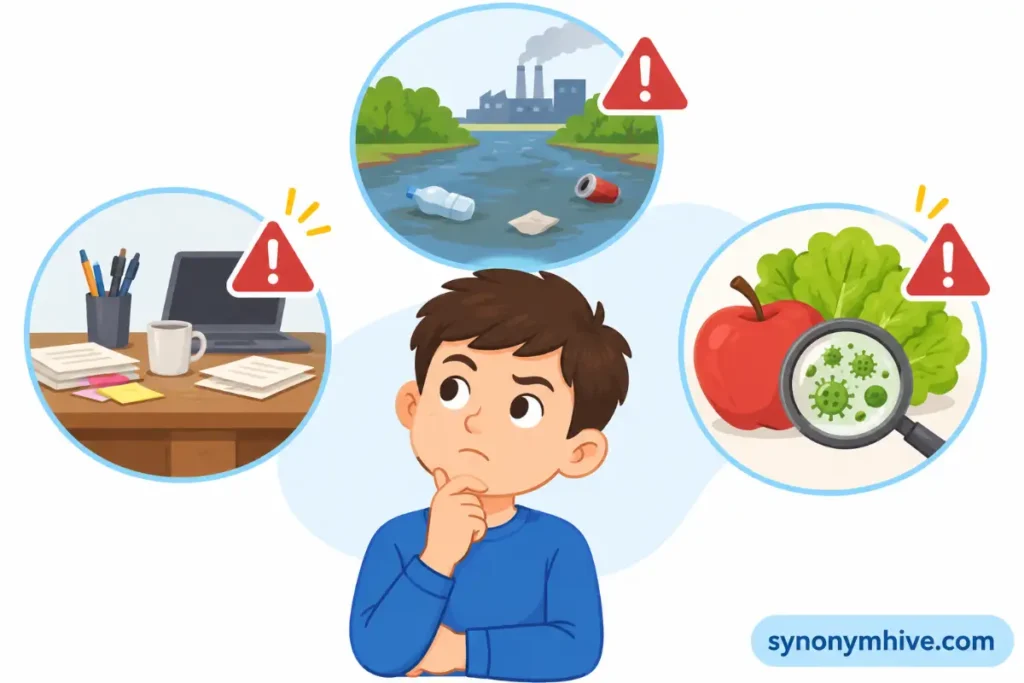
A polluted river is not simply dirty. A cluttered desk is not necessarily dirty. A contaminated food supply has a specific safety concern.
Choose a more exact word when the details matter. This makes your writing clearer and gives readers a better picture of the problem.
Confusing Messy With Unsanitary
Messy means untidy or disorganized. Unsanitary means that conditions may create a health risk.
A child’s bedroom with toys on the floor may be messy. A kitchen with spoiled food and dirty preparation surfaces may be unsanitary.
Do not use unsanitary just because a room looks untidy. The word makes a stronger claim about hygiene and health.
Using Filthy When You Mean Slightly Dirty
Filthy is a strong word. It suggests a very poor level of cleanliness.
If a window has a few fingerprints, dirty or smudged is more accurate. If a bathroom has heavy buildup and a strong odor, filthy may fit.
Match the strength of the word to the condition. Overstatement can make a description sound less believable.
Choosing Formal Words for Casual Messages
Words such as contaminated, defiled, and sullied may sound unnatural in a simple text message.
For example, you would normally tell a friend, The kitchen is dirty, not The kitchen is contaminated, unless you have a real concern about harmful substances.
Formal words are useful when they add accuracy. They are not automatically better than simple words.
Assuming Clean Always Means Free From Dirt
Clean has several meanings. It can also mean honest, fair, clear, or free from offensive language.
For example, a clean record means a record without known wrongdoing. Its opposite might be a criminal record or a history of misconduct, depending on the sentence.
A clean joke is free from rude or offensive content. Its opposite may be an off color or vulgar joke. Dirty can work in this context too, but it often has a stronger or more specific meaning.
Always identify the meaning of clean before choosing its opposite.
What Are the Antonyms of Clean
An antonym is a word with the opposite meaning of another word. Clean has several antonyms because it can describe dirt, order, purity, and behavior.
| Meaning of Clean | Common Antonym |
|---|---|
| Free from dirt | Dirty |
| Neat and orderly | Messy |
| Well arranged | Disorganized |
| Free from harmful substances | Contaminated |
| Free from pollution | Polluted |
| Hygienic | Unsanitary |
| Pure | Impure |
| Honest | Dishonest |
| Fair | Unfair |
| Free from offensive language | Vulgar |
The most common antonym remains dirty. The other choices fit more specific meanings.
For example, a clean kitchen may have a dirty floor. A clean criminal record may have no history of wrongdoing. A clean sports performance may follow the rules. Each use calls for a different opposite.
Quick Tips for Choosing the Right Word
Use these simple checks when you are unsure which word to choose.
- Ask what is wrong. Is the problem dirt, clutter, a stain, pollution, or poor hygiene? Name the problem directly.
- Check the intensity. Use dusty for a light layer of dust and filthy for an extreme lack of cleanliness.
- Think about the subject. A room can be messy, water can be contaminated, and air can be polluted.
- Match the audience. Use simple words in everyday conversation and more precise terms in formal writing.
- Avoid exaggeration. Do not call something filthy if it only has a small mark.
- Read the full sentence. Make sure the chosen word fits the meaning of clean in that sentence.
- Choose clarity over complexity. A simple, accurate word is better than a formal word that does not fit.
A useful test is to replace clean with its meaning before choosing an antonym. If clean means free from dirt, dirty may work. If it means neat, messy is more suitable.
Looking for a better alternative? Visit Opposite of Beautiful Best Words and Examples 2026.
Conclusion
The best word depends on the kind of problem you want to describe. Dirty is the most common choice for physical dirt, while messy and untidy describe a lack of order. Stronger words such as filthy and grimy suggest heavy dirt, and formal terms such as contaminated and polluted explain specific health or environmental problems.
When choosing the opposite of clean, look at the subject and the meaning of the sentence. A dusty shelf needs a different word from unsafe drinking water or a cluttered office. You do not need the longest or most formal term to sound clear. Pick the word that gives readers the right picture, and your writing will be more accurate and natural.
Frequently Asked Questions
What is the most common opposite of clean?
The most common opposite of clean is dirty. It describes something covered with dirt, dust, mud, or unwanted marks. Messy is another common choice when you mean untidy rather than physically dirty.
What is another way to say clean?
You can use words such as spotless, tidy, neat, fresh, hygienic, or pure. The best choice depends on the meaning. Spotless describes something without visible marks, while hygienic focuses on health and cleanliness.
Is messy the opposite of clean?
Messy can be an opposite when clean means neat or orderly. However, it does not always mean dirty. A desk covered with clean papers can look messy without having any dirt on it.
What is the opposite of clean in formal English?
Dirty is still correct in formal English, but more precise terms may work better. Use contaminated for harmful substances, polluted for environmental damage, and unsanitary for poor hygiene conditions.
What is the strongest word for dirty?
Filthy is one of the strongest common words for extremely dirty. Grimy can also describe heavy dirt, especially when it has built up over time. Words such as disgusting and revolting express a strong reaction to something unpleasant.
What is the opposite of clean water?
The answer depends on the problem. Contaminated water contains unwanted or harmful substances, while polluted water has been affected by waste or environmental damage. Unsafe water is another useful phrase when discussing health risks.
What is the opposite of clean in a sentence?
The most common choice is dirty. For example, The clean shirt was in the closet, but the dirty shirt was in the laundry basket. You can also use messy, stained, or contaminated when those words describe the situation more accurately.