
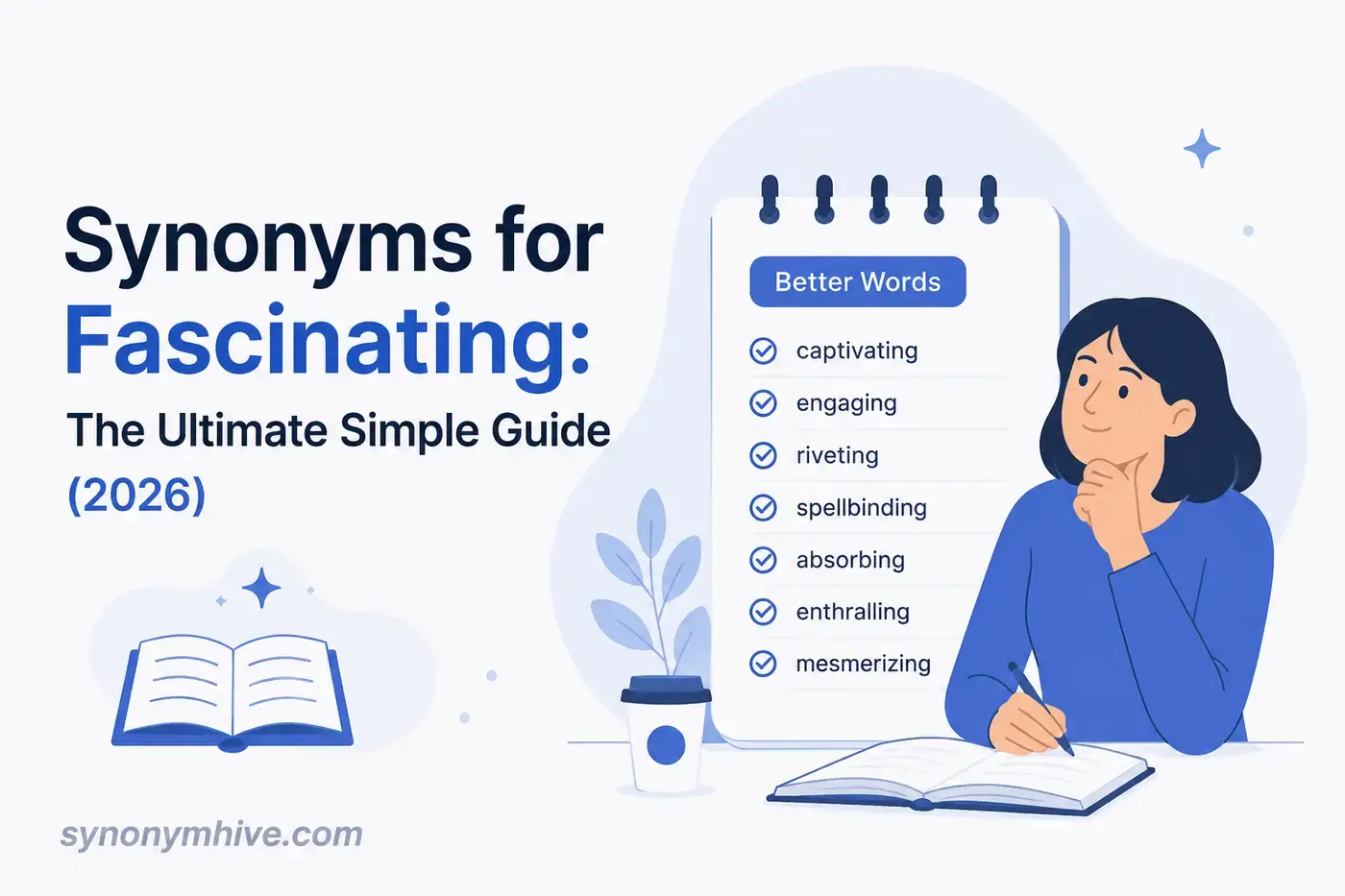
Have you ever stared at your screen while writing an email, essay, or text message because the word interesting just didn’t feel strong enough? That’s where alternatives for fascinating can help. The right word can make your writing more colorful, clear, and memorable.
Synonyms for fascinating are words that describe something that grabs attention, sparks curiosity, or keeps someone deeply interested. The best choice depends on the situation, tone, and audience. A single word can change how your message feels. Saying a book was captivating paints a different picture than saying it was remarkable or engrossing. Picking the right word helps your writing sound more natural and more confident.
This guide explains the meaning and history of the word, shares a large collection of alternatives, compares similar words, and shows you exactly when to use each one in real life.
Learn more useful word alternatives in Synonyms for Anger Simple Guide Find the Perfect Word (2026).
What Does Fascinating Mean
The word fascinating describes something that captures your full attention. It makes you want to keep looking, reading, listening, or learning more. People often use it to describe things that are:
- Extremely interesting.
- Full of mystery.
- Beautiful in a unique way.
- Rich with surprising details.
- Hard to stop thinking about.
For example:
- The documentary was fascinating from beginning to end.
- Her life story was fascinating because it was full of unexpected twists.
- The science experiment became more fascinating with every step.
At its heart, the word suggests much more than simple interest. It describes something that pulls you in and keeps your attention.
Word Origin And Plain English Meaning
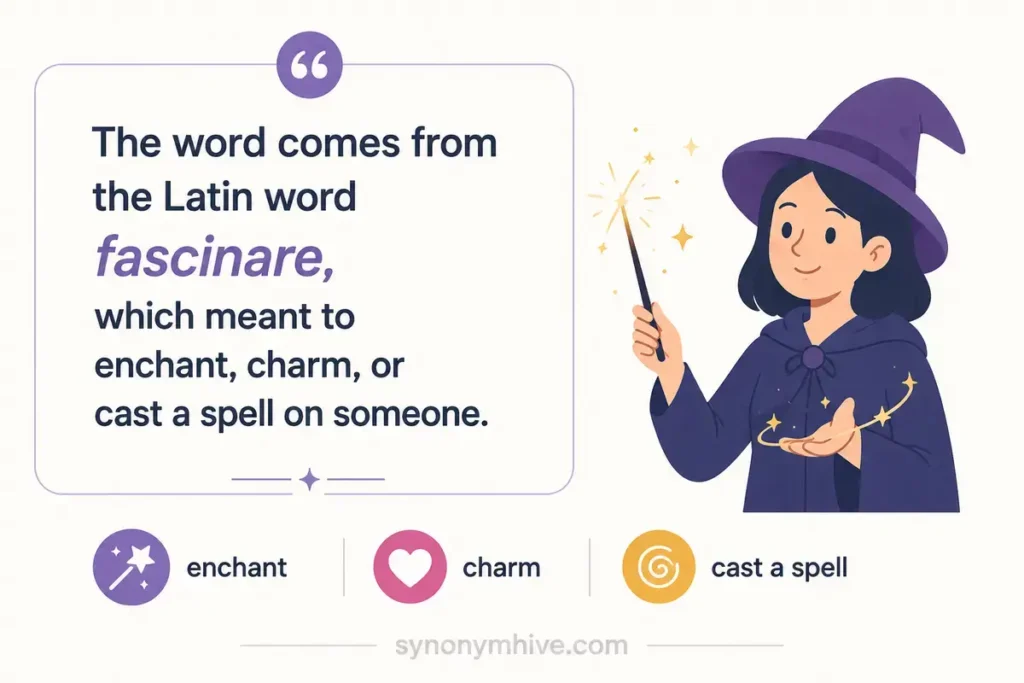
Many people use fascinating every day but never think about where it came from. The word comes from the Latin word fascinare, which meant to enchant, charm, or cast a spell on someone. Over time, English speakers stopped using it in a magical sense and started using it to describe anything that strongly attracts attention. Today, nobody expects magic when they hear the word. Instead, they think about something so interesting that it feels almost impossible to ignore.
In plain English, fascinating simply means:
- Very interesting.
- Worth paying attention to.
- Full of details that make you curious.
- So engaging that you want to know more.
Think about watching a mystery movie. Every scene makes you ask another question. You stay glued to the screen until the ending. That feeling is what fascinating describes. The same idea applies to people, places, books, ideas, conversations, discoveries, and experiences.
Synonyms For Fascinating Master Word List
Many pages online list only a handful of words. Real writing needs more options because every situation calls for a different tone. The table below groups useful choices into everyday language, formal writing, and casual conversation.
| Word | Meaning | Tone | Example |
|---|---|---|---|
| Interesting | Holds attention | Simple | The lesson was interesting. |
| Engaging | Keeps people involved | Simple | The speaker gave an engaging talk. |
| Captivating | Holds complete attention | Everyday | The novel was captivating. |
| Compelling | Strong enough to keep interest | Everyday | She made a compelling point. |
| Absorbing | Easy to become lost in | Everyday | It was an absorbing documentary. |
| Intriguing | Makes people curious | Everyday | That’s an intriguing idea. |
| Remarkable | Unusually impressive | Everyday | His journey was remarkable. |
| Impressive | Deserving admiration | Everyday | The results were impressive. |
| Memorable | Easy to remember | Everyday | It was a memorable trip. |
| Eye opening | Changes your thinking | Everyday | The interview was eye opening. |
| Inspiring | Encourages new ideas | Everyday | Her speech was inspiring. |
| Mesmerizing | Holds attention with beauty | Formal | The dance was mesmerizing. |
| Engrossing | Takes all your attention | Formal | It was an engrossing novel. |
| Astonishing | Causes great surprise | Formal | The discovery was astonishing. |
| Extraordinary | Far above ordinary | Formal | She had an extraordinary career. |
| Incredible | Hard to believe | Everyday | That story was incredible. |
| Amazing | Very impressive | Everyday | The museum was amazing. |
| Awesome | Extremely good | Casual | That game was awesome. |
| Cool | Pleasantly impressive | Casual | That’s a cool idea. |
| Wild | Very surprising | Slang | That’s a wild story. |
| Mind blowing | Beyond expectations | Slang | The ending was mind blowing. |
| Epic | Very exciting or impressive | Slang | The concert was epic. |
| Stunning | Extremely beautiful or impressive | Everyday | The artwork was stunning. |
| Magical | Full of wonder | Everyday | The evening felt magical. |
This collection gives you choices for school assignments, business writing, creative work, and everyday conversations.
Synonyms By Intensity
Not every situation needs the strongest word. Sometimes a gentle description works better than dramatic language.
Mild Interest
These words describe something pleasant without sounding exaggerated.
| Word | Best Use |
|---|---|
| Interesting | Everyday conversation. |
| Engaging | Presentations and articles. |
| Enjoyable | Casual writing. |
| Pleasant | Friendly conversations. |
| Worthwhile | Reviews and recommendations. |
Medium Interest
These words show stronger attention and curiosity.
| Word | Best Use |
|---|---|
| Intriguing | Mysteries and ideas. |
| Compelling | Arguments and essays. |
| Captivating | Stories and books. |
| Remarkable | Achievements. |
| Absorbing | Reading and learning. |
Strong Interest
These words express deep admiration and complete attention.
| Word | Best Use |
|---|---|
| Riveting | Movies and speeches. |
| Enthralling | Performances. |
| Spellbinding | Storytelling. |
| Mesmerizing | Art and nature. |
| Gripping | Action stories. |
| Mind blowing | Informal conversation. |
Choosing the right strength helps your writing sound honest instead of exaggerated.
Synonyms By Part Of Speech
Most people know fascinating as an adjective, but related words appear in other forms too. Learning them makes your writing more flexible.
Adjectives
| Word | Example |
|---|---|
| Fascinating | The museum was fascinating. |
| Captivating | The show was captivating. |
| Intriguing | The question was intriguing. |
| Engaging | The lesson was engaging. |
| Riveting | The interview was riveting. |
| Compelling | The evidence was compelling. |
Nouns
| Word | Example |
|---|---|
| Fascination | Space has always been my fascination. |
| Curiosity | Her curiosity never faded. |
| Wonder | The children watched with wonder. |
| Interest | His interest grew quickly. |
| Attraction | The exhibit became a major attraction. |
Verbs
| Word | Example |
|---|---|
| Fascinate | The story fascinated everyone. |
| Captivate | Great teachers captivate students. |
| Engage | The game engaged young players. |
| Impress | Her skills impressed the judges. |
| Inspire | His speech inspired the audience. |
Using different forms helps your writing flow instead of repeating the same word again and again.
Do Americans And British People Use Different Words
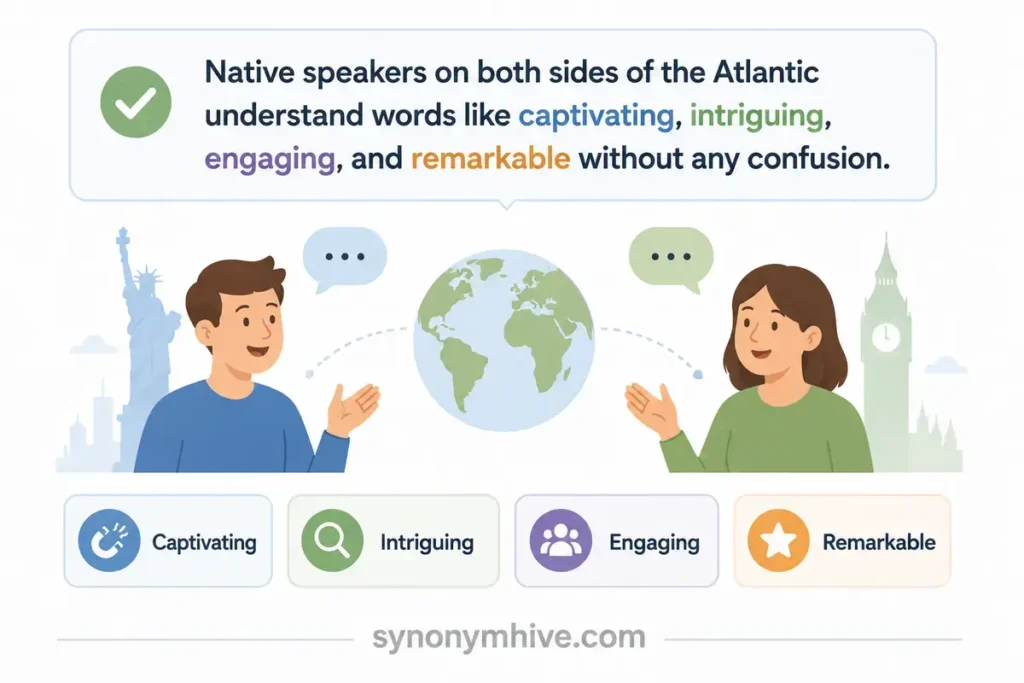
Most synonyms for fascinating work the same in American and British English. Native speakers on both sides of the Atlantic understand words like captivating, intriguing, engaging, and remarkable without any confusion. Still, some expressions sound more common in one place than another.
| Word Or Phrase | More Common In | Notes |
|---|---|---|
| Brilliant | UK | Often means excellent or very impressive. |
| Lovely | UK | Can describe people, places, or experiences warmly. |
| Awesome | US | Very common in casual conversation. |
| Cool | US | Used daily to describe something enjoyable or impressive. |
| Mind blowing | US | Common in informal speech and online writing. |
| Cracking | UK | Informal way to describe something very good. |
If you’re writing for an American audience, everyday choices like interesting, captivating, engaging, compelling, and amazing usually sound the most natural.
Best Word For Different Writing Situations
Picking the right synonym isn’t about finding the fanciest word. It’s about matching the word to the moment. A resume needs a different tone than a text message. A school essay sounds different from a casual conversation with a friend. The sections below show which words work best in common situations and explain why.
Best Word For A Resume
A resume should sound confident and professional. Strong but believable words leave the best impression. Avoid words that sound too dramatic. Hiring managers usually prefer clear language over flashy vocabulary.
| Best Word | Why It Works | Example |
|---|---|---|
| Compelling | Shows strong value. | Created compelling presentations for clients. |
| Engaging | Describes communication skills. | Delivered engaging training sessions for new employees. |
| Remarkable | Highlights achievements. | Earned remarkable improvements in customer satisfaction. |
| Impressive | Shows measurable success. | Built an impressive sales record over three years. |
| Inspiring | Works well for leadership roles. | Inspired team members to reach project goals. |
Good resume writing focuses on results instead of trying to impress with difficult words.
Best Word For An Essay
School essays usually call for formal but easy to understand language.
| Best Word | Best Use | Example |
|---|---|---|
| Intriguing | Ideas and questions. | The author presents an intriguing argument. |
| Compelling | Evidence and opinions. | The study offers compelling evidence. |
| Thought provoking | Analysis. | The novel raises thought provoking questions. |
| Enlightening | Learning. | The documentary was enlightening. |
| Captivating | Stories and literature. | The opening chapter is captivating. |
These choices make your writing sound polished without feeling forced.
Best Word For A Text Message
Text messages are short and relaxed. Simple words usually work best.
| Best Word | Example |
|---|---|
| Awesome | That movie was awesome. |
| Amazing | The concert was amazing. |
| Cool | That’s a cool idea. |
| Wild | That story is wild. |
| Epic | The ending was epic. |
Friends rarely expect formal vocabulary in everyday chats.
Best Word For An Email
Emails can be professional or friendly. Your word choice should match your relationship with the reader.
| Situation | Best Word | Example |
|---|---|---|
| Work email | Interesting | I found your proposal very interesting. |
| Client email | Compelling | Your presentation included several compelling ideas. |
| Teacher | Engaging | Your lecture was engaging and easy to follow. |
| Friendly email | Fascinating | I read a fascinating article this morning. |
| Thank you email | Inspiring | Your advice was inspiring and helpful. |
Simple language almost always sounds more sincere than complicated wording.
Best Word For Speaking
When speaking, people naturally choose shorter and more familiar words. These work especially well.
| Word | Example |
|---|---|
| Amazing | That museum was amazing. |
| Interesting | I met an interesting person today. |
| Fascinating | That’s a fascinating question. |
| Incredible | The view was incredible. |
| Captivating | She told a captivating story. |
A natural conversation sounds better than one filled with formal vocabulary.
Original Example Sentences You Can Use
Reading examples is one of the fastest ways to understand how similar words differ.
- The podcast shared a fascinating story about forgotten cities.
- Her speech was so captivating that nobody checked their phones.
- I found the history lesson surprisingly engaging.
- The detective novel became more gripping with every chapter.
- The museum displayed an intriguing collection of ancient maps.
- His explanation made a difficult topic feel interesting.
- The documentary offered an enlightening look at ocean life.
- We had an absorbing conversation that lasted for hours.
- The scientist shared remarkable discoveries from the expedition.
- The travel guide described the village as magical during winter.
- Her life journey was inspiring because she never gave up.
- The ending of the movie was mind blowing and completely unexpected.
- The speaker gave a compelling reason to protect local parks.
- The art exhibit was mesmerizing from the moment we walked inside.
- The teacher used engaging activities that helped everyone learn faster.
Notice that each sentence fits a different situation. That makes the vocabulary feel natural instead of repetitive.
Fascinating Vs Interesting
These two words often appear in the same situations, but they don’t mean exactly the same thing.
| Fascinating | Interesting |
|---|---|
| Shows deep attention. | Shows normal curiosity. |
| Creates a stronger emotional response. | Sounds more neutral. |
| Suggests you want to learn more. | Suggests something is worth noticing. |
| Best for memorable experiences. | Best for everyday situations. |
Examples.
Interesting.
The article was interesting.
Fascinating.
The article was fascinating. I couldn’t stop reading it.
The second sentence creates a much stronger picture.
Find similar expressions in Synonyms For Terrible Ultimate Guide Expert Picks (2026).
Fascinating Vs Captivating
These words are close, but each paints a different image.
| Fascinating | Captivating |
|---|---|
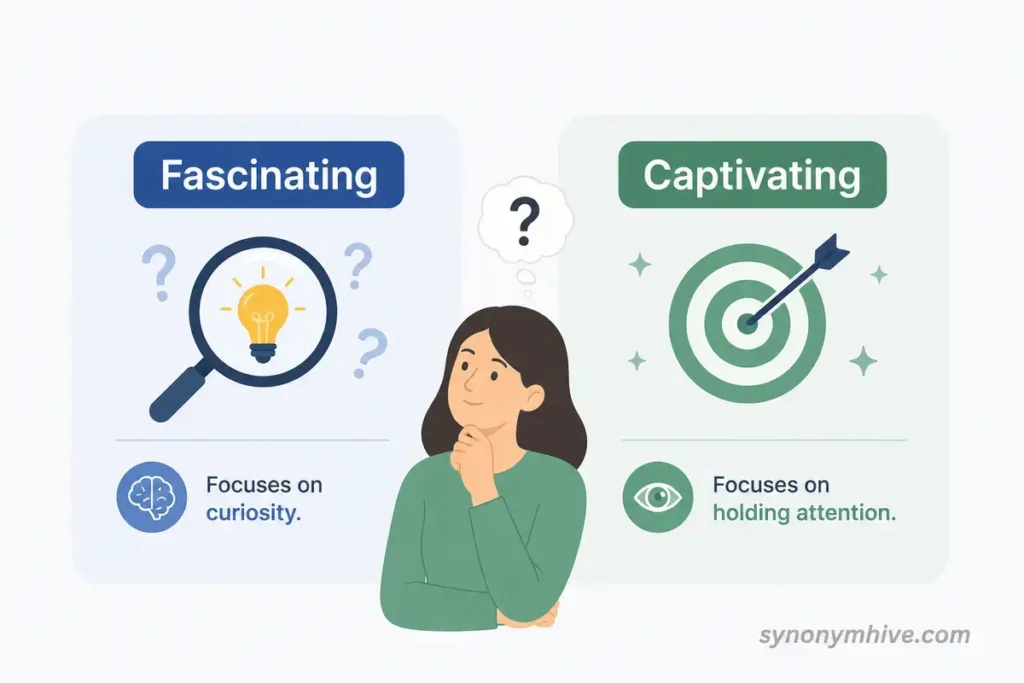
| Focuses on curiosity. | Focuses on holding attention. |
| Often describes ideas and facts. | Often describes stories and performances. |
| Works in formal and casual writing. | Sounds slightly more expressive. |
Examples.
The science experiment was fascinating because it revealed surprising facts.
The storyteller was captivating because everyone listened from beginning to end.
One centers on curiosity. The other centers on attention.
Fascinating Vs Intriguing
People often confuse these words because both involve curiosity. The difference is simple.
| Fascinating | Intriguing |
|---|---|
| You already feel very interested. | You want to know more before forming an opinion. |
| Stronger feeling. | Earlier stage of curiosity. |
| Often follows learning. | Often starts with mystery. |
Examples.
The old castle looked intriguing from the outside.
After taking the guided tour it became fascinating.
The curiosity comes first. Deep interest comes later.
Fascinating Vs Compelling
These words overlap, but they aren’t interchangeable every time.
| Fascinating | Compelling |
|---|---|
| Pulls attention through interest. | Persuades through strong evidence or emotion. |
| Common with stories and discoveries. | Common with arguments and presentations. |
Examples.
The documentary was fascinating.
The documentary presented compelling evidence.
The first sentence talks about your experience. The second focuses on the strength of the information.
Common Mistakes People Make
Many writers repeat the same strong word again and again. That makes the writing sound flat.
Here are mistakes worth avoiding.
- Using fascinating in every paragraph.
Readers notice repeated words quickly. Mix in other choices like captivating, engaging, remarkable, and intriguing.
- Picking a word that’s too dramatic.
Calling an ordinary meeting spellbinding usually sounds exaggerated.
- Using slang in formal writing.
Words like awesome, epic, and mind blowing don’t belong in academic papers or business reports.
- Choosing formal words for casual conversations.
Nobody expects a friend to say dinner was enthralling. Amazing or great sounds much more natural.
- Ignoring your audience.
Think about who will read your work. Teachers, coworkers, friends, and customers all expect a different style.
When You Should Not Use Fascinating
Even though alternatives for fascinating help make writing more expressive, the original word isn’t always the best choice. Avoid it when:
- Something is only mildly interesting.
- You need an objective tone in technical writing.
- You don’t actually feel strong interest.
- The situation calls for simple everyday language.
- You’re repeating the same word several times in one piece of writing.
Strong words have more impact when you save them for moments that truly deserve them.
Antonyms For Fascinating
Sometimes the best way to understand a word is to look at its opposite. If something doesn’t capture attention or spark curiosity, one of these words may fit better.
| Antonym | Meaning | Example |
|---|---|---|
| Boring | Not interesting. | The lecture was boring. |
| Dull | Lacking excitement. | It was a dull presentation. |
| Ordinary | Nothing special. | The story felt ordinary. |
| Unremarkable | Not memorable. | The movie was unremarkable. |
| Plain | Very simple or basic. | The design looked plain. |
| Dry | Lacking emotion or energy. | The report was dry. |
| Monotonous | Repeating the same thing. | The speech became monotonous. |
| Tiresome | Making people lose interest. | The meeting felt tiresome. |
| Tedious | Taking too long and becoming boring. | The homework was tedious. |
| Forgettable | Easy to forget. | It was a forgettable performance. |
Choosing the right opposite can make your writing more balanced and precise.
How To Pick The Right Word Every Time
A long list of words is helpful, but knowing how to choose the best one is even more valuable.
Follow these simple tips.
- Think about your audience first.
A school essay, business email, and text message all call for different vocabulary.
- Match the strength of the situation.
Don’t describe an average experience with an extremely dramatic word. Save stronger words for moments that truly deserve them.
- Keep your tone consistent.
If your writing is formal, avoid casual slang. In conversations with friends, simple language usually feels more natural.
- Read the sentence out loud.
If the word feels awkward when you say it, try another option.
- Avoid repeating the same word.
Good writing uses variety naturally. Rotate between related words when they fit the context.
- Pick clarity over complexity.
The easiest word is often the strongest choice because everyone understands it.
- Let the meaning guide you.
Some words focus on curiosity. Others highlight beauty, surprise, emotion, or admiration. Pick the one that matches your message.
Quick Reference Table
This table gives you a fast answer when you’re in a hurry.
| If You Want To Say | Best Choice |
|---|---|
| Very interesting | Fascinating |
| Makes people curious | Intriguing |
| Holds attention completely | Captivating |
| Strong evidence or argument | Compelling |
| Makes people think | Thought provoking |
| Easy to enjoy | Engaging |
| Beautiful and impossible to ignore | Mesmerizing |
| Exciting story | Gripping |
| Great for casual conversation | Amazing |
| Great for texting | Awesome |
Everyday Situations And The Best Choice
The same experience can be described in many ways. These examples show how changing one word changes the feeling of the sentence.
| Situation | Better Word | Example |
|---|---|---|
| Reading a novel | Captivating | The novel was captivating from the first page. |
| Watching a documentary | Enlightening | The documentary was enlightening and easy to follow. |
| Visiting a museum | Fascinating | The museum had a fascinating collection of ancient tools. |
| Listening to a speech | Engaging | The speaker kept everyone engaged from start to finish. |
| Reviewing research | Compelling | The report presented compelling evidence. |
| Talking with friends | Amazing | That concert was amazing. |
| Describing artwork | Mesmerizing | The painting was mesmerizing. |
| Sharing travel stories | Remarkable | We had a remarkable adventure. |
| Writing an essay | Intriguing | The author introduces an intriguing idea. |
| Recommending a movie | Gripping | It’s a gripping movie that never slows down. |
Small word changes can make your writing sound more natural without making it harder to read.
Why Expanding Your Vocabulary Matters
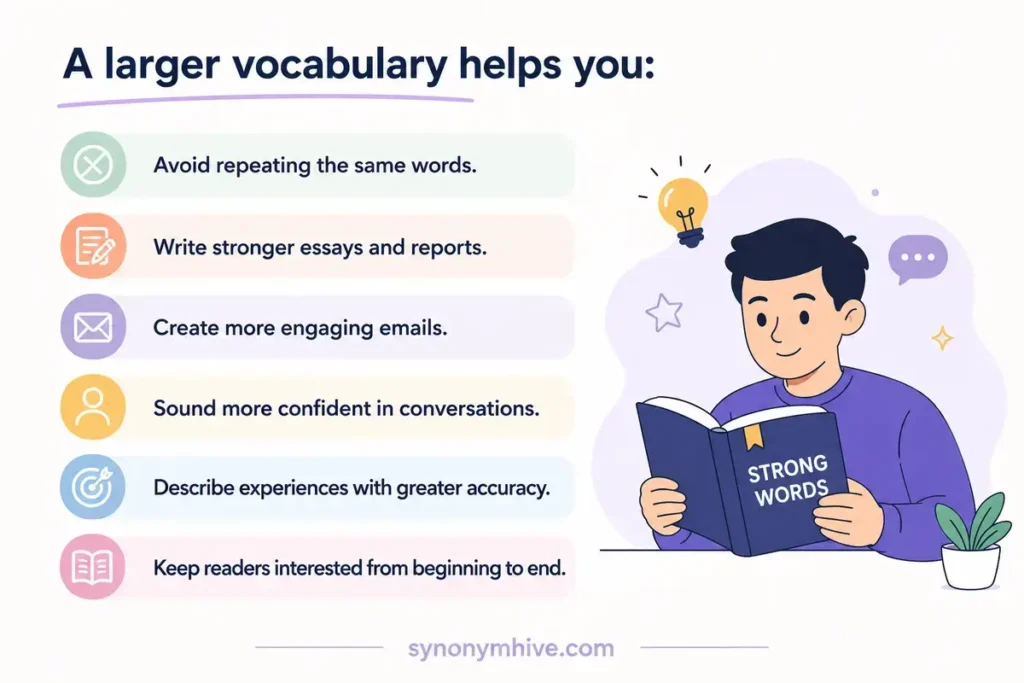
Learning new words isn’t about sounding smarter. It’s about expressing yourself more clearly. A larger vocabulary helps you:
- Avoid repeating the same words.
- Write stronger essays and reports.
- Create more engaging emails.
- Sound more confident in conversations.
- Describe experiences with greater accuracy.
- Keep readers interested from beginning to end.
That’s exactly why learning alternatives for fascinating is useful. Each alternative gives you another way to express curiosity, admiration, or excitement without sounding repetitive.
Looking for a better alternative? Visit Synonyms For Happy Ultimate Guide: Alternatives 2026.
Conclusion
Learning synonyms for fascinating gives you more than a longer vocabulary. It gives you better ways to express ideas, tell stories, and connect with readers. The best choice depends on your audience, your purpose, and the feeling you want to create. Sometimes interesting is enough. Other times captivating, compelling, intriguing, or mesmerizing paints a much clearer picture.
Keep this guide nearby as you write emails, essays, presentations, or social posts. The more you practice using different words in real situations, the more natural they will feel. Strong writing isn’t about using the biggest words. It’s about choosing the right word at the right time.
Frequently Asked Questions
What’s another way to say fascinating?
There are many great alternatives. phrases for fascinating include captivating, intriguing, engaging, compelling, gripping, mesmerizing, remarkable, and absorbing. Choose the one that best matches your situation.
What’s the strongest synonym for fascinating?
There isn’t one perfect answer. Spellbinding, enthralling, riveting, and mesmerizing are among the strongest choices because they suggest complete attention or deep admiration.
Can I use fascinating in formal writing?
Yes. Fascinating works well in essays, reports, articles, and professional emails when something genuinely deserves strong praise.
What’s the difference between fascinating and interesting?
Interesting shows normal curiosity. Fascinating expresses much stronger interest and suggests something keeps your attention for a longer time.
What are the best expressions for fascinating in an essay?
Good formal choices include intriguing, compelling, thought provoking, enlightening, captivating, and remarkable. They sound natural in academic writing without feeling overdone.
Is fascinating a positive word?
Yes. It almost always has a positive meaning because it describes something that attracts attention in a good way or inspires curiosity.
How can I stop repeating fascinating in my writing?
Use phrases for fascinating naturally instead of repeating the same word. Think about the exact meaning you want to express, then choose a word that fits your sentence and your audience.