
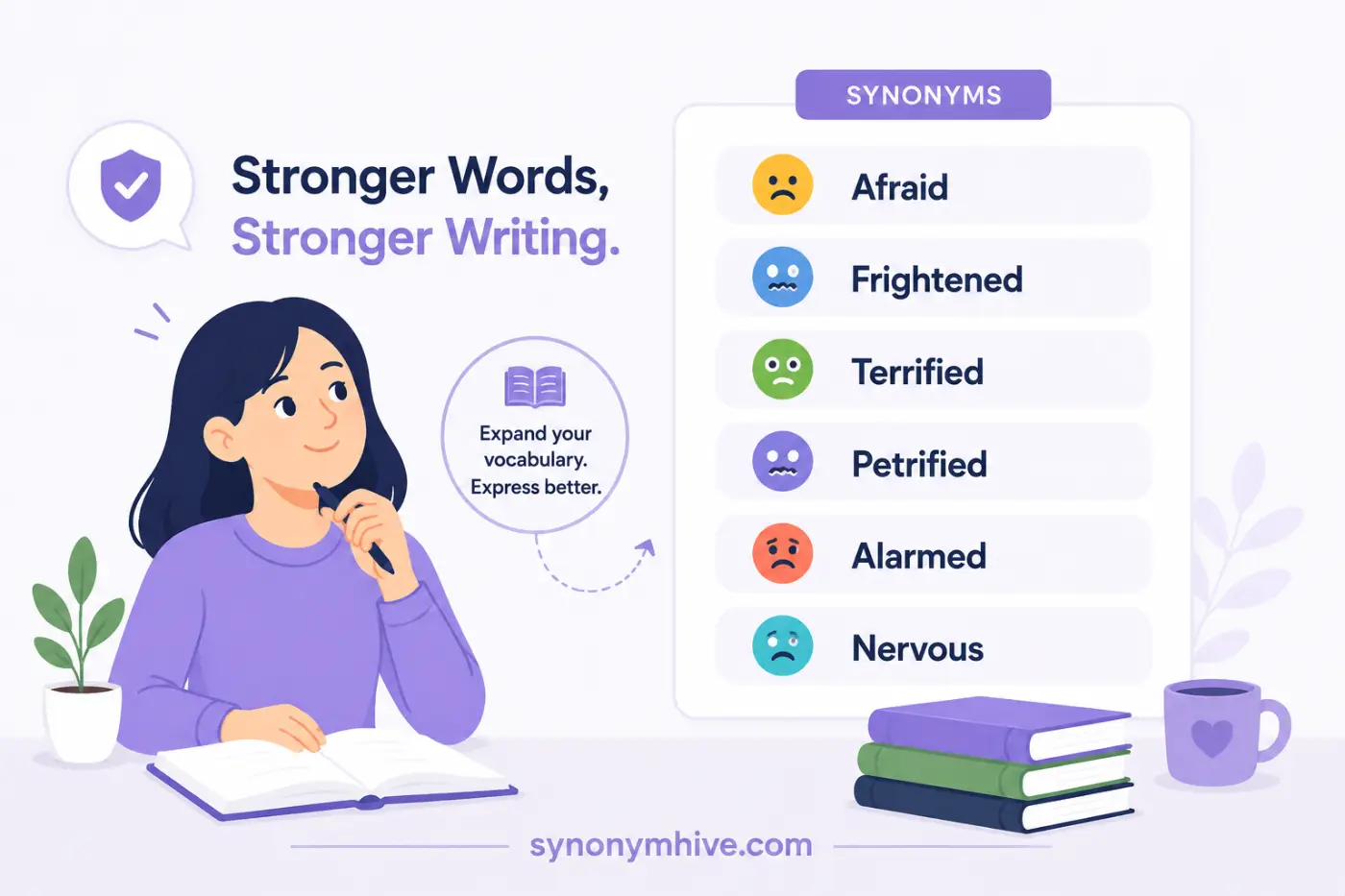
Have you ever written an email an essay or even a text message and noticed you kept using the word scared. Finding another word for scared makes your writing sound more natural more descriptive and less repetitive. Scared can describe many different feelings. Someone may feel nervous before a job interview frightened during a storm anxious about an exam or terrified in a dangerous situation. Picking the right synonym helps readers understand the exact emotion.
Another term for scared is a synonym that describes fear worry anxiety nervousness or panic. The best choice depends on how strong the feeling is and the situation.
This guide explains what scared means where the word came from and the best alternatives for conversations essays emails stories and everyday writing. You’ll also find comparison tables practical examples and simple tips that help you choose the right synonym.
Expand your vocabulary with Another Word For Nice Best Guide: Synonyms (2026).
What Does Scared Mean
Scared means feeling fear worry or concern because something seems dangerous uncertain or uncomfortable.
People use scared in many situations.
- A child feels scared during a thunderstorm.
- Someone feels scared before speaking in public.
- A student feels scared before an important exam.
- A traveler feels scared during severe turbulence.
- A character in a story becomes scared after hearing strange noises.
Because scared covers many emotions choosing a more specific synonym often makes your writing much clearer.
Where Does Scared Come From
The word scared comes from the Old Norse word skirra which meant to frighten or make someone afraid. Over time English speakers began using scared to describe a person who feels fear instead of the action that causes it. Today scared is one of the most common words for fear in everyday English. It appears in conversations books movies news stories and school writing.
Master List Of Another Word For Scared
The table below includes more than thirty useful choices for another phrase for scared. Each one describes a different type or level of fear.
| Word | Meaning | Tone | Example |
|---|---|---|---|
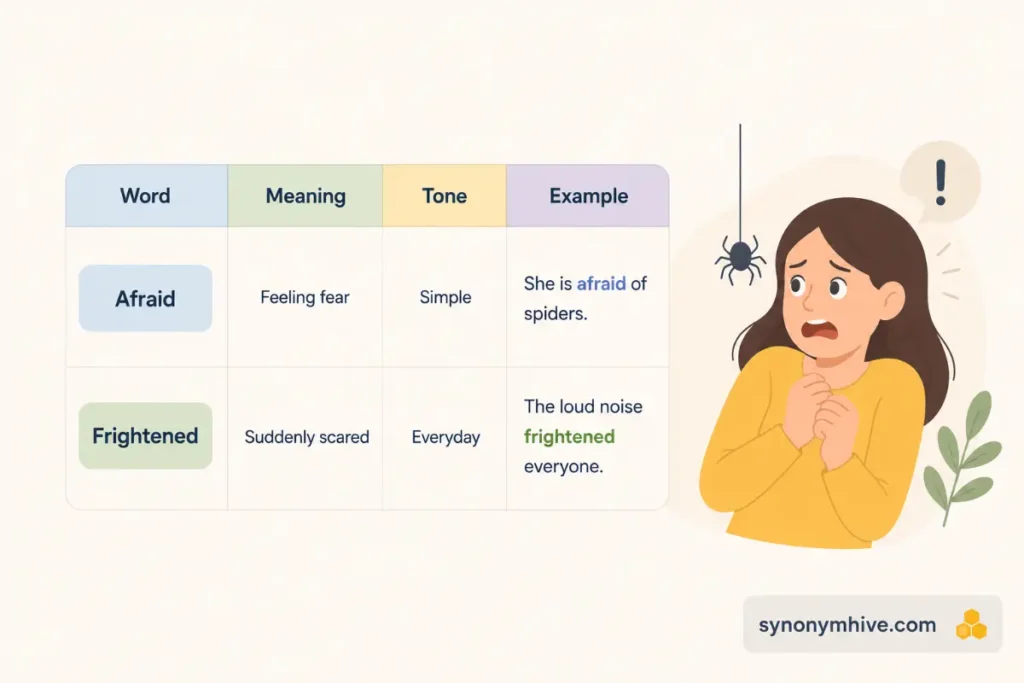
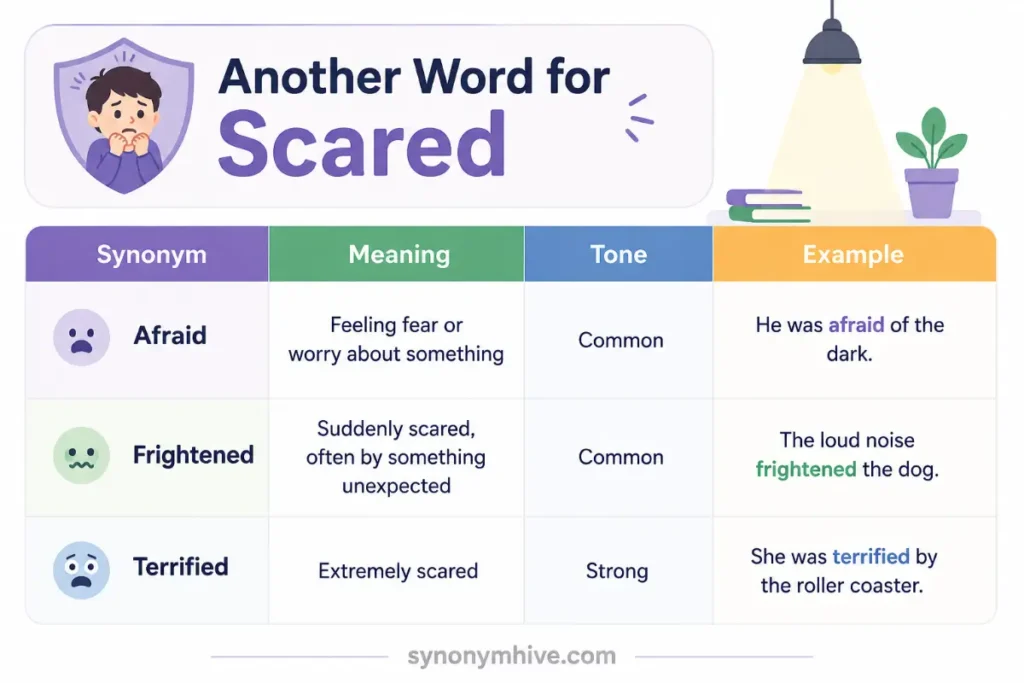
| Afraid | Feeling fear | Simple | She is afraid of spiders. |
| Frightened | Suddenly scared | Everyday | The loud noise frightened everyone. |
| Terrified | Extremely scared | Everyday | He was terrified during the storm. |
| Nervous | Slightly worried | Everyday | She felt nervous before the interview. |
| Anxious | Worried about something | Neutral | I’m anxious about the results. |
| Alarmed | Suddenly concerned | Neutral | The family became alarmed. |
| Panicked | Overcome with fear | Everyday | The crowd panicked. |
| Startled | Surprised by fear | Neutral | The dog startled the child. |
| Uneasy | Slight discomfort | Neutral | I felt uneasy walking alone. |
| Apprehensive | Expecting trouble | Formal | She was apprehensive about surgery. |
| Fearful | Full of fear | Neutral | The villagers looked fearful. |
| Petrified | Frozen with fear | Everyday | He stood petrified. |
| Horrified | Filled with horror | Neutral | They were horrified by the accident. |
| Intimidated | Made to feel afraid | Neutral | She felt intimidated by the audience. |
| Timid | Naturally shy or fearful | Neutral | The puppy seemed timid. |
| Shaken | Emotionally disturbed | Everyday | He looked shaken afterward. |
| Disturbed | Emotionally upset | Neutral | The news disturbed everyone. |
| Worried | Concerned | Everyday | My parents were worried. |
| Concerned | Feeling care or worry | Neutral | Teachers were concerned. |
| Tense | Unable to relax | Everyday | Everyone felt tense. |
| On edge | Feeling nervous | Casual | I’ve been on edge all week. |
| Spooked | Suddenly frightened | Casual | The strange sound spooked us. |
| Creeped out | Made uncomfortable | Slang | That movie creeped me out. |
| Goose bumped | Feeling fear | Casual | The story gave me goose bumps. |
| Cautious | Acting carefully | Neutral | Drivers became cautious. |
| Doubtful | Lacking confidence | Neutral | She felt doubtful about the trip. |
| Overwhelmed | Emotionally overloaded | Everyday | He felt overwhelmed by the situation. |
| Vulnerable | Feeling exposed | Neutral | The child felt vulnerable. |
Synonyms By Intensity
Some words describe small worries while others express overwhelming fear.
Mild Choices
- Nervous.
- Uneasy.
- Concerned.
- Worried.
- Tense.
- Doubtful.
These fit everyday conversations school writing and workplace situations.
Moderate Choices
- Scared.
- Afraid.
- Frightened.
- Alarmed.
- Apprehensive.
- Intimidated.
- Fearful.
These describe noticeable fear without suggesting complete panic.
Strong Choices
- Terrified.
- Petrified.
- Panicked.
- Horrified.
- Spooked.
- Shaken.
- Frozen with fear.
Use these words when describing intense emotional reactions.
Synonyms By Part Of Speech
Most choices for another alternative for scared are adjectives but other word forms also improve sentence variety.
Adjectives
- Scared.
- Afraid.
- Nervous.
- Anxious.
- Terrified.
- Fearful.
- Uneasy.
- Apprehensive.
- Timid.
- Alarmed.
Verbs
- Fear.
- Frighten.
- Scare.
- Alarm.
- Intimidate.
- Terrify.
- Worry.
- Panic.
- Disturb.
- Startle.
Nouns
- Fear.
- Anxiety.
- Worry.
- Panic.
- Terror.
- Concern.
- Apprehension.
- Horror.
- Nervousness.
- Dread.
Using adjectives verbs and nouns together helps your writing sound smoother and less repetitive.
Do Americans And British People Use Different Words
Most synonyms for scared are common in both American and British English. Some informal expressions appear more often in one region.
| Word | More Common In | Notes |
|---|---|---|
| Scared | Both | Common in everyday speech. |
| Afraid | Both | Works in formal and informal writing. |
| Nervous | Both | Frequently used in daily conversations. |
| On edge | Both | Casual expression for feeling tense. |
| Spooked | United States | Common in informal speech. |
| Creeped out | United States | Casual expression for discomfort or fear. |
| Frightened | Both | Common in books news and conversations. |
| Apprehensive | Both | More common in formal writing. |
Most readers in the United States and the United Kingdom will understand every synonym in this guide without difficulty.
What Is The Best Word To Use In Different Situations
The best synonym depends on the situation and the level of fear. A business email needs different language than a scary story. Choosing the right word makes your writing more believable.
What Is The Best Word For A Resume
A resume should sound professional and confident. Instead of talking about being scared use words that describe caution or learning.
Good choices include.
- Cautious.
- Careful.
- Prepared.
- Aware.
- Attentive.
- Focused.
Examples.
I remain calm under pressure.
My approach to problem-solving is careful and methodical.
I stay focused during challenging situations.
Professional writing should emphasize confidence instead of fear.
What Is The Best Word For An Essay
Essays often describe emotions characters and historical events. More precise vocabulary makes your writing stronger.
Good choices include.
- Apprehensive.
- Fearful.
- Alarmed.
- Terrified.
- Horrified.
- Anxious.
Examples.
The main character became apprehensive after reading the letter.
The villagers were terrified by the approaching storm.
The speech left the audience alarmed.
These words help readers understand the exact emotion.
What Is The Best Word For A Text Message
Text messages usually sound best with everyday language.
Good choices include.
- Scared.
- Nervous.
- Freaked out.
- Spooked.
- Creeped out.
- Worried.
Examples.
I’m nervous about tomorrow.
That movie totally creeped me out.
The strange sound really spooked me.
I’m a little worried about the weather.
Simple language feels natural in casual conversations.
What Is The Best Word For An Email
Professional emails should describe concerns without sounding overly emotional.
Good choices include.
- Concerned.
- Cautious.
- Uncertain.
- Apprehensive.
- Worried.
Examples.
We are concerned about the project timeline.
I remain cautious about the proposed changes.
The team is concerned about possible delays.
These words communicate concern while keeping a professional tone.
What Is The Best Word For Speaking
Everyday conversations usually sound best with simple vocabulary.
Good choices include.
- Scared.
- Afraid.
- Nervous.
- Worried.
- Shaken.
- On edge.
Examples.
I was scared to try it.
She’s nervous about the interview.
He looked shaken after the accident.
I’ve been on edge all day.
Simple words often sound the most genuine.
Real Life Examples Using Another Word For Scared
These examples show how different synonyms fit everyday situations.
- The little boy was afraid of the dark.
- She felt nervous before giving her presentation.
- We were alarmed by the emergency warning.
- The hikers became frightened when they heard thunder.
- He looked shaken after the near accident.
- I’m anxious about my exam results.
- The loud explosion startled everyone nearby.
- They felt uneasy walking through the empty building.
- The audience was horrified by the tragic news.
- She became intimidated by the large crowd.
- The puppy looked timid around strangers.
- He was petrified during the earthquake.
- Everyone panicked when the fire alarm sounded.
- I felt on edge before the big meeting.
- That old house completely creeped us out.
Using different synonyms helps readers picture the exact kind of fear instead of relying on one general word.
Scared Vs Afraid
These words are closely related but they are not always interchangeable.
| Scared | Afraid |
|---|---|
| Common in everyday speech. | Slightly more formal. |
| Often describes temporary fear. | Can describe lasting fear. |
| I was scared during the storm. | I’m afraid of heights. |
Afraid often sounds calmer than scared.
Scared Vs Nervous
These words describe different emotional experiences.
| Scared | Nervous |
|---|---|
| Fear caused by danger or perceived danger. | Worry about something that may happen. |
| Usually stronger. | Usually milder. |
| She was scared by the loud noise. | He was nervous before the interview. |
Nervous usually suggests uncertainty instead of immediate fear.
Expand your vocabulary with Another Word For Fast: Powerful Synonyms to Write Smarter 2026.
Scared Vs Terrified
These words describe different levels of intensity.
| Scared | Terrified |
|---|---|
| General feeling of fear. | Extreme overwhelming fear. |
| Fits everyday situations. | Reserved for serious situations. |
| I was scared during the movie. | She was terrified during the tornado. |
Terrified creates a much stronger emotional image.
Common Mistakes People Make
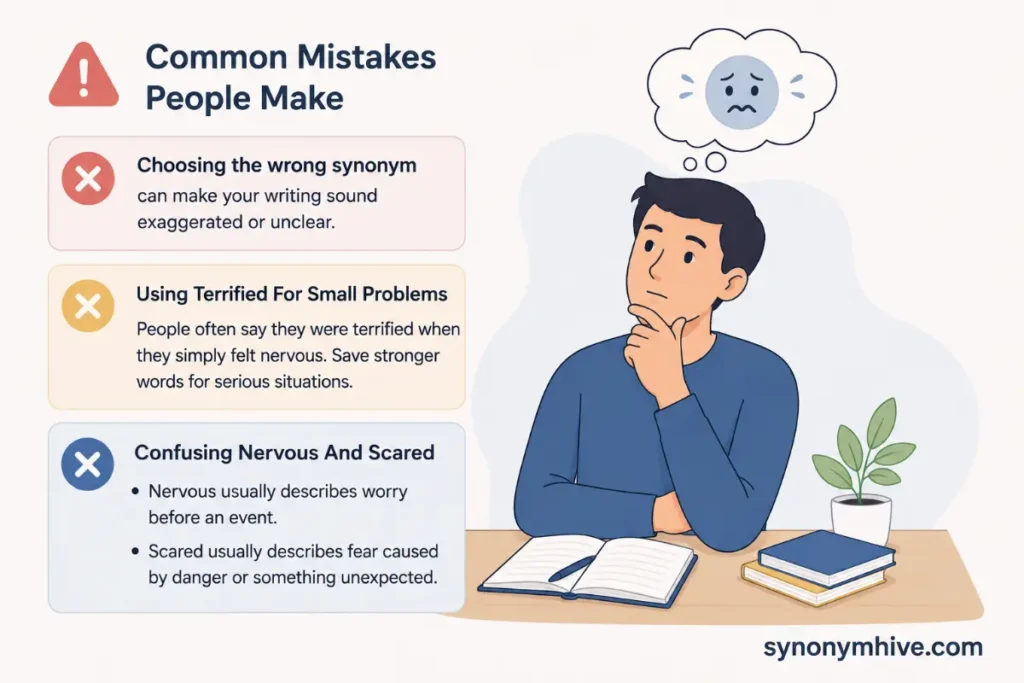
Choosing the wrong synonym can make your writing sound exaggerated or unclear.
Using Terrified For Small Problems
People often say they were terrified when they simply felt nervous. Save stronger words for serious situations.
Confusing Nervous And Scared
Nervous usually describes worry before an event. Scared usually describes fear caused by danger or something unexpected.
Mixing Casual And Formal Language
Creeped out and freaked out sound natural in conversations.
Apprehensive and alarmed work better in essays reports and professional writing.
Ignoring The Exact Meaning
Uneasy describes mild discomfort.
Petrified describes extreme fear.
Concerned describes worry.
Choose the word that best matches the situation.
Using Fear Words Too Often
Repeating scared in every paragraph weakens your writing.
Mixing in words like worried anxious frightened uneasy and alarmed creates more interesting and accurate sentences.
Antonyms Of Scared
Learning opposite words helps you describe confidence courage and calm more clearly.
| Word | Meaning | Example |
|---|---|---|
| Brave | Ready to face danger | The firefighter stayed brave throughout the rescue. |
| Courageous | Showing great courage | She made a courageous decision. |
| Fearless | Showing no fear | The fearless climber reached the summit. |
| Confident | Believing in yourself | He felt confident before the interview. |
| Calm | Free from worry | She remained calm during the emergency. |
| Relaxed | Comfortable and at ease | Everyone looked relaxed after the meeting. |
| Composed | In control of emotions | The pilot stayed composed under pressure. |
| Bold | Willing to take risks | She made a bold choice. |
| Secure | Feeling safe | The children felt secure with their parents. |
| Assured | Full of confidence | He sounded assured during the presentation. |
Sometimes using an opposite word explains your idea better than simply saying someone was not scared.
What Is Another Word For Scared In Customer Reviews
Customer reviews become more useful when they explain the exact feeling instead of simply saying someone was scared.
| Situation | Better Word | Example |
|---|---|---|
| Unsafe hotel | Uneasy | I felt uneasy walking through the parking lot at night. |
| Roller coaster | Terrified | The ride left me terrified but excited. |
| Haunted attraction | Spooked | The actors really spooked our group. |
| Poor neighborhood | Concerned | We felt concerned about the area after dark. |
| Wildlife tour | Alarmed | We were alarmed when the animal came close. |
| Horror movie | Creeped out | The ending completely creeped me out. |
Specific words help readers understand exactly what happened.
What Is Another Word For Scared In School Writing
School assignments become stronger when you replace scared with a word that matches the exact situation.
| Instead Of Scared | Better Choice | Example |
|---|---|---|
| Scared | Nervous | She was nervous before the speech. |
| Scared | Apprehensive | The explorer felt apprehensive before entering the cave. |
| Scared | Frightened | The children were frightened by the loud thunder. |
| Scared | Alarmed | Residents were alarmed by the warning sirens. |
| Scared | Terrified | The character was terrified during the storm. |
| Scared | Fearful | The villagers remained fearful throughout the night. |
Using precise vocabulary makes essays more engaging and easier to understand.
Common Phrases That Use Scared
Many everyday expressions become more descriptive when you replace scared with a more specific synonym.
| Common Phrase | Better Alternative | Example |
|---|---|---|
| Scared of heights | Afraid of heights | He is afraid of heights. |
| Scared to speak | Nervous to speak | She was nervous to speak in front of the class. |
| Scared of failure | Anxious about failure | He was anxious about failing the test. |
| Scared during the storm | Frightened during the storm | The children were frightened during the storm. |
| Scared by the movie | Creeped out by the movie | We were creeped out by the ending. |
| Scared of the dark | Fearful of the dark | The little boy was fearful of the dark. |
| Scared after the accident | Shaken after the accident | She looked shaken after the crash. |
| Scared before surgery | Apprehensive before surgery | The patient felt apprehensive before surgery. |
Choosing the right synonym creates a much clearer picture for your readers.
What Is The Most Common Another Word For Scared
Some synonyms appear more often because they fit everyday conversations.
| Synonym | Best Used For |
|---|---|
| Afraid | General fear. |
| Nervous | Everyday worries. |
| Anxious | Future events and uncertainty. |
| Frightened | Sudden fear. |
| Concerned | Professional conversations. |
| Uneasy | Mild discomfort. |
| Alarmed | Unexpected danger. |
| Terrified | Extreme fear. |
| Shaken | Emotional reactions after an event. |
| Apprehensive | Formal writing. |
If you are unsure which word to choose start with afraid or nervous. Both sound natural in many situations.
Why Scared Is One Of The Most Overused Words
Scared is useful but it does not always explain the exact emotion.
| If You Mean | Better Word |
|---|---|
| Slight worry | Nervous |
| Future concern | Anxious |
| Mild discomfort | Uneasy |
| Sudden fear | Frightened |
| Extreme fear | Terrified |
| Emotional shock | Shaken |
| Professional concern | Apprehensive |
| Unexpected danger | Alarmed |
Using a more specific word makes your writing more vivid and easier to understand.
How To Replace Scared Without Sounding Dramatic
Strong writing does not always use the strongest words. It uses the most accurate ones.
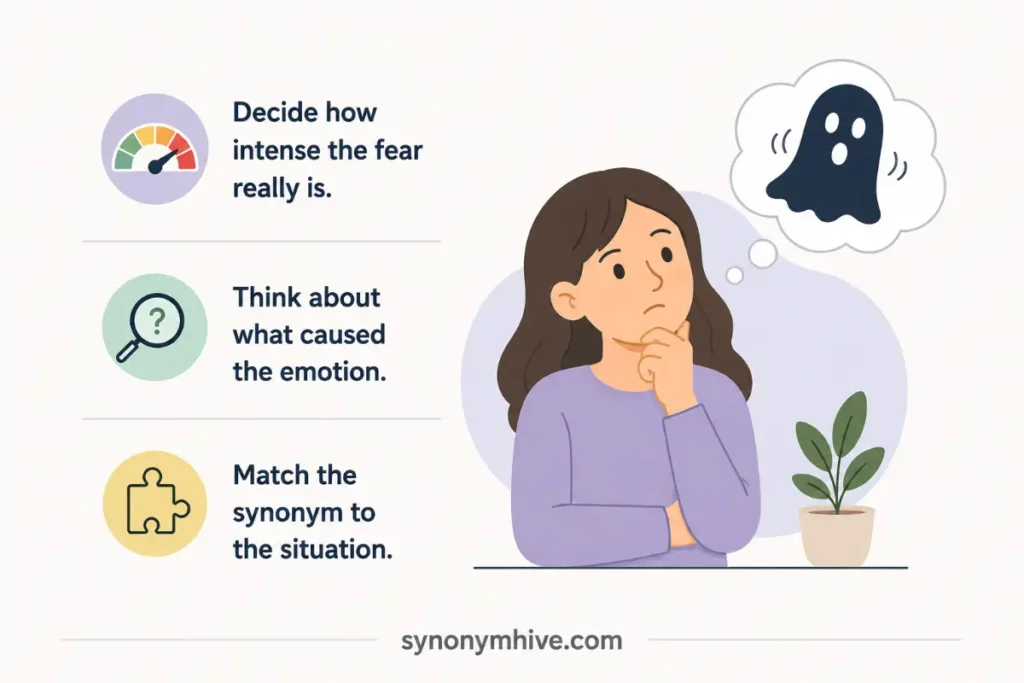
- Decide how intense the fear really is.
- Think about what caused the emotion.
- Match the synonym to the situation.
- Read the sentence aloud to check if it sounds natural.
- Choose clear everyday language instead of dramatic vocabulary unless the situation truly calls for it.
The best synonym is the one that helps your reader picture the emotion without exaggeration.
Quick Tips For Choosing The Right Word
Choosing the right synonym becomes much easier when you match the word to the situation.
- Use nervous for everyday worries.
- Choose afraid for general fear.
- Pick anxious when talking about uncertainty or future events.
- Use frightened for sudden fear.
- Choose terrified only for very intense fear.
- Use apprehensive in formal writing and essays.
- Pick uneasy when someone feels uncomfortable instead of frightened.
- Use spooked or creeped out in casual conversations.
- Match the strength of the word to the emotion.
- Read the sentence aloud to make sure it sounds natural.
Small word choices can make a big difference in how readers understand your message.
Explore another synonym guide: Another Word For Amazing Best Guide: Alternatives (2026).
Conclusion
Finding another word for scared helps you describe fear with much greater accuracy. Instead of repeating the same word you can choose nervous for mild worry afraid for general fear apprehensive for formal writing frightened for sudden fear or terrified for extreme situations. Each synonym gives readers a clearer picture of what someone is feeling.
Strong writing depends on choosing the most accurate word instead of the strongest one. Practice using these alternatives in essays emails stories conversations and everyday writing. As your vocabulary grows your sentences will sound more natural more engaging and much easier to understand.
Frequently Asked Questions
What’s Another Way To Say Scared?
Common alternatives include afraid frightened nervous anxious terrified alarmed uneasy and apprehensive. The best another expression for scared depends on how much fear you want to describe.
What Is The Strongest Synonym For Scared?
Terrified petrified and horrified are among the strongest synonyms. They describe much more intense fear than scared.
Can I Use Nervous Instead Of Scared?
Yes if the situation involves worry instead of immediate danger. Nervous is often a better choice before an exam interview or presentation.
Which Word Sounds Best In Professional Writing?
Concerned apprehensive cautious and uncertain usually fit business writing because they sound respectful and measured.
Is Creeped Out Too Informal?
Yes. Creeped out is common in conversations and text messages but it is usually not suitable for academic or professional writing.
What Is Another Expression For Scared In A Story?
Frightened terrified alarmed fearful petrified and shaken all work well because they help readers picture different levels of fear.
How Can I Choose Another Term For Scared More Easily?
Think about how strong the fear is before choosing a synonym. Another lexeme for scared should match the exact emotion instead of simply sounding more dramatic.