
You’re writing an email and want to say someone made a powerful point. Maybe you’re polishing a resume and need a stronger word than powerful. Or perhaps you’re working on an essay and keep using the same word again and again. That’s when finding another word for powerful can make your writing sharper and more natural.
The best replacement depends on what you mean by powerful. A person can be influential. An argument can be convincing. A speech can be moving. A leader can be authoritative. A machine can be strong. These words overlap but they don’t carry the same meaning.
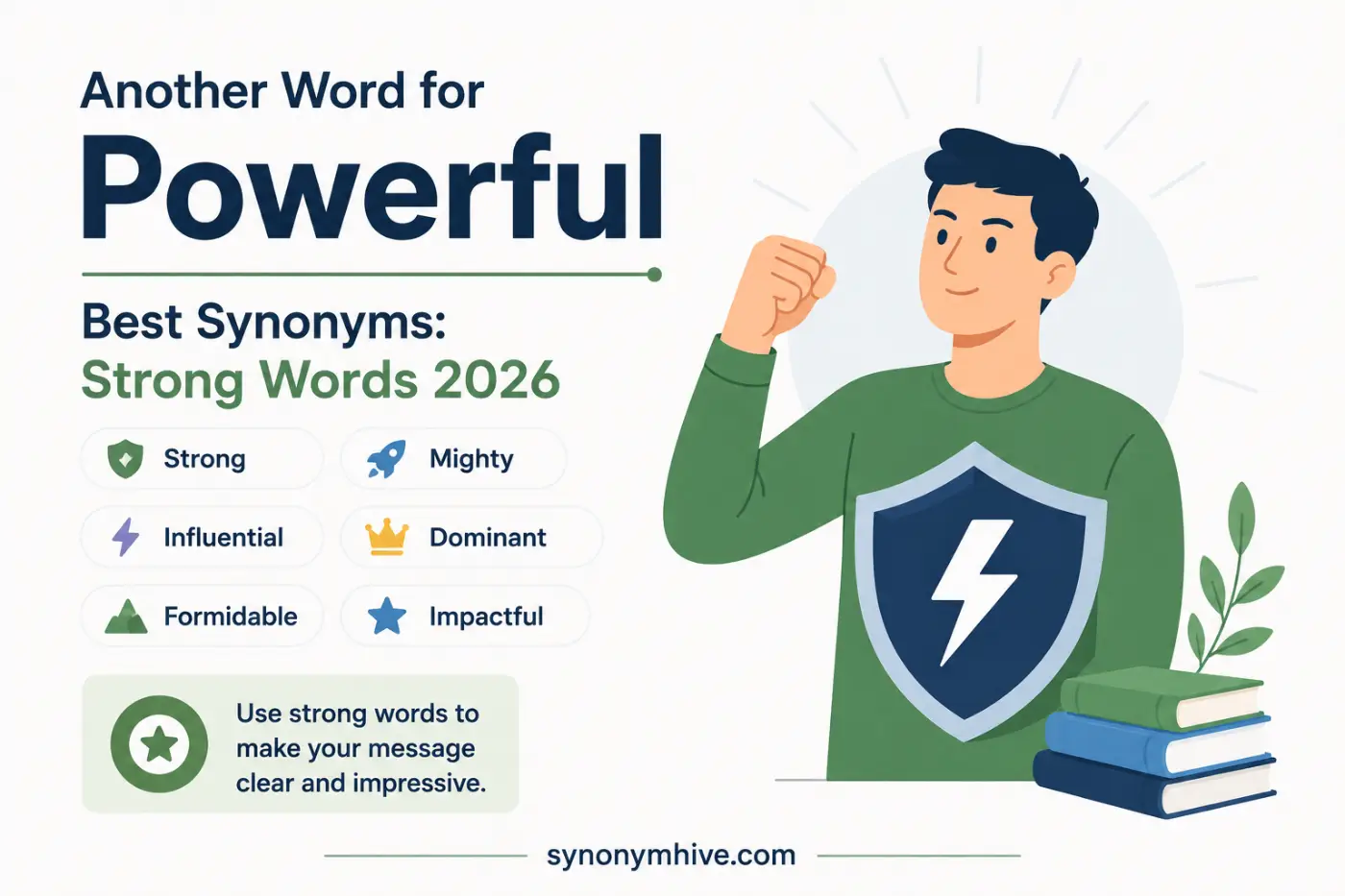
Another phrase for powerful is influential when you mean someone or something has a strong effect on people or events. Other choices include strong, forceful, influential, compelling, effective, dominant, mighty, and authoritative.
This guide explains the meaning and origin of powerful. You’ll also find more than 30 useful synonyms grouped by tone. Then we’ll compare close choices and show you the best word for resumes, essays, emails, texts, and everyday speech. You’ll also get practical examples, common mistakes, antonyms, and quick tips for choosing the right word.
Need a similar word? Read Another Word for Passionate: Power Picks (2026).
What Does Powerful Mean
Powerful usually describes someone or something that has a lot of power, strength, influence, or effect. The word can describe physical strength.
For example.
The powerful engine moved the heavy truck up the hill.
It can also describe influence.
For example.
She’s a powerful leader who can bring people together.
Powerful can describe ideas and emotions too.
For example.
The speaker gave a powerful argument for better education.
The movie ended with a powerful message about family.
The exact meaning changes with the context. That’s why simply replacing powerful with the first synonym you find can make a sentence sound strange.
If you’re looking for another expression for powerful, first ask what kind of power you mean.
- Physical strength.
- Personal influence.
- Strong authority.
- Emotional impact.
- Persuasive force.
- Strong performance.
- Social or political control.
- Strong effect on the senses or mind.
Once you know the type of power, the right synonym becomes much easier to choose.
Where Does Powerful Come From
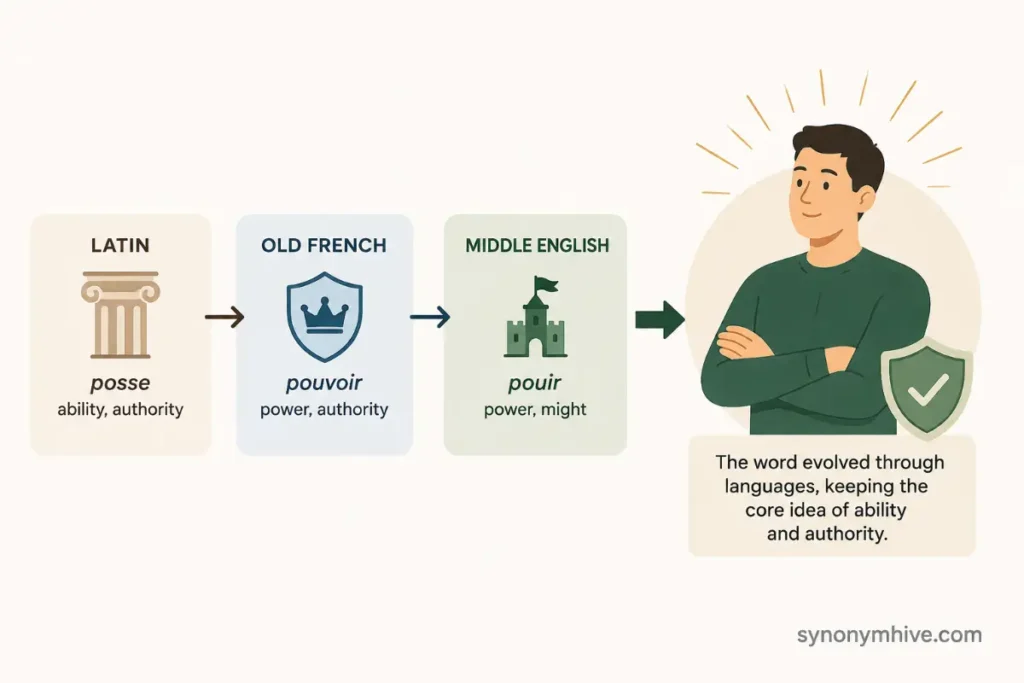
Powerful comes from the word power. Power traces back through Middle English and Old French to Latin roots connected with ability and authority. The idea behind the word has stayed fairly consistent. It relates to having the ability to act, control, influence, or produce an effect.
The suffix ful means full of or having a lot of something. So powerful basically means full of power or having great power. English has used powerful for centuries. Over time, the word developed several common meanings. It can refer to physical force, political authority, personal influence, emotional impact, or effectiveness.
That wide range makes powerful useful. It also makes the word easy to overuse. For example, calling a speech powerful tells the reader that it had a strong effect. But it doesn’t explain why it worked. A more precise word can add useful detail. A compelling speech grabs attention and holds it. A moving speech creates a strong emotional response. A persuasive speech changes someone’s thinking. An authoritative speech sounds confident and informed. A forceful speech presents an idea with strong energy. The more specific word often gives your reader a clearer picture.
What Are The Best Synonyms For Powerful
The best synonym depends on the situation. Some words sound natural in everyday conversation. Others work better in formal writing. A few are casual or slang choices. The table below gives you a broad set of options.
| Word | Meaning | Tone | Example |
|---|---|---|---|
| Strong | Having great strength or effect | Simple | She has a strong personality. |
| Influential | Able to affect people or events | Everyday | He’s an influential teacher. |
| Forceful | Showing strong energy or conviction | Everyday | She gave a forceful response. |
| Effective | Producing the desired result | Professional | The campaign was highly effective. |
| Persuasive | Good at changing opinions | Formal | Her presentation was persuasive. |
| Mighty | Very strong or powerful | Literary | The mighty river crossed the valley. |
| Potent | Having a strong effect | Formal | The medicine had a potent effect. |
| Persuasive | Able to convince others | Professional | The writer used persuasive language. |
| Significant | Important or influential | Formal | The change had a significant effect. |
| Overwhelming | Extremely strong or difficult to resist | Everyday | The support was overwhelming. |
| Mighty | Extremely strong | Literary | The mighty warrior stood firm. |
| Formidable | Difficult to defeat or challenge | Formal | She became a formidable opponent. |
| Muscular | Physically strong or developed | Everyday | He has a muscular build. |
| Robust | Strong and healthy | Formal | The company has a robust system. |
| Beastly | Extremely strong or difficult | Slang | That workout was beastly. |
| Heavy hitting | Highly influential or forceful | Informal | The panel included several heavy hitting experts. |
Some entries overlap. For example, influential appears more than once because it works across several contexts. In polished writing, you should choose the word that adds the most specific meaning.
Which Synonyms Are Simple And Everyday
If you need another phrase for powerful in ordinary conversation then keep it simple. Strong is usually the safest choice because it works naturally in many everyday situations. You can say she has a strong personality. You can also say he made a strong argument. That’s a strong engine is another natural example. You might also describe a group by saying this is a strong team.
Influential works well when you’re talking about a person who affects other people. For example you can say she’s one of the most influential teachers in the school. Forceful fits when someone speaks or acts with confidence and energy. You could say he gave a forceful response during the meeting.
Moving works when something creates a strong emotional response. For example you can say her story was deeply moving. Convincing works when an argument or explanation makes sense and persuades someone. You might say his explanation was convincing. These choices sound natural and clear without making the sentence feel overly formal.
Which Synonyms Work Best In Formal Writing
Formal writing often benefits from precision. Compelling is useful for strong arguments and evidence. For example the report presents a compelling case for reform. Persuasive works when the goal involves changing someone’s mind. You might write the candidate gave a persuasive presentation.
Authoritative works when someone sounds knowledgeable and trustworthy. For example the article provides an authoritative overview of the subject. Formidable works when someone or something is difficult to challenge. You could say the company has become a formidable competitor. Significant works when you want to stress importance such as the discovery had a significant impact on the field. Potent works when something creates a strong effect. For example the study identified a potent factor in consumer behavior. These words can make academic and professional writing more precise without making it harder to understand.
Which Synonyms Sound Casual Or Slang
Some alternatives work better in relaxed speech. Killer can mean excellent or extremely effective in casual American English. For example that was a killer presentation. Electrifying describes something exciting and full of energy. You might say the crowd gave an electrifying response. Beastly can describe something extremely difficult or intense. It’s much more informal. For example that was a beastly workout.
Heavy hitting describes people or organizations with major influence. For example the conference attracted several heavy hitting speakers. These choices can add personality to casual writing and conversation. Still they don’t belong in every setting. Avoid slang in formal reports academic essays resumes and professional applications unless the style clearly calls for it.
How Do Powerful Synonyms Change With Intensity
Not every synonym carries the same level of strength. Think of these words as sitting on a scale. The right choice depends on how much strength or impact you want to express.
Mild And Moderate Choices
Effective is often moderate. It says something works without suggesting extraordinary power. For example the new training program was effective. Significant suggests importance but doesn’t always suggest extreme force. You could write the decision had a significant effect on the business. Strong sits in the middle and works in many situations. For example she made a strong case for the proposal.
Strong Choices
Forceful suggests energy and confidence. For example he gave a forceful speech. Compelling suggests that something is difficult to ignore or reject. You could say the evidence was compelling. Persuasive suggests the ability to change someone’s mind. For example her argument was highly persuasive.
Influential suggests lasting or meaningful impact on people or decisions. For example he became an influential voice in education. These words communicate more specific types of strength than powerful alone.
Very Strong Choices
Formidable suggests that something is difficult to challenge. For example the team is a formidable opponent. Dominant suggests control or clear superiority. You might say the company has a dominant position in the market. Mighty suggests great strength and often has a dramatic or literary feel. For example the mighty storm moved across the coast.
Overwhelming suggests an effect so strong that it becomes difficult to resist or manage. For example the audience gave her overwhelming support. The key lesson is simple. Stronger doesn’t always mean better. A precise word beats an exaggerated word.
What Is Another Phrase For Powerful For A Person
When powerful describes a person the best word depends on the kind of power they have. Influential works for someone who changes opinions or behavior. Authoritative works for someone who has expertise and confidence. Commanding works for someone who naturally takes control. Charismatic works for someone who attracts and inspires people.
Dominant works for someone who holds a strong position over others. Formidable works for someone who is difficult to challenge. Dynamic works for someone energetic and effective. Forceful works for someone who expresses ideas with strength. For example she’s an influential leader in her community. He has a commanding presence in the courtroom. The coach is a formidable opponent. She’s a dynamic speaker who keeps the audience engaged. His forceful personality can fill a room.
These words give readers more information than powerful alone. They help explain exactly what makes someone powerful.
What Is Another Word For Powerful On A Resume
For a resume choose a word that shows a measurable quality. Strong can work when you describe relationships skills or performance. For example I built strong relationships with key clients. Influential can work for leadership roles. You could write led an influential marketing campaign that expanded brand awareness.
Effective is excellent when you can connect it to results. For example developed an effective sales process that improved customer retention. Strategic can work when your power comes from planning and decision making. You might write created strategic partnerships with regional organizations. Results driven can also work in professional settings when used carefully.
A powerful resume doesn’t simply claim that you’re powerful. It proves your value through actions and results. Instead of writing I’m a powerful manager you could write I led a team of 18 employees and improved project delivery times by 25 percent. The second sentence gives evidence. That makes it more credible.
What Is Another Expression For Powerful In An Essay
Essays often need precise academic language. Compelling is a strong choice for arguments. For example the author presents a compelling argument about social responsibility. Persuasive works when discussing reasoning. You could write the evidence provides a persuasive explanation for the policy change.
Significant works for importance. For example the event had a significant impact on public opinion. Influential works for people or ideas. You might write the philosopher became an influential figure in modern political thought. Profound works when something has deep meaning or a lasting effect. For example the novel offers a profound reflection on identity.
Avoid replacing powerful with an impressive sounding word just to make your essay seem academic. Clear writing usually sounds stronger than complicated writing.

What Is Another Term For Powerful In An Email
Professional emails usually need simple and direct language. Strong is often the best choice because it sounds natural and clear. For example you could write you made a strong point during the meeting. Compelling works when you’re praising an argument. You might say your proposal makes a compelling case for the new approach.
Valuable can work when you mean useful rather than powerful. For example your feedback was valuable to the team. Effective works when something achieved its purpose. You could write your strategy has been highly effective. In an email clarity matters more than dramatic language.
What Is Another Expression For Powerful In A Text
Text messages usually call for natural everyday language. You might say that was a strong speech. You could also write that was such a powerful moment. If you’re talking about an argument you might say that argument was convincing. For a person you could say she’s seriously influential. For a movie or experience you might say that was intense or that was an amazing performance.
If you’re texting friends you can also use casual terms such as killer or electrifying. Your relationship with the person and the situation should guide your choice. Simple words usually sound more natural in everyday texts.
What Is Another Expression For Powerful In Speaking
Spoken English often favors short familiar words. Strong is the easiest choice for general situations. Influential works well for people. Forceful works for speech and behavior. Moving describes emotional experiences. Convincing works for arguments. Intense fits strong feelings and experiences.
For example you could say that was a really strong presentation. You might describe someone as an influential voice in the community. You could also say his response was forceful but respectful. Her story was incredibly moving. His explanation was convincing. These choices sound natural when spoken aloud.
What Are Some Real Examples Of Powerful Synonyms
Context makes a major difference when choosing a synonym for powerful. You could say the CEO gave a forceful response to the criticism. Her story was deeply moving and stayed with the audience. He’s an influential writer whose ideas have shaped modern education. The lawyer presented a compelling case.
You could also describe an athlete as dominant or a speaker as persuasive. Other useful choices include effective formidable commanding profound impactful and strong. Notice how each word changes the meaning slightly. The goal isn’t to find a perfect replacement. The goal is to choose the word that expresses your exact idea.
Strong Vs Influential What Is The Difference
Strong is broader while influential is more specific. If you say someone has a strong personality you might mean they’re confident determined intense or independent. If you say someone is influential you mean they affect other people opinions decisions or behavior.
Compare these examples. She has a strong personality. She’s an influential leader. The first sentence describes her character. The second describes her effect on other people. You can also use strong for physical strength. He’s physically strong. Influential doesn’t describe physical power because it focuses on social impact and influence.
Powerful Vs Forceful What Is The Difference
Powerful can describe many kinds of strength. Forceful usually describes behavior communication or action. Compare these examples. She gave a powerful speech. She gave a forceful speech. Both sentences work but they emphasize different ideas.
Powerful focuses more on the overall impact of the speech. Forceful suggests that she spoke with confidence energy and strength. You can also say he made a forceful argument. That suggests he presented his position strongly. Powerful sounds broader while forceful tells you more about how something was delivered.
Influential Vs Authoritative What Is The Difference
Influential describes impact while authoritative describes expertise confidence or recognized authority. A person can be influential without being an expert. For example a celebrity might influence public opinion without having professional knowledge of the subject.
An authoritative source usually has strong knowledge or recognized expertise. You could say the professor is an authoritative source on American history. The professor may also be influential because many people follow her work. These qualities can overlap but they describe different forms of power. Influence focuses on effect while authority focuses on knowledge and credibility.
What Are The Best Antonyms For Powerful
The best antonym for powerful depends on the meaning. Weak is the most direct opposite when you’re talking about physical strength. Powerless means lacking control or influence. Ineffective means failing to produce the desired result. Unconvincing means failing to persuade. Minor and insignificant can describe something with little importance or impact.
Submissive can contrast with dominant when describing behavior. Fragile can contrast with strong when describing physical structure. For example the argument was unconvincing. The old engine was weak. The organization felt powerless against the larger company. Choose the opposite that matches the specific meaning you want to express.
What Common Mistakes Should You Avoid
Using the same synonym everywhere is one of the biggest mistakes. Powerful and strong aren’t interchangeable in every sentence. Another mistake involves choosing a word simply because it sounds impressive. Formidable may sound more sophisticated than strong but that doesn’t mean it belongs in every sentence.
Avoid formal words in casual settings when a simple word sounds better. You probably wouldn’t text a friend by saying your performance was exceedingly compelling. You’d more naturally say your performance was amazing. Another mistake is using influential when you mean physically strong. A bodybuilder can be strong without being influential. Good writing matches the strength of the word to the strength of the evidence.
How Do You Choose The Right Synonym
Start by asking what kind of power you mean. Use strong for general strength. Use influential for social impact. Use forceful for strong expression or action. Use compelling for arguments and evidence. Use persuasive for ideas that change minds. Use authoritative for expertise and confidence.
Use dominant for control or superiority. Use formidable for something difficult to challenge. Use moving for emotional impact. Use effective for something that works well. Use intense for strong feelings or experiences. Use mighty for dramatic writing. Use dynamic for energetic people or performances. Use significant for importance and meaningful impact. Use potent for a strong effect.
A useful trick is to replace powerful with the exact meaning you want. Ask yourself if the person influences people. Ask if the argument persuades people. Ask if the speech creates emotion. Ask if the machine produces strong force. Ask if the leader has authority. Ask if the event has a major effect. Your answer will usually point toward the right synonym.
Are There US And UK Differences
Most common synonyms for powerful work in both American and British English. Strong influential forceful effective persuasive compelling and dominant are widely understood in both varieties. The bigger difference usually comes from tone rather than meaning.
American English often favors direct and familiar wording. British English can sometimes use more formal or understated expressions depending on the setting. Some slang also varies by region. For a US audience strong influential effective convincing compelling and forceful are safe choices across most everyday and professional situations. When writing for an international audience simple English usually works best.
How Can You Make Your Writing Sound Stronger
The easiest way to make writing stronger isn’t always to find a bigger synonym. Sometimes you need a stronger verb. Instead of saying she gave a powerful explanation you could write she explained the problem clearly and changed the team’s approach. That sentence shows the effect instead of simply labeling it powerful.
The same principle works in professional writing. Instead of saying he is a powerful manager you could write he leads three teams and consistently delivers projects ahead of schedule. Specific details create credibility. This matters for resumes essays reports and business writing because readers trust evidence more than broad praise.
Quick Tips For Choosing The Best Word
Keep a few simple rules in mind when choosing a synonym. Choose strong for general use. Choose influential when someone affects other people. Choose compelling for strong evidence or arguments. Choose persuasive when something changes opinions. Choose forceful for confident expression. Choose moving for emotional impact.
Choose effective when something works well. Choose authoritative when expertise matters. Choose dominant when one side clearly controls a situation. Choose formidable when something is difficult to challenge. Choose intense for strong feelings or experiences. Choose mighty for dramatic writing. Choose dynamic for energetic people or performances. Choose significant when you mean important. Read the full sentence aloud before choosing the final word. This simple step can help you spot wording that sounds stiff or unnatural.
Discover another helpful synonym list in Another Word For Brave: Bold Alternatives 2026.
How Can You Use Powerful Synonyms Naturally
Good synonym use should feel invisible. The reader shouldn’t stop and think about the vocabulary. They should understand your point immediately. Imagine you’re writing a recommendation for a coworker. You could say she’s a powerful employee but that sounds vague.
A better version might be she’s an influential team member who helps others solve difficult problems. Now the reader knows what makes her valuable. The same idea applies to personal writing. Instead of saying he gave a powerful speech you might write he gave a compelling speech that convinced several undecided voters. The second sentence gives the reader a reason to believe the speech was powerful.
This approach also helps SEO content because search engines and answer systems can understand related concepts when you naturally use terms such as influential compelling forceful persuasive effective and authoritative. The goal isn’t to force synonyms into every paragraph. Use the word that fits the meaning.
Which Word Works Best For A Strong Personality
If you’re describing personality strong can be the safest choice. You can say she has a strong personality. However you can be more specific. Confident describes self assurance. Assertive describes someone who communicates needs and opinions clearly. Determined describes someone who keeps working toward a goal.
Charismatic describes someone who naturally attracts attention and support. Dominant describes someone who tends to control a group or situation. Forceful describes someone who expresses ideas with strength. Commanding describes someone whose presence suggests authority. Influential describes someone whose actions or ideas affect others.
Each word gives your reader a different picture. That matters because personality words can carry positive negative or neutral meanings. Confident is usually positive. Bossy can sound negative. Assertive is often positive or neutral. Aggressive can sound negative. Dominant can be neutral in some contexts but negative in others. Choose carefully.
Which Word Works Best For A Powerful Leader
Influential is often the best choice for a leader who changes people or organizations. You could say she’s an influential leader in the education sector. Commanding works when the leader naturally takes charge. For example he has a commanding presence during negotiations.
Visionary works when the leader has a clear and ambitious view of the future. You might say she’s a visionary leader who helped reshape the company. Authoritative works when the leader has strong knowledge and credibility. Formidable works when the leader is difficult to challenge. The strongest choice depends on the exact quality you want to highlight.
Which Word Works Best For A Powerful Argument
Compelling is often the strongest natural choice for an argument. You could write the researcher made a compelling argument. Persuasive is another excellent option when the argument aims to change opinions. For example the essay presents a persuasive case for reform.
Convincing sounds more conversational. You might say his explanation was convincing. Forceful emphasizes the strength of the presentation. For example she made a forceful argument against the proposal. Sound can work when you want to stress logic and reliability. You could write he presented a sound argument supported by evidence. These choices are more useful than simply repeating powerful because each one adds a specific meaning.

Which Word Works Best For A Powerful Speech
A speech can be powerful in several ways. A moving speech affects emotions and can stay with listeners long after it ends. A persuasive speech aims to change opinions. A compelling speech captures attention and keeps people engaged. A forceful speech communicates confidence and conviction. An inspiring speech motivates people to take action.
An authoritative speech sounds informed and credible. An electrifying speech creates excitement and strong audience engagement. For example you could write the mayor delivered an inspiring speech that encouraged volunteers to help the community. This sentence tells the reader exactly what made the speech powerful.
Which Word Works Best For A Powerful Image
Visual descriptions need careful word choice. Striking is often better than powerful when an image immediately catches attention. For example the photographer captured a striking image of the desert at sunset. Stunning describes strong visual beauty. You could say the gallery displayed a stunning portrait.
Dramatic describes strong contrast or emotional effect. For example the painting uses dramatic lighting. Vivid describes strong color or clear detail. You might write the artist used vivid colors to create energy. Evocative describes an image that brings feelings or memories to mind. For example the photograph is deeply evocative. These words give more information than powerful alone.
Which Word Works Best For A Powerful Story
Moving is useful for emotional stories. Compelling works when a story keeps readers interested from beginning to end. Gripping suggests that a story holds your attention strongly. Inspiring describes a story that motivates people. Heartfelt describes genuine emotion. Profound suggests deep meaning or lasting significance.
For example you could write the book tells a gripping story about a family rebuilding its life after a major loss. This gives readers a clearer reason to care about the story. Choosing a specific adjective also makes your writing more vivid and helps readers understand the exact quality that makes the story powerful.
How Can You Avoid Repeating Powerful
If you’ve already used powerful several times don’t automatically search for another synonym. First consider rewriting the sentence so you describe the specific effect. For example the speaker made a powerful argument that had a powerful effect on the audience repeats the same word and idea. A tighter version would be the speaker made a compelling argument that changed how the audience viewed the issue.
You can use the same approach with personality and voice. Instead of saying she has a powerful personality and a powerful voice you could write she has a commanding personality and a confident voice. The second version adds useful detail. Strong writing doesn’t simply swap words. It improves the idea.
Why Context Matters More Than Synonym Lists
A dictionary can give you dozens of synonyms but it can’t always tell you which one sounds natural in your sentence. Consider the word potent. A potent medicine makes sense but a potent personality sounds unusual. Now consider charismatic. A charismatic leader sounds natural while a charismatic engine does not.
This is why a large synonym list is only the starting point. You need to consider the noun that follows the adjective and the audience you’re writing for. A classroom essay may call for compelling. A text message may call for amazing. A resume may call for effective. A business report may call for significant. A speech review may call for moving. The right word depends on the job.
What Should You Avoid In Professional Writing
Professional writing should sound confident without sounding inflated. Avoid stacking strong adjectives simply to make a person or idea sound impressive. For example she’s an extremely powerful and highly influential and incredibly dynamic leader sounds exaggerated and crowded.
A stronger sentence would be she’s an influential leader who has guided the company through three major changes. Specific evidence does more work than a pile of adjectives. Also avoid slang unless your audience expects it. Words such as killer and beastly can sound friendly in casual speech but may sound careless in formal writing. Keep professional writing clear so your reader can understand the point immediately.
How Can You Show Power Instead Of Saying Powerful
Showing is often stronger than telling. Instead of saying he’s a powerful leader show what he has accomplished. You could write he led the organization through a difficult merger and helped keep employee turnover low. That gives readers evidence instead of a broad claim.
The same principle works in other situations. Instead of saying she gave a powerful presentation you could write her presentation convinced the board to approve the proposal. Instead of saying the article contains powerful evidence you could explain that the study analyzed data from more than 10,000 participants and found a clear relationship between the two factors. Specific details improve credibility and make writing more engaging.
What Is The Best General Replacement
If you need one safe replacement for another term for powerful choose strong when the context is broad. Strong is simple familiar and flexible. Still each situation may call for a more precise word.
Influential works better for people who shape opinions. Compelling fits arguments and evidence. Effective works well for methods and actions. Moving suits emotional impact. Forceful fits confident expression. Dominant describes clear control. Authoritative suggests expertise. Formidable describes difficult opponents. The best synonym is the one that explains the exact kind of power you mean.
What Are The Most Useful Words To Remember
You don’t need to memorize every synonym in the English language. A small group of useful words can cover most everyday writing situations. Strong works for general strength. Influential describes social impact. Effective describes successful actions or methods. Forceful suggests confident expression. Compelling works well for strong arguments.
Persuasive describes something that changes opinions. Convincing describes reasoning that makes sense. Authoritative suggests expertise and credibility. Dominant describes control or superiority. Formidable describes something difficult to challenge. Moving describes emotional impact. Intense describes strong feelings or experiences. Dynamic describes energetic people or performances. Commanding suggests authority. Significant describes importance.
How Can You Pick A Word In Seconds
Use a simple mental test. Ask what the power actually does. If it creates physical strength use strong or mighty. If it changes people use influential. If it changes opinions use persuasive. If it supports a powerful argument use compelling. If it creates emotion use moving.
If it produces results use effective. If it shows authority use commanding or authoritative. If it controls a situation use dominant. If it creates a serious challenge use formidable. If it creates excitement use electrifying. This simple process can save you from choosing a synonym that technically fits but sounds unnatural in context.
What Does Powerful Mean In Personality Writing
When powerful describes personality it often means someone has a strong presence or influence. That person may be confident assertive determined authoritative influential or naturally good at attracting attention. They may also take control in social or professional situations.
Personality writing benefits from specific terms because each word gives the reader a different picture. You could say she has a strong personality. You could also say she has a commanding personality. A charismatic personality suggests natural appeal. An assertive personality suggests confidence in communication. An influential personality suggests that the person affects other people. These meanings overlap but they aren’t identical.
What Are The Best Words For A Powerful Presence
Commanding is one of the strongest choices for describing a person whose presence naturally suggests authority. For example she has a commanding presence in every meeting. Magnetic works when someone naturally attracts attention. You could say his magnetic personality drew people toward him.
Charismatic is common when someone combines charm with influence. For example she’s a charismatic speaker. Authoritative works when someone appears knowledgeable and confident. Intimidating works when someone’s presence makes others nervous. For example her intimidating presence made the room unusually quiet. The emotional effect matters so choose the word that matches what people actually experience.
What Are The Best Words For Powerful Actions
Effective is ideal when an action achieves a goal. For example the new strategy was effective. Forceful works when an action is strong and direct. You could say the organization took forceful action against the problem. Decisive works when someone acts quickly and confidently.
Aggressive can describe an unusually strong or confrontational action. For example the company took an aggressive approach to expansion. Bold works when an action involves confidence and risk. You could say the team made a bold decision. These words describe different kinds of action so choose the one that matches the behavior.
What Are The Best Words For Powerful Emotions
Intense is one of the most useful choices for strong emotions. You could say she felt intense excitement before the performance. Overwhelming works when an emotion becomes difficult to manage. For example he felt overwhelming gratitude. Profound works when an emotion carries deep meaning. You might write she felt a profound sense of loss.
Moving describes something that creates a strong emotional response. For example it was a deeply moving moment. Heartfelt describes genuine emotional expression. You could say she gave a heartfelt thank you. Passionate describes strong feeling combined with commitment. For example he gave a passionate speech about education.
What Are The Best Words For Powerful Evidence
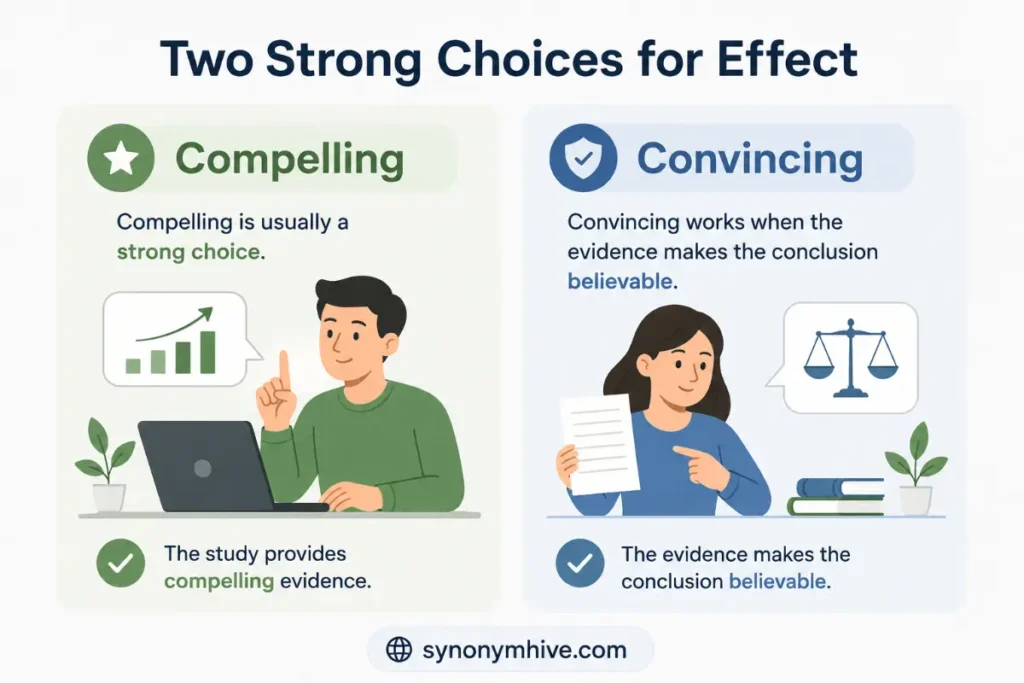
Compelling is usually a strong choice when evidence strongly supports an argument or conclusion. For example the study provides compelling evidence. Convincing works when the evidence makes a conclusion believable. You could say the results offer convincing support for the theory. Persuasive works when the evidence helps change opinions. For example the report presents persuasive evidence.
Substantial works when there is a large or meaningful amount of evidence. You might write the researchers collected substantial evidence over five years. Conclusive works when the evidence settles a question. For example the investigation produced conclusive evidence. Use conclusive carefully because it suggests that the evidence supports a final conclusion.
What Are The Best Words For Powerful Performance
Dominant works for a performance that clearly outclasses competitors. For example the team delivered a dominant performance. Outstanding describes a performance that is unusually good. You could say she gave an outstanding presentation. Exceptional means something performs far above normal expectations. For example he delivered an exceptional performance.
Impressive describes something that deserves attention or admiration. You might write the athlete gave an impressive performance. Commanding suggests clear control and confidence. For example the team produced a commanding performance. Electrifying works when a performance creates excitement and keeps the audience engaged. These choices give readers more information than powerful alone.
How Do You Know If A Synonym Sounds Natural
Read the sentence aloud before you settle on a synonym. Then ask yourself three simple questions. Does the word sound like something a real person would say. Does it match the exact meaning you want. Does it fit the audience and situation. If all three answers are yes then you probably have a good choice.
If the sentence sounds stiff simplify it. English often sounds strongest when the words are familiar and precise. A short sentence with one carefully chosen adjective can work better than a long sentence packed with impressive vocabulary. Natural wording usually makes your message clearer and more convincing.
What Should You Remember About Synonyms
Synonyms are rarely perfect substitutes. Two words can share a basic meaning while carrying different emotions or suggesting different situations. Strong and influential overlap but describe different kinds of power. Compelling and persuasive also overlap but focus on different effects.
Forceful and aggressive can both suggest intensity but aggressive often carries a more negative tone. Commanding and intimidating can both describe a strong presence but intimidation suggests fear. The best writers notice these small differences. Good word choice comes from understanding the exact meaning tone and context behind each synonym.
Compare more word options with Another Word For Help Simple Guide: Better Words 2026.
Conclusion
Finding another word for powerful starts with understanding the kind of strength you want to describe. Strong is the safest everyday choice. Influential works for people who shape opinions. Compelling fits strong arguments. Persuasive fits ideas that change minds. Forceful fits confident expression. Moving fits emotional impact. Effective fits actions that produce results.
The best choice isn’t the biggest or most impressive word. It’s the word that gives your reader the clearest picture. When you match the synonym to the context, your writing becomes sharper and more believable. So before you replace powerful, pause for a second and ask what kind of power you mean. That small step can turn a vague sentence into one that feels precise and confident.
Frequently Asked Questions
What Is Another Phrase For Powerful?
Strong is the simplest general alternative. Other useful choices include influential, forceful, compelling, persuasive, effective, dominant, and authoritative. The best option depends on the type of strength you want to describe. Strong works for general power while influential focuses on social impact. Compelling works well for arguments and evidence.
What’s Another Way To Say Powerful?
You can say strong, influential, compelling, forceful, effective, or formidable depending on the context. Strong is the most flexible everyday choice. Influential describes someone who affects people or decisions. Compelling works well for arguments. Forceful suggests confidence and intensity. Formidable describes someone or something that is difficult to challenge.
What Is A Strong Synonym For Powerful?
Influential is a strong choice when you mean social impact or the ability to affect people. Formidable works when something is difficult to challenge or defeat. Strong is better for general use. Compelling suits arguments and evidence. The right synonym depends on the specific kind of strength or influence you want to express.
What Is A Professional Word For Powerful?
Compelling, influential, authoritative, effective, and significant can work well in professional writing. Compelling suits strong arguments and evidence. Influential describes people or ideas that affect others. Authoritative suggests expertise and credibility. Effective describes something that achieves its purpose. Significant highlights importance or meaningful impact. Choose the word that matches the exact context.
What Is Another Word For A Powerful Person?
Influential, authoritative, commanding, charismatic, dominant, and formidable can describe a powerful person. Influential highlights social impact. Authoritative suggests expertise. Commanding describes natural authority. Charismatic suggests charm and appeal. Dominant emphasizes control. Formidable describes someone who is difficult to challenge. Choose the word that best explains why the person is powerful.
What Is Another Word For A Powerful Argument?
Compelling, persuasive, convincing, forceful, and sound are useful choices. Compelling is especially natural for strong evidence and reasoning. Persuasive focuses on changing opinions. Convincing sounds more conversational. Forceful emphasizes confident presentation. Sound highlights logic and reliability. Choose the term that describes the specific strength of the argument.
What Is The Opposite Of Powerful?
The opposite depends on context. Weak describes a lack of physical strength. Powerless means lacking control or influence. Ineffective describes something that fails to produce results. Insignificant means having little importance or impact. Unconvincing describes an argument that fails to persuade. Choose the antonym that matches the specific meaning of powerful in your sentence.