
You’re writing a resume and want to describe yourself as humble without making the sentence sound weak. You might also need the right phrase for an email a school essay or a message to a coworker. Finding another word for humble can help you show modesty while still sounding capable and professional.
Humble usually describes someone who doesn’t brag about their skills achievements or importance. A humble person can know they’re good at something without making every conversation about it. That balance matters in professional writing because you want to show confidence without sounding full of yourself.
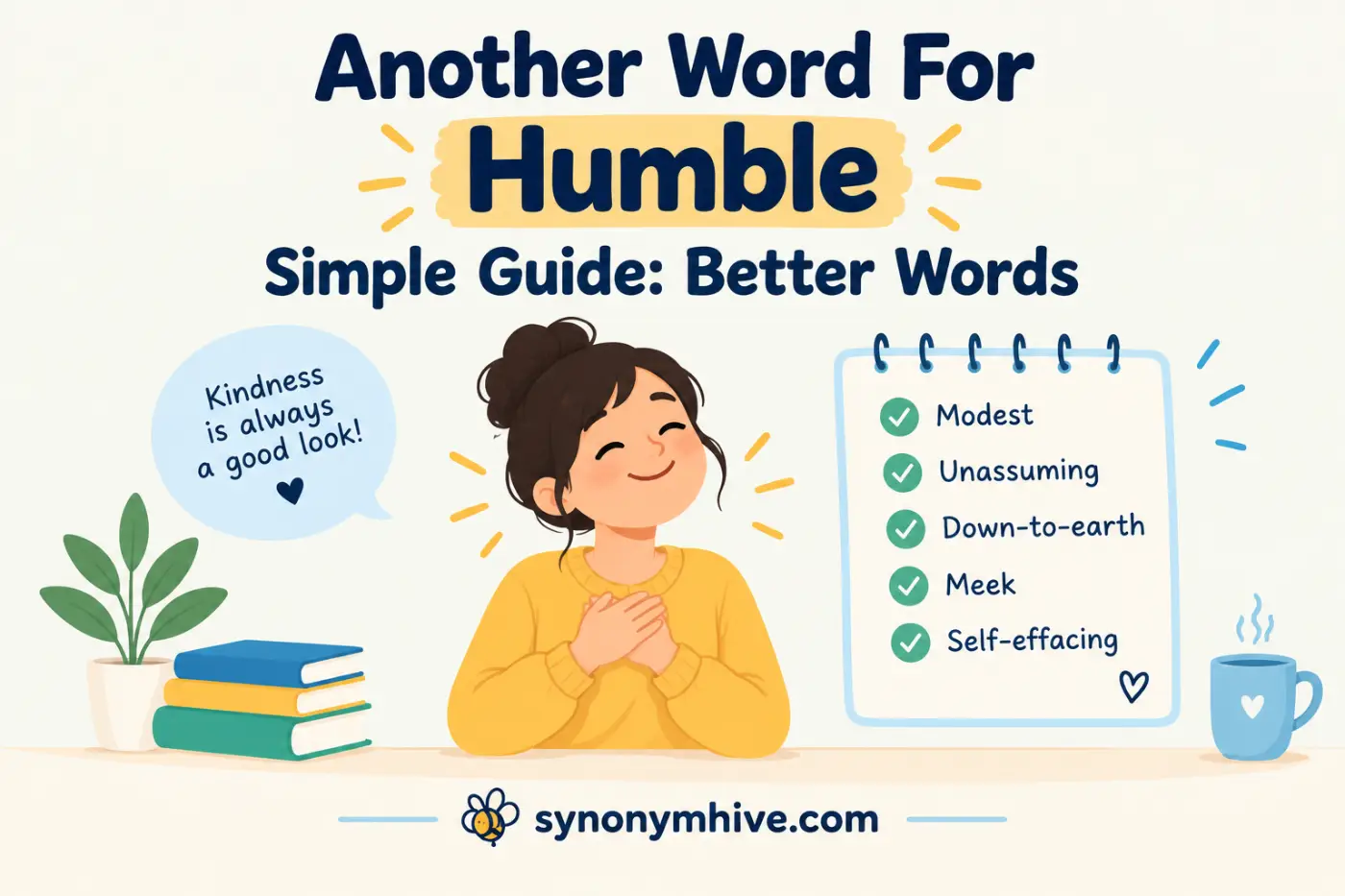
Another term for humble is modest. Other useful choices include unassuming modest hearted down to earth grounded self effacing and unpretentious. The best word depends on the setting and the kind of humility you want to express.
This guide explains the meaning and origin of humble and gives you more than 30 useful alternatives. You’ll also find choices by tone and intensity along with resume examples essay examples email wording and simple comparisons that help you choose the right word.
Discover another helpful synonym list in Another Word For Problem Solver: 15 Resume Power Picks 2026.
What Is Another Word For Humble
The simplest answer is modest. It’s the closest everyday replacement for humble when you mean someone who doesn’t brag about their abilities or achievements.
Still several other words can work. Modest focuses on avoiding praise or showing off. Unassuming describes someone who doesn’t act important. Down to earth suggests a person who stays practical and approachable. Grounded suggests emotional balance and a realistic view of yourself.
Self effacing describes someone who deliberately plays down their own achievements. It can sound positive in some situations but it can also suggest that a person is too hard on themselves.
Unpretentious is another useful choice. It describes someone who doesn’t try to appear more impressive or important than they really are.
What Does Humble Mean In Plain English
Humble means having a realistic view of yourself without acting superior to other people.
A humble person can recognize their strengths. They simply don’t need constant praise for them.
For example a humble manager might say that a project succeeded because the whole team worked hard. They don’t pretend they did everything alone.
Humble can also describe things that are simple or not expensive. A humble home might be small and comfortable rather than large and luxurious.
The word can therefore describe both a person’s attitude and something simple in style or appearance.
Where Did The Word Humble Come From
Humble comes from the Latin word humilis which meant low or close to the ground. That word connects to humus meaning earth or ground.
The meaning developed over time. The idea of being close to the ground became linked with modesty and a lack of pride.
That history gives the modern word an interesting image. Humility brings a person down to earth in the best sense. It suggests someone who stays realistic instead of placing themselves above everyone else.
Is Humble Always A Positive Word
Humble is usually positive when it describes healthy modesty.
A humble person may accept praise but still recognize the work of others. They may have strong skills without acting superior.
However humility can go too far. Someone who constantly rejects praise or refuses to recognize their own abilities may appear insecure rather than humble.
That distinction matters on a resume. You want to sound modest while still making your qualifications clear.
What Are The Best Synonyms For Humble
The right synonym depends on the tone you want. Some choices sound natural in conversation. Others work better in professional writing.
| Word | Meaning | Tone | Example |
|---|---|---|---|
| Modest | Not bragging about yourself | Neutral | She is modest about her achievements. |
| Unassuming | Not trying to appear important | Positive | He has an unassuming personality. |
| Unpretentious | Simple and genuine | Positive | Her unpretentious style makes people comfortable. |
| Down to earth | Practical and easy to talk to | Casual | Our new manager is very down to earth. |
| Grounded | Realistic and emotionally balanced | Positive | She stays grounded despite her success. |
| Self effacing | Playing down your own achievements | Formal | His self effacing manner won the audience over. |
| Reserved | Not seeking attention | Neutral | She has a reserved personality. |
| Meek | Quiet and submissive | Mild to negative | He seemed meek during the discussion. |
| Mild | Gentle and not aggressive | Neutral | She has a mild and friendly manner. |
| Gentle | Kind and soft in behavior | Positive | He has a gentle way of speaking. |
| Unpretentious | Free from showiness | Positive | The restaurant has an unpretentious atmosphere. |
| Simple | Not fancy or complicated | Neutral | She prefers a simple lifestyle. |
| Plain | Not showy or elaborate | Neutral | He lives a plain and comfortable life. |
| Unassuming | Quietly modest | Positive | She remained unassuming after winning the award. |
| Low key | Quiet and not attention seeking | Casual | He keeps his success low key. |
| Approachable | Easy to talk to | Positive | Her humble attitude makes her approachable. |
| Practical | Focused on real needs | Neutral | He has a practical outlook. |
| Realistic | Seeing yourself and life clearly | Neutral | She has a realistic view of her skills. |
| Sincere | Honest and genuine | Positive | His sincere response impressed the team. |
| Genuine | Real and not fake | Positive | She has a genuine personality. |
| Authentic | True to your real character | Modern | He remains authentic despite his success. |
| Courteous | Respectful toward others | Formal | She was courteous and modest during the interview. |
| Quiet | Not loud or attention seeking | Everyday | She has a quiet confidence. |
| Modest minded | Not overly focused on personal success | Formal | He is modest minded despite his achievements. |
Which Synonyms Sound Simple And Natural
If you want easy everyday English use modest unassuming down to earth grounded simple or genuine.
These words are easy for most readers to understand.
For example:
“She’s modest about her success.”
“He’s very down to earth.”
“She stayed grounded after getting the promotion.”
“His style is simple and unpretentious.”
These sentences sound natural because the words are common and clear.
Which Synonyms Sound More Formal
For formal writing consider self effacing unassuming unpretentious courteous respectful grounded and reserved.
Self effacing is especially useful when someone deliberately avoids praise.
Unassuming works well in professional descriptions because it suggests quiet confidence.
Reserved can describe someone who doesn’t seek attention but doesn’t always mean humble.
Courteous and respectful describe behavior toward others rather than humility itself. They can support the idea without being direct synonyms.
Which Synonyms Are Casual Or Slang
Casual English gives you a few relaxed choices.
Down to earth is one of the most useful.
Low key can also work when you mean someone doesn’t make a big deal about their success.
For example:
“She’s a low key person who lets her work speak for itself.”
“He’s successful but still very down to earth.”
These expressions fit conversations texts and informal emails better than formal reports.
How Can You Choose Another Phrase For Humble By Intensity
Not every synonym has the same strength. Some describe mild modesty. Others suggest a deeper lack of ego.
Mild Humility
Use modest simple quiet or reserved when the humility is subtle.
These words don’t make a strong judgment about the person. They simply show that the person doesn’t seek attention.
For example:
“She gave a modest response to the praise.”
That sentence suggests humility without making it sound dramatic.
Moderate Humility
Use unassuming grounded genuine unpretentious or down to earth for a stronger sense of modesty.
These words suggest that humility is part of the person’s personality.
For example:
“Despite her success she remains grounded.”
That sentence gives a stronger picture than simply saying she is modest.
Strong Humility
Use self effacing egoless or deeply modest when you want to show that someone strongly avoids personal praise.
These choices need care.
Self effacing can sound admirable when someone gives credit to others. But it can also suggest that the person minimizes their own worth too much.
Egoless is stronger and more modern. It suggests that personal status and recognition aren’t the main goals.
Negative Forms Of Humility
Some words sit near humility but create a negative impression.
Meek can suggest that someone lacks confidence or struggles to stand up for themselves.
Timid suggests fear or hesitation.
Submissive suggests giving in to others.
These words shouldn’t replace humble unless that negative meaning is intended.
A humble person can still be confident decisive and strong.
How Does Another Word For Humble Work In Different Contexts
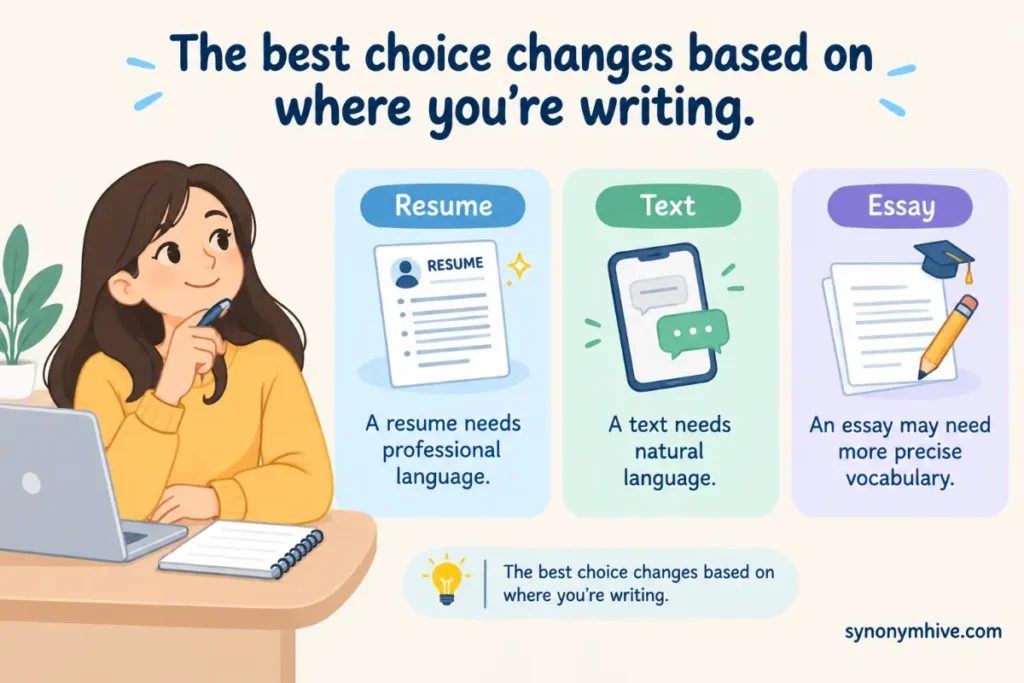
The best choice changes based on where you’re writing. A resume needs professional language. A text needs natural language. An essay may need more precise vocabulary.
What Is The Best Word For Humble On A Resume
Modest is a safe choice but it may not be the strongest resume word.
A resume should show humility through actions rather than simply labeling yourself humble.
Words such as collaborative grounded approachable and team focused can communicate the same quality while giving the employer more useful information.
Try this:
“I’m a grounded team leader who gives credit to others and focuses on shared results.”
This sentence shows humility through behavior.
You can also write:
“I’m an approachable manager who values team input and shared success.”
That sounds stronger than simply saying you’re humble.
What Is The Best Word For Humble In An Essay
Modest works well in most essays.
Use unassuming when describing someone who doesn’t appear important at first.
Use grounded when discussing someone who stays realistic after success.
Try this:
“Despite his growing reputation the author remained grounded and focused on his work.”
The word grounded adds more meaning than a simple replacement.
What Is The Best Word For Humble In A Text
Down to earth is often the most natural choice in casual texting.
Try this:
“She’s really down to earth even though she’s famous.”
You could also use modest for a shorter message.
“He’s pretty modest about what he’s accomplished.”
Keep texting language simple. A formal word can make a casual message sound stiff.
What Is The Best Word For Humble In An Email
Modest, grounded, and unassuming work well in professional emails.
Try this:
“I’ve always appreciated how grounded she remains despite her many accomplishments.”
For a coworker you could write:
“He’s very approachable and always gives the team credit.”
This style feels professional without sounding exaggerated.
What Is The Best Word For Humble In Speaking
Down to earth and modest usually sound best in everyday speech.
Try this:
“She’s one of the most down to earth people I know.”
That sounds warm and natural.
If you’re speaking in a formal setting you might choose grounded or unassuming instead.
What Are Some Examples Of Synonyms
Real examples make these differences easier to understand.
- Job interview. She remained modest when the interviewer praised her leadership skills.
- Resume profile. He is a grounded professional who values teamwork and shared success.
- Email. I appreciate how approachable you’ve remained despite your recent promotion.
- Text message. She’s successful but still really down to earth.
- School essay. The athlete stayed unassuming even after becoming a national champion.
- Team meeting. He gave credit to everyone instead of taking all the praise himself.
- Award speech. Her modest response showed how much she valued the people around her.
- Workplace conversation. Our director is surprisingly down to earth and easy to talk to.
- Personal description. He has a genuine personality and never tries to impress people.
- Leadership profile. She has a grounded approach that keeps the team focused on practical goals.
- Character description. The famous writer was quiet and unassuming in person.
- College application. He showed a sincere interest in learning from people with different experiences.
- Professional bio. She is known for her approachable style and team focused leadership.
- Conversation. He could easily brag about his success but he stays modest.
- Community work. The volunteer was unpretentious and focused more on helping than receiving praise.
- Management. She listens carefully and gives credit to her staff.
- Family conversation. He’s accomplished but still very grounded.
- Public speaking. The speaker used a self effacing joke to make the audience feel comfortable.
- Social media caption. Even after reaching a major goal she stayed low key.
- Recommendation letter. He is an unassuming professional who treats every colleague with respect.
These examples show an important point. The strongest replacement often depends on the behavior you want to highlight.
How Are Modest And Humble Different
Modest and humble are very close. In many sentences you can use either one.
Still they have slightly different uses.
| Humble | Modest |
|---|---|
| Often describes character and attitude | Often describes behavior and self praise |
| Can suggest a lack of pride | Often suggests not bragging |
| Can describe simple living | Can describe a smaller amount or level |
| Often has a deeper moral meaning | Often sounds more neutral |
For example:
“She is humble despite her success.”
“She is modest about her success.”
Both sentences work. Humble gives a broader impression of character. Modest focuses more directly on how she talks about her achievements.
Modest also has meanings that humble doesn’t always share.
You can say “a modest salary” or “a modest home.” In those cases modest means moderate or not large.
You normally wouldn’t replace modest with humble in those sentences.
How Are Unassuming And Humble Different
Unassuming and humble overlap but they focus on different things.
Humble describes a person’s attitude toward themselves and others.
Unassuming describes how a person presents themselves.
Someone can be unassuming because they don’t draw attention to themselves. They may not appear powerful or important even when they have major achievements.
For example:
“The scientist was humble about her discovery.”
“The scientist was unassuming when I met her.”
The first sentence focuses on her attitude. The second focuses on her manner.
This distinction makes unassuming useful when describing people in biographies essays and character profiles.
How Are Down To Earth And Humble Different
Down to earth is more casual.
It describes someone who feels practical approachable and normal even when they have status or success.
Humble is broader and more formal.
For example:
“He is humble about his achievements.”
“He is very down to earth despite his success.”
The first sentence focuses on modesty. The second focuses on personality and social behavior.
Use down to earth in conversation and informal writing. Use humble modest or grounded when you need a more professional tone.
What Are The US And UK Differences
Humble has the same basic meaning in American and British English.
The differences mostly appear in style rather than definition.
Americans commonly use down to earth in everyday speech. The phrase also appears in British English but can feel more conversational than formal.
Modest grounded unassuming genuine and unpretentious work naturally in both varieties of English.
One useful point concerns the word humble itself. In American English it can describe a modest attitude as well as a simple home or background.
For example:
“He grew up in humble surroundings.”
That sentence means his background was simple or modest. It doesn’t necessarily say anything about his personality.
What Are Common Mistakes With Humble Synonyms
Using the wrong synonym can change your meaning. A few mistakes happen often.
Mistake One Is Using Meek As A Positive Synonym
Meek can suggest weakness or a lack of confidence.
A humble leader can still speak firmly and make hard decisions.
If you want positive humility use modest grounded or unassuming instead.
Mistake Two Is Using Self Effacing For Every Situation
Self effacing can suggest that someone puts themselves down.
That isn’t always the same as healthy humility.
Use it when the person deliberately minimizes personal praise.
Mistake Three Is Using Down To Earth In Formal Writing
Down to earth sounds friendly and natural but it can be too casual for some professional documents.
Use grounded or approachable when you need a more polished option.
Mistake Four Is Calling Yourself Humble Without Evidence
On a resume a direct claim such as “I’m a humble person” can sound like self praise.
Show humility through your actions.
Mention teamwork. Give credit to others. Describe how you listen. Explain how you support colleagues.
Mistake Five Is Confusing Humble With Insecure
Humility doesn’t mean thinking poorly of yourself.
A humble person can understand their strengths while recognizing the strengths of others.
That difference matters.
Healthy humility says “I’m good at this and I still have things to learn.”
Insecurity says “I’m probably not good enough.”
Those ideas aren’t the same.
When Should You Not Use Another Word For Humble
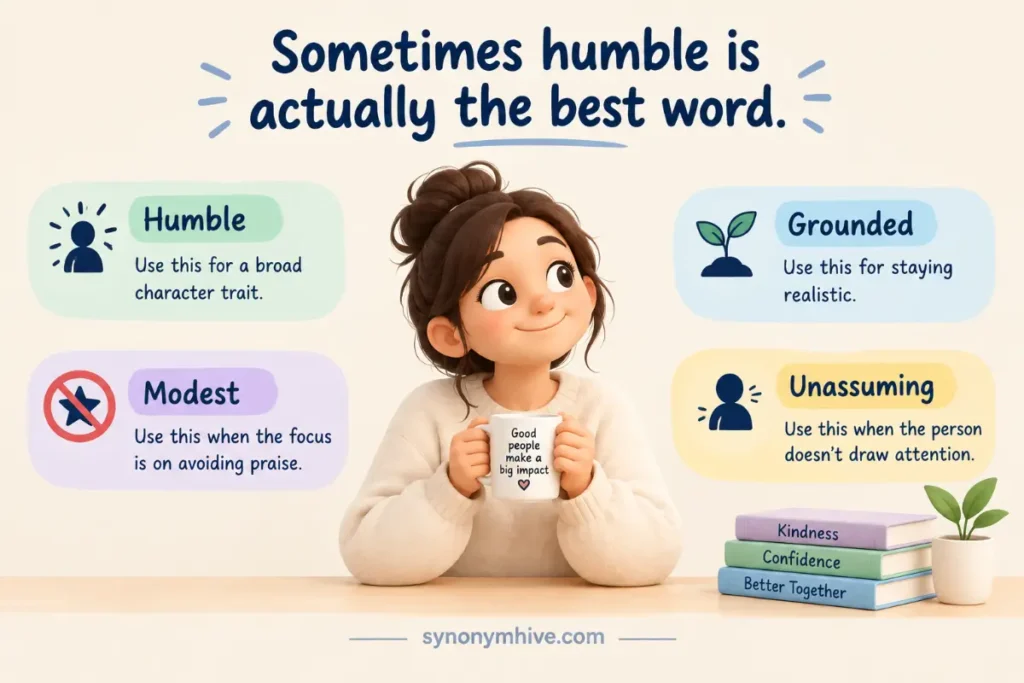
Sometimes humble is actually the best word.
For a broad character trait, use humble.
When the focus is on avoiding praise, use modest.
For staying realistic, use grounded.
When the person doesn’t draw attention, use unassuming.
When the person feels approachable and practical, use down to earth.
To describe someone who deliberately minimizes their achievements, use self effacing.
Don’t force a synonym just to avoid repeating a word. Repetition becomes a problem only when it makes the writing dull or unclear.
Clear writing should always come first.
Looking for another word? See another word for confident Simple Guide 2026.
What Are The Antonyms Of Humble
The most common opposite of humble is arrogant.
Other antonyms include proud boastful conceited egotistical self important vain pretentious and boastful.
These words also differ in strength.
Proud can be positive or negative depending on context.
Arrogant is strongly negative and suggests a belief in superiority.
Conceited suggests excessive pride in yourself.
Egotistical suggests an excessive focus on yourself.
Vain often focuses on appearance or personal admiration.
Pretentious suggests trying to appear more important or impressive than you really are.
Knowing these opposites helps you understand the range of meaning around humble.
How Can You Use Humility In Professional Writing
Professional humility works best when you connect it to actions.
Instead of saying:
“I’m humble and hardworking.”
Try:
“I value team input and give credit to colleagues who help achieve strong results.”
Instead of:
“I’m a humble leader.”
Try:
“I listen carefully to my team and make decisions based on shared goals.”
These sentences give readers something they can believe and understand.
This approach also supports EEAT because strong professional writing should make clear claims that connect to real experience and behavior.
If you say you’re a strong leader show what you’ve led.
If you describe yourself as modest let your writing style support that claim.
How Can You Show Humility Without Saying Humble
You can communicate humility through simple actions.
- Give credit to other people.
- Mention what you learned from a difficult experience.
- Recognize the support you received.
- Avoid exaggerated claims about your abilities.
- Talk about results without making yourself the hero of every story.
- Admit when you don’t know something.
- Show that you’re open to feedback.
- Explain how you improved over time.
These choices make writing feel more genuine.
For example:
“Working with the design team helped me understand how small changes can improve the customer experience.”
That sentence shows openness and appreciation without directly calling the writer humble.
What Is Another Alternative For Humble In Professional Writing
For professional writing the strongest choices are usually modest grounded unassuming approachable genuine and unpretentious.
The best one depends on the message.
When discussing achievements, use modest.
For a balanced personality, use grounded.
When someone doesn’t seek attention, use unassuming.
To show that people feel comfortable speaking with someone, use approachable.
When the focus is honesty and sincerity, use genuine.
For someone who avoids showing off, use unpretentious.
These choices can make a resume bio recommendation or professional profile more specific.
How Can You Pick The Right Word Quickly
Choosing the right word doesn’t need to take long.
- Ask what you mean by humble. Decide if you mean modesty confidence kindness simplicity or lack of ego.
- Think about your audience. A resume needs professional language. A text can sound more relaxed.
- Match the strength. Use modest for mild humility. Use grounded for steady confidence. Use self effacing for stronger self understatement.
- Check the emotional tone. Avoid meek or timid if you want a positive description.
- Read the sentence aloud. If the word sounds unnatural replace it with a simpler choice.
- Look for evidence. In professional writing show the behavior behind the quality.
- Choose clarity over complexity. A familiar word that fits is better than an unusual word that sounds forced.
The best vocabulary choice should feel like it belongs in the sentence. Think of synonyms as different tools in the same toolbox. They may do similar jobs but each one works best for a specific task.
How Can You Make Humble Writing Sound Strong
Humility doesn’t require weak language.
You can write with confidence while staying modest.
Instead of saying:
“I was lucky to be part of the project.”
You could say:
“I’m proud of the results and grateful to everyone who helped make the project successful.”
This sentence shows confidence and appreciation at the same time.
Another example:
“I led the project successfully while working closely with the entire team.”
That statement doesn’t brag. It gives a clear fact.
Strong writing doesn’t need to shout. It simply needs to be accurate specific and honest.
Why Does Word Choice Matter On A Resume
A resume gives you very little space to create a strong impression. Every adjective should earn its place.
Humble may not always be the best resume word because employers usually want evidence of skills results and behavior.
Words such as collaborative approachable grounded and team focused can work better when supported by examples.
For instance:
“Led a cross functional team while encouraging input from every department.”
That sentence shows confidence leadership and humility without using any of those labels.
It also gives the reader something concrete to remember.
How Can You Balance Humility And Confidence
The strongest professional tone often sits between arrogance and insecurity.
You don’t need to hide your achievements.
You also don’t need to make every achievement sound extraordinary.
A balanced statement might say:
“I helped lead the project and worked closely with the team to meet the deadline.”
That sentence takes credit for real work while recognizing collaboration.
Another example is:
“I developed the training guide and used feedback from colleagues to improve it.”
The writer owns the contribution and shows openness to learning.
That balance makes professional writing more believable.
What Is Synonym In A Cover Letter
A cover letter can benefit from words such as grounded approachable collaborative modest and team focused.
Still the best approach is often to describe your behavior.
Try this:
“I value feedback and enjoy working with people who bring different ideas to the table.”
That sentence suggests humility while also showing teamwork and maturity.
You can also write:
“I’m proud of my experience but I’m always looking for ways to learn from the people around me.”
This approach sounds confident without becoming boastful.
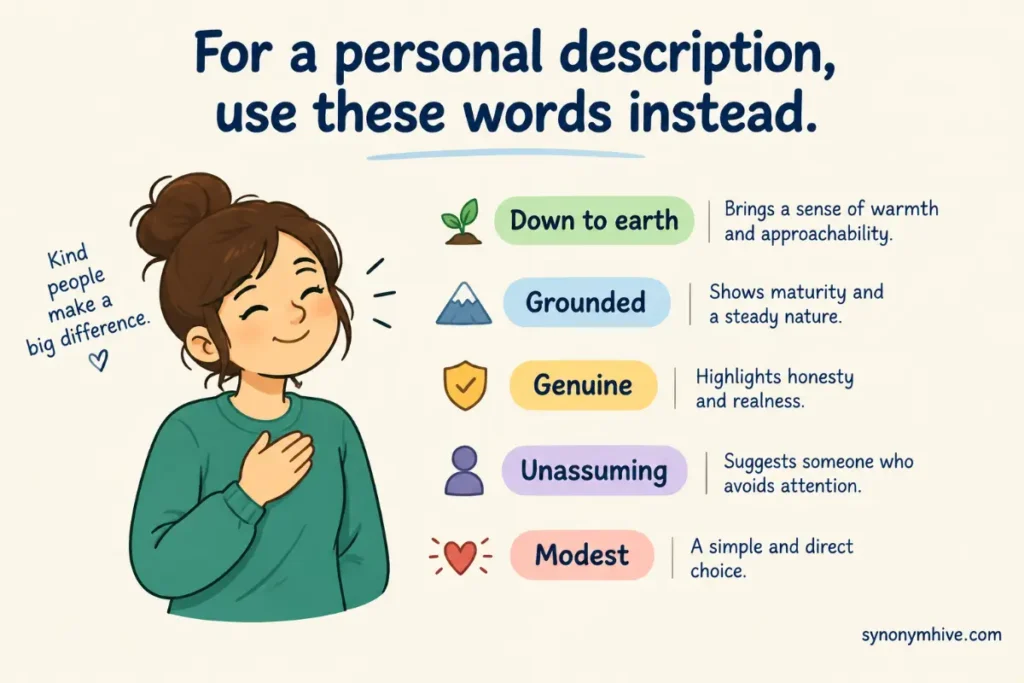
What Is Another Word For Humble In A Personal Description
For a personal description use modest down to earth grounded genuine or unassuming.
Down to earth works especially well when you want warmth.
Grounded works when you want maturity.
Genuine works when you want to emphasize honesty.
Unassuming works when someone avoids attention.
Modest remains the simplest direct option.
For example:
“She’s successful but incredibly grounded.”
“He’s friendly genuine and easy to talk to.”
“She has an unassuming personality despite her impressive career.”
Each sentence creates a slightly different picture.
Final Tips For Choosing The Right Humility Word
Start with meaning instead of searching for the fanciest synonym.
When someone doesn’t brag, use modest.
For someone who stays realistic, use grounded.
To describe someone who avoids attention, use unassuming.
When someone is easy to talk to, use approachable.
For someone who feels natural and genuine, use unpretentious.
When someone plays down achievements, use self effacing.
To describe someone who is practical and friendly, use down to earth.
Remember that humble doesn’t mean weak. It doesn’t mean uncertain. It doesn’t mean someone should hide their achievements.
Good humility leaves room for confidence. A person can know their value and still respect the value of others.
That balance is often the strongest message you can send in professional writing.
Looking for a better alternative? Visit Another Word for Empathetic Best Resume Choices 2026.
Conclusion
Choosing another word for humble depends on the quality you want to highlight. Modest is the closest everyday option. Grounded works well for someone who stays realistic. Unassuming fits a person who doesn’t seek attention. Approachable highlights a friendly nature. Unpretentious suggests a simple and genuine style.
For resumes and professional writing focus less on labels and more on evidence. Show how you give credit to others. Explain how you work with a team. Mention how you learn from feedback. Those details make humility believable.
The strongest writing doesn’t hide achievement or turn it into bragging. It finds the middle ground where confidence and modesty can work together. Choose the word that matches your meaning and let the surrounding sentence prove it.
Frequently Asked Questions
What’s another way to say humble?
Another way to say humble is modest. Other options include grounded unassuming unpretentious approachable and down to earth.
What is another term for humble on a resume?
A useful choice is grounded approachable or collaborative. These words can communicate humility while also showing useful professional qualities.
Is modest the same as humble?
Modest and humble are very close but modest often focuses more on avoiding praise while humble can describe a broader attitude toward yourself and others.
What is a good synonym for humble in an essay?
Modest unassuming grounded and self effacing can work well. Choose the word that matches the person’s behavior and the tone of your essay.
Can humble mean poor?
Humble can describe simple or modest living conditions. It doesn’t automatically mean poor.
Is humble a positive word?
Yes. Humble usually has a positive meaning when it describes someone who recognizes their strengths without acting superior.
What is the opposite of humble?
The strongest opposite is arrogant. Other choices include conceited egotistical vain boastful and pretentious.