
You’re writing an essay, a personal story, a text message, or a novel when you notice you’ve used the word lonely several times. Repeating the same word can make your writing feel repetitive. Learning alternatives for lonely helps you describe different kinds of isolation, sadness, and solitude with greater accuracy.
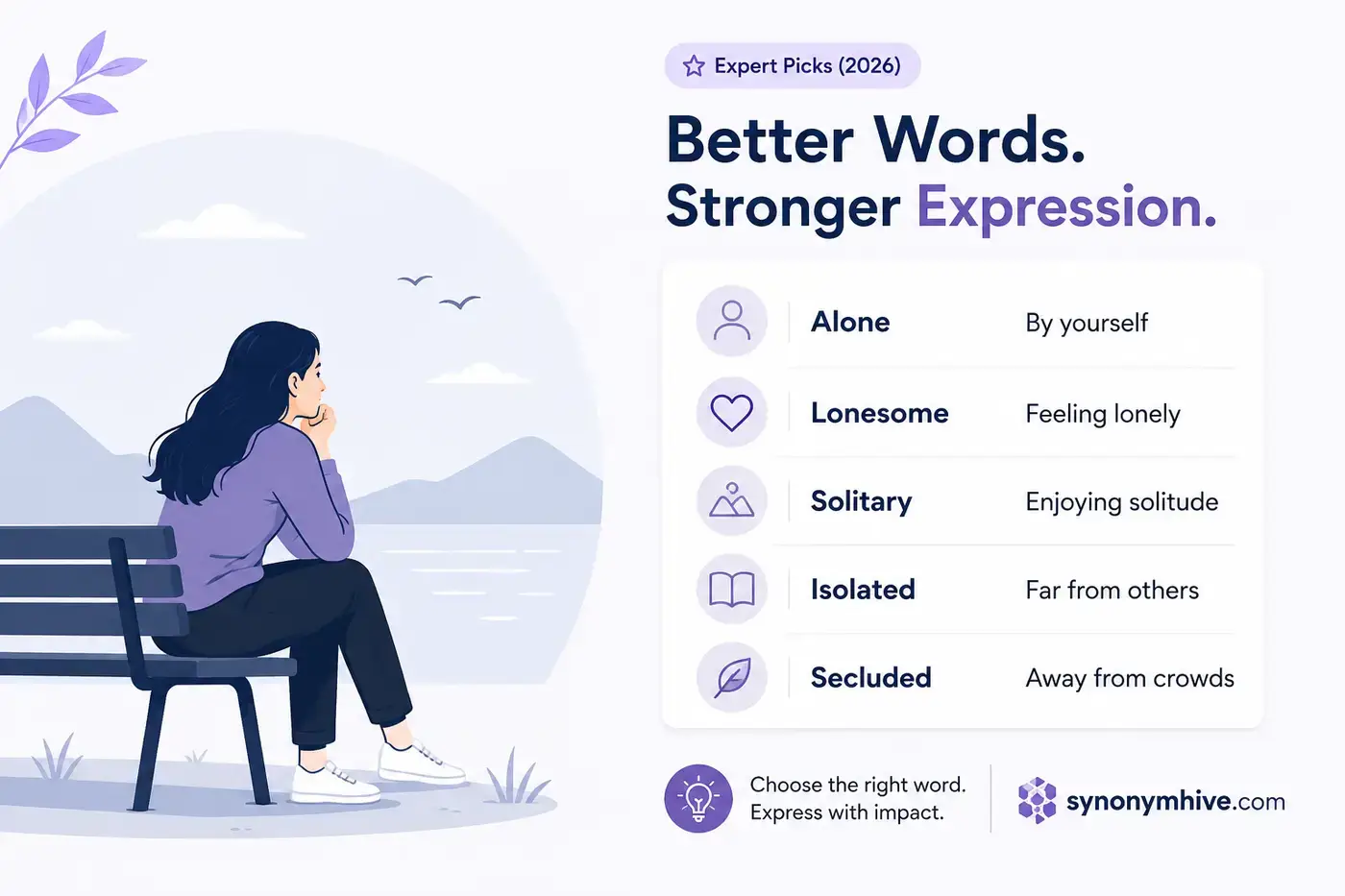
Synonyms for lonely are words that describe feeling alone, isolated, abandoned, or disconnected from others. Common alternatives include alone, isolated, abandoned, secluded, homesick, lonesome, and solitary. The best choice depends on the situation and the emotion you want to express.
Some words describe peaceful time spent alone. Others express emotional pain or a deep sense of separation. Choosing the right synonym helps readers better understand the feeling. This guide explains the meaning and history of the word, provides a complete list of alternatives, compares similar words, and shows you which synonym works best in different situations.
Discover related words in Synonyms for Hate: Powerful Alternatives (2026).
What Does Lonely Mean
Lonely describes the feeling of being alone or emotionally disconnected from other people. A person can feel lonely even in a crowded room if they believe nobody understands them. On the other hand, someone can spend time alone without feeling lonely at all.
Here are a few examples.
- She felt lonely after moving to a new city.
- He spent a lonely evening at home.
- The child looked lonely during recess.
- Living far from family sometimes feels lonely.
Learning phrases for lonely helps you express these emotions more clearly and avoid repeating the same word.
Where Did The Word Lonely Come From
The word lonely comes from the Middle English word alone, which originally described someone by themselves. Over time, its meaning expanded to include emotional isolation and sadness caused by a lack of companionship.
Today, lonely is one of the most common emotion words in English. Writers use it to describe everything from temporary solitude to deep emotional isolation.
Master List Of Synonyms For Lonely
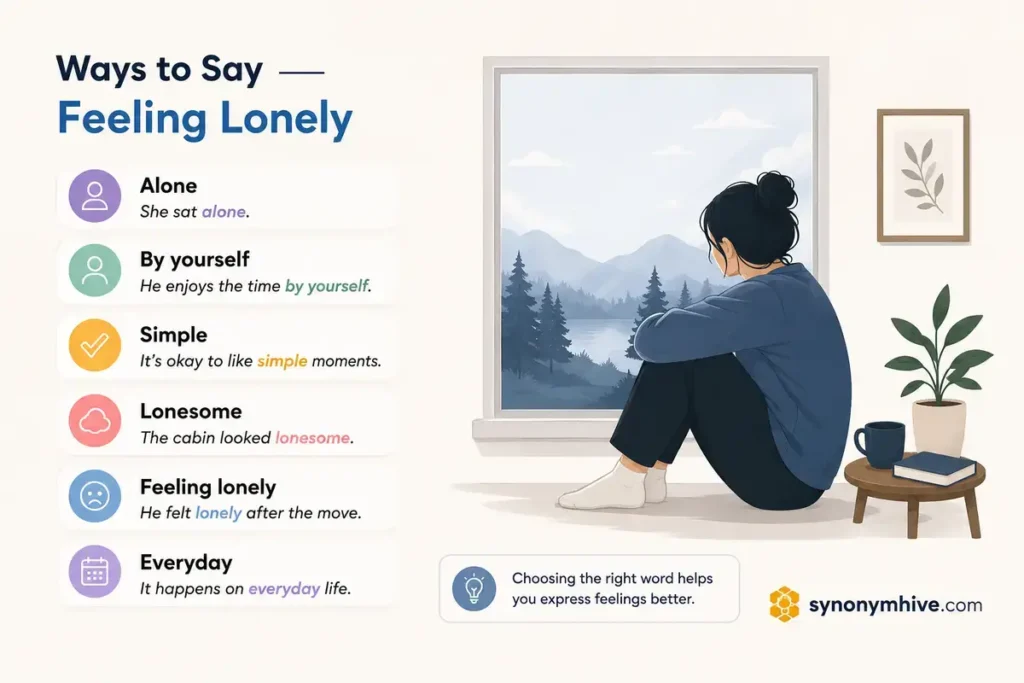
The table below includes more than thirty useful expressions for lonely grouped by tone and meaning.
| Word | Meaning | Tone | Example |
|---|---|---|---|
| Alone | By yourself | Simple | She sat alone. |
| Lonesome | Feeling lonely | Everyday | The cabin looked lonesome. |
| Isolated | Separated from others | Formal | He felt isolated at work. |
| Solitary | Existing alone | Formal | She lived a solitary life. |
| Abandoned | Left behind | Formal | The puppy looked abandoned. |
| Deserted | Empty or left alone | Neutral | The beach was deserted. |
| Secluded | Away from others | Neutral | They found a secluded cabin. |
| Homesick | Missing home | Everyday | He became homesick at college. |
| Friendless | Without friends | Formal | The character felt friendless. |
| Rejected | Not accepted | Neutral | She felt rejected after the interview. |
| Left out | Excluded | Everyday | He felt left out at the party. |
| Unwanted | Not welcomed | Neutral | The child felt unwanted. |
| Neglected | Not cared for | Formal | The old house looked neglected. |
| Forgotten | No longer remembered | Neutral | She felt forgotten. |
| Detached | Emotionally distant | Formal | He remained detached. |
| Withdrawn | Quiet and distant | Neutral | She became withdrawn. |
| Alienated | Separated emotionally | Formal | Workers felt alienated. |
| Remote | Far away | Neutral | They lived in a remote village. |
| Empty | Emotionally hollow | Everyday | The room felt empty. |
| Blue | Feeling sad | Informal | I’ve been feeling blue. |
| Down | Feeling unhappy | Casual | He seemed down today. |
| Low | Emotionally sad | Casual | She’s feeling low. |
| Miserable | Very unhappy | Everyday | He looked miserable. |
| Heartbroken | Deep emotional pain | Everyday | She was heartbroken. |
| Gloomy | Sad atmosphere | Neutral | It was a gloomy afternoon. |
| Isolated emotionally | Emotionally disconnected | Formal | He felt isolated emotionally. |
| On your own | Alone | Everyday | You’re on your own now. |
| By yourself | Alone | Everyday | She traveled by herself. |
| Cut off | Disconnected | Neutral | The storm cut us off. |
| Apart | Separated | Neutral | They lived far apart. |
Which Synonyms Show Different Levels Of Loneliness
Different words describe different levels of emotional isolation.
| Intensity | Best Synonyms |
|---|---|
| Very Mild | Alone Secluded Remote |
| Mild | Lonesome Left out Homesick |
| Moderate | Isolated Detached Withdrawn |
| Strong | Alienated Rejected Forgotten |
| Very Strong | Abandoned Friendless Heartbroken |
Using the right level makes your writing more realistic and emotionally accurate.
Which Parts Of Speech Are These Words
Most phrases for lonely are adjectives because they describe a person’s emotional state or surroundings.
Adjectives
- Lonely.
- Alone.
- Lonesome.
- Isolated.
- Solitary.
- Abandoned.
- Detached.
- Alienated.
Nouns
- Loneliness.
- Isolation.
- Solitude.
- Separation.
- Abandonment.
Verbs
- Isolate.
- Separate.
- Abandon.
- Withdraw.
- Exclude.
Knowing these related forms helps you create more natural and varied sentences.
Are There Any US And UK Differences
Most phrases for lonely are common in both American and British English. A few expressions are used more often in one region.
| More Common In The US | More Common In The UK |
|---|---|
| Homesick | Cut off |
| Left out | On your own |
| Blue | Fed up |
| Down | Out of sorts |
American English commonly uses alone, lonely, left out, homesick, and isolated in everyday conversations.
What Is The Best Word For A Resume
A resume rarely describes personal emotions, but you may need these words when explaining challenges, relocation, volunteering, or customer care.
Professional alternatives include.
- Isolated.
- Independent.
- Self directed.
- Remote.
- Resilient.
Example sentences.
Worked independently on long term projects.
Supported remote teams across multiple time zones.
Adapted successfully after relocating to a new city.
These words sound professional and focus on your abilities instead of negative emotions.
What Is The Best Word For An Essay
Essays often require more precise vocabulary than everyday conversations.
Good choices include.
- Isolated.
- Alienated.
- Solitary.
- Detached.
- Abandoned.
Example sentences.
The main character felt alienated from society.
Years of isolation affected his emotional health.
The novel explores the effects of a solitary lifestyle.
These words add depth while keeping your writing clear.
What Is The Best Word For Text Messages
Text messages usually use simple and familiar language.
Common choices include.
- Lonely.
- Alone.
- Left out.
- Down.
- Blue.
Example sentences.
I’m feeling a little lonely today.
I hate feeling left out.
I’ve been kind of down lately.
I’m spending the evening alone.
These expressions sound natural in everyday conversations.
What Is The Best Word For Emails
Professional emails should avoid emotional or dramatic language.
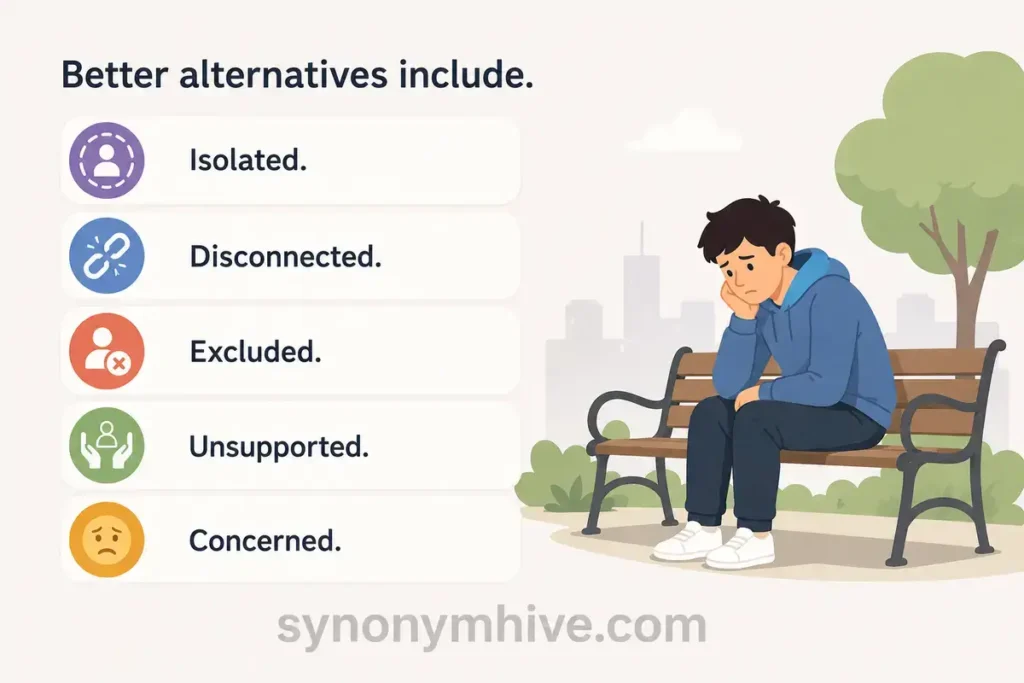
Better alternatives include.
- Isolated.
- Disconnected.
- Excluded.
- Unsupported.
- Concerned.
Example sentences.
Some remote employees may feel isolated from the team.
Several members reported feeling disconnected during the project.
We want every employee to feel supported and included.
These words communicate concerns respectfully and professionally.
What Is The Best Word For Speaking
People usually choose simple words when talking with friends or family.
Common choices include.
- Lonely.
- Alone.
- Left out.
- Isolated.
- Homesick.
Example sentences.
I’ve been feeling lonely recently.
She felt left out during the party.
He’s a little homesick after moving away.
Working from home sometimes feels isolating.
Real Life Examples Using Different Synonyms
Reading examples helps you understand how each synonym fits a different situation.
- She felt isolated after changing schools.
- The old house stood alone on the hill.
- He became homesick during his first semester.
- The abandoned building looked mysterious.
- I felt left out when everyone made plans without me.
- The remote village was peaceful but solitary.
- He stayed withdrawn after the difficult experience.
- The child seemed friendless at the playground.
- She felt detached from the conversation.
- The empty apartment made him feel lonely.
- Years of separation created emotional distance.
- The traveler spent a solitary night in the mountains.
- The new employee felt alienated at first.
- Living far from family can be challenging.
- The forgotten park was completely deserted.
Lonely Vs Alone
These words are often confused, but they are not the same.
| Lonely | Alone |
|---|---|
| Describes an emotion. | Describes being by yourself. |
| Usually has a negative meaning. | Can be positive or neutral. |
| Focuses on feelings. | Focuses on physical situation. |
Examples.
She felt lonely even in a crowded room.
He enjoyed spending time alone.
Lonely Vs Isolated
These words are related but describe different situations.
| Lonely | Isolated |
|---|---|
| Emotional feeling. | Physical or emotional separation. |
| Can happen around other people. | Often means limited contact with others. |
| Personal emotion. | Situation or condition. |
Examples.
He felt lonely after moving away.
The village remained isolated during the winter.
Solitary Vs Secluded
Both describe being away from others, but they are used differently.
| Solitary | Secluded |
|---|---|
| Describes a person or lifestyle. | Usually describes a place. |
| Focuses on being alone. | Focuses on privacy and distance. |
| Can have an emotional meaning. | Usually describes location. |
Examples.
He lived a solitary life.
They rented a secluded cabin in the woods.
Common Mistakes To Avoid
Choosing the wrong synonym can completely change the meaning of your sentence.
Using Lonely When You Mean Alone
Someone can be alone without feeling lonely.
Incorrect.
I enjoy feeling lonely while reading.
Better.
I enjoy being alone while reading.
Confusing Solitude With Loneliness
Solitude is often a positive choice. Loneliness usually describes emotional pain.
Using Abandoned For Everyday Situations
Abandoned suggests someone or something has been completely left behind. It is much stronger than lonely.
Treating Every Synonym As Equal
Not every word carries the same emotional weight. Homesick focuses on missing home. Alienated focuses on feeling disconnected from people or society. Choosing the right synonym makes your writing more accurate.
Explore more word choices in Synonyms for Horrible Ultimate Guide 2026.
What Are The Opposite Words Of Lonely
Sometimes you need to describe positive social feelings instead.
| Antonym | Meaning |
|---|---|
| Connected | Feeling close to others. |
| Included | Part of a group. |
| Loved | Cared for by others. |
| Accepted | Welcomed by people. |
| Supported | Helped by others. |
| Social | Enjoying interaction with people. |
Quick Tips For Choosing The Right Word
- Use alone for a physical situation.
- Use lonely for emotional sadness.
- Use isolated for separation from people or places.
- Use homesick when someone misses home.
- Use alienated in formal or academic writing.
- Use secluded to describe quiet locations.
- Match the strength of the word to the situation.
The right synonym helps readers understand the exact feeling and makes your writing sound more natural and engaging.
How Do Native English Speakers Describe Feeling Lonely
Native English speakers do not always use the word lonely. They often choose expressions that match the situation more naturally.
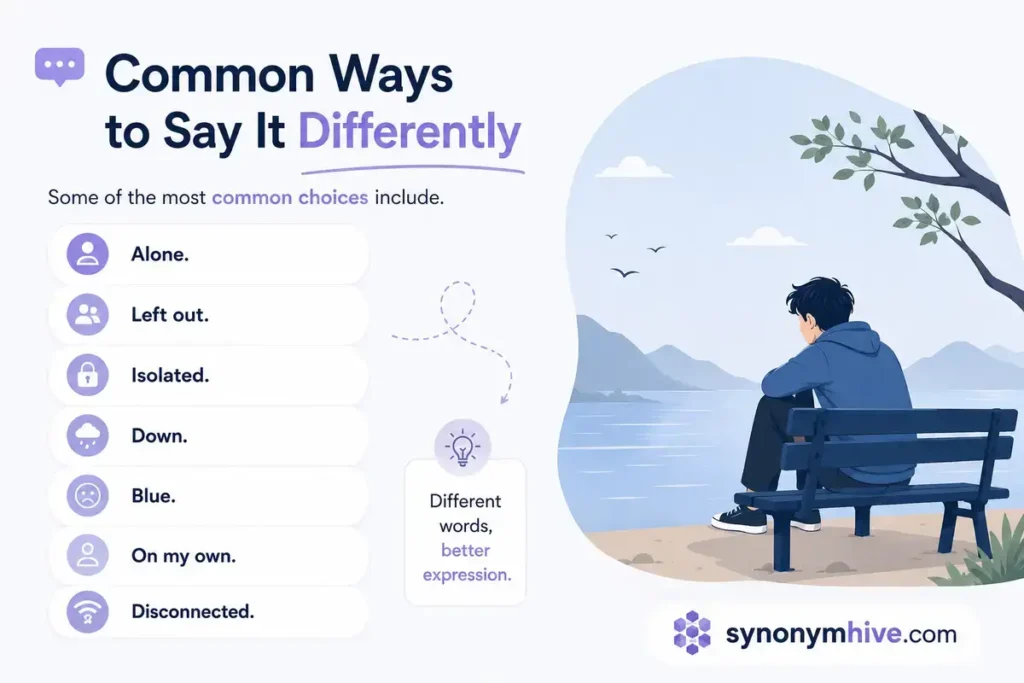
Some of the most common choices include.
- Alone.
- Left out.
- Isolated.
- Down.
- Blue.
- On my own.
- Disconnected.
These expressions sound natural because each one describes a slightly different experience. Someone may feel left out at a party but homesick after moving to another country.
Which Synonyms Sound Too Strong For Everyday Situations
Some words describe deep emotional pain and should not be used for ordinary situations.
Examples include.
- Abandoned.
- Alienated.
- Friendless.
- Heartbroken.
- Rejected.
These words fit serious emotional experiences, novels, or personal stories. For everyday situations, alone, left out, or isolated usually sound more natural.
How Can You Avoid Repeating Lonely In Your Writing
Using the same emotion word too many times can make your writing feel repetitive. Instead of repeating lonely, choose a word that matches the situation.
- Use alone for being by yourself.
- Use homesick when someone misses home.
- Use isolated for physical or emotional separation.
- Use detached for emotional distance.
- Use left out when someone is excluded from a group.
These small changes make your writing clearer and more engaging.
Which Synonyms Fit Different Types Of Writing
Different audiences expect different vocabulary.
| Writing Type | Best Choices |
|---|---|
| Text message | Lonely Alone Left out |
| Conversation | Down Blue Homesick |
| Story | Alienated Solitary Abandoned |
| Business email | Isolated Disconnected Excluded |
| School essay | Detached Alienated Isolation |
| Speech | Separated Connectedness Isolation |
| Blog post | Alone Homesick Left out |
Choosing words that fit the audience makes your writing sound more natural.
Which Synonyms Should English Learners Learn First
If you are building your vocabulary, begin with the words you will hear most often.
- Lonely.
- Alone.
- Left out.
- Isolated.
- Homesick.
- Down.
- Blue.
Once you know these words well, you can expand your vocabulary with advanced choices like alienated, detached, solitary, and friendless.
Which Idioms Express Loneliness Naturally
Native speakers often use idioms to describe feeling lonely or disconnected.
Some common expressions include.
- Feel like an outsider.
- Be on your own.
- Feel out of place.
- Be all by yourself.
- Feel miles away.
Examples.
She felt like an outsider during the meeting.
After moving to a new city he was on his own.
I felt out of place at the reunion.
The little cabin stood all by itself.
These expressions make conversations and stories sound more natural. They are less suitable for formal writing.
How Can Reading Improve Your Emotion Vocabulary
Reading novels, biographies, and quality articles helps you discover new emotion words. Notice how experienced writers avoid repeating lonely. One chapter may describe a character as isolated, while another uses homesick, detached, or abandoned.
Keep a notebook of unfamiliar words and write your own example sentences. Regular practice helps you remember them and use them naturally.
Practice Exercise To Build Your Vocabulary
Replace lonely with a better synonym in each sentence.
- She felt lonely after changing schools.
Possible answer.
She felt isolated after changing schools.
- The child looked lonely at the playground.
Possible answer.
The child looked left out at the playground.
- He felt lonely after moving overseas.
Possible answer.
He felt homesick after moving overseas.
- The old lighthouse stood lonely on the cliff.
Possible answer.
The old lighthouse stood solitary on the cliff.
- She became lonely after everyone ignored her.
Possible answer.
She became alienated after everyone ignored her.
These exercises help you understand the small differences between similar words and improve your writing.
Which Synonyms Describe Emotional And Physical Loneliness
Some words describe how someone feels inside, while others describe a physical situation.
| Emotional Loneliness | Physical Loneliness |
|---|---|
| Lonely | Alone |
| Alienated | Secluded |
| Left out | Remote |
| Rejected | Solitary |
| Disconnected | Isolated |
Understanding this difference helps you choose words that accurately describe the situation.
Which Synonyms Work Best In Creative Writing
Creative writing often needs vivid emotion words that help readers connect with a character.
Strong choices include.
- Lonesome.
- Solitary.
- Forgotten.
- Alienated.
- Desolate.
- Abandoned.
- Withdrawn.
Examples.
The old fisherman lived a solitary life by the sea.
She felt forgotten after everyone left.
The traveler wandered through the desolate town alone.
These words create stronger imagery and make scenes more memorable.
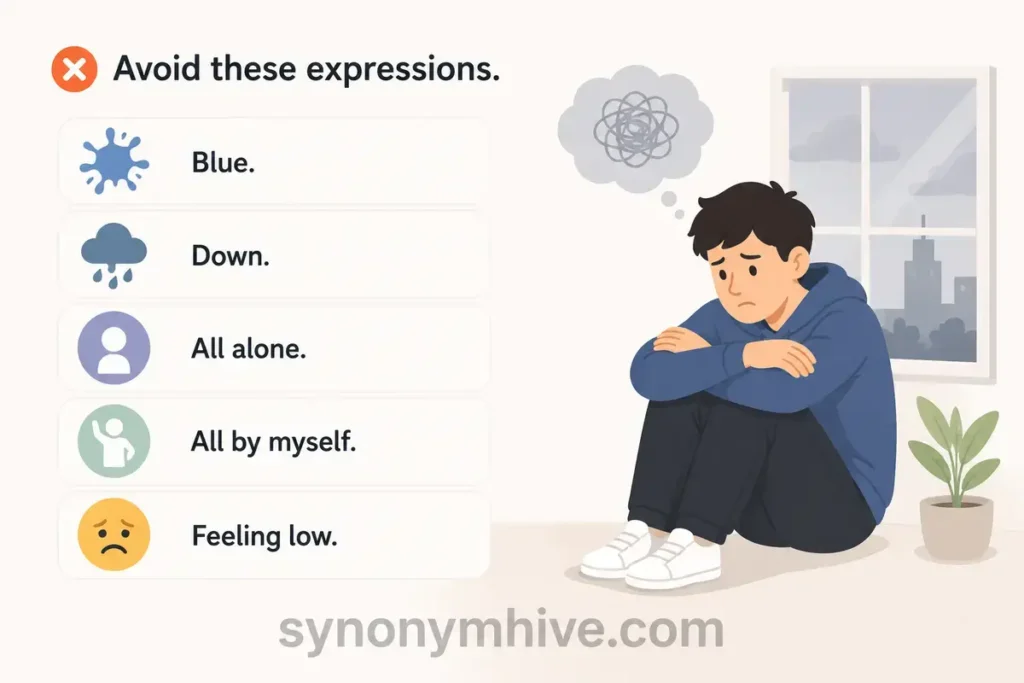
Which Synonyms Should You Avoid In Formal Writing
Some words sound too dramatic or too casual for professional documents and academic papers.
Avoid these expressions.
- Blue.
- Down.
- All alone.
- All by myself.
- Feeling low.
Instead, use words like isolated, disconnected, detached, or excluded. These alternatives sound more professional and precise.
How Can You Build A Better Vocabulary For Emotions
A stronger vocabulary develops through regular practice.
Try these simple ideas.
- Read novels that describe character emotions.
- Replace repeated words during editing.
- Learn one new emotion word every day.
- Write short sentences using new vocabulary.
- Pay attention to how native speakers describe feelings.
Small daily habits help you remember new words and use them with confidence.
Which Synonyms Match Different Life Situations
Different situations call for different words.
| Situation | Best Synonym |
|---|---|
| Moving to a new city | Homesick |
| Being ignored by friends | Left out |
| Living in a quiet cabin | Solitary |
| Working far from others | Isolated |
| Missing family | Homesick |
| Feeling disconnected at work | Alienated |
| Spending peaceful time alone | Alone |
Choosing a synonym that fits the situation makes your writing feel natural and believable.
Discover another helpful synonym list in Synonyms For Happy Ultimate Guide: Alternatives 2026.
Conclusion
Learning synonyms for lonely gives you more ways to describe emotions with clarity and precision. Instead of repeating the same word, you can choose an alternative that matches the exact situation. Mild feelings may call for alone or left out, while stronger emotions are better expressed with isolated, alienated, or abandoned.
Keep practicing these words in conversations, emails, essays, and stories. The more you use them, the more natural they will feel. A richer vocabulary helps your writing connect with readers and express emotions in a more meaningful way.
Frequently Asked Questions
What’s Another Way To Say Lonely.
Some of the best substitutes for lonely include alone, isolated, lonesome, homesick, detached, secluded, and abandoned. The best choice depends on the situation and the level of emotion.
What Is The Difference Between Lonely And Alone.
Alone describes being by yourself. Lonely describes feeling sad because of a lack of companionship.
Which Synonym Sounds Best In Professional Writing.
Words like isolated, disconnected, detached, and excluded work well in professional and academic writing because they sound clear and respectful.
Is Lonesome The Same As Lonely.
They are very similar, but lonesome often has a softer and more reflective feeling. It is common in songs, stories, and casual conversations.
Which Synonym Shows The Strongest Emotion.
Abandoned, friendless, and alienated are among the strongest expressions for lonely because they describe deep emotional isolation.
What Is The Difference Between Homesick And Lonely.
Homesick means you miss your home, family, or familiar surroundings. Lonely is a broader feeling of emotional isolation that can happen anywhere.
Which Synonyms Do Native English Speakers Use Most.
Native speakers often use alone, left out, isolated, homesick, and down because these words sound natural in everyday conversations.