

Writing a resume can make simple word choices feel harder than they should. You may want to describe yourself as genuine, but that word can sound too general on a professional resume. Finding another word for genuine can help you show a clearer quality such as honesty, authenticity, sincerity, or trustworthiness.
The best choice depends on what you actually mean. Genuine can describe a person who is honest and sincere. It can also describe something that is real, authentic, original, or not fake. These meanings overlap, but they aren’t always interchangeable.
Answer box: The best alternative to genuine depends on the meaning. Strong choices include authentic, sincere, honest, credible, trustworthy, and sincere.
This guide explains the meaning and origin of genuine, compares more than 30 useful alternatives, and shows which word works best in resumes, essays, emails, texts, and conversations. You’ll also see differences between close synonyms, common mistakes, examples, and quick tips for choosing the right word.
Looking for another word? See Another Word For Growth Mindset Best Resume Words 2026.
What Does Genuine Mean in Simple English
Genuine means real, sincere, honest, or true. The exact meaning changes slightly based on the situation.
When you describe a person as genuine, you usually mean that person acts in an honest and sincere way. They don’t pretend to be someone they aren’t.
For example:
- She is a genuine person who treats everyone with respect.
- His genuine interest in the project was easy to see.
- The manager gave a genuine apology.
- The customer wanted a genuine product.
Initially, genuine describes someone’s character. Next, it describes real interest. Then, it means sincere. Finally, it means authentic rather than fake.
This makes genuine a flexible word. However, that flexibility can also make it less precise on a resume.
Where Does Genuine Come From
Genuine comes from the Latin word genuinus, which meant natural, native, or true. English later developed genuine as a word for something real and authentic.
Over time, the word gained a broader meaning. People began using it for sincere feelings, honest behavior, real products, and trustworthy qualities.
Today, genuine commonly describes something that is real rather than fake or something that is sincere rather than forced.
The history also explains why genuine can work in both personal and professional writing. It can describe an object, feeling, statement, quality, or person.
What Is Another Word for Genuine
The best alternative depends on the meaning you want to communicate.
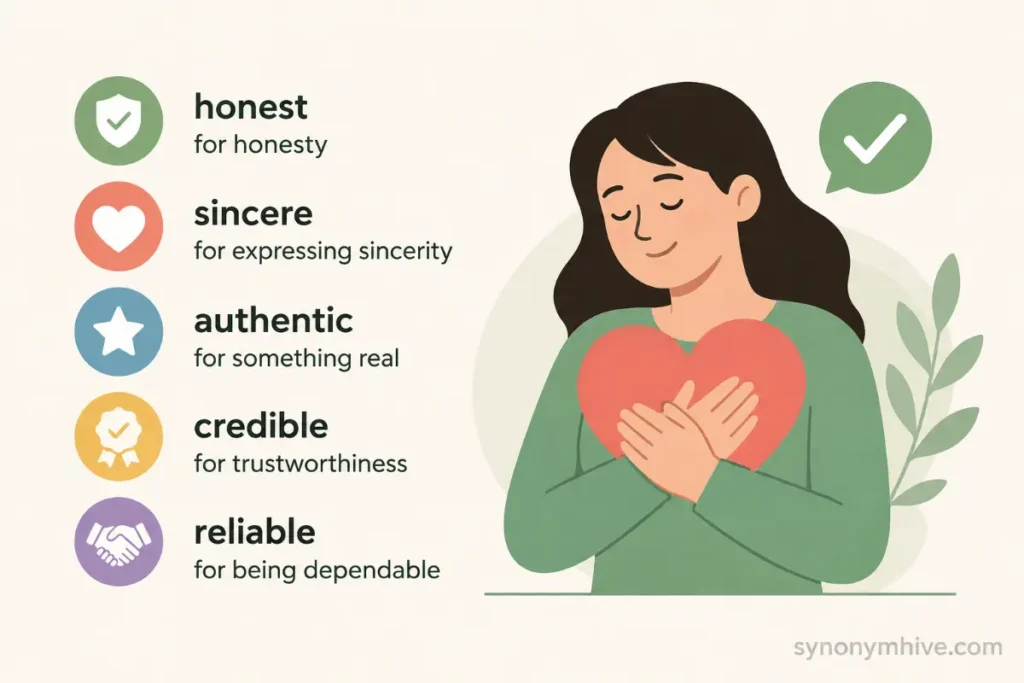
For honesty, use honest or truthful. When expressing sincerity, use sincere or heartfelt. For something real, use authentic or legitimate. To describe trustworthiness, use credible or reliable.
Here is a larger list to help you choose.
What Are The Best Synonyms for Genuine
| Word | Meaning | Tone | Example |
|---|---|---|---|
| Authentic | Real and true to its nature | Professional | She has an authentic leadership style. |
| Sincere | Honest and deeply meant | Professional | He gave a sincere response. |
| Honest | Truthful and straightforward | Everyday | She is known for being honest. |
| Truthful | Based on truth | Formal | He provided a truthful account. |
| Real | Not fake or artificial | Everyday | Her concern was real. |
| Original | Not copied or imitated | Professional | He developed an original idea. |
| Legitimate | Genuine and valid | Formal | She found a legitimate solution. |
| Credible | Believable and trustworthy | Professional | He is a credible source. |
| Trustworthy | Deserving trust | Professional | She is a trustworthy team member. |
| Reliable | Dependable and consistent | Professional | He is a reliable employee. |
| Faithful | Loyal or true to something | Formal | She remained faithful to her values. |
| Heartfelt | Showing deep sincere feeling | Emotional | He offered a heartfelt apology. |
| Earnest | Serious and sincere | Formal | She made an earnest effort. |
| Candid | Open and honest | Professional | He gave a candid assessment. |
| Frank | Direct and honest | Everyday | She gave a frank opinion. |
| Straightforward | Clear and honest | Everyday | He gave a straightforward answer. |
| Unfeigned | Not pretended or fake | Formal | Her unfeigned concern was obvious. |
| Valid | Sound and acceptable | Formal | The concern was valid. |
| Pure | Free from dishonesty or harmful intent | Emotional | His intentions were pure. |
| Unpretentious | Not trying to appear more important | Everyday | She has an unpretentious style. |
| Trustable | Capable of being trusted | Everyday | The source seemed trustable. |
| Dependable | Consistently reliable | Professional | He is a dependable worker. |
| Honesthearted | Sincere and honest | Informal | Her honesthearted approach earned respect. |
Some entries in this table are uncommon and may sound unusual in normal professional writing. For a resume, focus mainly on authentic, sincere, honest, credible, trustworthy, reliable, dependable, candid, and straightforward.
Which Genuine Synonym Is Best for a Resume
A resume usually needs precise professional language. Simply writing that you are genuine doesn’t tell an employer much.
Instead, connect the quality to an action or result.
For example, instead of:
I am a genuine team player.
Try:
I build authentic relationships with clients and colleagues.
Instead of:
I have a genuine approach to customer service.
Try:
I provide sincere and respectful customer support.
The second versions give the reader more information. They also sound more natural in professional writing.
When looking for another term for genuine on a resume, choose a word that matches a specific professional quality.
What Is The Best Word for Genuine on a Resume
Use Authentic for a Natural Professional Style
Authentic works well when you want to show that your approach is natural, honest, and consistent with your values.
Example:
I bring an authentic leadership style that builds trust across diverse teams.
Authentic is especially useful for resumes involving leadership, communication, branding, customer relations, coaching, education, and creative work.
Use Sincere for Honest Intent
Sincere focuses on feelings, intentions, or communication that are honestly meant.
Example:
I build sincere relationships with clients through attentive communication and consistent follow up.
Sincere works best when your resume discusses relationships, communication, customer care, or interpersonal skills.
Use Trustworthy for Reliability and Integrity
Trustworthy tells an employer that people can depend on you and believe what you say.
Example:
Known as a trustworthy team member who handles confidential information with care.
This word can work well in administrative, financial, healthcare, customer service, management, and support roles.
Use Credible for Expertise
Credible means believable and worthy of trust. It works especially well when your experience involves research, communication, analysis, leadership, or professional advice.
Example:
Developed credible reports that helped managers make informed decisions.
Credible is stronger than genuine when you want to emphasize professional authority.
Use Honest for Directness
Honest is simple and powerful. It works best when you want to emphasize truthfulness.
Example:
Provide honest feedback that helps teams identify problems and improve performance.
You don’t need complicated vocabulary to make a resume sound professional. Honest can be more effective than an uncommon synonym.
Use Reliable for Consistency
Reliable focuses on dependable performance rather than personality.
Example:
Reliable employee who consistently meets deadlines and supports team priorities.
If your evidence involves attendance, deadlines, accuracy, or consistent results, reliable is usually a better choice than genuine.
What Is Another Term for Genuine in an Essay
In an essay, your best synonym depends on your topic and argument.
Use authentic when discussing identity, culture, art, products, or personal expression.
Example:
The character presents an authentic view of life in a changing community.
Use sincere when discussing feelings, intentions, apologies, or emotional responses.
Example:
The speaker offers a sincere response to the criticism.
Use legitimate when discussing claims, concerns, reasons, or authority.
Example:
The students raised legitimate concerns about the new policy.
Use truthful when discussing statements or accounts.
Example:
The witness provided a truthful account of the event.
Academic writing often benefits from precision. Instead of using genuine several times, choose a synonym that matches the exact idea.

What Is Another Word for Genuine in Texting
Texting usually calls for simple everyday language.
Good choices include real, honest, sincere, authentic, and true.
For example:
- That was a real apology.
- She seems really sincere.
- He is an honest person.
- Her reaction felt authentic.
- I know his concern is real.
You usually don’t need formal words such as unfeigned or earnest in a casual text. Simple words sound more natural.
What Is Another Term for Genuine in an Email
Professional emails need a balance between warmth and clarity.
Sincere, honest, authentic, thoughtful, and heartfelt can work well depending on the message.
For example:
Thank you for your sincere feedback.
I appreciate your honest response.
Your thoughtful message meant a lot to our team.
We value your authentic perspective.
The right word depends on the purpose of the email. A customer complaint may call for sincere. A professional opinion may call for honest. A personal thank you may call for heartfelt.
What Is Another Phrase for Genuine in Speaking
In everyday speech, real, honest, sincere, and authentic are the most natural choices.
You might say:
She is a really sincere person.
That felt like a real apology.
He gave me an honest answer.
Her reaction seemed authentic.
People usually choose familiar words when speaking. Formal alternatives can sound stiff if the conversation is casual.
How Do Genuine Synonyms Change in Strength
Not every synonym has the same emotional strength. Some words are mild. Others make a stronger statement about character.
| Intensity | Best Words | Main Idea |
|---|---|---|
| Mild | Real, natural, straightforward | Something feels true or normal |
| Moderate | Honest, sincere, authentic | Strong sense of truth or sincerity |
| Strong | Trustworthy, credible, heartfelt | Strong trust or emotional meaning |
| Very specific | Legitimate, truthful, candid | Precise professional meaning |
Real is broad and casual. Honest is clearer when discussing truthfulness. Sincere adds emotional meaning. Authentic suggests something is true to its identity or nature. Trustworthy focuses on character and reliability.
Choosing the strongest word isn’t always best. Choose the word that says exactly what you mean.
What Is The Difference Between Genuine and Authentic
Genuine and authentic are close synonyms, but they aren’t identical.
Genuine often emphasizes sincerity or the fact that something isn’t fake.
Authentic often emphasizes originality, true identity, or connection to the original source.
For example:
She gave a genuine apology.
This means the apology was sincere.
The museum displayed an authentic painting.
This means the painting is believed to be the real original rather than a copy.
You can use both words for people, but authentic often has a stronger connection to identity and natural self expression.
What Is The Difference Between Genuine and Sincere
Genuine and sincere are especially close when describing people and emotions.
Genuine means real or sincere rather than fake.
Sincere focuses more directly on honest feelings or intentions.
Consider these examples:
His concern was genuine.
Her apology was sincere.
Both sentences communicate honesty. However, sincere fits naturally with apologies, thanks, feelings, promises, and intentions. Genuine has a wider range of uses.
For a resume, sincere can work when describing communication or relationships. Genuine may work when describing your approach or personality. Still, both should connect to evidence.
What Is The Difference Between Genuine and Honest
Honest focuses on truthfulness. Genuine has a broader meaning.
An honest employee tells the truth and doesn’t mislead others.
A genuine employee may also be sincere, natural, and authentic.
For example:
She gave an honest answer.
This focuses on truth.
She showed genuine concern.
This focuses on sincere feeling.
Use honest when truthfulness is the main point. Use genuine when you want to describe sincerity or real emotion.
What Is The Difference Between Genuine and Real
Real is the simplest alternative, but it can be too broad for professional writing.
Real can mean physically existing, true, authentic, serious, or sincere.
For example:
The problem is real.
His concern is real.
That product is real.
Genuine can be more precise in some contexts.
The product is genuine.
This usually means the product is authentic and not counterfeit.
The apology was genuine.
This means the apology was sincere.
Use real in casual conversation. Use a more precise term in professional or academic writing.
Discover another helpful synonym list in Another Word for Resourceful Best Resume Choices 2026.
What Are The Best Synonyms by Part of Speech
Genuine is mainly an adjective. Most alternatives in this topic are also adjectives.
Adjectives
Common adjective choices include:
- Authentic.
- Sincere.
- Honest.
- Truthful.
- Real.
- Credible.
- Trustworthy.
- Reliable.
- Legitimate.
- Candid.
- Earnest.
- Heartfelt.
- Natural.
- Original.
- Transparent.
These words can describe people, feelings, statements, products, ideas, or behavior depending on the word.
Nouns
Sometimes you may need a noun instead of an adjective.
Examples include:
- Authenticity.
- Sincerity.
- Honesty.
- Truthfulness.
- Credibility.
- Trustworthiness.
- Integrity.
- Originality.
For example:
Her authenticity helped build strong client relationships.
His honesty earned the team’s trust.
The credibility of the report was important.
Adverbs
You can also express the idea with adverbs.
Examples include:
- Authentically.
- Sincerely.
- Honestly.
- Truthfully.
- Naturally.
- Earnestly.
For example:
She communicated sincerely with customers.
He answered honestly during the interview.
How Do US And UK English Use Genuine
Genuine has the same basic meaning in American and British English.
Both varieties use genuine for people, emotions, products, statements, and experiences.
The main difference is usually style rather than meaning. American professional writing often favors direct words such as honest, real, authentic, and trustworthy. British writing can also use these terms, along with words such as sincere, earnest, and candid.
You don’t need a different synonym simply because your audience is in the US or UK. Instead, choose the word that fits your audience and context.
For a US resume, simple professional terms are usually the safest choice.
What Are Real Examples of Another Word for Genuine
The following examples show how different alternatives work in everyday and professional situations.
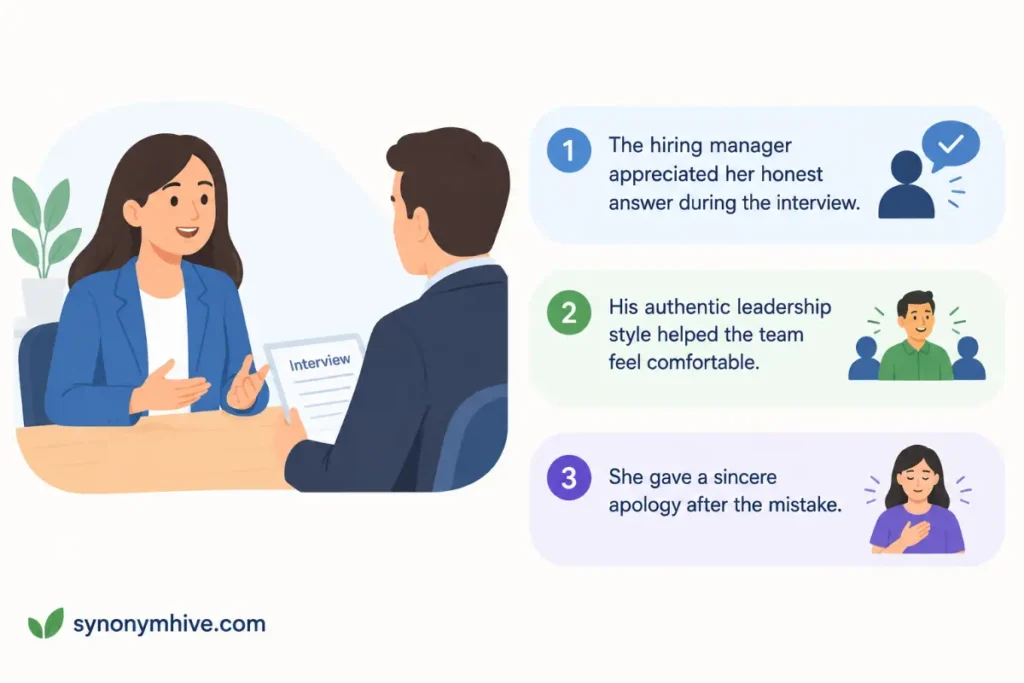
- The hiring manager appreciated her honest answer during the interview.
- His authentic leadership style helped the team feel comfortable.
- She gave a sincere apology after the mistake.
- The customer wanted a genuine product rather than a copy.
- We need a credible source before using that information.
- His trustworthy nature made him a strong choice for the role.
- She gave a candid opinion about the proposed change.
- The employee provided a straightforward explanation of the issue.
- His heartfelt message showed how much the project meant to him.
- The researcher offered a truthful account of the findings.
- Her natural communication style helped customers feel at ease.
- The manager values reliable employees who meet deadlines.
- His legitimate concern deserved a serious response.
- She developed an original approach to solving the problem.
- The speaker gave an earnest response to the audience.
- The company uses a transparent process for handling complaints.
- His unpretentious style made him easy to work with.
- She remained faithful to the values that shaped her work.
- The client appreciated his frank explanation.
- Her genuine interest in helping others was clear from the beginning.
These examples show why context matters. You can’t replace genuine with the same word every time.
When Should You Avoid Genuine
Genuine isn’t a bad word. The problem is that it can be vague.
Avoid relying on genuine when you need to show a specific professional strength.
For example:
I am a genuine employee.
This doesn’t tell the employer enough.
Instead:
I provide honest feedback and communicate openly with team members.
This version shows what genuine means in practice.
You should also avoid using genuine when another word gives a more accurate meaning.
For dependability, use reliable.
When discussing truthfulness, use honest.
For emotional sincerity, use heartfelt or sincere.
To describe originality, use authentic or original.
For something believable, use credible.
Specific words create stronger writing.
What Are Common Mistakes With Genuine Synonyms
Using Authentic for Every Meaning
Authentic is popular, but it doesn’t always mean sincere.
An authentic product is real and original. An authentic person may act naturally and honestly. However, authentic isn’t always the best choice for a simple statement about truth.
Using Sincere for Physical Products
Sincere usually describes feelings, intentions, words, or behavior.
You can have a sincere apology.
You don’t normally describe a physical product as sincere.
For products, authentic or genuine is usually better.
Using Honest for Original Products
Honest means truthful. It doesn’t normally mean original or authentic.
An honest seller may sell an authentic product, but honest doesn’t describe the product itself in the same way.
Using Formal Words in Casual Conversations
Words such as unfeigned and earnest can sound unnatural in everyday texting.
Use real, honest, or sincere instead.
Adding Synonyms Without Proof on a Resume
A resume should support claims with evidence.
Instead of writing:
I am extremely trustworthy.
Show trust through your experience.
For example:
Managed confidential customer records while maintaining strict data accuracy.
The example proves the quality instead of simply claiming it.
What Are The Antonyms of Genuine
The opposite of genuine depends on the meaning.
Common antonyms include:
- Fake.
- False.
- Artificial.
- Insincere.
- Dishonest.
- Pretended.
- Counterfeit.
- Deceptive.
- Misleading.
- Unauthentic.
Fake and counterfeit usually describe things that aren’t real.
Insincere describes feelings or words that aren’t honestly meant.
Dishonest describes a person or action that doesn’t tell the truth.
Knowing the opposite can help you understand the exact meaning you want from a synonym.
How Do You Choose The Right Synonym
Choosing another term for genuine becomes easier when you identify the exact idea first.
Ask yourself what you really want to say.
- Do you mean honest. Choose honest or truthful.
- Do you mean sincere. Choose sincere or heartfelt.
- Do you mean real. Choose authentic or legitimate.
- Do you mean trustworthy. Choose trustworthy or reliable.
- Do you mean believable. Choose credible.
- Do you mean open. Choose candid or transparent.
- Do you mean natural. Choose authentic or unaffected.
- Do you mean original. Choose original or authentic.
- Do you mean dependable. Choose reliable or dependable.
- Do you mean serious and sincere. Choose earnest.
This simple test prevents vague word choices.
Which Word Sounds Best on a Resume
For most resumes, authentic, trustworthy, credible, reliable, honest, sincere, and dependable are useful choices.
However, don’t add these words just to make your resume sound impressive. Employers care more about clear evidence than impressive adjectives.
Compare these two statements.
I am a genuine and trustworthy professional.
I build strong client relationships through honest communication and dependable service.
The second statement is stronger because it shows the qualities through action.
Your resume should answer a simple question. What did you actually do.
Then choose the word that accurately describes that work.
How Can You Make Genuine Sound More Professional
You don’t always need to replace genuine. Sometimes you can make the sentence stronger by adding specific details.
Instead of:
I have a genuine interest in customer service.
Try:
I have a strong interest in helping customers solve problems quickly.
Instead of:
I am genuine with my coworkers.
Try:
I communicate openly and respectfully with coworkers.
Instead of:
I show genuine leadership.
Try:
I lead teams with clear communication, accountability, and respect.
The strongest resume language usually combines a quality with an action.
How Should You Use Genuine in a Cover Letter
A cover letter gives you more room to discuss personality and motivation.
Genuine can work naturally here because cover letters allow more personal language.
For example:
I have a genuine interest in helping small businesses improve their customer experience.
You can also use sincere or authentic.
For example:
I have a sincere interest in supporting customers and solving practical problems.
The key is to connect your statement to the position. Don’t simply call yourself genuine. Explain what makes your interest real.
What Works Best for Interviews
During an interview, natural language matters more than impressive vocabulary.
You can say:
I believe trust comes from consistent and reliable work.
I like to build authentic relationships with clients.
These statements sound natural because they use familiar words.
An interview isn’t the place to force rare synonyms. Clear language makes your answer easier to understand and remember.
Quick Tips for Choosing Another Word for Genuine
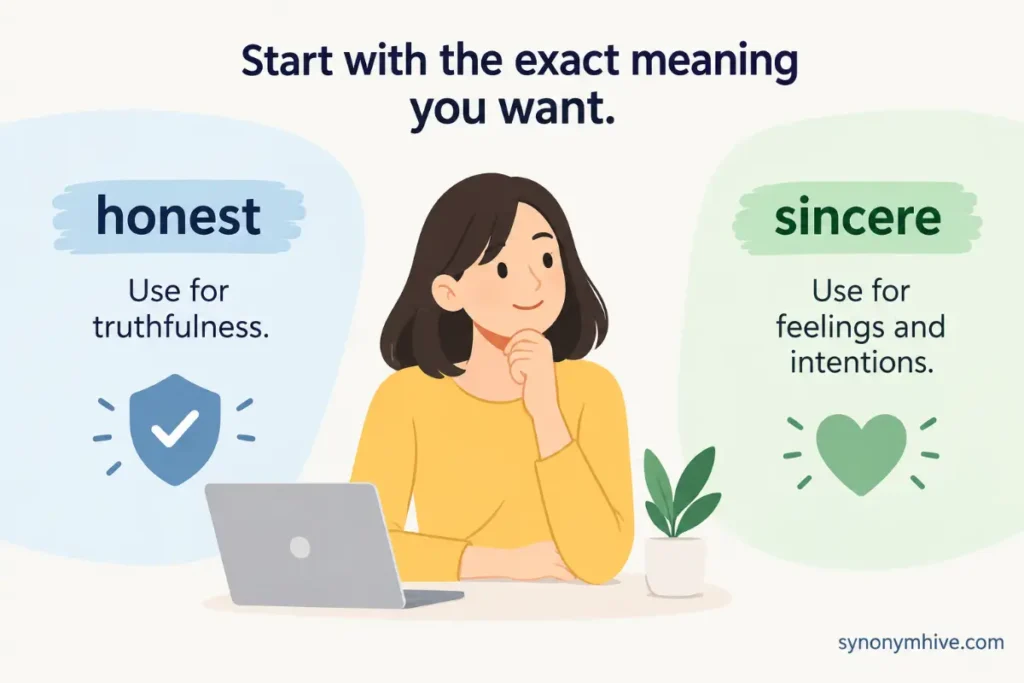
- Start with the exact meaning you want.
- Use honest for truthfulness.
- Use sincere for feelings and intentions.
- Use authentic for real identity or originality.
- Use credible for professional trust.
- Use trustworthy for character.
- Use reliable for consistent performance.
- Use candid for open direct communication.
- Use heartfelt for deep emotion.
- Use legitimate for something valid or real.
- Use real for simple casual conversation.
- Support resume adjectives with specific results.
The best synonym isn’t the most complicated word. It’s the word that communicates your meaning clearly.
Why Context Matters More Than Vocabulary
A synonym can be technically correct but still sound wrong in a sentence.
For example, authentic and sincere are close, but they don’t always work in the same places.
An authentic painting means the painting is genuine or original.
A sincere apology means the apology is honestly meant.
A credible report means the report is believable and trustworthy.
A reliable employee means the employee can be depended on.
These differences may seem small, but they matter in professional writing.
Good word choice isn’t about using the biggest word. It’s about choosing the most accurate word.
What Is The Best Overall Alternative to Genuine
There isn’t one perfect replacement for every situation.
Authentic is one of the most flexible professional choices. Sincere is best for honest feelings and intentions. Honest works well for direct communication. Trustworthy focuses on character. Credible highlights professional trust. Reliable emphasizes consistent performance.
So if you’re searching for another term for genuine, first identify the quality you want to highlight.
For most resume writing, authentic, trustworthy, reliable, credible, honest, and sincere are strong choices. Then support the word with a specific action or result.
Looking for another word? See Another Word for Empathetic Best Resume Choices 2026.
Conclusion
The best synonym for genuine depends on the quality you want to show. Use authentic for something real and true to its identity. Choose sincere for honest feelings or intentions. Use honest for truthfulness, credible for professional trust, trustworthy for character, and reliable for consistent performance.
When choosing another word for genuine on a resume, focus on precision instead of impressive vocabulary. A clear word supported by a real example will always be stronger than a vague adjective.
Remember that context controls word choice. The right synonym should fit the sentence, audience, and purpose. Once you identify the exact meaning you want, finding the right word becomes much easier.
Frequently Asked Questions
What is another term for genuine?
Authentic, sincere, honest, trustworthy, credible, and real are common alternatives to genuine. The best choice depends on the exact meaning and context.
What’s another way to say genuine on a resume?
Authentic, trustworthy, credible, reliable, sincere, and honest can work well on a resume. Choose the word that matches the professional quality you can support with experience.
Is authentic the same as genuine?
Authentic and genuine are close in meaning but aren’t always identical. Authentic often emphasizes originality or staying true to identity, while genuine can emphasize sincerity or the absence of fakery.
What is a professional word for genuine?
Authentic is a strong professional alternative to genuine. Trustworthy, credible, sincere, and reliable can be better choices when you want to highlight a specific quality.
What is another phrase for genuine interest?
Sincere, authentic, strong, real, or heartfelt can describe genuine interest. Sincere is often the best choice when you want to emphasize honest personal interest.
Can I use genuine on my resume?
Yes, but genuine can be too broad on a resume. A more specific word such as reliable, trustworthy, authentic, or credible can communicate your professional strength more clearly.
What is the opposite of genuine?
Common opposites include fake, false, artificial, insincere, dishonest, counterfeit, and deceptive. The best antonym depends on the context.