
Have you ever written an email an essay or even a heartfelt message and realized you kept using the term sad. Finding another word for sad helps your writing sound more natural more specific and more meaningful. English has many words that express different kinds of sadness. Some describe a little disappointment. Others show deep grief or heartbreak. Choosing the right word helps readers understand exactly how someone feels.
Another lexemes for sad is a synonym that describes feelings of unhappiness disappointment grief or emotional pain. The best choice depends on how strong the emotion is and the situation you want to describe.
This guide explains what sad means where the term came from and the best alternatives for conversations essays emails stories and everyday writing. You’ll also find comparison tables practical examples and helpful tips for choosing the right word.
Discover related words in Another Word For Difficult Simple Guide: Better Alternatives.
What Does Sad Mean
Sad describes a feeling of unhappiness sorrow or emotional pain. It can be caused by loss disappointment failure loneliness or difficult life events.
People use sad in many situations.
- A child loses a favorite toy.
- A family says goodbye to a loved one.
- A student fails an important exam.
- A friend moves to another city.
- A favorite television series comes to an end.
Not every kind of sadness feels the same. Some situations bring mild disappointment while others bring deep grief. That is why choosing the right synonym matters.
Where Does Sad Come From
The word sad comes from Old English. Long ago it described someone who was serious or firm. Over hundreds of years the meaning slowly changed. Eventually it became associated with feelings of sorrow unhappiness and emotional pain. Today sad is one of the most common emotional words in English. People use it to describe feelings events stories music conversations and everyday experiences.
Master List Of Another Phrase For Sad
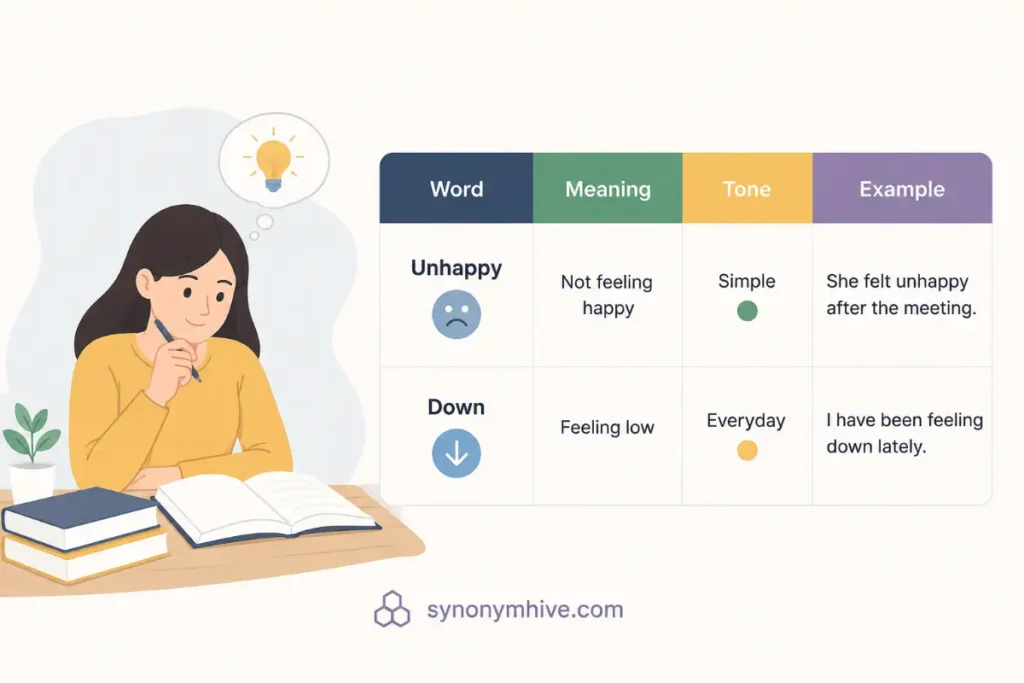
The table below includes more than thirty useful choices for another phrase for sad. Each one fits a different level of emotion and tone.
| Word | Meaning | Tone | Example |
|---|---|---|---|
| Unhappy | Not feeling happy | Simple | She felt unhappy after the meeting. |
| Down | Feeling low | Everyday | I have been feeling down lately. |
| Blue | Feeling sad | Everyday | He has been a little blue this week. |
| Upset | Emotionally disturbed | Everyday | She looked upset after the call. |
| Disappointed | Feeling let down | Neutral | We were disappointed by the result. |
| Heartbroken | Deep emotional pain | Everyday | He was heartbroken after the breakup. |
| Miserable | Very unhappy | Everyday | They felt miserable during the storm. |
| Gloomy | Dark or unhappy | Neutral | The news created a gloomy mood. |
| Depressed | Deep sadness | Formal | He appeared depressed after the loss. |
| Sorrowful | Filled with sorrow | Formal | She gave a sorrowful speech. |
| Grief stricken | Deeply affected by loss | Formal | The family was grief stricken. |
| Discouraged | Losing confidence | Neutral | She felt discouraged after several failures. |
| Glum | Quietly unhappy | Everyday | He looked glum all afternoon. |
| Low | Feeling emotionally weak | Everyday | I have been feeling low recently. |
| Crestfallen | Deeply disappointed | Formal | She looked crestfallen after hearing the news. |
| Tearful | Ready to cry | Neutral | He became tearful during the speech. |
| Lonely | Feeling alone | Everyday | She felt lonely after moving away. |
| Hopeless | Without hope | Formal | The situation seemed hopeless. |
| Broken | Emotionally hurt | Casual | He felt completely broken. |
| Hurt | Emotionally wounded | Everyday | Her words left me hurt. |
| Somber | Serious and sad | Formal | The ceremony had a somber mood. |
| Crushed | Emotionally overwhelmed | Casual | She was crushed by the news. |
| Devastated | Extremely sad | Everyday | They were devastated by the fire. |
| Bummed | Slightly disappointed | Slang | I was bummed that the game was canceled. |
| Feeling rough | Feeling emotionally low | Slang | He has been feeling rough lately. |
Synonyms By Strength
Some words describe mild disappointment while others express deep emotional pain.
Mild Choices
- Down.
- Blue.
- Unhappy.
- Low.
- Upset.
- Bummed.
These work well for everyday conversations.
Moderate Choices
- Sad.
- Disappointed.
- Glum.
- Discouraged.
- Miserable.
- Gloomy.
- Hurt.
These describe stronger emotional reactions.
Strong Choices
- Heartbroken.
- Devastated.
- Grief stricken.
- Sorrowful.
- Mournful.
- Hopeless.
- Crushed.
Reserve these for situations involving serious loss or deep emotional pain.
Synonyms By Part Of Speech
Most choices for another term for sad are adjectives. Related nouns and adverbs also help improve sentence variety.
Adjectives
- Heartbroken.
- Miserable.
- Gloomy.
- Lonely.
- Somber.
- Glum.
- Tearful.
- Crestfallen.
- Discouraged.
- Dejected.
Nouns
- Sadness.
- Grief.
- Sorrow.
- Heartbreak.
- Misery.
- Disappointment.
- Loneliness.
- Despair.
Adverbs
- Sadly.
- Miserably.
- Tearfully.
- Gloomily.
- Sorrowfully.
- Unhappily.
Using different word forms helps your writing flow naturally instead of repeating the same adjective.
Do Americans And British People Use Different Words
Most synonyms for sad are understood in both American and British English. Some expressions simply appear more often in one place.
| Word | More Common In | Notes |
|---|---|---|
| Bummed | United States | Casual word for disappointment. |
| Blue | United States | Common expression for feeling sad. |
| Glum | United Kingdom | Heard more often in British English. |
| Down | Both | Very common in daily conversation. |
| Miserable | Both | Common in speech and writing. |
| Heartbroken | Both | Used for serious emotional loss. |
| Melancholy | Both | Common in literature and formal writing. |
| Gloomy | Both | Used for emotions weather and atmosphere. |
Most readers in the United States and the United Kingdom will understand every word in this guide without difficulty.
What Is The Best Word To Use In Different Situations
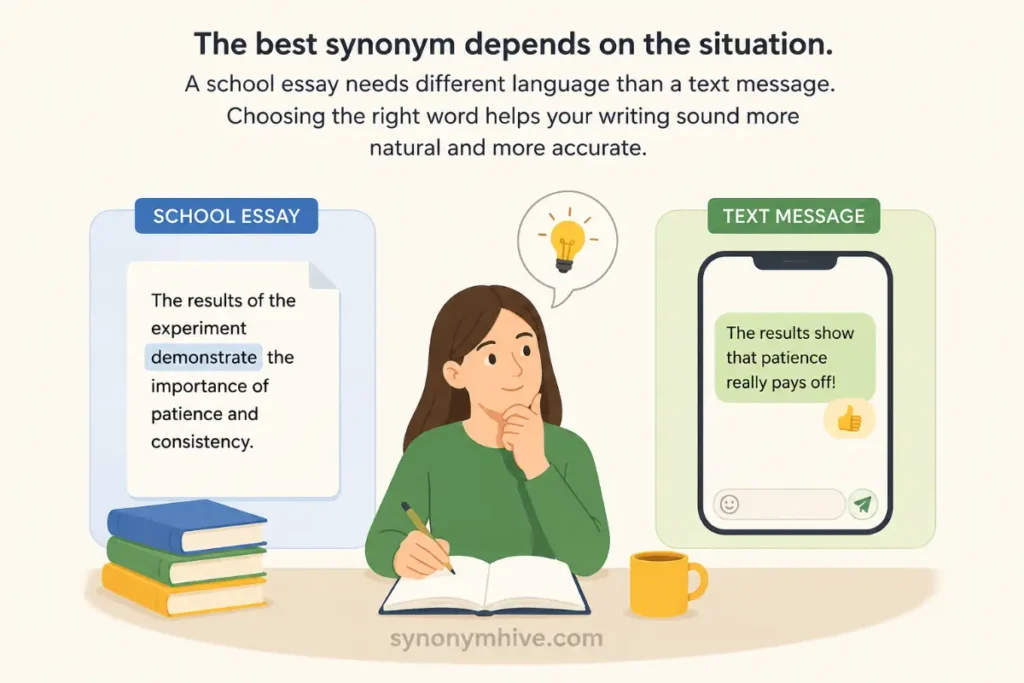
The best synonym depends on the situation. A school essay needs different language than a text message. Choosing the right word helps your writing sound more natural and more accurate.
What Is The Best Word For A Resume
A resume rarely needs emotional language. Still you may describe challenges customer concerns or difficult situations in a professional way.
Good choices include.
- Disappointed.
- Discouraged.
- Concerned.
- Dejected.
- Low.
Examples.
Customer feedback showed disappointed clients before the service improvements.
The team remained motivated despite discouraged market conditions.
I helped improve employee morale during a difficult period.
These words describe challenges without sounding overly emotional.
What Is The Best Word For An Essay
Essays often require more descriptive vocabulary than everyday conversations.
Good choices include.
- Melancholy.
- Sorrowful.
- Gloomy.
- Heartbroken.
- Dejected.
- Somber.
Examples.
The novel ends with a melancholy feeling of lost opportunities.
The community felt sorrowful after the natural disaster.
The author creates a gloomy atmosphere throughout the story.
These words make your writing richer while keeping the meaning clear.
What Is The Best Word For A Text Message
Text messages usually sound best with simple everyday words.
Good choices include.
- Down.
- Blue.
- Bummed.
- Upset.
- Hurt.
- Miserable.
Examples.
I’m feeling a little down today.
I’m really bummed that the concert got canceled.
She sounded upset after the meeting.
That comment really hurt.
These expressions feel natural in everyday conversations.
What Is The Best Word For An Email
Professional emails should stay respectful and measured.
Good choices include.
- Disappointed.
- Concerned.
- Regretful.
- Unsatisfied.
- Discouraged.
Examples.
We were disappointed with the recent delay.
Several customers expressed concern about the service.
The team felt discouraged after the unexpected changes.
These words communicate emotions without sounding dramatic.
What Is The Best Word For Speaking
Simple language usually feels the most genuine during conversations.
Good choices include.
- Sad.
- Down.
- Upset.
- Hurt.
- Heartbroken.
- Disappointed.
Examples.
I’m sad that you’re moving away.
She looked upset after the conversation.
We were disappointed by the results.
He was heartbroken after losing his dog.
Simple words often carry the strongest emotional impact.
Real Life Examples Using Another Expression For Sad
These examples show how different synonyms fit real situations.
- The children felt disappointed when the trip was canceled.
- She looked heartbroken after hearing the difficult news.
- He seemed glum during the entire meeting.
- The coach looked dejected after the championship loss.
- The movie ended on a melancholy note.
- I felt bummed when my flight was delayed.
- Their farewell speech was sorrowful and emotional.
- The family remained grief stricken after losing their grandfather.
- She became tearful while reading the letter.
- The rainy weather created a gloomy mood.
- He felt lonely after moving to a new city.
- The students looked discouraged after the difficult exam.
- The singer performed a mournful song.
- We all felt miserable without electricity during the storm.
- His face showed a heavyhearted expression as he left.
Using different words helps readers understand the exact emotion instead of relying on one general adjective.
Sad Vs Disappointed
These words are related but describe different emotions.
| Sad | Disappointed |
|---|---|
| General feeling of unhappiness. | Feeling let down because expectations were not met. |
| Covers many emotional situations. | Usually follows a specific event. |
| Can last a long time. | Often fades after the situation changes. |
| She felt sad after the goodbye. | He felt disappointed by the test score. |
Disappointed usually has a clear reason. Sad is broader and can describe many different emotions.
Looking for a better alternative? Visit Another Word For Nice Best Guide: Synonyms (2026).
Heartbroken Vs Devastated
Both words describe strong emotional pain but they are not identical.
| Heartbroken | Devastated |
|---|---|
| Deep emotional pain often linked to relationships or loss. | Extreme emotional shock caused by major events. |
| Often personal. | Can describe many serious situations. |
| She was heartbroken after the breakup. | They were devastated after the fire. |
Heartbroken usually focuses on personal loss. Devastated can describe many kinds of life changing events.
Gloomy Vs Melancholy
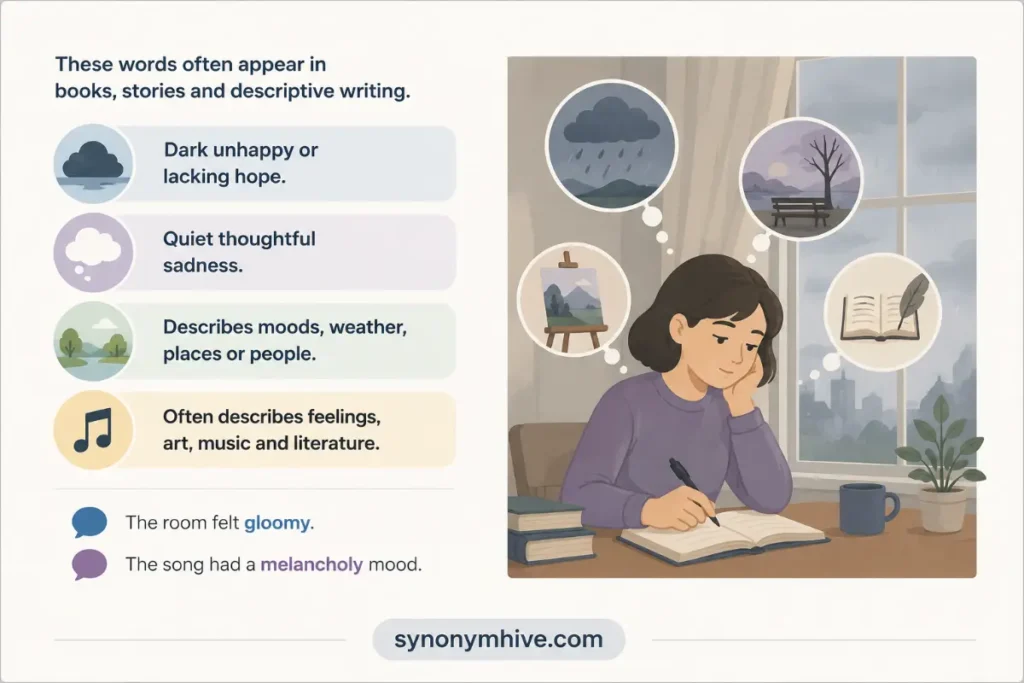
These words often appear in books stories and descriptive writing.
| Gloomy | Melancholy |
|---|---|
| Dark unhappy or lacking hope. | Quiet thoughtful sadness. |
| Describes moods weather places or people. | Often describes feelings art music and literature. |
| The room felt gloomy. | The song had a melancholy mood. |
Melancholy often carries a softer more reflective feeling than gloomy.
Common Mistakes People Make
Choosing the wrong synonym can make your writing sound confusing or overly dramatic.
Using Strong Words For Small Problems
Missing a bus is disappointing.
Losing a close family member may leave someone devastated or grief stricken.
Match the word to the situation.
Mixing Casual And Formal Language
Bummed sounds natural with friends.
Melancholy and sorrowful fit essays literature and formal writing much better.
Repeating Sad Too Often
Many writers use sad in every paragraph.
Instead choose words like disappointed gloomy lonely hurt heartbroken or miserable when they better match the situation.
Ignoring The Exact Meaning
Lonely means feeling alone.
Heartbroken describes deep emotional pain.
Discouraged means losing confidence.
Choose the word that best matches the feeling you want readers to understand.
Trying To Sound Too Dramatic
Powerful words lose their impact if every situation is described as devastating or heartbreaking.
Simple honest language often feels more believable and creates a stronger connection with readers.
Antonyms Of Sad
Learning opposite words makes it easier to understand different emotional tones and choose the best word for every situation.
| Word | Meaning | Example |
|---|---|---|
| Happy | Feeling joy | She felt happy after the good news. |
| Cheerful | Full of happiness | The children stayed cheerful all day. |
| Joyful | Filled with great happiness | They shared a joyful celebration. |
| Glad | Pleased or thankful | I’m glad you came. |
| Delighted | Very pleased | She was delighted with the surprise. |
| Excited | Full of enthusiasm | The kids were excited about the trip. |
| Hopeful | Feeling optimistic | We stayed hopeful during the project. |
| Content | Peaceful and satisfied | He felt content with his decision. |
| Optimistic | Expecting good things | She remained optimistic about the future. |
| Upbeat | Positive and energetic | His upbeat attitude encouraged everyone. |
Sometimes using an opposite term explains your meaning better than simply saying someone is not sad.
What Is Another Alternative For Sad In Customer Reviews
Customer reviews often describe disappointing experiences. Using a specific lexeme instead of sad makes your review clearer and more useful.
| Situation | Better Word | Example |
|---|---|---|
| Poor service | Disappointed | We were disappointed by the slow service. |
| Vacation | Let down | We felt let down by the hotel. |
| Product | Unsatisfied | I was unsatisfied with the product quality. |
| Event | Underwhelmed | We were underwhelmed by the concert. |
| Experience | Miserable | The long delays made the trip miserable. |
| Overall visit | Unpleasant | It turned into an unpleasant experience. |
Focus on the reason behind the emotion. Readers understand your experience much better when you explain exactly what caused it.
What Is Another Lexeme For Sad In School Writing
School assignments often ask you to describe characters emotions. Replacing sad with a more accurate term makes your writing stronger.
| Instead Of Sad | Try This | Example |
|---|---|---|
| Sad about failure | Disappointed | The athlete felt disappointed after the loss. |
| Sad after losing someone | Grief stricken | The family was grief stricken after the funeral. |
| Quiet sadness | Melancholy | The poem has a melancholy mood. |
| Feeling alone | Lonely | The child felt lonely at the new school. |
| Deep emotional pain | Heartbroken | She was heartbroken after the goodbye. |
| Losing hope | Hopeless | The character became hopeless after many failures. |
A more specific word helps readers understand the emotion without needing extra explanation.
Common Phrases That Use Sad
The word sad appears in many everyday expressions. Sometimes another word creates a stronger image.
| Common Phrase | Better Alternative | Example |
|---|---|---|
| Sad story | Heartbreaking story | It is a heartbreaking story. |
| Sad news | Tragic news | We received tragic news this morning. |
| Sad face | Gloomy expression | He had a gloomy expression. |
| Sad feeling | Melancholy feeling | She carried a melancholy feeling all day. |
| Sad ending | Emotional ending | The movie had an emotional ending. |
| Sad memory | Painful memory | It remained a painful memory. |
| Sad music | Mournful music | The violin played mournful music. |
| Sad day | Difficult day | It was a difficult day for everyone. |
Some phrases sound more natural with sad. Replace it only when another word gives readers a clearer picture.
What Is The Most Common Another Word For Sad
Some synonyms appear more often than others because they fit many different situations.
| Synonym | Best Used For |
|---|---|
| Unhappy | General everyday sadness. |
| Disappointed | Expectations that were not met. |
| Down | Casual conversations. |
| Blue | Informal American English. |
| Lonely | Feeling isolated. |
| Heartbroken | Personal loss and relationships. |
| Miserable | Deep unhappiness or discomfort. |
| Gloomy | Moods weather and atmosphere. |
| Melancholy | Literature music and thoughtful writing. |
| Devastated | Major loss or shocking events. |
If you are not sure which word to use start with unhappy or disappointed. They fit many situations and sound natural to almost every English speaker.
Quick Tips For Choosing The Right Word
Choosing the right synonym becomes much easier when you focus on the exact feeling you want to describe.
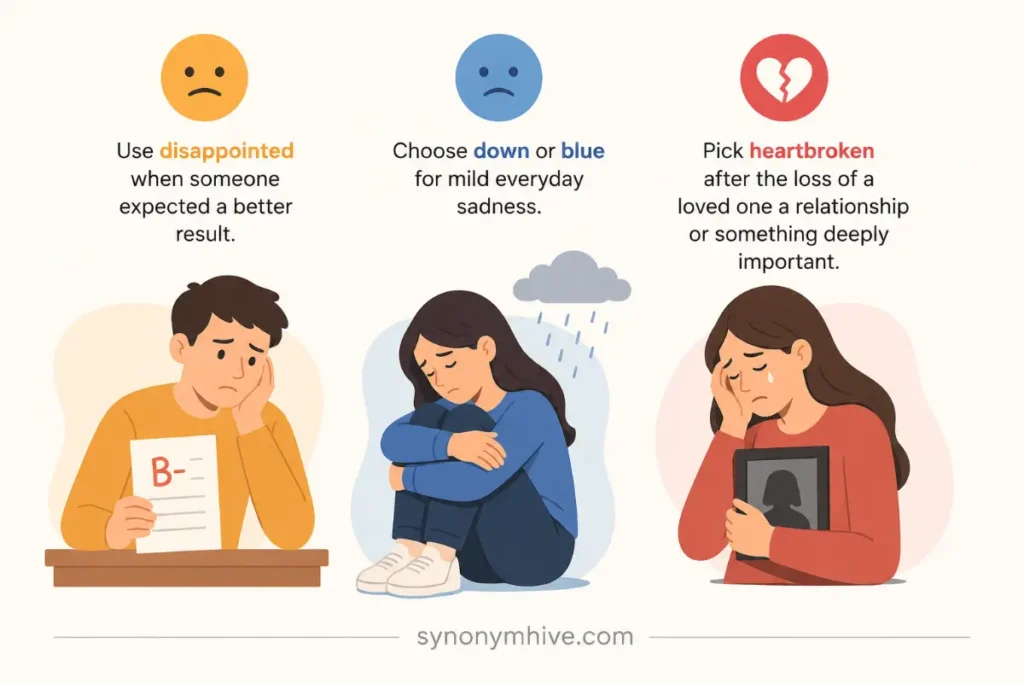
- Use disappointed when someone expected a better result.
- Choose down or blue for mild everyday sadness.
- Pick heartbroken after the loss of a loved one a relationship or something deeply important.
- Use melancholy for thoughtful quiet sadness in books music stories or essays.
- Choose gloomy to describe dark moods places weather or emotional atmospheres.
- Use lonely only when talking about feeling alone or isolated.
- Pick miserable when someone feels deeply unhappy or uncomfortable.
- Use devastated only for major life changing events because it expresses very strong emotion.
- Match the strength of the word to the situation. Small disappointments do not need the strongest emotional language.
- Read your sentence aloud before you finish. If it sounds like something you would naturally say it is probably the right choice.
Looking for another word? See Another Word For Stupid: Polite Alternatives 2026.
Conclusion
Finding another word for sad helps you express emotions with more clarity and honesty. Instead of using the same adjective every time you can choose disappointed for unmet expectations lonely for isolation heartbroken for deep personal loss or melancholy for quiet reflective sadness. The right word paints a clearer picture for your readers.
The best writing connects with people because it feels real. Practice using these synonyms in emails essays stories conversations and everyday writing. As your vocabulary grows you will describe emotions more naturally and your writing will become more engaging without sounding forced.
Frequently Asked Questions
What’s Another Way To Say Sad?
There are many choices including unhappy disappointed gloomy lonely heartbroken miserable melancholy sorrowful and devastated. The best another phrase for sad depends on the feeling you want to describe.
What Is The Strongest Synonym For Sad?
Heartbroken devastated grief stricken and sorrowful express much stronger emotions than sad. They are best used for serious loss or deep emotional pain.
Can I Use Blue Instead Of Sad?
Yes. Blue is a common informal expression that means feeling a little sad or emotionally low. It is especially common in American English.
Which Word Sounds Best In Professional Writing?
Disappointed discouraged concerned and regretful usually fit professional emails reports and workplace communication because they sound respectful and balanced.
Is Miserable Stronger Than Sad?
Yes. Miserable describes a much deeper level of unhappiness and emotional discomfort than sad. It often suggests that someone feels unhappy for a longer time or because of a difficult situation.
What Is Another Expressions For Sad In A Story?
Melancholy sorrowful gloomy heartbroken mournful and dejected all work well in stories because they create stronger emotional detail and help readers picture the scene.
How Can I Choose Another Expression For Sad More Easily?
Think about the reason behind the emotion first. Another phrase for sad should match the exact feeling instead of simply sounding stronger. Choosing the most accurate word always makes your writing feel more natural.