
When you write an essay about your childhood home, send an email describing a new house, or text a friend about your favorite place, finding the right terms to describe home can make your message more personal. A home can feel cozy, peaceful, welcoming, lively, or even overwhelming. The best word depends on the place itself and the feelings it brings out in you.
Words to describe home are adjectives and descriptive expressions that explain how a home looks, feels, sounds, and affects the people who live there. Words such as cozy, spacious, welcoming, peaceful, and charming help readers picture a place and understand what makes it special.
A good description does more than list the rooms, furniture, and colors. It helps someone imagine the warmth of a kitchen, the quiet of a bedroom, or the happy noise of a family gathering. Even a small apartment can feel inviting, and a large house can feel lonely. The words you choose help tell that story.
This guide covers useful vocabulary for describing a home, from simple everyday terms to formal expressions. You’ll find meanings, examples, differences between similar words, writing tips, and practical suggestions for essays, emails, resumes, texts, and everyday conversations.
Discover related words in words to describe a sunset Best Guide.
What Are the Best Words to Describe Home?
The best descriptive words depend on the quality you want to highlight. If you want to describe comfort, try cozy or comfortable. If you want to focus on appearance, use beautiful or charming. For a place that makes visitors feel at ease, welcoming or inviting may work better.
A home can have several qualities at once. It might be spacious but cluttered, modern but cozy, or simple but beautiful. Choosing precise words helps you express these details without making your description sound exaggerated.
Here are some useful starting points.
| Word | What It Describes | Example |
|---|---|---|
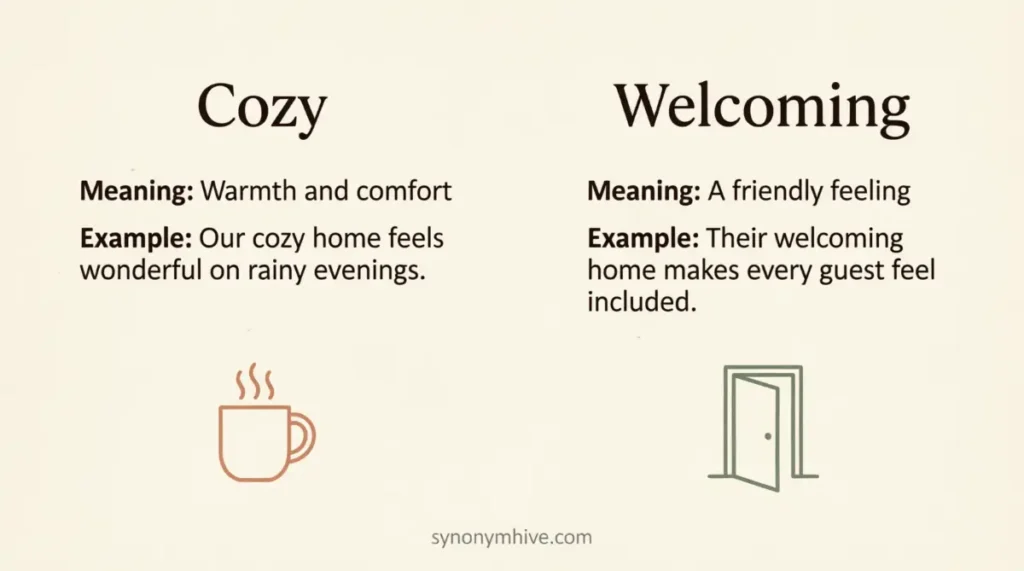
| Cozy | Warmth and comfort | Our cozy home feels wonderful on rainy evenings. |
| Welcoming | A friendly feeling | Their welcoming home makes every guest feel included. |
| Peaceful | Calm and quiet | My peaceful home gives me a break from busy days. |
| Spacious | Plenty of room | The spacious house has room for everyone. |
| Charming | Attractive and full of character | We live in a charming cottage near the woods. |
| Bright | Plenty of light | The bright living room gets morning sunshine. |
| Homely | A familiar and comfortable feeling in some varieties of English | Her kitchen feels homely and warm. |
| Elegant | Graceful and stylish | The elegant home has simple furniture and soft lighting. |
| Lively | Full of activity | Our lively home is rarely quiet on weekends. |
| Serene | Deeply calm | The serene home overlooks a quiet garden. |
Start by asking yourself one simple question. What do you want the reader to notice first? Once you know the answer, the right adjective becomes easier to find.
Where the Word Home Comes From and What It Means
The word home has a long history in English. It comes from Old English hām, which referred to a dwelling, an estate, or a place where someone lived. Related forms appear in other Germanic languages.
Today, home can mean a physical place where someone lives, but it often carries a deeper meaning. It can represent family, safety, belonging, memories, and personal identity.
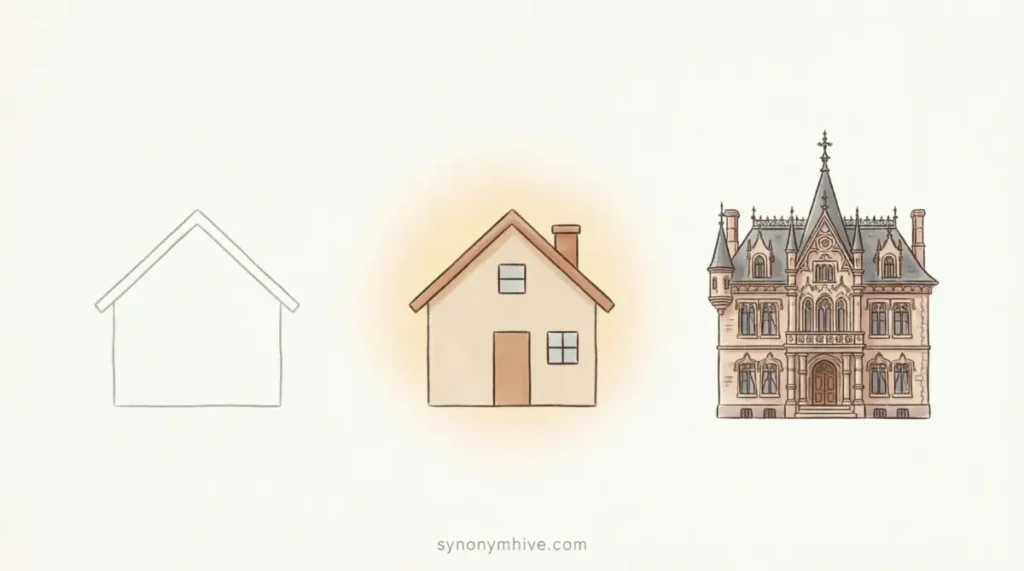
This distinction matters when you describe a place. A house usually refers to a building. A home often means the building and the life connected to it. A house becomes a home through the experiences, relationships, and routines that give it meaning.
Consider these sentences.
- The house has three bedrooms and a large kitchen.
- The home feels warm and welcoming because everyone gathers in the kitchen.
The first sentence focuses on the building. The second focuses on the experience of living there.
You can also use home in different ways. It can act as a noun in Our home is near the park. It can act as an adjective in home cooking or home life. In expressions such as feel at home, it describes a sense of comfort and belonging.
When you write about a home, think beyond its walls. Describe the light coming through the windows, the smell of fresh bread, the sound of familiar voices, or the quiet corner where you read. These details give descriptive words a clear purpose.
A Master List of Expressions to Describe Home
The following words help you describe a home’s appearance, atmosphere, size, style, and emotional meaning. Some are simple enough for everyday conversation, while others suit formal writing or creative descriptions.
Use the examples as models, then adjust them to match the home you’re describing.
Simple Words for Everyday Writing
These words are easy to understand and work well in school assignments, conversations, and basic descriptions.
| Word | Meaning | Tone | Example |
|---|---|---|---|
| Nice | Pleasant or enjoyable | Casual | We have a nice home near the school. |
| Clean | Free from dirt or mess | Neutral | The clean home feels fresh and organized. |
| Big | Large in size | Casual | Their big home has a backyard for the children. |
| Small | Limited in size | Neutral | My small home has everything I need. |
| Warm | Comfortable and friendly | Positive | A warm home makes winter evenings special. |
| Quiet | Making little noise | Neutral | Our quiet home is perfect for reading. |
| Pretty | Attractive to look at | Casual | The pretty home has flowers beside the door. |
| Comfortable | Pleasant to live in | Positive | The comfortable home helps us relax after work. |
Everyday Words for a More Detailed Description
These choices help you explain what makes a home memorable without using difficult vocabulary.
| Word | Meaning | Tone | Example |
|---|---|---|---|
| Cozy | Snug and comfortable | Friendly | The cozy home has soft blankets and warm lighting. |
| Welcoming | Friendly toward visitors | Positive | Their welcoming home is always open to friends. |
| Spacious | Having plenty of room | Neutral | The spacious home has a large dining area. |
| Bright | Filled with light | Positive | Our bright home gets sunlight throughout the day. |
| Airy | Open and well ventilated | Positive | The airy home stays pleasant in summer. |
| Charming | Attractive in a special way | Warm | The charming home has a wooden porch and a flower garden. |
| Lively | Full of energy and activity | Positive | Our lively home fills with laughter on holidays. |
| Peaceful | Free from disturbance | Calm | The peaceful home sits beside a quiet lane. |
Formal Words for Essays and Descriptive Writing
These words can make your writing more precise. They work well in school essays, property descriptions, travel writing, and other situations where a more polished tone is useful.
| Word | Meaning | Tone | Example |
|---|---|---|---|
| Elegant | Graceful and stylish | Formal | The elegant home features simple furniture and classic details. |
| Serene | Calm and restful | Formal | The serene home overlooks a green valley. |
| Immaculate | Extremely clean and tidy | Formal | The immaculate home looks carefully maintained. |
| Picturesque | Attractive enough to look like a picture | Literary | The picturesque home stands beside a winding country road. |
| Refined | Stylish and carefully chosen | Formal | The refined home combines neutral colors with fine woodwork. |
| Inviting | Making people want to enter or stay | Polished | The inviting home has a sunny porch and comfortable chairs. |
| Tranquil | Very calm and quiet | Formal | The tranquil home offers a welcome break from city noise. |
| Tasteful | Attractive without being showy | Formal | The tasteful home uses simple decorations and natural materials. |
Slang and Casual Expressions for Home
Informal words can make texts and conversations sound natural. Some expressions describe the place itself, while others describe the feeling of being there.
| Word or Expression | Meaning | Tone | Example |
|---|---|---|---|
| Homey | Comfortable and familiar | Casual | This little kitchen feels so homey. |
| Snug | Small, warm, and comfortable | Casual | Our snug home is perfect for cold nights. |
| Chill | Relaxed and laid back | Slang | Their home has a chill atmosphere. |
| Laid back | Relaxed and informal | Casual | We have a laid back home where nobody needs to dress up. |
| Sweet | Pleasant and appealing | Casual | They found a sweet little home near the lake. |
| Cute | Attractive in a small or appealing way | Casual | Your new place is really cute. |
| Comfy | Comfortable | Informal | The living room is comfy enough for movie nights. |
| A happy place | Somewhere that brings joy or comfort | Informal | My home is my happy place after a long day. |
One useful distinction is that homey and homely don’t always mean the same thing across English speaking regions. In American English, homey usually suggests warmth and familiarity. In British English, homely can have that same positive meaning. In the United States, however, homely can also mean plain or unattractive when describing someone’s appearance. For a welcoming home, homey is usually the safer American choice.
How to Choose Words to Describe Home by Intensity
Sometimes you know the feeling you want to express, but the first adjective that comes to mind doesn’t feel strong enough. Choosing a word by intensity helps you communicate the exact impression you want to leave.
A simple way to do this is to move from a mild description to a stronger one. You don’t always need the strongest word. The best choice is the one that matches the details you can support.
Mild Words for a Simple Description
Use mild adjectives when you want to describe a home without making a strong emotional claim.
- Pleasant. The home is enjoyable to be in.
- Neat. The rooms look tidy and orderly.
- Simple. The design is uncomplicated.
- Comfortable. The space meets everyday needs and feels good to use.
- Attractive. The home looks appealing.
For example, The home is pleasant and neat, with a simple layout and comfortable furniture.
This description is useful when you want a clear and balanced impression.
Medium Strength Words for a Stronger Impression
Choose these words when the home has a noticeable quality that stands out.
- Cozy. The home feels snug and comfortable.
- Charming. It has appealing details or a special character.
- Inviting. It makes people feel welcome.
- Beautiful. It has qualities that make it especially pleasing to look at.
- Peaceful. It creates a sense of calm.
For example, The charming home has a cozy reading corner and an inviting front porch.
These words give readers a stronger sense of the place without making the description sound overdone.
Strong Words for a Memorable Description
Use stronger adjectives when the home creates an unusually powerful impression.
- Breathtaking. The home is so beautiful that it inspires wonder.
- Magnificent. It is impressive in appearance, size, or design.
- Luxurious. It offers a high level of comfort, quality, or expense.
- Exquisite. Its details are exceptionally beautiful or carefully made.
- Spectacular. It creates a striking visual impression.
For example, The magnificent home overlooks the ocean, with wide windows that frame the sunset.
Strong words work best when the details support them. Calling a small, ordinary room spectacular may sound exaggerated unless something about it truly stands out.
Words That Describe Negative Feelings
Not every home feels comfortable or welcoming. Sometimes a description needs to express discomfort, neglect, or tension.
| Word | Meaning | Example |
|---|---|---|
| Cramped | Too small for the people or things inside | The cramped home has little room for storage. |
| Cluttered | Filled with too many objects | The cluttered home needs better organization. |
| Gloomy | Dark or depressing | The gloomy home gets very little sunlight. |
| Uninviting | Not making people feel welcome | The bare entrance makes the home feel uninviting. |
| Run down | In poor condition from age or lack of care | The run down home needs repairs. |
| Chaotic | Full of confusion or disorder | The chaotic home becomes noisy during busy mornings. |
| Neglected | Not receiving the care it needs | The neglected home has broken windows and an overgrown yard. |
Negative adjectives can make a description more honest and useful. If you’re writing about a property, for example, cramped tells the reader something different from small. A small home can be thoughtfully designed, while a cramped home lacks enough usable space.
Which Parts of Speech Help You Describe a Home?
Adjectives do most of the work when you describe a home, but nouns, verbs, and descriptive phrases can make your writing more vivid. Combining them helps you show what a place looks like and how people experience it.
Adjectives That Describe a Home
Adjectives explain the qualities of a place. They answer questions such as what kind of home it is, how it looks, or how it feels.
Examples include cozy, spacious, modern, peaceful, elegant, rustic, bright, and welcoming.
Try using one adjective for the appearance and another for the atmosphere.
For example, The modern home feels warm and welcoming because of its wooden floors and soft lighting.
Here, modern describes the design, while warm and welcoming describe the atmosphere.
Nouns That Make a Description More Specific
Nouns name the features that give a home its character. They help you move from a general statement to a clear picture.
Useful nouns include comfort, warmth, charm, elegance, tranquility, character, simplicity, and hospitality.
For example, instead of writing The home is peaceful, you could write The home offers a sense of peace that makes it easy to relax.
Both sentences work, but the second focuses on the experience of living there.
Verbs That Bring a Home to Life
Strong verbs help readers picture how a home affects people.
- Welcomes. The sunny entrance welcomes guests into the home.
- Radiates. The little cottage radiates warmth and charm.
- Reflects. The simple design reflects the family’s relaxed lifestyle.
- Provides. The quiet home provides a comfortable place to study.
- Surrounds. The home is surrounded by trees and colorful flowers.
- Blends. The house blends modern design with traditional details.
- Invites. The open living room invites family members to gather.
These verbs make your sentences more active. Instead of repeating is and has, you can explain what makes a place special.
Descriptive Phrases for a More Natural Style
Sometimes one adjective isn’t enough. A short phrase can communicate an idea more clearly.
| Descriptive Phrase | Meaning | Example |
|---|---|---|
| Filled with natural light | Bright because of sunlight | The home is filled with natural light in the morning. |
| Full of character | Has distinctive features | The old home is full of character. |
| A peaceful retreat | A place to escape stress | Our home is a peaceful retreat after work. |
| Warm and lived in | Comfortable and used regularly | The kitchen feels warm and lived in. |
| Open and airy | Feels spacious and well ventilated | The open and airy home stays cool in summer. |
| Rich in history | Connected to the past | The historic home is rich in history. |
| Designed for comfort | Arranged to make daily life pleasant | The home is designed for comfort rather than show. |
| Close to nature | Near natural surroundings | Their home is close to nature and surrounded by trees. |
Use phrases when they explain something that a single word cannot express as clearly. This is especially helpful in essays and creative writing.
How Do American and British Words for Home Differ?
Most common home related adjectives work in both American and British English. Words such as cozy, spacious, peaceful, elegant, and welcoming are widely understood in both varieties.
The main differences appear in spelling, word choice, and informal expressions.
| American English | British English | Difference |
|---|---|---|
| Cozy | Cosy | Different spelling. Both describe a snug and comfortable place. |
| Homey | Homely | Both can describe a comfortable and familiar place, but the American meaning of homely can be negative when describing appearance. |
| Apartment | Flat | Both refer to a home in a building divided into separate living units. Apartment is common in the US, while flat is common in the UK. |
| Yard | Garden | Yard often refers to the outdoor area around a US home. Garden commonly refers to a planted outdoor area in the UK. |
| Vacation home | Holiday home | Both describe a property used for vacations. |
| Living room | Sitting room or lounge | All can describe a room used for relaxing, although preferences vary by household and region. |
Regional language can also affect how people describe a home. In the United States, laid back is common when talking about a relaxed atmosphere. In Britain, homely can be a natural compliment for a place that feels familiar and comfortable.
These differences aren’t strict rules. People use different expressions based on age, location, family habits, and personal preference.
If you’re writing for an American audience, homey is a good choice for a comfortable and familiar atmosphere. If you’re writing for a British audience, homely may sound more natural in that same context.
The most important point is to choose words your intended readers will understand. Clear descriptions matter more than trying to sound regional.

How to Choose Words to Describe Home for Different Situations
The right vocabulary changes with the purpose of your writing. A resume needs professional language, an essay needs clear details, and a text message can sound relaxed and personal. You can describe the same place in several ways without changing the facts.
What Words Should You Use to Describe Home in a Resume?
When describing a home in a resume, the context matters. Most resumes don’t need a personal description of your house. However, if you’re applying for a job in real estate, hospitality, interior design, property management, or home care, precise property related language may be relevant.
Choose words that describe features or skills in a professional way.
Useful terms include well maintained, organized, functional, accessible, spacious, energy efficient, and carefully designed.
For example, if you’re describing a property for a real estate related role, you might write:
Presented a well maintained residential property with a functional layout and carefully organized living spaces.
If you’re describing a home based workspace, you could write:
Maintained an organized and comfortable home office to support focused work and daily productivity.
Avoid vague claims such as the best home ever in professional writing. Specific details sound more credible and give readers something meaningful to understand.
What Words Work Best in an Essay About Home?
An essay about home often needs a mix of physical details and emotional meaning. Start with simple words, then support them with examples.
Useful choices include welcoming, cozy, familiar, peaceful, lively, modest, meaningful, and comforting.
For example:
My childhood home was modest but welcoming. The kitchen was small, yet it brought the whole family together every evening. The smell of fresh bread and the sound of familiar voices made the place feel special.
Notice how the description uses a few adjectives rather than piling them into one sentence. The details explain why the home feels welcoming.
If you’re writing a school essay, choose words you understand and can support with examples from the setting or your memories. A personal detail often makes a stronger impression than a string of fancy adjectives.
What Words Should You Use in a Text Message?
Texts usually sound best when they’re short and natural. You don’t need formal vocabulary to describe a place to a friend.
Try words such as cute, cozy, comfy, chill, bright, sweet, and homey.
For example:
- Your new place looks so cozy.
- The apartment has a really chill vibe.
- I love how bright and airy your living room is.
- Your little house is cute and full of character.
You can also use a short phrase such as a home away from home when describing a place that makes you feel comfortable even though it isn’t your usual residence.
Choose language that fits your relationship with the reader. A message to a close friend can sound casual, while a text to a landlord or property manager may need a more direct and polite tone.
What Words Work Best in an Email About a Home?
An email about a home may involve a rental inquiry, a property description, a thank you message, or an invitation. The best words depend on what you need to communicate.
For a rental inquiry, use practical terms such as spacious, well maintained, bright, quiet, and conveniently located.
For a thank you email, words such as welcoming, comfortable, lovely, and thoughtful can express appreciation.
For example:
Thank you for inviting us into your lovely home. The welcoming atmosphere and comfortable living room made the evening feel special.
For a property inquiry, you might write:
I’m interested in the apartment because it appears bright and well maintained. I’d appreciate more information about the available living space and storage.
Keep your language polite and specific. If you’re describing a home for practical reasons, focus on the features that matter to the reader.
What Words Work Best When Speaking About Home?
In conversation, simple and familiar words often work better than formal vocabulary. You want your description to sound natural when spoken aloud.
Use words such as comfortable, quiet, lively, spacious, cozy, and welcoming.
For example, if a friend asks about your new home, you could say, It’s small but cozy, and the neighborhood is peaceful.
If someone asks about your dream home, you might say, I’d love a bright, spacious home with a garden and a comfortable place to read.
You can also describe how a home makes you feel. Expressions such as it feels like a safe place or I can finally relax there often communicate more than a long list of adjectives.
Compare more word options with words to describe the ocean Best Guide.
Ten Original Examples of Phrases to Describe Home
Examples help you see how descriptive words work in real situations. Each sentence below focuses on a different feature or feeling, so you can adapt the wording to your own needs.
1. A family gathering. Our welcoming home fills with laughter whenever relatives visit for Sunday dinner.
2. A small apartment. Although my apartment is small, its bright windows and clever storage make it feel comfortable and open.
3. A childhood memory. My childhood home was a familiar place where the smell of homemade meals still brings back happy memories.
4. A modern property. The modern home combines clean lines, large windows, and natural materials to create a calm atmosphere.
5. A country cottage. The charming cottage sits among tall trees and colorful flowers, giving it a peaceful and secluded feel.
6. A busy household. Our lively home echoes with conversations, music, and the sound of children playing.
7. A quiet retreat. After a long day at work, I return to my serene home and enjoy a few minutes of silence.
8. A home for guests. Their inviting home has comfortable seating, warm lighting, and a kitchen where everyone gathers.
9. A house that needs work. The neglected home has peeling paint and an overgrown garden, but its original wooden floors still have character.
10. A dream home. My ideal home would be spacious and sunlit, with a cozy reading nook overlooking a peaceful garden.
These examples show that a useful description doesn’t need many adjectives. One or two well chosen words, supported by concrete details, can create a clearer picture than a sentence filled with general praise.
Cozy vs Comfortable and Welcoming vs Inviting
Some descriptive words seem interchangeable, but they carry different shades of meaning. Understanding these differences helps you avoid vague writing and select the word that fits your message.
Cozy vs Comfortable
Both words describe a pleasant place, but they emphasize different qualities.
| Cozy | Comfortable |
|---|---|
| Suggests warmth, closeness, and a snug feeling. | Suggests ease, physical comfort, or a practical sense of well being. |
| Often suits small rooms, cottages, reading corners, and intimate spaces. | Works for homes of any size and style. |
| Example. The cozy living room has soft blankets and a glowing fireplace. | Example. The comfortable home has supportive furniture and a practical layout. |
A home doesn’t need to be small to feel cozy. Warm lighting, soft textures, and personal touches can create that feeling in a large room, too.
Use comfortable when you want to describe how easy a home is to live in. Choose cozy when you want to emphasize warmth and a snug atmosphere.
Welcoming vs Inviting
These words both suggest that a home makes people want to enter or stay, but the emphasis differs.
| Welcoming | Inviting |
|---|---|
| Focuses on friendliness and making people feel accepted. | Focuses on attracting people into a space or making them want to stay. |
| Often describes the atmosphere created by the people who live there. | Often describes the appearance or arrangement of a room or entrance. |
| Example. Our welcoming home makes guests feel like part of the family. | Example. The inviting porch has comfortable chairs and colorful flowers. |
The distinction isn’t absolute. You can describe a room as welcoming or a family as inviting in the right context. However, welcoming often highlights hospitality, while inviting highlights appeal.
Beautiful vs Charming
Beautiful describes something that looks very attractive. Charming suggests a special appeal, character, or personality.
A newly built home with elegant windows and a striking view might be beautiful. An older cottage with a creaky wooden porch, a tiny garden, and unusual details might be charming.
For example, The beautiful home impressed us with its sweeping staircase, while the charming cottage won us over with its little details.
Use beautiful when appearance is the main point. Use charming when the home’s unique character matters just as much as its appearance.

How to Use Words to Describe Home More Accurately
Good descriptions rely on more than attractive adjectives. They also need accurate details, a clear purpose, and a tone that fits the reader. Before choosing a word, think about what you can actually observe.
Describe the Details That Support Your Word Choice
If you call a home bright, explain what makes it bright. Perhaps large windows bring in natural light, or pale walls reflect sunlight around the room.
If you call it peaceful, mention the quiet street, shaded garden, or lack of traffic noise.
If you call it welcoming, describe the open entrance, comfortable seating, or friendly people who live there.
These details make your writing more believable because readers can picture the reasons behind your description.
Compare the following sentences.
The house is beautiful.
The house has tall windows, a stone fireplace, and a garden filled with roses.
The first sentence gives a general opinion. The second gives readers details they can imagine and use to form their own impression.
You can combine both approaches when you want a stronger description.
The beautiful house has tall windows, a stone fireplace, and a garden filled with roses.
Match the Word to the Feeling You Want to Express
A home can create several different feelings, so choose adjectives that reflect the experience you’re describing.
| Feeling | Useful Words | Example |
|---|---|---|
| Safety | Secure, sheltered, reassuring | The sheltered home feels safe during heavy rain. |
| Happiness | Cheerful, joyful, lively | Our cheerful home fills with laughter on weekends. |
| Relaxation | Peaceful, serene, restful | The restful home offers a quiet place to recharge. |
| Affection | Beloved, cherished, familiar | My beloved childhood home holds many family memories. |
| Luxury | Elegant, lavish, luxurious | The luxurious home features a private pool and spacious bedrooms. |
| Simplicity | Modest, simple, practical | Their modest home meets every everyday need. |
| Nature | Leafy, rustic, secluded | The rustic home sits among leafy trees. |
| Creativity | Artistic, distinctive, eclectic | The artistic home displays colorful paintings and handmade furniture. |
Be careful not to confuse appearance with emotion. A luxurious house isn’t automatically welcoming, and a modest home isn’t automatically peaceful. Describe the quality you can support rather than assuming one quality guarantees another.
Use Sensory Details to Make the Description Vivid
Sensory details explain what someone might see, hear, smell, touch, or even taste in a place. They’re especially useful in personal essays and creative writing.
- Sight. Sunlight spreads across the polished wooden floor.
- Sound. The quiet home carries the soft ticking of a wall clock.
- Smell. The cozy kitchen smells of cinnamon and freshly baked bread.
- Touch. Soft cushions make the reading corner feel comfortable.
- Taste. The family gathers around a table covered with homemade dishes.
You don’t need to use every sense in one paragraph. Select the details that best match the scene.
For example, Our peaceful home smells of fresh coffee each morning, while sunlight falls across the kitchen table. This sentence combines smell and sight to make the setting feel real.
Common Mistakes When Describing a Home
Even good vocabulary can lose its effect when you use it carelessly. Avoid these common mistakes to keep your writing clear and believable.
Using Too Many Adjectives
A sentence such as Our beautiful, gorgeous, lovely, wonderful, amazing, cozy home is perfect doesn’t tell readers much. Most of the words express similar positive feelings.
A better version is Our cozy home has a sunny kitchen and a comfortable living room where the family gathers every evening.
The revised sentence uses fewer adjectives but provides more information.
Treating Similar Words as Exact Matches
Words can share a general meaning without expressing the same idea.
- Spacious describes the amount of room available.
- Bright describes the amount of light or a cheerful quality.
- Cozy describes warmth and snug comfort.
- Elegant describes graceful or stylish appearance.
- Welcoming describes friendliness and hospitality.
Choosing the wrong word can confuse readers. A room with large windows may be bright without being spacious. A large living room may be spacious without feeling cozy.
Using Formal Words in Casual Conversations
Words such as exquisite, magnificent, and tranquil can work well in descriptive essays, but they may sound unnatural in an ordinary text message.
For example, Your new apartment is exquisite sounds more formal than Your new apartment looks amazing.
Neither sentence is wrong. The better choice depends on the relationship and the situation.
Making Claims You Can’t Support
Words such as immaculate, luxurious, and breathtaking make strong claims. Use them when the home genuinely fits the description.
If a home is clean but has a few visible signs of everyday use, tidy may be more accurate than immaculate. If a room has simple furnishings and a practical layout, comfortable may fit better than luxurious.
Accurate descriptions build trust. They also help readers understand the actual qualities of a place.
Forgetting the Purpose of the Description
A personal essay may focus on memories and emotions. A property listing should focus on features that help potential buyers or renters understand the space. A message to a friend can be relaxed and personal.
Before writing, decide what the reader needs to know. That decision will guide your vocabulary, examples, and tone.
What Are the Opposite Words for Home Descriptions?
Antonyms help you explain what a home lacks or how it differs from an ideal space. They’re useful in property reviews, descriptive essays, and stories where the setting creates a particular mood.
| Positive Word | Opposite Word | Difference |
|---|---|---|
| Cozy | Uncomfortable | Lacks a snug and pleasant feeling. |
| Spacious | Cramped | Has too little usable room. |
| Welcoming | Uninviting | Doesn’t make visitors feel at ease. |
| Peaceful | Noisy | Has too much sound or disturbance. |
| Bright | Gloomy | Feels dark or lacks light. |
| Clean | Dirty | Contains dirt or needs cleaning. |
| Organized | Cluttered | Has too many objects or lacks order. |
| Modern | Old fashioned | Has a traditional style rather than a contemporary one. |
| Luxurious | Basic | Offers fewer expensive features or comforts. |
| Cheerful | Depressing | Creates a sad or unpleasant feeling. |
Remember that an opposite word doesn’t always describe a bad home. A traditional house isn’t necessarily unattractive, and a basic home can still be comfortable and inviting. Choose the word that accurately describes the feature you’re discussing.
Quick Tips for Choosing the Right Home Description
Choosing the right adjective gets easier when you have a clear purpose. Use these practical tips to make your writing more natural and precise.
1. Start with the main quality. Decide if you want to describe appearance, comfort, size, atmosphere, or emotional meaning.
2. Choose familiar words first. Words such as cozy, bright, peaceful, and welcoming are clear and effective for most readers.
3. Add one concrete detail. Explain why the home feels cozy or looks elegant. A sunny window or a wooden fireplace gives the reader something to picture.
4. Match your tone to the audience. Use casual expressions with friends and more precise language in essays, emails, and professional descriptions.
5. Avoid exaggeration. Don’t call every home magnificent or breathtaking. Save stronger words for places that genuinely inspire that reaction.
6. Vary your vocabulary. If you’ve already used beautiful several times, try charming, attractive, or elegant when the meaning fits.
7. Read your sentences aloud. If a description sounds unnatural in conversation, simplify it. Clear writing usually sounds good when spoken.
8. Describe feelings as well as features. A home can be small and practical yet full of warmth. Mentioning the feeling helps readers understand why the place matters.
9. Keep your details honest. If you’re describing a real property, don’t claim that it’s spacious, luxurious, or immaculate unless the features support those words.
10. Let the setting speak for itself. You don’t need an adjective in every sentence. A well chosen detail can create the mood without extra explanation.
The goal isn’t to find the fanciest word. It’s to help readers see the place clearly and understand what makes it distinctive.
Explore more word choices in Words to Describe Autumn Best Word List.
Conclusion
Choosing the right words to describe home helps you communicate more than the size or appearance of a building. It lets you express comfort, family connections, personal memories, and the atmosphere that makes a place feel special.
Start with simple words such as cozy, bright, peaceful, or welcoming. Then add specific details to show readers why those words fit. If you’re writing an essay, focus on memories and feelings. For a property description, highlight practical features and accurate details. In casual conversations, use familiar language that sounds natural.
You don’t need a long list of adjectives to create a strong description. A few thoughtful choices can paint a clear picture and make your writing more memorable. Pay attention to the little things that give a home its character, and let those details guide your words.
Frequently Asked Questions
What Are Some Positive Words to Describe a Home?
Positive words include cozy, welcoming, peaceful, charming, elegant, spacious, and comfortable. Choose the ones that match the home’s actual features and atmosphere.
What’s Another Way to Say a Home Is Cozy?
You can say the home is snug, warm, comfortable, homey, or inviting. Snug emphasizes a small and comfortable space, while homey suggests familiarity and warmth.
What Are the Best Terms to Describe Home in an Essay?
The best terms to describe home in an essay include welcoming, familiar, peaceful, comforting, lively, and meaningful. Add personal memories and sensory details to explain why the place matters to you.
How Can I Describe a Beautiful Home in Simple English?
You can describe it as pretty, bright, clean, charming, or attractive. Explain what makes it beautiful, such as large windows, colorful flowers, or a neat garden.
What Words Describe a Warm and Welcoming Home?
Words such as cozy, inviting, friendly, comfortable, cheerful, and homey describe a warm and welcoming home. You can also mention family gatherings, soft lighting, and comfortable furniture.
How Do I Describe a Small Home in a Positive Way?
Use words such as cozy, compact, practical, charming, and well organized. These terms highlight comfort and smart use of space without suggesting that a small home is cramped.
What Are Some Words to Describe a Peaceful Home?
Peaceful, serene, tranquil, quiet, restful, and calming are useful choices. Mention features such as a quiet street, a garden, or soft natural light to make the description more vivid.