
If you’re writing an essay, caption, story, email, or personal message, finding the right words can make a simple rainy scene much more vivid. Searching for words to describe rain can help you move beyond basic terms like wet, heavy, or light. The best word depends on the sound, speed, mood, and effect of the rain.
Rain can be gentle and peaceful. It can also be fierce, noisy, cold, steady, or gloomy. A soft shower may create a calm mood, while a violent storm can make a scene tense and dramatic. Choosing a precise word helps your reader picture the weather instead of simply knowing that it is raining.
The right description can also show emotion. Drizzle may suggest comfort or sadness. A downpour can suggest trouble or urgency. Steady rain can make a scene feel quiet and slow.
Words to describe rain can range from simple terms such as gentle and light to stronger choices such as torrential and relentless. The best choice depends on the rain itself and the mood you want to create.
This guide explains the meaning and use of more than 30 useful words for rain. You’ll also find words grouped by intensity and tone, examples for essays and everyday writing, close word comparisons, common mistakes, and practical tips for choosing the right description.
You may also like Words to Describe Autumn Best Word List.
What Does Rain Mean In Simple English
Rain is water that falls from clouds to the ground in drops. It can happen during a short shower or continue for hours or even days. Rain varies in strength, speed, temperature, sound, and effect.
The word rain comes from Old English regn or rain. Similar forms appear in other Germanic languages. The word has been part of English for many centuries, and its basic meaning has stayed remarkably stable.
When describing rain, writers often focus on more than the water itself. They may describe how it sounds against a window, how quickly it falls, how much water reaches the ground, or how the weather changes the mood of a place.
For example, gentle rain suggests softness and calm. Heavy rain suggests a large amount of water falling quickly. Persistent rain suggests that it continues for a long time. Torrential rain suggests extreme force and a very large amount of water.
That difference matters because two rainy scenes can look completely different on the page.
What Are The Best Words To Describe Rain
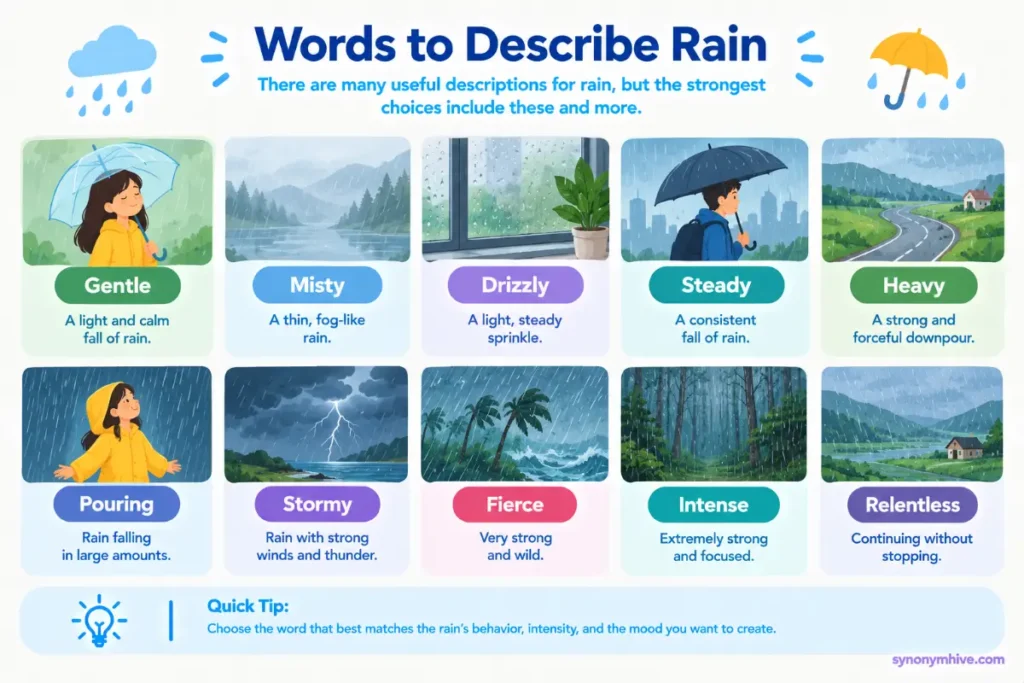
There are many useful descriptions for rain, but the strongest choices include gentle, soft, light, misty, drizzly, steady, persistent, heavy, pouring, driving, stormy, fierce, powerful, intense, torrential, and relentless.
The best word depends on the details you want the reader to notice. Use gentle or soft for calm rain, drizzly or misty for very fine rain, steady or persistent for rain that continues, and torrential or fierce for very strong rainfall.
Words To Describe Rain In A Master List
The table below gives you a broad range of useful choices. The words are grouped by the kind of language they suit best.
| Word | Meaning | Tone | Example |
|---|---|---|---|
| Gentle | Soft and mild rain | Simple | Gentle rain tapped against the roof. |
| Light | Rain that falls in small amounts | Simple | Light rain covered the streets. |
| Soft | Quiet and delicate rain | Simple | Soft rain cooled the garden. |
| Wet | Covered with water | Simple | The wet road reflected the lights. |
| Misty | Fine drops floating in the air | Simple | A misty rain covered the hills. |
| Pelting | Rain falling hard and fast | Everyday | Rain was pelting the roof. |
| Melancholy | Rain that creates a sad or thoughtful mood | Literary | Melancholy rain blurred the city lights. |
| Moody | Rain that creates a strong emotional atmosphere | Literary | Moody rain darkened the empty street. |
| Dramatic | Rain that makes a scene striking | Literary | Dramatic rain swept across the valley. |
| Wild | Rain that seems uncontrolled or fierce | Informal | Wild rain rattled the old windows. |
| Nasty | Unpleasant and difficult rain | Informal | Nasty rain kept the roads nearly empty. |
| Brutal | Extremely harsh rain | Informal | Brutal rain hit the town overnight. |
How To Choose A Word Based On Rain Intensity
The strength of rainfall is one of the easiest ways to choose the right description. A useful scale moves from barely noticeable rain to extreme rainfall.
Mild Rain
For very light rainfall, choose words such as misty, drizzly, sprinkling, soft, or light. These terms suggest small drops and low intensity.
A drizzly morning may leave the sidewalks damp without creating puddles. Misty rain may seem almost like moisture floating through the air.
Light rain fell across the empty park.
A soft drizzle covered the windshield.
These descriptions work well when the rain is noticeable but not disruptive.
Moderate Rain
Steady, regular, showery, and persistent work well for medium rainfall. These words focus on duration and pattern instead of extreme force.
Steady rain fell throughout the afternoon.
Persistent rain kept the grass dark and wet.
Showery weather brought rain and sunshine at different times.
These terms are useful in news writing, essays, stories, and everyday descriptions.
Heavy Rain
Use heavy, pouring, soaking, pelting, pounding, or downpour when the rain is strong enough to make a clear impact.
Heavy rain filled the streets within an hour.
Rain poured over the rooftops.
A sudden downpour sent everyone running for shelter.
Pelting rain made it hard to see the road.
Pounding rain kept the family awake.
These choices create a stronger picture than simply saying it was raining hard.
Extreme Rain
Torrential, intense, relentless, driving, and cloudburst describe more severe conditions.
Torrential rain can cause flooding and dangerous travel conditions. Relentless rain focuses on how long the rainfall continues. Driving rain emphasizes the role of strong wind. A cloudburst describes a sudden, very heavy fall of rain.
The storm brought torrential rain throughout the night.
Relentless rain caused the river to rise.
Driving rain swept across the open field.
A sudden cloudburst flooded the narrow street.
Use these words carefully. They are stronger than ordinary descriptions and should match the scene.
What Words Describe Rain By Sound
Rain can create many different sounds. The sound depends on the size of the drops, the force of the rainfall, and the surface the drops hit.
For quiet rain, use soft, gentle, whispering, soothing, or delicate.
Soft rain tapped against the glass.
For stronger rain, use tapping, pattering, drumming, pelting, pounding, or roaring.
Rain drummed against the metal roof.
Heavy drops pounded the windows.
The rain roared across the old barn roof.
Tapping and pattering suggest smaller and lighter sounds. Pounding and drumming create a stronger effect. Roaring suggests very loud rainfall, often during a powerful storm.
Sound words can make descriptions more vivid because they help readers imagine the scene through their ears.
What Words Describe Rain By Mood
Rain does not always create the same emotional effect. The setting and the writer’s purpose can change the mood.
Calm Rain
Gentle, peaceful, soothing, quiet, soft, and refreshing work well for calm scenes.
A gentle rain cooled the garden after a hot afternoon.
The soft rain created a peaceful sound outside the bedroom window.
A refreshing rain settled the dust along the road.
These words can make rain seem comforting and safe.
Sad Rain
Melancholy, gloomy, somber, lonely, and mournful can suggest sadness.
Melancholy rain blurred the lights outside her apartment.
Gloomy rain covered the town as he walked home alone.
The words do not mean that rain is actually sad. They describe the emotional mood created by the scene.
Dark Or Tense Rain
Fierce, violent, threatening, wild, stormy, relentless, and driving can create tension.
Fierce rain swept across the highway.
Driving rain made the dark road hard to see.
Relentless rain trapped the travelers inside the cabin.
These words work especially well in fiction and dramatic descriptions.
Positive Rain
Refreshing, welcome, nourishing, cleansing, cool, and soothing can give rain a positive meaning.
The welcome rain saved the dry crops.
Cool rain brought relief after weeks of heat.
A nourishing rain gave the fields the moisture they needed.
These choices work well in nature writing and descriptions of changing seasons.
What Words Describe Rain In An Essay
An essay usually needs clear and specific language. Avoid piling up dramatic words when a simple word explains the scene better.
Good choices include gentle, steady, heavy, persistent, refreshing, intense, and torrential.
For example, instead of writing:
The rain was very, very heavy and really bad.
Write:
Torrential rain flooded the streets and delayed traffic.
The second sentence gives the reader useful information. It tells us the rain was extreme and explains its effect.
For a descriptive essay, you can add sensory details.
Steady rain tapped against the classroom windows while students waited for the bell.
That sentence describes the rain and also gives the reader a sound and setting.
What Words Describe Rain In A Text Message
Text messages are more casual, so simple and natural words usually work best.
You might say that the rain is pouring, drizzling, sprinkling, crazy strong, heavy, or nonstop.
It’s pouring outside.
It’s been drizzling all morning.
This rain won’t stop.
The rain is coming down hard.
These phrases sound natural in casual conversation. You do not need formal words such as torrential or persistent unless you want a more dramatic effect.

What Words Describe Rain In An Email
Emails usually benefit from clear and neutral language. Choose words that sound natural without being overly dramatic.
Heavy rain caused several delays this morning.
Due to persistent rain, the outdoor meeting has been moved indoors.
Light rain is expected during the afternoon.
The first sentence is simple and direct. The second sounds more formal and works well in workplace communication.
Avoid overly dramatic words in professional emails unless the situation truly calls for them.
What Words Describe Rain In Speaking
In everyday speech, people often use pouring, raining hard, drizzling, sprinkling, heavy, light, and nonstop.
It’s pouring outside.
It’s been raining all day.
We had some light rain this morning.
That was a huge downpour.
These expressions are easy to understand and sound natural in conversation.
Formal terms can still be useful when you are giving a presentation or describing weather in a more careful way.
What Words Describe Rain In Creative Writing
Creative writing gives you more freedom. You can describe rain through sight, sound, movement, temperature, and emotion.
Rain whispered against the bedroom window.
Cold rain slipped down his jacket.
Silver rain covered the streetlights.
The storm sent sheets of rain across the empty road.
Rain hammered the roof as the lights went out.
Notice that these examples do not rely only on adjectives. Strong verbs can make a description more active.
Instead of saying the rain was loud, describe what it did. It drummed, pounded, struck, rattled, or hammered.
That approach often creates a stronger image.
What Is The Difference Between Drizzle And Downpour
Drizzle and downpour describe very different amounts of rain.
Drizzle means light rain made of very small drops. It usually creates a mild and damp setting.
A downpour means a period of very heavy rain. It suggests a large amount of water falling in a short period.
| Drizzle | Downpour |
|---|---|
| Very light rain | Very heavy rain |
| Small drops | Large or forceful rainfall |
| Usually mild | Often intense |
| May last for hours | Can be brief but powerful |
| Often creates a quiet mood | Can create a dramatic mood |
For example, you might write:
A light drizzle covered the garden.
A sudden downpour flooded the street.
Using these words correctly helps readers understand the actual strength of the rainfall.
Discover another helpful synonym list in Words to Describe Summer Ultimate Word List.
What Is The Difference Between Steady And Persistent Rain
Steady and persistent are close, but they highlight different ideas.
Steady rain falls at a regular rate. The word focuses on consistency.
Persistent rain continues for a long time. The word focuses on duration.
Steady rain fell from morning until noon.
Persistent rain continued through the entire weekend.
Rain can be both steady and persistent. In that case, it falls regularly and keeps going for a long period.
This distinction is useful in weather reports and detailed writing because it lets you describe both the pattern and the duration.
What Is The Difference Between Heavy And Torrential Rain
Heavy rain is strong rainfall with a large amount of water. Torrential rain is much more extreme.
Heavy rain may make driving difficult and create puddles or minor flooding.
Torrential rain suggests very intense rainfall that can cause serious flooding and dangerous conditions.
Heavy rain covered the town.
Torrential rain flooded several roads.
If the scene only involves a wet sidewalk and slow traffic, torrential is probably too strong. Choose the word that matches the actual event.
How Do Adjectives And Verbs Describe Rain Differently
Adjectives tell readers what the rain is like. Verbs show what the rain does.
Common adjectives include gentle, heavy, light, steady, cold, warm, misty, intense, and torrential.
Common verbs include falls, pours, drips, taps, patters, pelts, pounds, lashes, sweeps, and rattles.
Compare these sentences.
Heavy rain fell outside.
Rain pounded the windows.
The first sentence gives a basic description. The second creates movement and sound.
Strong writing often combines both.
Heavy rain pounded the windows throughout the night.
The adjective heavy tells us about the amount of rain. The verb pounded tells us about its force and sound.
How Does Rain Change By Season
Rain can have different qualities depending on the season and setting.
Spring rain is often described as fresh, gentle, cool, soft, or cleansing. These words fit scenes where rain helps plants grow.
Summer rain may be warm, sudden, heavy, refreshing, or stormy. A hot day followed by rain can create a strong contrast.
Autumn rain can be chilly, steady, gloomy, misty, or persistent. These words often fit gray skies and falling leaves.
Winter rain may be cold, icy, bitter, freezing, or relentless. In very cold conditions, rain can mix with sleet or change into snow.
The best description depends on the actual weather. Avoid choosing a seasonal word simply because it sounds poetic.
How Does Rain Change By Setting
The same rain can look different in different places.
In a city, rain may be described as reflective, noisy, heavy, gray, or relentless. Water runs along streets, strikes windows, and reflects lights.
In a forest, rain may be described as soft, filtered, misty, cool, or soothing. Leaves change the sound and movement of falling drops.
At the beach, rain may be wild, windy, cold, sudden, or dramatic. Open space allows wind to push the rain across the water.
In the countryside, rain may be gentle, nourishing, steady, welcome, or soaking. The effect on fields and crops can matter as much as the rain itself.
Think about the place before choosing the word. Good description connects the weather to its surroundings.
Ten Natural Sentences That Describe Rain
Here are examples that show how different words work in real situations.
- Gentle rain cooled the sidewalks after a hot afternoon.
- A soft drizzle covered the windshield as we drove home.
- Steady rain fell over the town for most of the morning.
- Heavy rain turned the dirt road into thick mud.
- A sudden downpour sent shoppers running toward the nearest store.
- Persistent rain kept the soccer field too wet for practice.
- Torrential rain caused water to spill over the roadside drains.
- Refreshing rain washed the dust from the leaves.
- Cold rain soaked through his jacket during the long walk.
- Rain pounded the roof while the family sat inside.
- Misty rain floated across the hills before sunrise.
- Relentless rain continued through the night.
- Driving rain swept across the open field.
- The first spring rain brought a fresh scent to the garden.
- A quiet drizzle tapped against the window as she read.
These examples show why a large vocabulary helps. Each word creates a slightly different picture.
Common Mistakes When Describing Rain
One common mistake is using the strongest word for every situation. Words such as torrential, violent, and relentless suggest serious conditions. They should not describe a few light drops.
Another mistake is using several words that mean almost the same thing without adding information. A sentence such as the gentle, soft, mild, light rain can sound crowded. Pick the word that adds the most useful detail.
A third mistake is confusing rain intensity with rain duration. Heavy describes the amount or force of rain. Persistent describes how long it continues. The two ideas are related but not identical.
Another problem is using emotional words without a clear reason. Gloomy rain works best when the scene actually creates a gloomy mood. If the rain is helping crops grow after a drought, refreshing or welcome may fit better.
Writers also sometimes forget that verbs can do more work than adjectives. Instead of adding three adjectives, use one clear adjective and a strong verb.
Heavy rain pounded the roof.
That sentence is more vivid than a long string of similar descriptive words.
When Should You Not Use A Dramatic Word For Rain
Do not use dramatic language when accuracy matters more than emotion.
Weather reports, school assignments, workplace emails, and factual writing often need simple descriptions. Heavy rain may be better than torrential rain if the rainfall is strong but not extreme.
The same rule applies to emotional descriptions. If a scene is peaceful, words such as violent and brutal can change the mood in a way you may not intend.
Ask yourself what the reader needs to know.
Do you need to show the amount of rain, its sound, its movement, its effect, or its emotional mood?
Once you answer that question, the right word becomes much easier to choose.
What Are The Antonyms Of Rain Descriptions
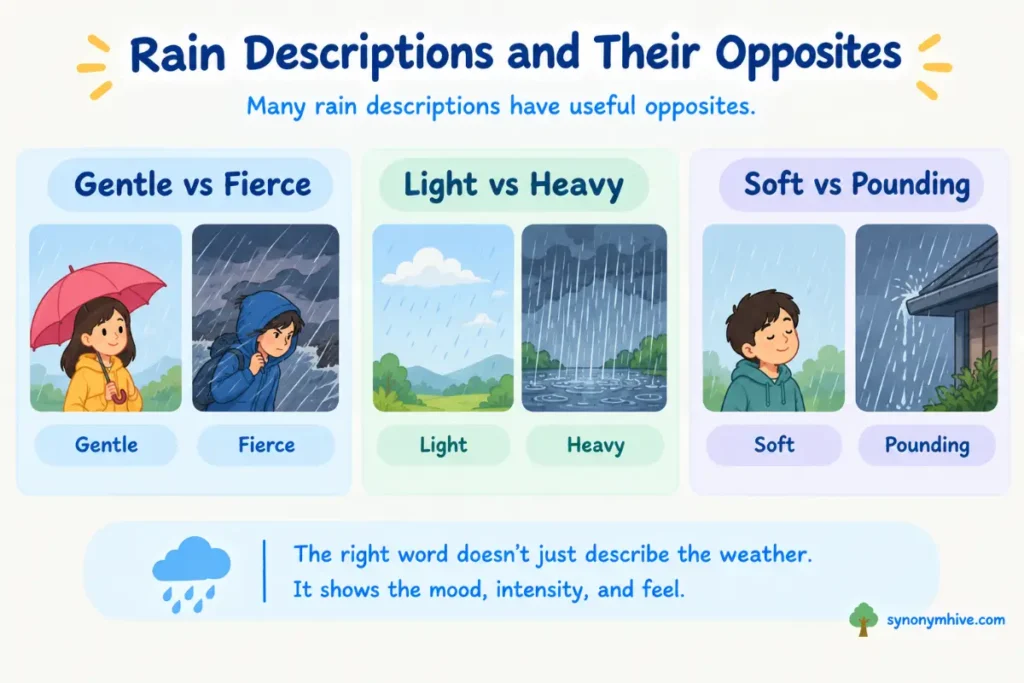
Refreshing can contrast with oppressive.
Calm can contrast with stormy.
Brief can contrast with persistent.
Dry weather is the broad opposite of rainy weather.
These contrasts can help you build stronger descriptions. For example, a dry afternoon followed by a sudden downpour creates a clear change in the scene.
How Do You Choose The Right Rain Word
Start with the physical details. Ask how much rain is falling, how fast it is falling, how long it lasts, and how it sounds.
Next, consider the setting. Rain on a city street creates a different image from rain in a forest or on a farm.
Then consider the mood. A peaceful story may need soft or soothing rain. A tense scene may need driving or relentless rain.
Finally, read the sentence aloud. The best word should fit naturally with the rest of the sentence.
A useful rule is to choose the simplest word that gives the exact meaning you need. A precise word is usually stronger than a fancy word.
Quick Tips For Describing Rain Better
Choose words that match the actual strength of the rain.
Use driving or blustery when wind affects the rainfall.
Use strong verbs such as tapped, drummed, poured, pelted, or pounded to create movement.
Avoid using several near synonyms in one sentence unless each word adds a new detail.
Match the word to your audience. Everyday writing usually needs simple language, while creative writing can support more expressive choices.
Compare more word options with words to describe a sunset Best Guide.
Conclusion
Choosing the right words to describe rain is less about using complicated language and more about noticing the details. A light drizzle, steady shower, sudden downpour, and torrential storm each create a different picture.
Think about intensity first. Then consider sound, movement, duration, setting, and mood. A simple word such as gentle may work better than a dramatic word when the scene is calm. For a powerful storm, torrential or relentless may give the reader a clearer image.
Strong descriptions also use verbs. Rain can tap, patter, drum, pour, pelt, pound, sweep, or lash. These verbs help readers picture the weather instead of simply being told that it is raining.
Before choosing your final word, ask what you want the reader to notice. Match the description to that detail, and your writing will sound clearer, more natural, and more vivid.
Frequently Asked Questions
What are some good words to describe rain?
Good choices include gentle, light, soft, drizzly, steady, heavy, pouring, persistent, refreshing, intense, torrential, and relentless. The best choice depends on the rain’s strength, sound, duration, and mood.
What are the best words to describe rain in creative writing?
Creative writing can use words such as soothing, misty, melancholy, dramatic, relentless, whispering, pounding, and silver. Strong verbs can also make rain more vivid by showing how it moves or sounds.
What is another way to say heavy rain?
Another way to describe heavy rain is downpour, pouring rain, torrential rain, intense rain, or driving rain. Downpour is common in everyday English, while torrential suggests much more extreme rainfall.
Can rain be described as beautiful?
Yes, rain can be described as beautiful, peaceful, refreshing, soothing, sparkling, gentle, or magical. The best choice depends on the scene and the mood you want to create.
What words describe light rain?
Words for light rain include drizzle, drizzly, misty, sprinkling, soft, gentle, and light. Drizzle is especially useful for rain made of very small drops.
What words describe rain in a sad scene?
Words such as gloomy, melancholy, somber, lonely, cold, and mournful can suit a sad scene. You can also describe the sound of rain to strengthen the mood.
What are strong words for very heavy rain?
Strong choices include torrential, relentless, intense, pounding, pelting, driving, and cloudburst. Use them only when the rain is strong enough to support that level of description.