
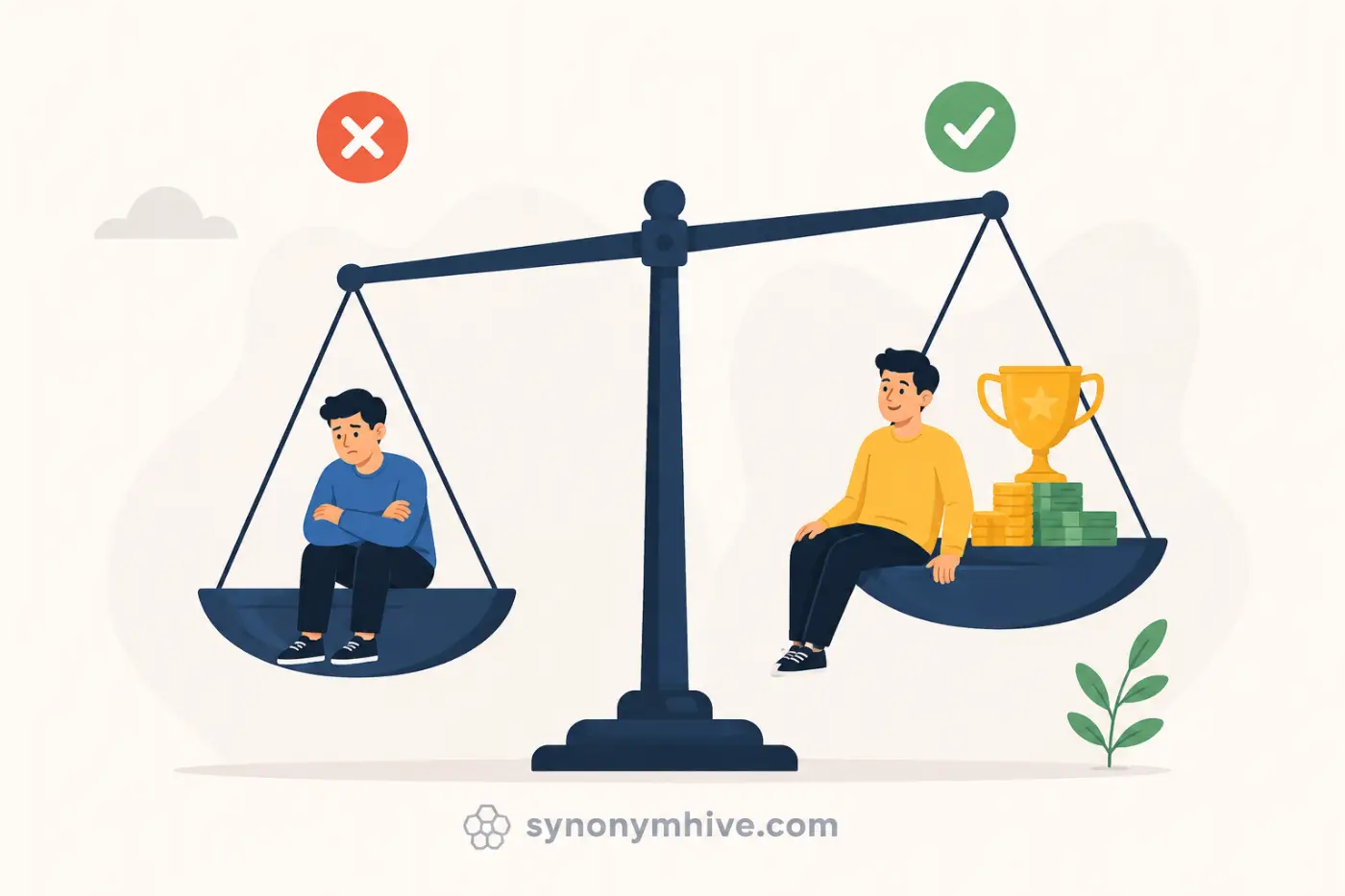
Have you ever stared at an email or essay and felt that the word unfair sounded too plain or too emotional for what you wanted to say. Finding the right words can make your message stronger and more believable. That’s where synonyms for unfair come in. The right word can change how people understand your point. Some choices sound calm and professional. Others carry more emotion or fit casual conversations. Picking the best one helps your writing sound natural instead of forced.
Synonyms for unfair are words or phrases that describe something that is not just equal or reasonable. The best choice depends on the situation the tone and the level of emotion you want to show.
This guide explains the meaning and history of the word unfair. You’ll also find a large list of alternatives grouped by tone examples that sound natural intensity levels regional notes and practical advice for real life writing.
What Does Unfair Mean
The word unfair describes something that is not just honest or equal. It usually means someone did not receive the same chance treatment or opportunity as someone else.
People use unfair in many situations.
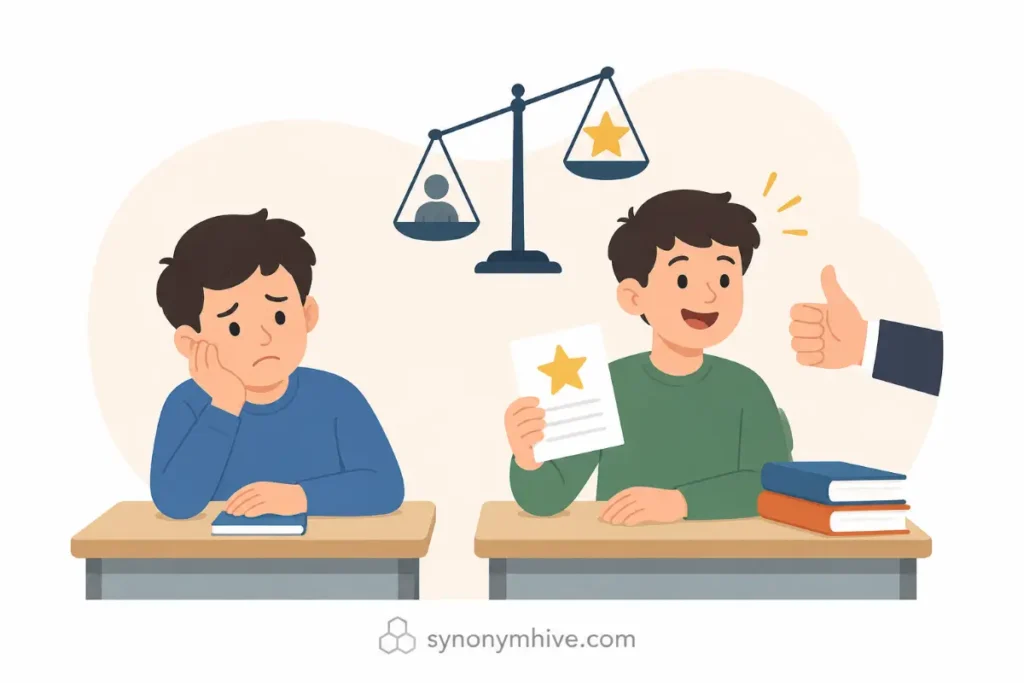
- A teacher gives one student extra points but not the others.
- A boss promotes a friend instead of the best worker.
- A referee makes a bad call during a game.
- A rule favors one group and hurts another.
In each case people feel that something is wrong because it lacks fairness. Unfair can describe actions rules decisions treatment behavior or situations. It often carries an emotional meaning because people naturally expect fairness in daily life.
Where The Word Unfair Comes From
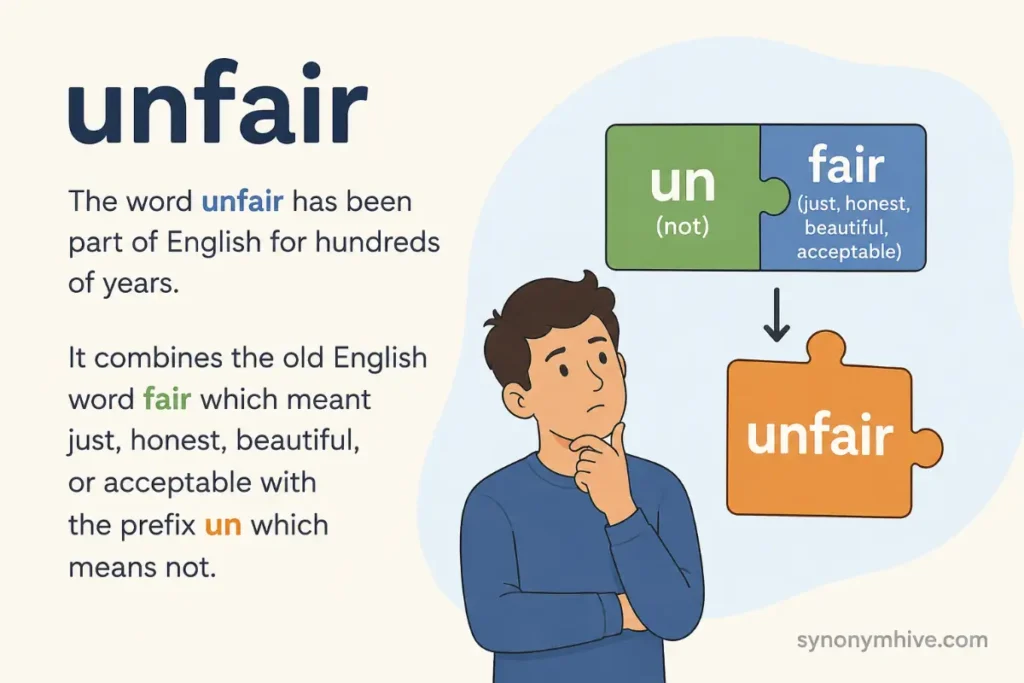
The word unfair has been part of English for hundreds of years. It combines the old English word fair which meant just honest beautiful or acceptable with the prefix un which means not.
Over time unfair came to describe actions decisions and situations that fail to meet accepted standards of justice or equality. Today people use it in schools workplaces sports politics business family life and everyday conversations. It remains one of the simplest and most common ways to describe injustice.
Master List Of Synonyms For Unfair
The table below includes many useful phrases for unfair grouped by tone. Some work best in formal writing while others fit everyday conversations or slang.
| Word | Meaning | Tone | Example |
|---|---|---|---|
| Unjust | Not based on justice | Formal | The decision felt unjust. |
| Inequitable | Not equal or balanced | Formal | The policy was inequitable. |
| Biased | Showing favoritism | Neutral | The report sounded biased. |
| Partial | Favoring one side | Formal | The judge stayed partial. |
| One sided | Supporting only one view | Everyday | The debate felt one sided. |
| Discriminatory | Treating people differently | Formal | The hiring process looked discriminatory. |
| Unequal | Not balanced | Neutral | The workload was unequal. |
| Prejudiced | Based on unfair opinions | Formal | His remarks sounded prejudiced. |
| Favoritist | Showing favorites | Everyday | The manager acted favoritist. |
| Rigged | Secretly arranged | Slang | Everyone thought the game was rigged. |
| Crooked | Dishonest | Slang | People called the deal crooked. |
| Rotten | Morally bad | Everyday | It was a rotten decision. |
| Mean | Unkind | Everyday | That rule was mean. |
| Harsh | Too strict | Everyday | The punishment was harsh. |
| Severe | Very strict | Formal | The sentence seemed severe. |
| Oppressive | Cruel through power | Formal | The system became oppressive. |
| Exploitative | Taking advantage of others | Formal | The contract was exploitative. |
| Dishonest | Not truthful | Neutral | The process felt dishonest. |
| Corrupt | Morally dishonest | Formal | The official appeared corrupt. |
| Skewed | Not balanced | Neutral | The results looked skewed. |
| Slanted | Favoring one side | Neutral | The article felt slanted. |
| Loaded | Influenced toward one opinion | Neutral | That question sounded loaded. |
| Lopsided | Not balanced | Everyday | The agreement was lopsided. |
| Out of line | Not acceptable | Everyday | The punishment was out of line. |
| Wrong | Morally incorrect | Everyday | That was simply wrong. |
| Unreasonable | Not sensible | Neutral | The request seemed unreasonable. |
| High handed | Using power unfairly | Formal | The leader took a high handed approach. |
| Playing favorites | Giving special treatment | Everyday | The coach kept playing favorites. |
Synonyms By Strength
Not every alternative carries the same emotional weight. Some simply point out a problem. Others express strong anger or serious injustice.
Mild Choices
These work well in everyday conversations and polite writing.
- Unequal.
- Unreasonable.
- One sided.
- Mean.
- Harsh.
- Out of line.
Moderate Choices
These suggest a stronger lack of fairness.
- Biased.
- Partial.
- Skewed.
- Slanted.
- Favoritist.
- Dishonest.
Strong Choices
Use these when describing serious problems or clear injustice.
- Unjust.
- Inequitable.
- Discriminatory.
- Oppressive.
- Exploitative.
- Corrupt.
- Rigged.
- Crooked.
Choosing the right level keeps your message believable. Calling every small problem corrupt or oppressive can make your writing sound exaggerated.
Synonyms By Part Of Speech
Most phrases for unfair are adjectives because they describe people actions decisions or situations. Still related nouns and adverbs can strengthen your writing.
Adjectives
- Unjust.
- Biased.
- Unequal.
- Rigged.
- Crooked.
- Shady.
- Discriminatory.
- Harsh.
- Oppressive.
- Slanted.
Nouns
- Injustice.
- Bias.
- Favoritism.
- Discrimination.
- Inequality.
- Corruption.
- Partiality.
- Prejudice.
Adverbs
- Unfairly.
- Unequally.
- Unjustly.
- Partially.
- Biasedly.
- Wrongfully.
Using different parts of speech helps your writing sound smoother instead of repeating the same adjective again and again.
Do Americans And British People Use Different Words
Most expressions for unfair are understood across the United States and the United Kingdom. Still a few words appear more often in one place than the other.
| Word | More Common In | Notes |
|---|---|---|
| Rigged | United States | Often used in sports politics and contests. |
| Playing favorites | United States | Common in schools families and workplaces. |
| Crooked | United States | Often describes dishonest people or systems. |
| One sided | Both | Common in everyday speech. |
| Biased | Both | Widely used in news education and business. |
| Unjust | Both | Common in formal writing and legal discussions. |
| Inequitable | Both | More common in academic and professional writing. |
| Shady | Both | Casual slang for suspicious behavior. |
Regional differences are small. In most cases your audience will understand these words without confusion. The better choice depends more on tone and context than on location.
What Is The Best Word To Use In Different Situations
The best replacement depends on who you’re talking to and what you’re writing. A word that works well in a text message may sound too casual in a job application. On the other hand a formal word can feel stiff during a friendly chat. The sections below show which words fit common situations and why they work.
What Is The Best Word For A Resume
A resume should sound professional and objective. Avoid emotional language unless you are describing a real challenge that you handled.
Good choices include.
- Unjust.
- Inequitable.
- Biased.
- Unequal.
- Discriminatory.
Examples.
I helped improve an inequitable scheduling system that caused staffing gaps.
I reported biased hiring practices through the proper company process.
Our team worked to reduce unequal workloads across departments.
These words focus on facts instead of emotion. That makes your writing more credible.
What Is The Best Word For An Essay
School papers and college essays often call for clear and balanced language. Strong vocabulary can improve your argument without making it sound dramatic.
Good choices include.
- Unjust.
- Inequitable.
- Discriminatory.
- Partial.
- Oppressive.
Examples.
Many people believed the law was unjust because it punished one group more than another.
The policy created an inequitable system that affected low income families.
The author argues that the decision was discriminatory and harmed equal opportunity.
These words fit academic writing because they explain the problem with precision.
What Is The Best Word For A Text Message
Text messages usually sound relaxed and direct. Short familiar words work best.
Good choices include.
- Rigged.
- Shady.
- Crooked.
- Mean.
- Out of line.
- One sided.
Examples.
That game was totally rigged.
Your teacher was out of line today.
That deal sounds shady to me.
The rules seem one sided.
These words feel natural in everyday conversations.
What Is The Best Word For An Email
Professional emails should stay polite even when you’re raising a concern.
Good choices include.
- Unequal.
- Unreasonable.
- Biased.
- Unjust.
- Inequitable.
Examples.
The current process appears unequal and may need another review.
Some team members believe the decision was biased.
The new policy creates an inequitable workload across departments.
Using calm language keeps the focus on solving the problem.
What Is The Best Word For Speaking
People usually choose simple words during conversations because they sound more natural.
Good choices include.
- Unfair.
- Wrong.
- Mean.
- One sided.
- Rigged.
- Harsh.
Examples.
That doesn’t seem fair at all.
The punishment was too harsh.
The whole thing felt one sided.
Everybody thought the contest was rigged.
Simple words are often the most powerful because everyone understands them right away.
Real Life Examples Using Synonyms For Unfair
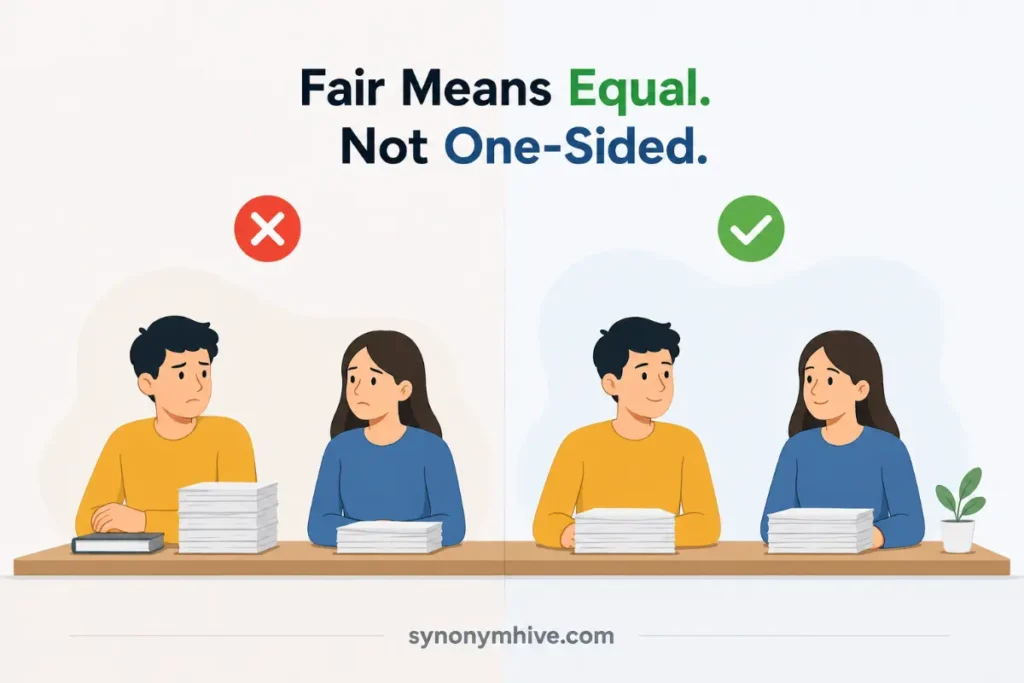
Reading examples makes it much easier to remember new vocabulary. These sentences show how different words fit different situations.
- The referee made a biased call that changed the game.
- Many workers believed the new schedule was inequitable.
- The teacher avoided being partial by grading every paper the same way.
- The online review looked slanted because it ignored important facts.
- Everyone agreed the punishment was harsh for such a small mistake.
- The company faced criticism for discriminatory hiring practices.
- My brother said the card game was rigged after losing three rounds.
- The deal sounded shady so I decided not to sign anything.
- The report exposed corrupt officials who accepted illegal payments.
- The children complained that their parents were playing favorites again.
- The contract created a lopsided agreement that helped only one side.
- Most people felt the decision was simply wrong.
- The workload stayed unequal for months before management fixed it.
- The article presented a one sided view of the issue.
- The landlord made unreasonable demands that surprised every tenant.
Using different words keeps your writing fresh and helps readers understand the exact level of unfairness you want to express.
Unjust Vs Biased
These two words often appear together but they do not mean the same thing.
| Unjust | Biased |
|---|---|
| Focuses on justice. | Focuses on favoritism or prejudice. |
| Describes an unfair result or action. | Describes an unfair opinion or attitude. |
| Common in legal and academic writing. | Common in media education and workplace discussions. |
| The law was unjust. | The judge sounded biased. |
Think of it this way.
A biased opinion can lead to an unjust decision. They are connected but they describe different parts of the problem.
Rigged Vs Fixed
People often use these words as if they mean the same thing. They overlap but each has its own flavor.
| Rigged | Fixed |
|---|---|
| Suggests secret manipulation. | Usually suggests a planned dishonest outcome. |
| Common in sports games elections and contests. | Common in sports competitions betting and business. |
| Sounds casual. | Can sound slightly more formal depending on the situation. |
| The raffle was rigged. | The match was fixed. |
If someone secretly changes the rules to help one side win people usually say the event was rigged. If people secretly arrange the final result ahead of time they often say it was fixed.
Unequal Vs Inequitable
These words seem similar but they are not always interchangeable.
| Unequal | Inequitable |
|---|---|
| Means not equal. | Means not fair or just. |
| Can describe numbers treatment or opportunities. | Focuses on fairness more than simple differences. |
| Common in everyday writing. | Common in professional and academic writing. |
| The work was unequal. | The policy was inequitable. |
Not every unequal situation is unfair. For example one employee may work more hours because they volunteered. That is unequal but not necessarily inequitable.
Common Mistakes People Make
Many writers accidentally choose words that do not match the situation. These mistakes can confuse readers or weaken your point.
Using Strong Words For Small Problems
Calling every small disagreement oppressive or corrupt can make your writing sound exaggerated.
Better example.
The grading system seemed biased.
Not.
The grading system was corrupt.
Mixing Bias And Unfair Results
Bias is an attitude or preference. Unjust describes the outcome. Use each word where it fits best.
Choosing Slang In Professional Writing
Words like shady crooked and rigged work well in conversations. They usually do not belong in formal reports or academic papers unless you are quoting someone.
Repeating The Same Word
Many people use unfair in every sentence. Instead mix in related words like unjust unequal biased harsh or one sided. Your writing becomes more natural and easier to read.
Ignoring Context
Some words carry legal social or political meaning. For example discriminatory is a serious word that usually refers to unfair treatment based on protected characteristics. It should not describe every disagreement or personal complaint. Choosing words with care makes your message stronger and more trustworthy.
Antonyms Of Unfair
Sometimes the best way to understand a word is to look at its opposite. These antonyms describe fairness honesty and equal treatment.
| Word | Meaning | Example |
|---|---|---|
| Fair | Just and equal | The teacher made a fair decision. |
| Just | Morally right | Everyone wanted a just outcome. |
| Equal | The same for everyone | The rules gave every player an equal chance. |
| Impartial | Not taking sides | The referee stayed impartial throughout the game. |
| Objective | Based on facts | The review remained objective from start to finish. |
| Honest | Truthful and sincere | She gave an honest answer. |
| Balanced | Giving equal attention | The article offered a balanced view. |
| Neutral | Not supporting either side | The moderator stayed neutral during the debate. |
| Reasonable | Fair and sensible | The manager reached a reasonable solution. |
| Ethical | Following moral principles | The company followed ethical business practices. |
Using an opposite word can sometimes make your writing clearer than repeating the negative idea.
Quick Tips For Choosing The Right Word
Choosing the right word is easier when you think about your audience and your goal.
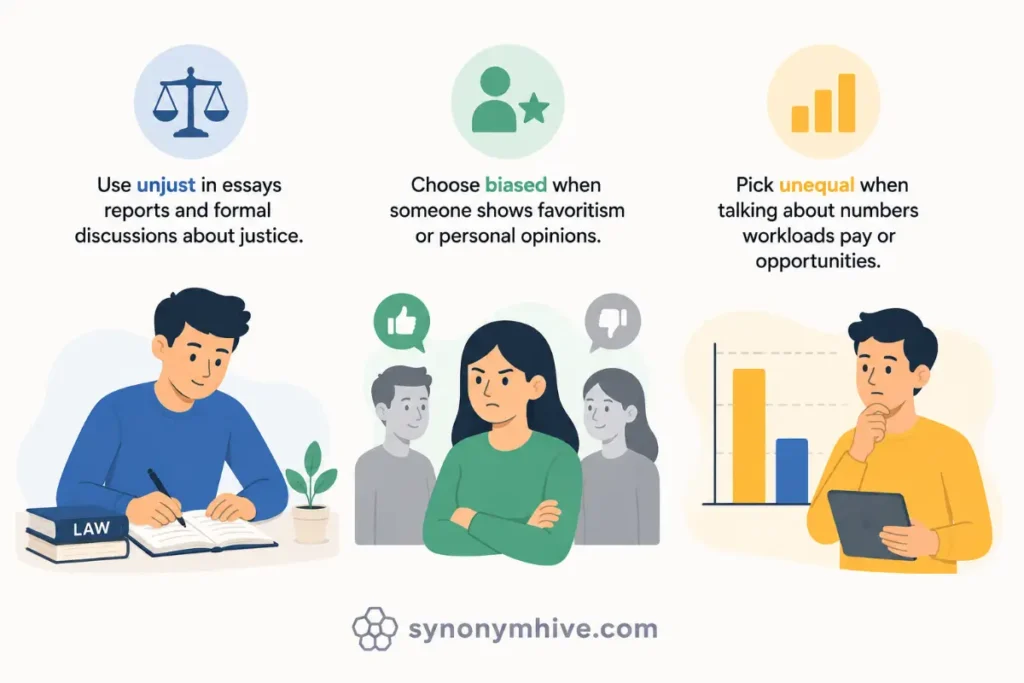
- Use unjust in essays reports and formal discussions about justice.
- Choose biased when someone shows favoritism or personal opinions.
- Pick unequal when talking about numbers workloads pay or opportunities.
- Use inequitable in professional writing about systems policies or rules.
- Choose rigged for games contests elections or situations that seem secretly manipulated.
- Use shady during casual conversations about suspicious behavior.
- Pick harsh when the punishment or reaction feels too strong.
- Use one sided when only one opinion or viewpoint is represented.
- Match the emotional strength of the word to the situation. Small problems need simple words. Serious issues deserve stronger language.
- Read your sentence aloud. If the word sounds natural during conversation it will usually sound natural in writing too.
Conclusion
Learning synonyms for unfair gives you more control over your writing and speaking. Instead of repeating the same word every time you can choose one that matches the exact situation and tone. Sometimes biased explains the problem best. In other cases unjust inequitable rigged or one sided tells the story more clearly.
Strong writing is not about using the hardest vocabulary. It is about choosing the right word at the right moment. Keep this guide handy practice these alternatives in everyday conversations emails essays and messages and your vocabulary will grow naturally over time. Small changes in word choice can make a big difference in how people understand your ideas.
Frequently Asked Questions
What’s Another Way To Say Unfair
There are many phrases for unfair including unjust biased unequal inequitable one sided harsh discriminatory rigged shady and crooked. The best choice depends on your situation and the tone you want to create.
What Is The Strongest Synonym For Unfair
Words like unjust oppressive discriminatory and corrupt express a much stronger idea than unfair. Use them only when they accurately describe the situation.
Can I Use Biased Instead Of Unfair
Yes if the problem involves favoritism or personal opinion. Biased focuses on the person’s attitude while unfair describes the overall action or result.
Which Synonym Sounds Best In Professional Writing
Unjust inequitable biased and unequal are excellent choices for reports emails academic papers and workplace communication because they sound clear and professional.
Is Rigged A Slang Word
Yes. Rigged is an informal word that usually describes games contests sports or elections that appear secretly manipulated. It is common in everyday American English.
What Is The Difference Between Unjust And Unequal
Unjust means something is morally wrong or not based on justice. Unequal simply means things are not the same. An unequal situation is not always unjust.
How Can I Remember The Best Expressions For Unfair
Group them by situation instead of memorizing one long list. Use unjust for formal writing biased for favoritism unequal for differences rigged for games and shady for casual conversations. That approach makes the words easier to remember and use naturally.